Reflections on life at “De Witte Wand”…

Year: 2007

  • Sunshine

    This is about the recent film Sunshine. Warning: spoilers ahead. If you don’t want to know about the plot, then stop reading now!
     
    I haven’t actually seen the film for myself, but the reviews sounded good. However, Geoff Manaugh, over at BLDGBLG, has just seen it and writes a long critique, in which he also discusses the plot. Now that I’ve read it, I feel much less of a desire to see the film. The trouble is that the plot twist that is thrown in comes across to me as simply juvenile, almost as though the filmmakers did not have the courage of their own convictions. Or perhaps because their previous film was 28 days later, they can’t get rid of their addiction to schlock horror.
     
    Like Manaugh, I think this is a real shame, a wasted opportunity that seems to undercut the grandeur of the basic idea. It’s as though The Seventh Seal suddenly turns into Driller Killer.
     
    For a time, it seems as though Sunshine is going to be a variation on an SF story I read years ago. Alas, I have forgotten the title, but the plot device remains vividly with me. It concerns people who develop the ability to teleport, but who then suddenly disappear. It turns out that they are like moths, drawn inexorably towards the light – in this case they suddenly realise that they have an irresistable desire to teleport into the sun. Their new ability is what ultimately destroys them.
     
    Sunshine, for much of its running time, is proceeding along similar lines to this old SF story; members of the crew become irresistably attracted to the sun. This is ominously prefigured in the very name of the spacecraft – Icarus (I might have thought that someone in the story would have suggested the safer alternative of naming it Daedelus instead). And the idea of the irresistable attraction in itself has so much resonance and depth to be explored.  But then comes the plot device, which I fear is going to make many, including me, go WTF?
  • Learning From The Masters

    The BBC has recently been going through some public washing of its dirty linen, after being shown to be falling short of the standards set by Lord Reith. Quite right too.
     
    But as Mark Ravenhill points out in today’s Guardian, the BBC has only been following in the footsteps of New Labour. It’s an excellent article and accurately skewers both organisations with the charge of stage management like beetles to a board.
  • The Hive Mind

    Charlie Brooker has one of his excellent columns in today’s Guardian, this time ruminating on the phenomenon of who’s really in charge of his mind. While it’s funny, like all the best humour there’s an underlying seriousness, and that is: how does consciousness and personality come about anyway? It’s a topic that, as I mentioned before, I find fascinating.
     
    One set of theories that I personally don’t accept about the mind and consciousness is that it has anything to do with dualism, certainly not Descartes’ substance dualism. Property dualism also seems to me to be introducing an unnecessary level of indirection into what seems to me to simply be emergent phenomena arising out of physical causes. And I’m still trying to get my head around what predicate dualism actually is. I’m a simple soul at heart, and that’s probably why, armed with Occam’s razor, I find any theory of dualism of the mind rather unsatisfactory. 
     
    There’s a good chapter in Stephen Law’s The Philosophy Gym titled, appropriately enough, The Consciousness Conundrum dealing with the subject. He deals with both substance and property dualism, but not predicate dualism (perhaps this is a recent development?). For further reading, Law recommends (amongst others) the "now quite old but nevertheless still excellent" The Mind’s I. I can concur – this book is very good indeed and well worth reading on the topic of what is the Mind? 
  • New Math

    A reminder of the great Tom Lehrer.
     
  • The Operation

    Last weekend we discovered that our labrador, Kai, had a lump lurking under his fur. We took him to the vet on Monday, and on Tuesday, the lump was removed. The vet said that there was nothing to worry about, the growth was benign and easy to remove.
     
    On Tuesday evening, Kai was feeling very sorry for himself as you can see from this photo. He’s wearing an old T-shirt to stop him worrying at the wound. After a couple of days, the T-shirt was removed, and now he’s back to normal. 
     
    20070717-1319-24 
  • Memorial

    At the side of a quiet country lane not far from where we live is this war memorial. I stopped there yesterday and read the rather poignant story behind it. It commemorates the execution, by firing squad, of 46 Dutch political prisoners by the Germans on the 2nd March 1945. They were executed in retaliation for the killing of four German soldiers by a local resistance group.

    The execution of the political prisoners took place in the field where the memorial now stands. Although the bodies were taken away that day and buried in the graveyard at nearby Varsseveld, their lifeblood soaked the ground. It is said that the corn grew higher that year on the spot where the execution occurred. The locals harvested that grain separately from the rest of the field. At the base of the memorial is a glass belljar. In it can be seen the grain that was harvested.  

    The inscription above reads:

    Warm bloed doordrenkt onze velden,
    en rijker rijpte hier ‘t graan.
    O, mocht uit het offer dier helden
    zulk een oogst van vrijheid ontstaan!

    Which, with excuses for my poor translation, says: Warm blood soaked our fields and richer ripened here the grain. Oh, might from this heroic sacrifice such a harvest of freedom arise! 


    20070721-1435-47 


    20070721-1433-56 

    20070721-1434-09

  • An Extraordinary Tale II

    Another story from today’s Observer, but this time fiction is stranger than truth. Fiction, because a couple of weeks ago, The Observer had a front page story claiming that new research showed a surge in autism. That story was simply wrong on all sorts of counts. Today, the paper prints what it calls a "clarification". This is obviously a new definition of the noun, and one that I had not come across previously.
     
    Ben Goldacre, over at Bad Science, is equally unimpressed. It’s worth reading his piece to appreciate how far journalistic standards appear to be falling at The Observer. Not good, not good at all.
     
    Update: apparently The Observer have now removed the original story from their online archives.
  • An Extraordinary Tale

    Another case of truth being far stranger than fiction. The Observer today carries the story behind the events that unfolded in the town of Erie on 28 August 2003. If it was crime fiction, I’d almost think it was over the top. The fact that it was real gives pause for thought. 
  • Please Can We Have Our Planet Back?

    A rant from Marcus Brigstocke that pretty much sums up my feelings re the major religions. 
  • Waffle II

    I mentioned the video discussion between Alister McGrath and Richard Dawkins a little while back. And marvelled at how McGrath seemed to say absolutely nothing with so many words.
     
    If you like this sort of tilting at windmills, then may I refer you to the discussion that began with the posting of this video on the Richard Dawkins site here. It begins on the 30th May and is still going today at the current count of 1,580 postings. Most of the sparring is between Dianelos Georgoudis and a variety of godforsaken atheists. It is an entertainment of sorts, but I do find Georgoudis’ rationale for his beliefs to be pretty threadbare. Still, it’s clearly something that gives him something to hang on to, so I suppose that’s fine. It’s just his touching belief that therefore it must be true that rather sticks in my craw.
  • The Giacometti Code

    The poet Rives has a lot of fun following coincidences in this talk at TED. He plays into the human brain’s hardwired ability to see connections where none necessarily exist. It’s easy to see how conspiracy theorists power their fantasies from this sort of thing. 
     
  • Not Just A Theory

    I often read statements to the effect that "evolution is just a theory…", usually written by an American, but also (depressingly) increasingly by Europeans. It’s a statement that is a sure sign of ignorance. The writer, either genuinely, or disingenuously, does not realise that the word "theory" has a special significance in the scientific method. 

    Here’s a short, pithy primer on the scientific meaning of the word.

    (hat tip to The Bad Astronomer for the link)

  • The Personality Defect Test

    Another test, another somewhat expected result…
     

    Your Score: Robot

    You are 100% Rational, 0% Extroverted, 42% Brutal, and 14% Arrogant.

    You are the Robot! You are characterized by your rationality. In fact, this is really ALL you are characterized by. Like a cold, heartless machine, you are so logical and unemotional that you scarcely seem human. For instance, you are very humble and don’t bother thinking of your own interests, you are very gentle and lack emotion, and you are also very introverted and introspective. You may have noticed that these traits are just as applicable to your laptop as they are to a human being. You are not like the robots they show in the movies. Movie robots are make-believe, because they always get all personable and likeable after being struck by lightning, or they are cold, cruel killing machines. In all reality, though, you are much more boring than all that. Real robots just sit there, doing their stupid jobs, and doing little else. If you get struck by lightning, you won’t develop a winning personality and heart of gold. (Robots don’t have hearts, silly, and if they did, they would probably be made of steel, not gold.) You also won’t be likely to terrorize humanity by becoming an ultra-violent killing machine sent into the past to kill the mother of a child who will lead a rebellion against machines, because that movie was dumb as hell, and because real robots don’t kill–they horribly maim at best, and they don’t even do that on purpose. Real robots are boringly kind and all too rarely try to kill people. In all my years, my laptop has only attacked me once, and that was only because my brother threw it at me. In short, your personality defect is that you don’t really HAVE a personality. You are one of those annoying, super-logical people that never gets upset or flustered. Unless, of course, you short circuit. Or if someone throws a pie at you. Pies sure are delicious.

    To put it less negatively:

    1. You are more RATIONAL than intuitive.

    2. You are more INTROVERTED than extroverted.

    3. You are more GENTLE than brutal.

    4. You are more HUMBLE than arrogant.

    Compatibility:

    Your exact opposite is the Class Clown.

    Other personalities you would probably get along with are the Hand-Raiser, the Emo Kid, and the Haughty Intellectual.

    *

    *

    If you scored near fifty percent for a certain trait (42%-58%), you could very well go either way. For example, someone with 42% Extroversion is slightly leaning towards being an introvert, but is close enough to being an extrovert to be classified that way as well. Below is a list of the other personality types so that you can determine which other possible categories you may fill if you scored near fifty percent for certain traits.

    The other personality types:

    The Emo Kid: Intuitive, Introverted, Gentle, Humble.

    The Starving Artist: Intuitive, Introverted, Gentle, Arrogant.

    The Bitch-Slap: Intuitive, Introverted, Brutal, Humble.

    The Brute: Intuitive, Introverted, Brutal, Arrogant.

    The Hippie: Intuitive, Extroverted, Gentle, Humble.

    The Televangelist: Intuitive, Extroverted, Gentle, Arrogant.

    The Schoolyard Bully: Intuitive, Extroverted, Brutal, Humble.

    The Class Clown: Intuitive, Extroverted, Brutal, Arrogant.

    The Robot: Rational, Introverted, Gentle, Humble.

    The Haughty Intellectual: Rational, Introverted, Gentle, Arrogant.

    The Spiteful Loner: Rational, Introverted, Brutal, Humble.

    The Sociopath: Rational, Introverted, Brutal, Arrogant.

    The Hand-Raiser: Rational, Extroverted, Gentle, Humble.

    The Braggart: Rational, Extroverted, Gentle, Arrogant.

    The Capitalist Pig: Rational, Extroverted, Brutal, Humble.

    The Smartass: Rational, Extroverted, Brutal, Arrogant.

    Be sure to take my Sublime Philosophical Crap Test if you are interested in taking a slightly more intellectual test that has just as many insane ramblings as this one does!

    About Saint_Gasoline

    I am a self-proclaimed pseudo-intellectual who loves dashes. I enjoy science, philosophy, and fart jokes and water balloons, not necessarily in that order. I spend 95% of my time online, and the other 5% of my time in the bathroom, longing to get back on the computer. If, God forbid, you somehow find me amusing instead of crass and annoying, be sure to check out my blog and my webcomic at SaintGasoline.com.

    Link: The Personality Defect Test written by saint_gasoline on OkCupid Free Online Dating, home of the The Dating Persona Test
  • Maths Lesson

    A maths lesson from Stephen Wells via PZ Myers. I’m definitely in the last camp. 
  • Paris

    While Hollywood trots out tired old stereotypes, Parisian Ad agencies come up with illustrations of certain people’s fantasies. And before you jump to conclusions; they are not mine, but I can certainly understand the frisson.
  • Proof

    Proof, if any were needed, that Hollywood is still stuck in the days of the stereotype of Stepin Fetchit, only now it’s gays. Didn’t they learn anything with The Gay Deceivers thirty eight fucking years ago? Apparently not.
  • The Open Library

    The Open Library is a project that has as its goal nothing less than to make every book available via the internet to anyone. The project has just begun, so it’s very early days. Still, go and take a look.
  • What Book Are You?

    Apparently, I’m…


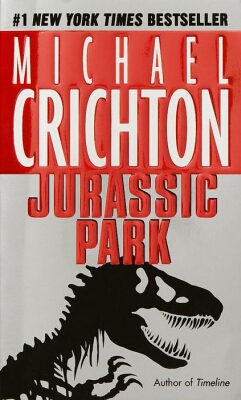
    You’re Jurassic Park!
    by Michael Crichton
    You combine all the elements of a mad scientist, a brash philosopher, a humble researcher, and a money-hungry attracter of tourists. With all these features, you could build something monumental or get chased around by your own demons. Probably both, in fact. A movie based on your life would make millions, and spawn at least two sequels thatwouldn’t be very good. Be very careful around islands.
    Take the Book Quiz at the Blue Pyramid.

    I rather doubt that a film (not "movie", if you please) based on my life would break even, let alone make millions, but there you go…
     
    (hat tip to Ario, over at Altering Labyrinth, for the link)) 
  • Don’t Blink

    If you do, you won’t see how the men behind the curtain manipulate what you perceive.
  • Waffle

    Get it while it’s hot. Alister McGrath in full flow. Gawd, it’s like nailing jelly to a tree, and equally as pointless.