
Chris Clarke, over at Creek Running North writes about a fairly depressing example of boys and their toys – in this case 4×4 owners churning up nature just because they can. I see the same sort of thing in the woods near here with dirt bike riders turning the paths into muddy ruts. Sigh.
Year: 2008
-
The Riddle of Consciousness
Here’s a terrific article on self-awareness by V. S. Ramachandran. I might quibble with his opening sentence (the riddle of consciousness is very far from being "one of the last remaining problems in science"), and Dr. Vaughan Bell wonders about a couple of passages in Ramachandran’s essay. Nonetheless, it’s a wonderful insight into the mirror maze that lies at the heart of that most difficult question: "Who am I?" -
Wolves and Humans
Jean Kazez has an interesting post up at the Talking Philosophy blog, where she writes about two books covering the subject of what it is to be human. The more interesting of the two seems to be Mark Rowlands’ The Philosopher and the Wolf.Because of the fact that we share the house with our dog, Kai, my choice of books for Martin this Christmas had a bit of a theme going about dogs and their owners. So I had chosen books such as Walking With Zeke, Dog Years and Paws and Reflect. From Kazez’s post, it sounds as though I should be adding The Philosopher and the Wolf to that list. -
Dark Sky Parks
I see that Scotland is preparing to host Europe’s first ‘dark sky park’. It’s near to where my brother lives, so that I’m pleased that he will be able to enjoy it. Around here, even though we are in what passes for the Dutch countryside, we still have a lot of light pollution. I would guess that for most nights we are still only class 4 on the Bortle Scale.
-
Cutting Your Cloth…
…to fit a false argument. Oh dear, I seem to be very negative today, what with pointing out Madeleine Bunting’s tripe, and now I feel impelled to do the same for Andrew Brown. Well, it’s not as if he doesn’t have a track record.
He’s written a piece on the “New Atheists” (oh, noes, not that meme again…). As soon as I read this bit, I thought, “Er hello, you’re either stupid or disingenuous…”:
The ideas I claim are distinctive of the new atheists have been collected from Richard Dawkins, Sam Harris, Christopher Hitchens, Jerry Coyne, the American physicist Robert L. Park, and a couple of blogging biologists, P Z Myers and Larry Moran. They have two things in common. They are none of them philosophers and, though most are scientists, none study psychology, history, the sociology of religion, or any other discipline which might cast light on the objects of their execration. All of them make claims about religion and about believers which go far beyond the mere disbelief in God which I take to be the distinguishing mark of an atheist.
Well, that’s interesting. “None of them philosophers”, eh? Well, passing over the fact that Harris has a degree in philosophy, where’s your mention of philosophers such as Daniel Dennett or A. C. Grayling, who I would have thought are prominent in the list of atheists in the public eye? Note, not “New” atheists… No doubt they conveniently slipped his mind.
Fuck it, he’s not worth the effort. Let P. Z. Myers deliver the flensing of Brown instead.
Update: And here is Ophelia adding some worthwhile points.
-
Darwin and the ‘New Atheists’
While I’m mentioning Darwin, I might as well draw your attention to another piece by ‘Our Maddy of the Sorrows’. This time Madeleine Bunting is urging us not to let the great man be hijacked by “New Atheists” – whatever they might be. I rather suspect that they are just the same as plain old atheists, i.e. people who lack beliefs in gods. No matter, after writing some accurate stuff in her article about Darwin’s achievements (to give her due credit), Maddy can’t resist launching off into some very silly riffs indeed.
The fear is that the anniversary will be hijacked by the New Atheism as the perfect battleground for another round of jousting over the absurdity of belief (a position that Darwin pointedly never took up). Many of the prominent voices in the New Atheism are lined up to reassert that it is simply impossible to believe in God and accept Darwin’s theory of evolution; Richard Dawkins and the US philosopher Daniel Dennett are among those due to appear in Darwin200 events.
I would assume that Dawkins and Dennett are amongst those due to appear because they have both done much good work examining various aspects of evolutionary theory. The fact that they are both atheists (Maddy, please note, not “New” atheists) is not really relevant. Besides, neither of those two gentlemen have ever, to my knowledge, asserted that “it is simply impossible to believe in God and accept Darwin’s theory of evolution”. I do wish Bunting would stop constructing strawmen.
What Darwin did was to show how complexity and apparent design could arise in the biological world through very simple principles. The collateral damage of his theory was to remove the need for the hand of God to be at work in the formation of species. Basically, he inadvertently blew a hole beneath the waterline of the good ship “Argument from Design”, which had been steaming about for centuries since being launched by the ancient Greeks and given a refit by the Rev. William Paley. And despite Bunting’s assertion, the best that the theory of evolution can be said to do is to posit an alternative explanation to the “GodDidIt” argument – it certainly can’t be said to prove the “impossibility of God”.
Oh, and one last thing, Bunting misquotes the title of Darwin’s seminal work as “On the Origin of the Species”. As Dawkins can’t resist pointing out (somewhat impishly, I feel):
A telling litmus test of an ignoramus on the subject of Darwin is their rendering of the title of his great book. The diagnostic solecism — remarkably common — is to stick a ‘the’ before ‘species’. Sure enough, Madeleine Bunting falls right into it, exactly as you would expect. The correct title, of course, is On the Origin of Species.
-
Darwin’s Dangerous Idea
We’re just under a year away from the 150th anniversary of the publication of Charles Darwin’s “On the Origin of Species” and a couple of months away from the bicentenary of his birth. As part of the celebrations, New Scientist has brought together a collection of the top ten of its in-depth articles that deal with evolution.
I’ve had a small pocket version of “The Origin of Species” for a number of years now, but this Christmas, I decided to treat myself to an altogether weightier tome: “On the Origin of Species: The Illustrated Edition”. This contains the same text that Charles Darwin penned, but it is supplemented by extracts from his autobiography, notebooks and letters, as well as a plethora of illustrations. I’m very much looking forward to re-discovering his masterwork. As the editor, David Quammen, writes in his introduction: “On the Origin of Species is a book every literate person should read. Equally important: It’s a book every literate person can enjoy”.

-
The Riposte to Woo
Tim Minchin has a way with words. Brilliant stuff.(hat tip to PZ Myers)Update: Oh, and the verses are here. -
Subprimes Explained in PowerPoint
Following on from the John Bird/John Fortune explanation of the Credit Crunch, here’s an excellent explanation of Subprimes.(hat tip to Andy for the link) -
The Brothers Grimm
One of the things I like about Christmas is that there’s usually a veritable feast of films on the telly. Sometimes you can pluck out a plum, but it has to be said that many are simply turkeys.
Last night, the BBC gave us Terry Gilliam’s The Brothers Grimm. A definite plum as far as I was concerned. I’d not seen it before so I’m pleased to have rectified the omission. I have to say that I wasn’t instantly won over to the very American double act of Heath Ledger and Matt Damon as the eponymous Brothers, but as the story, and more to the point, the visuals unfolded, the more I was entranced. Gilliam has a remarkable talent for visuals, both striking and grotesquely funny. The scene of Red Riding Hood in the forest with the camera tracking was not only striking but magisterial. And scenes such as in the Duke’s torture chamber allow Gilliam to indulge his sense of the grotesque to the full.
But it’s when Gilliam pulls off one of his heart-stopping sequences that I see quite how brilliant he can be at his best. The sequence that begins with the raven drowning in the well and leading to the mud-child/gingerbread man absorbing Sasha, the young child in the village, was quite one of the scariest things I’ve ever seen. Probably because it did push all the buttons that were implanted by the original tales that I read as a child. I’m certainly glad I didn’t see the film sequence when I was young – I’d probably have been really scarred for life.
-
Save the World: Be Heterosexual
That seems to be the gist of the Pope’s Christmas message. On the one hand, I can understand that he is what he is, an old fool who has little understanding of what it is to be human, because his rational mind has been undone by his upbringing. But on the other hand, he is, for better or worse, the spiritual leader of millions, and his idiocy will be the cause of yet more totally needless angst.
By coincidence, one of the Christmas cards we received this season was from a family in which the mother was a former pupil in Martin’s ballet school. In the letter that accompanied it, she writes of the experience that the family is going through because one of her children is unsure of whether he is a boy or she is a girl. The family are doing what they can to support the child, and help him/her come to the best outcome.
The last thing that family needs is ill-considered hypocritical nonsense from an old fart who wears white dresses, red Prada shoes and expensive rings. If there is an abomination around here, it is him.
-
The Credit Crunch Explained
John Bird and John Fortune with the best explanation of the Credit Crunch I’ve yet heard. -
Shouldn’t Happen To A Dog…
No comment – other than the fact that it speaks volumes about the owner. -
RIP, Adrian
Adrian Mitchell has died. Here he embodies one of his best-known poems – updated for modern times: To Whom It May Concern…And here’s Michael Rosen remembering the man. -
Human Homecare
Here in the Netherlands, there’s an annual award for the best TV commercial, which is voted for by the public. Usually, the winner is a commercial with humour, but this year, the winner was the commercial produced by the Dutch Socialist Party for its campaign for better homecare for the elderly. The commercial is startlingly simple, and probably quite shocking to many people. It also probably could not get screened in many countries.
It is exceedingly effective. Go and watch it here.
I am reminded about something that happened earlier this week. I had gone to Amsterdam by train to visit the bookshops. On the train from Arnhem to Utrecht, I overheard an elderly lady telling her friend the following story.
My brother is 80, and together with his wife, he lives in an old people’s home in The Hague. His wife is somewhat senile, so they have separate rooms. Recently, I went to visit him, and when I got to his room, I found the door shut and locked. That’s unusual, because his door is usually open, but I thought that perhaps he was visiting his wife. However, when I went to her room, I found her alone. I went back to his room, and as there was a cleaner in the corridor, I asked her where Mr. Hooft might be. “Mr Hooft?”, she replied, “He doesn’t live here anymore”.
Well, I was astonished, and went to the office. I asked the person there where Mr. Hooft was. “Mr. Hooft?”, she replied, “He doesn’t live here anymore”. “But, how is that possible?” I said, “What do you mean?” She reacted sharply to me: “And who might you be, madame?” “I’m his sister”, I replied, “What is going on here?”
Well, she then told me that he had had a fall, and been sent to hospital. While he was there, the home’s administrators decided that it would be better that he didn’t return there, and arranged for him to be put into another home in Voorburg. They didn’t tell anyone else in the family, not me, not my other brother who is supposed to be our contact point, they just went ahead and did it. So there I found him, stuck in another home in Voorburg, separated from his wife, and no-one knew or cared…
As Bette Davis once said: “Old Age is no place for sissies”. Your dignity is likely to be the first casualty.
-
Feet of Clay
Well, it didn’t take long for the euphoria over Barack Obama to evaporate. His choice of Rick Warren to deliver the invocation at Obama’s inauguration is a slap in the face for many people. Plus ça change, plus c’est la même chose… -
Parasites on the Brain
A couple more heart-warming stories from this wonderful world of Nature that we find ourselves in. First, the Puppet Master’s Medicine Chest and then, complete with video, a story about a tapeworm in a woman’s brain. Verily, the evolutionary landscape is wondrous to behold. -
Windows Live Wave 3
I see that the latest versions of the standalone applications (including Windows Live Mail, Windows Live Photo Gallery and Windows Live Writer) have now been released. This download page is still currently describing the applications as “beta”, but the applications themselves seem to have dropped that moniker from their titles.
I’m pleased to see that at least one bug in Windows Live Photo Gallery that I reported to Microsoft over a year ago has finally been corrected.
I’m using Windows Live Writer to create this post, and one thing that I want to check is how it handles image metadata. While it’s very easy to use WLW to insert images into your blog, the previous version seemed to be stripping out image metadata, and therefore creating orphan works, which I think is a very bad idea. So, here’s a test image, which in the original has my copyright information and IPTC Coreinformation as metadata embedded in the file.
Once an image is published in my blog, it can be downloaded from there as well. Let’s see what has happened to the metadata…
Yep, all the metadata has been stripped out – copyright, creator, keywords – everything. That’s not good, in my opinion.
-
Postcards Home
One of the careers that my father had was as a ship’s engineer. He began with the Isle of Man Steam Packet Company on the ships that crisscrossed the Irish Sea. The Island at that time (the 1920s) was a popular holiday destination, which meant that during the summer months, far more ships would be sailing than in the winter. At the end of the season, the junior engineers would work on the overhaul of the laid-up vessels. When the overhaul on a ship was completed, the men were paid off, and as my father wrote:
We walked round the town until the next vessel had her overhaul. This happened every year, and meant that over 100 men could be out of work for between 12 and 16 weeks. This did not appeal to me – I had seen too much of it, and I applied for a seagoing job with the Ellerman Line. I received a letter offering me a post as 4th Engineer on the City of Wellington from the Ellerman Line and this is what I really wanted because I would then begin to get my 18 months sailing time in before I could sit for my 2nd Class Marine Engineer’s Certificate.
I left Douglas on the 11th November 1925 and joined the City of Wellington on her maiden voyage round the world. Our first port of call was St. Johns, Nova Scotia, where during the war a munitions ship had blown up and destroyed the town.
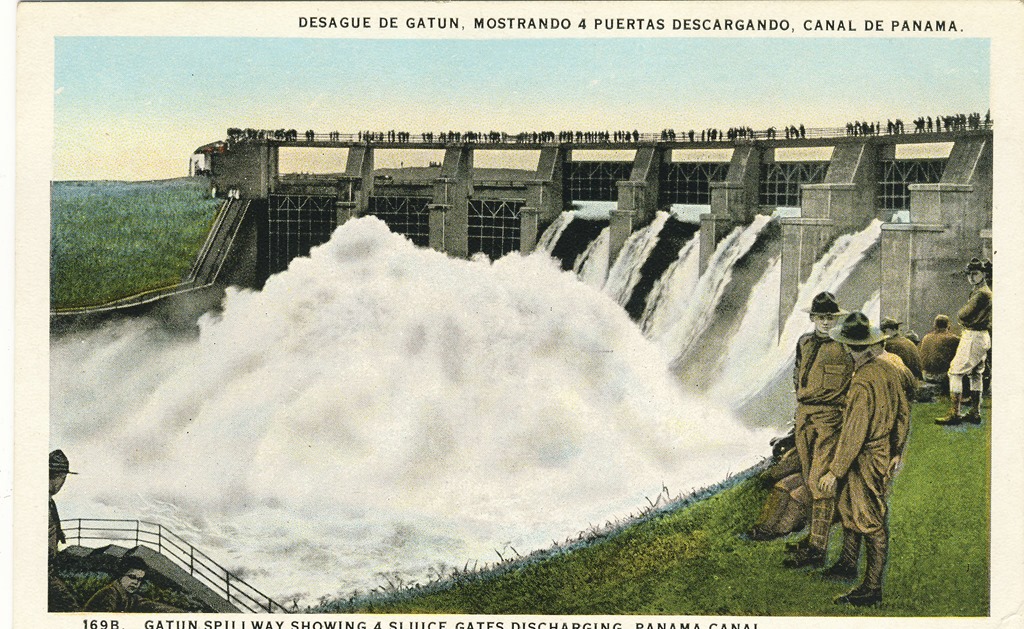
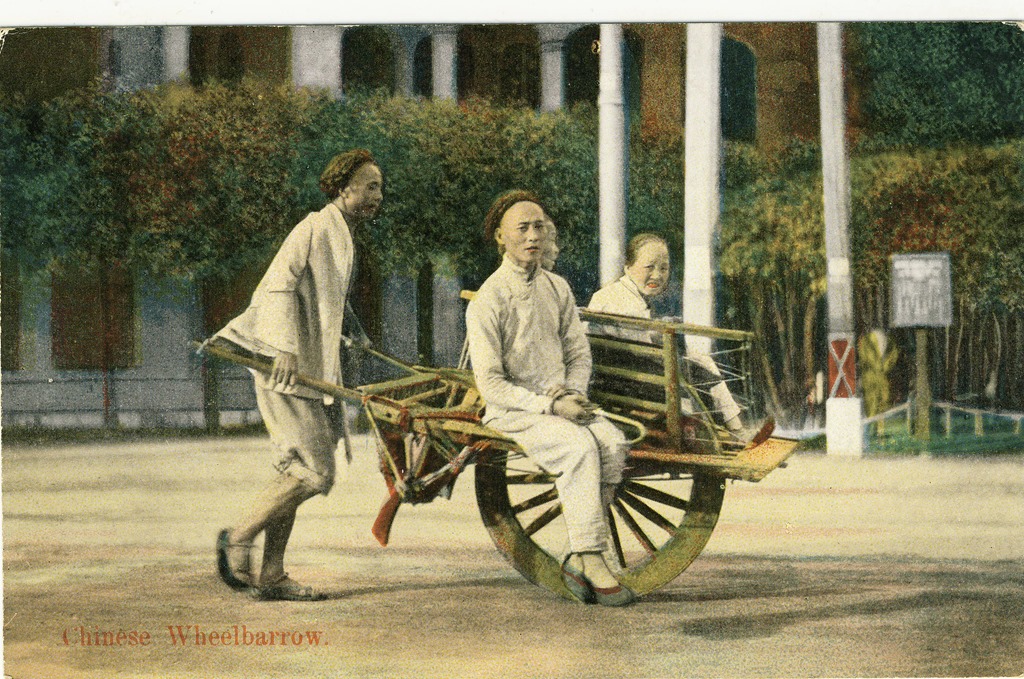
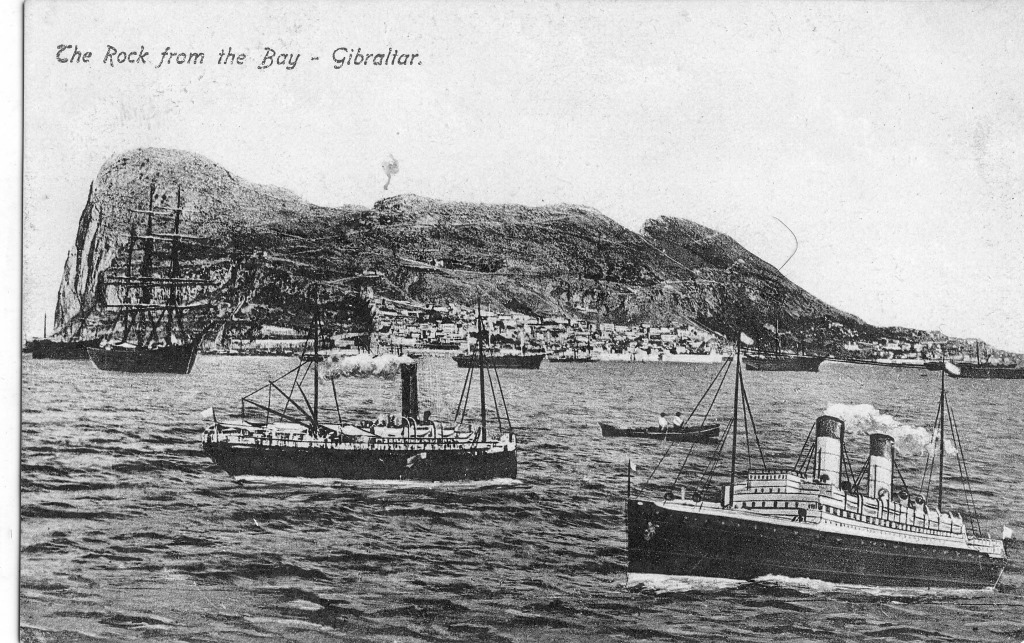
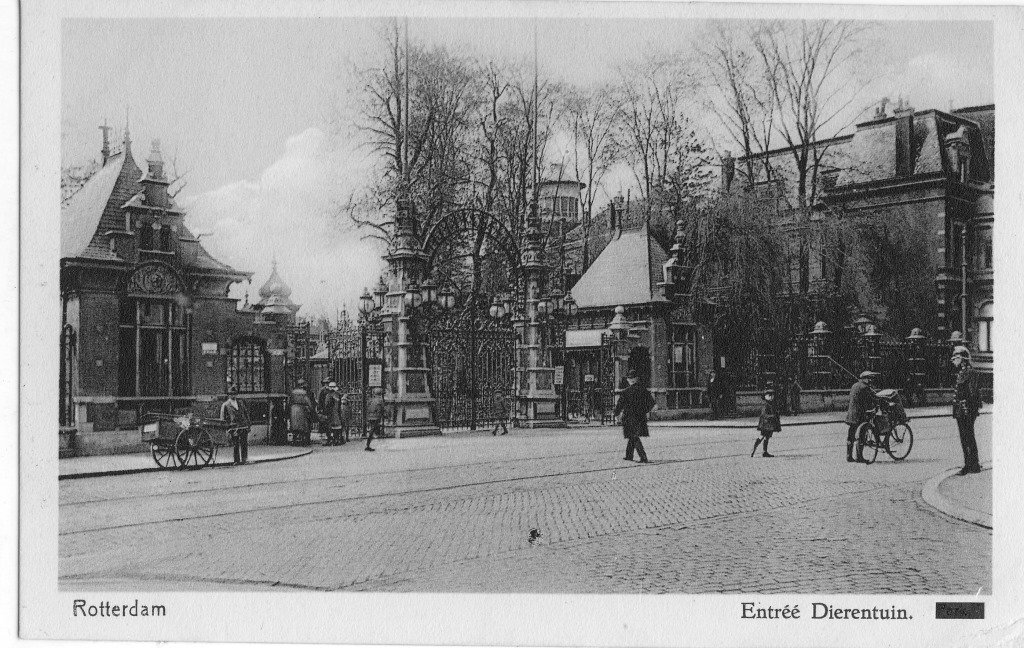
From there, the ship (and dad) visited Boston, New York, Newport, Panama, Honolulu, Yokohama, Kobe, Shanghai, Hong Kong, Suez, Gibraltar and Rotterdam. Dad bought postcards when he had the chance. Some he would send home – usually to his younger brother, Doug – but others he kept for himself, to remind him of where he had been on this, and subsequent voyages. After his voyaging days were over, he put them in an album where they’ve been ever since. They are a wonderful record of places and peoples that in many cases have changed beyond recognition or even vanished completely.

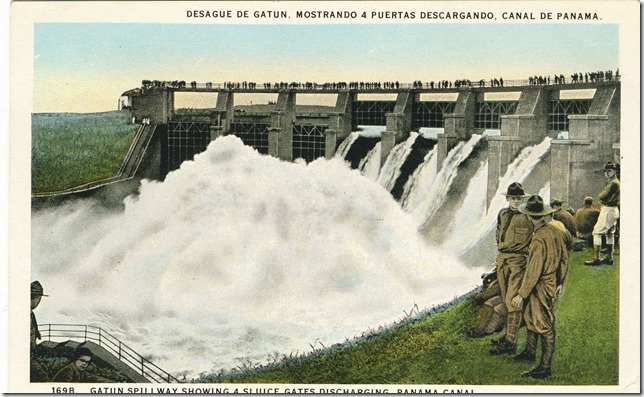

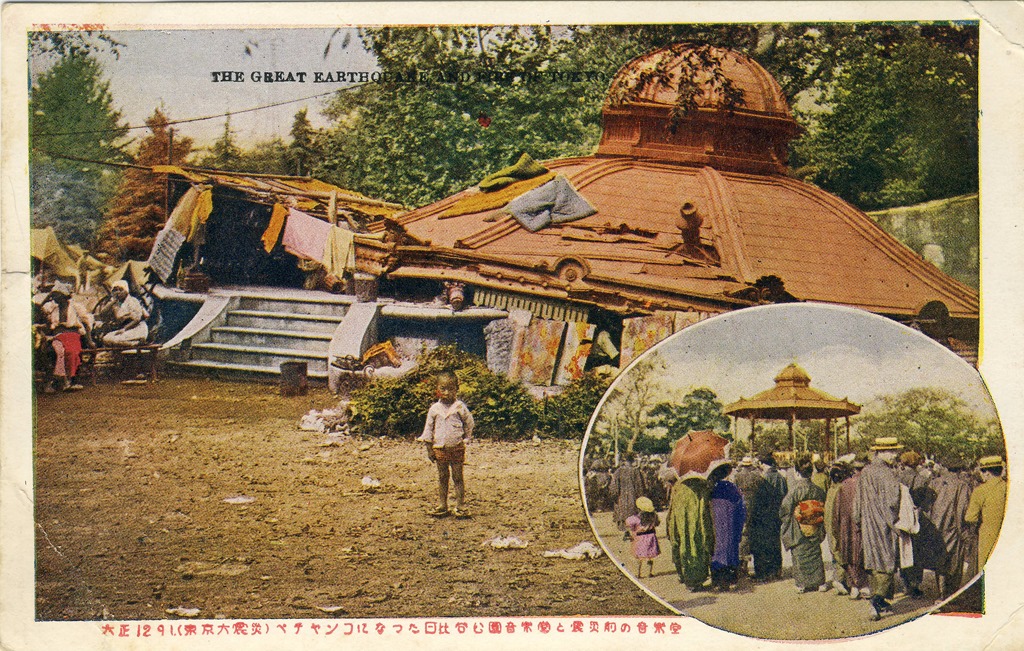
Dad wrote of Yokohama:
The massive destruction of the town by the earthquake in 1923 was there to be seen, and I will always remember the forts at the entrance to the harbour and the large blocks of concrete tossed higgledy-piggledy about.





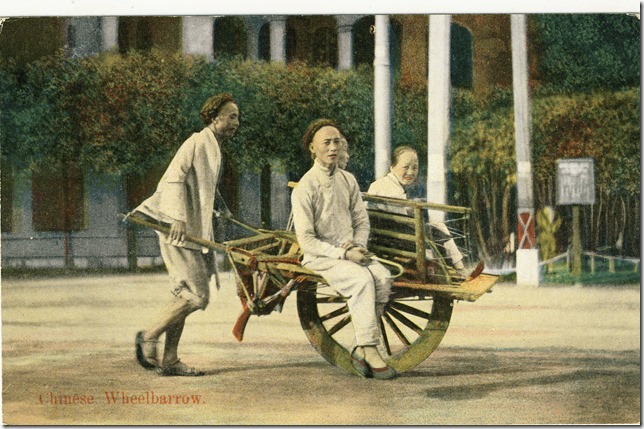
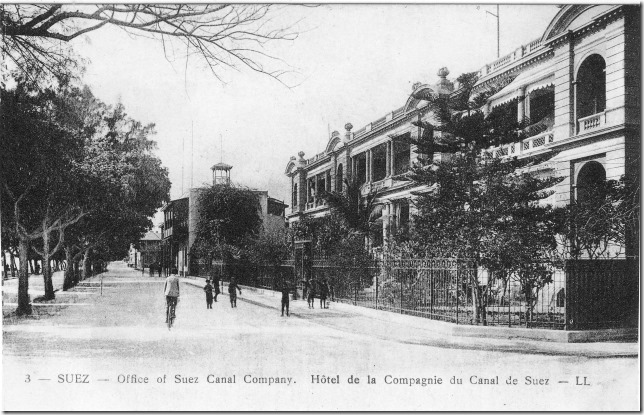
I love the fact that the publisher of this postcard has pasted in, not very convincingly, some ships in the foreground…
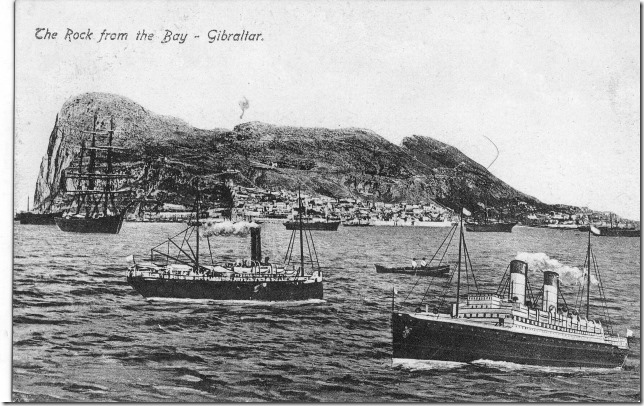
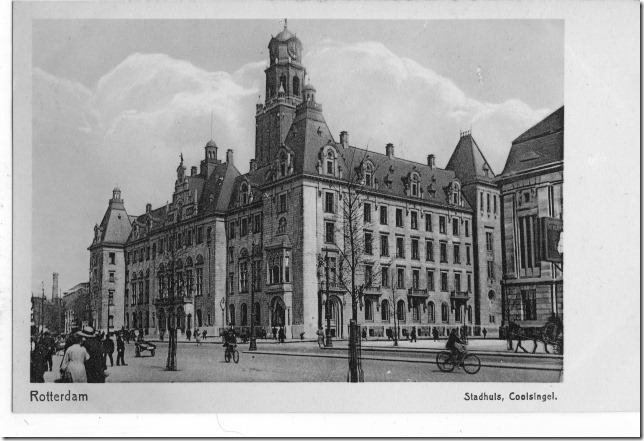
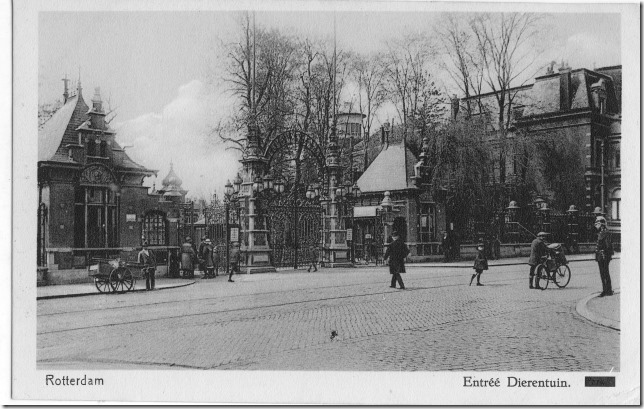
This is just a small selection of about 250 postcards. I think I’ll post a few more illustrating the places he visited in other voyages another time.
-
What Makes Altruism Good?
A very interesting and thought-provoking post by the Barefoot Bum. Go read.







 Geoff Coupe's Blog