Reflections on life at “De Witte Wand”…

Year: 2014

  • Pride

    There’s a new film coming out (if you’ll pardon the pun): Pride. It tells the true story of a group of lesbians and gay men from London who went deep into the Welsh valleys to support the miners during the dark days of the miners’ strike in the mid-1980s.

    It looks as though it’s wonderful, and will take me back to remembering those times. There’s a good interview with actor Bill Nighy and writer Stephen Beresford here.

    Addendum: Mark Simpson has a terrific post about the film and his recollections of being involved with the LGSM group. Shake that bucket!

  • A Romp With Robin

    Just finished watching the Doctor Who episode: Robot of Sherwood. My, that was fun! Mark Gatiss writing at the top of his form, with lots of jokes and a serious question of what it means to be a hero. Peter Capaldi, Jenna Coleman. Tom Riley, et al, delivered in spades. A terrific episode, despite the hasty re-editing to remove a beheading.

    Loved it, from beginning to end. Capaldi is going to be one of the great Doctors, mark my words.

  • Nailed?

    Regular readers of this blog will know that I’ve been looking at the specifications of the Lenovo ThinkPad 10 (the TP10) and the Microsoft Surface Pro 3 (the SP3) tablets, and trying to decide which of them is the best fit with my needs and usage. It’s been a bit of a saga, beginning back in May, with the announcement of the SP3 by Microsoft. I thought that the specifications of the SP3, whilst impressive in some respects, had some surprising omissions. I concluded that I would probably give the SP3 a miss.

    I revisited the topic in June, once TP10 models were becoming available, and pricing details were known. At that point, despite the SP3’s negatives, the SP3 model that I was most interested in (with the Intel Core i3 processor) was only slightly more expensive  (€15) than the closest equivalent TP10 available at that time, with its smaller display and less powerful processor. However, my decision was still not clear-cut, so I returned once more to the topic in July when I compared both the TP10 and the SP3 to my current tablet, the Lenovo Thinkpad Tablet 2 (the TPT2).

    I’ve had the TPT2 since January 2013, and it has served me very well. Things were becoming clearer by July 2014, as a result of both the TP10 and the SP3 getting in the hands of customers, and them posting their experiences and issues in community forums. In recent weeks, the TP10 has started appearing in Lenovo’s online web stores around the world. Interestingly, the models offered include versions with Windows 8.1 with Bing, a lower-priced alternative to those offered with Windows 8.1 Pro (which have, up until now, been the only versions available here in the Netherlands). I don’t need the additional features of Windows 8.1 Pro in my tablet, so that gives me an immediate saving of €130.

    That means that a TP10 with 4GB RAM, 64GB storage and no WWAN (i.e. the closest equivalent to the Core i3 version of the SP3) is €620 versus the SP3’s €819. I have to say that while the SP3 is an impressive engineering feat by Microsoft, the design has just too many compromises for me:

    • The rear camera is a low-resolution, fixed-focus device, which can’t be used for scanning documents, and which does not support the Panorama feature in Microsoft’s Camera App (despite Microsoft’s SP3 User Guide falsely claiming that it can). Addendum: The Panorama feature is now working, thanks to a software update released in September 2014. However, no software update will be able to compensate for the fixed-focus camera…
    • There are too many complaints that the WiFi capability does not work properly. Microsoft has admitted that there is an issue, and is working on a fix, but that is not yet available, with no estimate on when it will arrive.
    • In addition to the WiFi connectivity issue, there is also evidence that WiFi performance is poor under certain circumstances.
    • There is no GPS chip in the SP3. Personally, I think that every tablet should have one by default. Location via WiFi triangulation is not sufficient outside of built-up areas.
    • The SP3 is very difficult to repair (that IFIXIT teardown is hilarious, and well worth reading). If something goes wrong, the SP3 really needs to be thrown away and replaced. That doesn’t help my hankering to improve my green credentials.
    • And the big one: the SP3 is not fanless. It uses the Haswell generation of Intel’s Core processors, and their thermal output requires fan-assisted cooling for the most part.

    On that last point, it is true that Intel has now managed to produce a version of the Haswell chip that can be used in fanless tablet designs, but it’s clear that the SP3 was designed around the mainstream Haswell chips, and that means a fan is a necessity. All eyes are now turning to Intel’s next generation of chips, code-named Broadwell, and now becoming available under the moniker of Core M. These really do promise to deliver a full x86 platform as well as the performance beyond that of a smartphone or an Intel Atom-powered tablet (e.g. the TP10) in fanless designs. The first Core M-based fanless tablets/convertibles have already been announced by Lenovo (a new Helix model) and HP. They are both larger than the 10.1” form factor of the TP10 (possibly because the Core M chips are physically larger than the current Intel Atom chips?), so it’s quite possible that smaller tablets will continue with Atom-based designs. However, it seems almost a certainty that Microsoft must be at least thinking about a fanless SP4 having the same form factor and size as the current SP3, and such a design would be based around Core M.

    To sum up. Now that a wider range of TP10 models are available here in the Netherlands, I could get a TP10 (faster, with a better display, and twice the RAM) to replace my existing TPT2 for €620. I definitely won’t be going for the SP3 (at €819) – too many compromises and issues for me. I could also equally continue using my TPT2 quite happily and wait to see what an SP4 has to offer. There’s no rush.

    Addendum: I have a TP10 on loan!

  • Praise Indeed

    David Mitchell’s new book The Bone Clocks is published today. I was knocked out by his Cloud Atlas and by The Thousand Autumns of Jacob de Zoet, so I’m looking forward to reading the new book with great anticipation. I went down to the local village bookshop last week and ordered my copy.

    Today’s Guardian has a review of the book by another writer whom I admire without reservation and trust absolutely – Ursula le Guin. She likes it, so I’m sure I will too.

  • Photo Metadata – Software for Rights Test

    The standards organisation IPTC has just published the results of a test of commonly available software to find out how effective different tools are in writing, editing and reading rights data in an image.

    I’m pleased to see that Photo Supreme, the software I use for managing my photos, has come out well.

  • Step Away, Professor Dawkins, Step Away…

    One of the reasons why I refuse to use Twitter is because it is impossible to have nuanced conversation and argument in a straitjacket of 140 characters. However, as the saying goes, fools rush in, where angels fear to tread

    And so it is with Richard Dawkins, who in response to someone who tweeted:

    I honestly don’t know what I would do if I were pregnant with a kid with Down Syndrome. Real ethical dilemma.

    responded with

    Abort it and try again. It would be immoral to bring it into the world if you have the choice.

    Oh god; *facepalm*. Talk about a hostage to fortune. Ophelia references a discussion between Michael Bérubé (whose son, Jamie, has Down Syndrome) and the moral philosopher Peter Singer. It’s worth reading.  Dawkins, it should be noted is a scientist, not an ethicist or moral philosopher.

    Professor Dawkins has a history of opening his mouth to change feet when he uses Twitter. Personally, I think he should stop using it. It’s an embarrassment to all concerned.

  • “ISIS is a Zionist Plot”

    There’s a small disturbance in the Force here in the Netherlands at the moment. A civil servant, working for the Ministry of Security and Justice as a Project Leader for the National Cyber Security Centre, just so happened to tweet (and I paraphrase) that

    “the terror group ISIS does not exist and it is all a Zionist plot to defame Islam”.

    Yasmina Haifa, for it was she, has since deleted the tweet, claiming that she belatedly realised the political sensitivity in relation to her work (no, really?), but apparently stands by what she says, claiming, in a radio interview that

    “Apparently freedom of speech in the Netherlands applies to particular groups and not to others”.

    Not surprisingly, she has been sacked suspended from her job. However, she claims to have had no idea that her comments would cause such a fuss, saying in the radio interview that she

    “…assumed I was living in a democratic country”.

    Yes, Ms. Haifi, you are living in a democratic country. And freedom of speech does not absolve you from freedom from responsibility.

    She appears to be either disingenuous or ignorant. Either way, she does not seem fit to hold the position of Project Leader at the National Cyber Security Centre.

  • I Wish…

    …that the upcoming Disney version of Stephen Sondheim’s Into the Woods will do justice to the material.

    The first teaser trailer for the film of Into the Woods has been released, and it’s notable that there ain’t no singing in it, even though it’s a Sondheim Musical. Apparently the filmmakers have also taken out a couple of the songs and changed the plot. All of which leaves me hoping that they haven’t wrecked one of Sondheim’s best works. At least I saw the stage production of Into the Woods when it played in London back in 1990, and I have the DVD of the American Playhouse production of the work to remind me of how good it could be.

  • This Land is Mine Redux

    A couple of years back, I blogged about Nina Paley’s short animation: This Land is Mine. Two years on, and nothing seems to have changed in that part of the world. The only winner, as Nina pointed out, is the Angel of Death.

  • MH17 & Dutch Pragmatism

    It’s shocking news about the loss of flight MH17. All the more so because 298 civilians appear to have been killed in a conflict that has nothing whatsoever to do with them. And all because some trigger-happy Ukrainian rebels, armed by the Russians with surface-to-air missiles, appear to have mistaken a passenger airliner, flying above 32,000 feet on an established route over Ukrainian air-space, for a Ukrainian military transport plane.

    It’s a route and flight that was well-known to me during my last years working for Shell. We were setting up a data centre in Kuala Lumpur, and many of my colleagues, of many nationalities, would be travelling back and forth between Shell’s head office in The Hague and KL. I myself flew that route on a couple of occasions. It would not surprise me in the least to learn that at least one Shell employee, working in IT, was on that flight.

    This article in today’s Guardian points up the phenomenon of Dutch pragmatism. Dutch passengers checking in at Schiphol today seem to be of the opinion that the downing of flight MH17 was an isolated incident, and unlikely to happen ever again. They are right, but that’s probably of little comfort to those who have lost family, friends or colleagues in this tragic event.

  • Horse Driving Trials

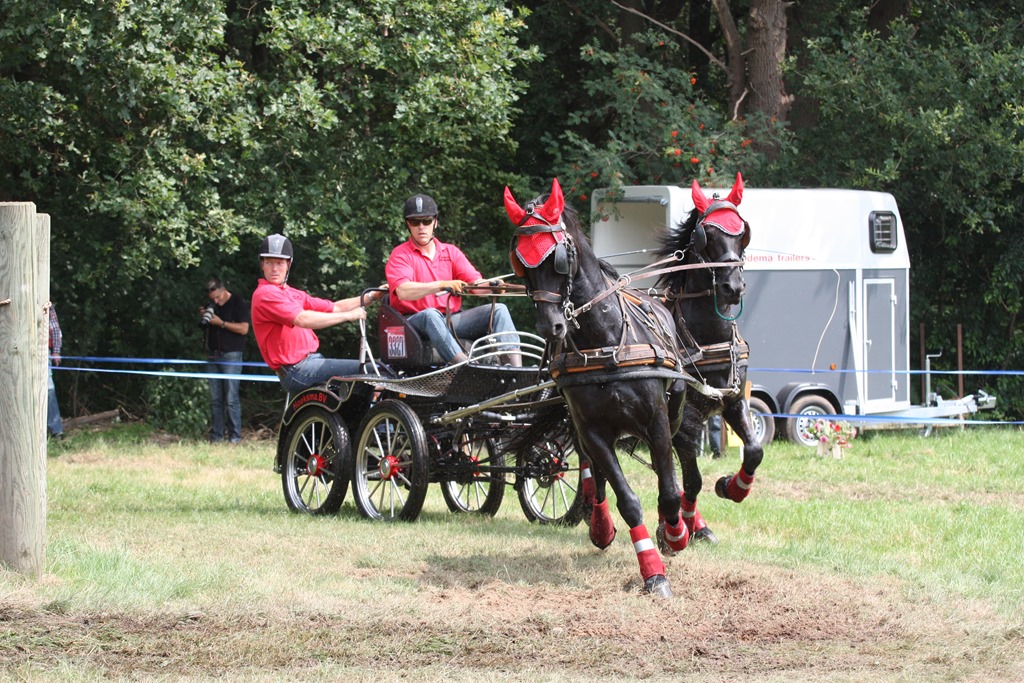
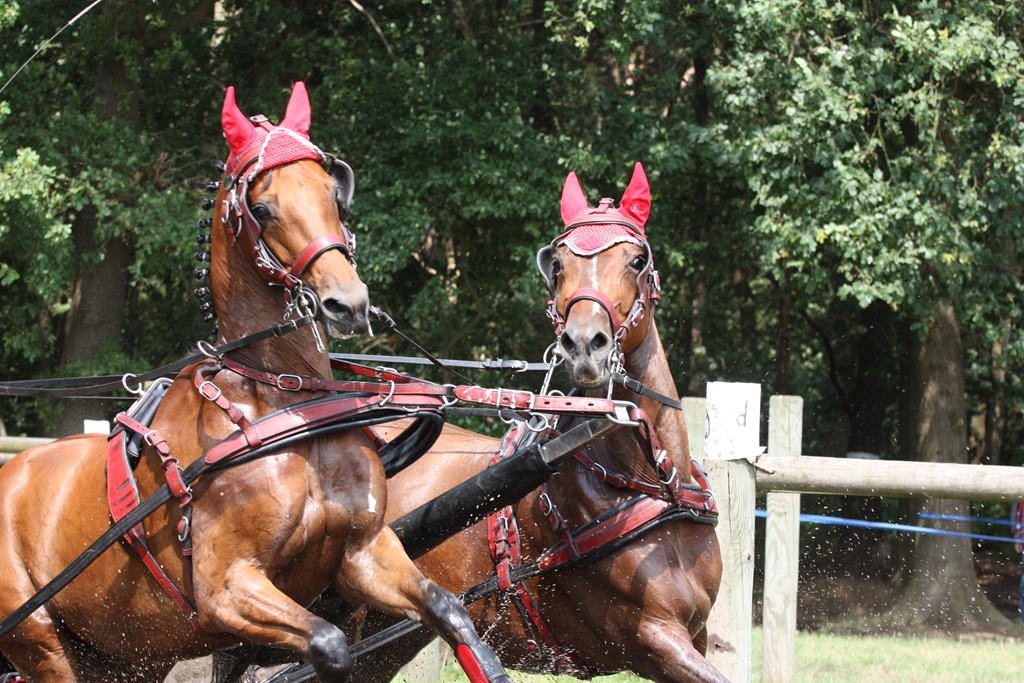
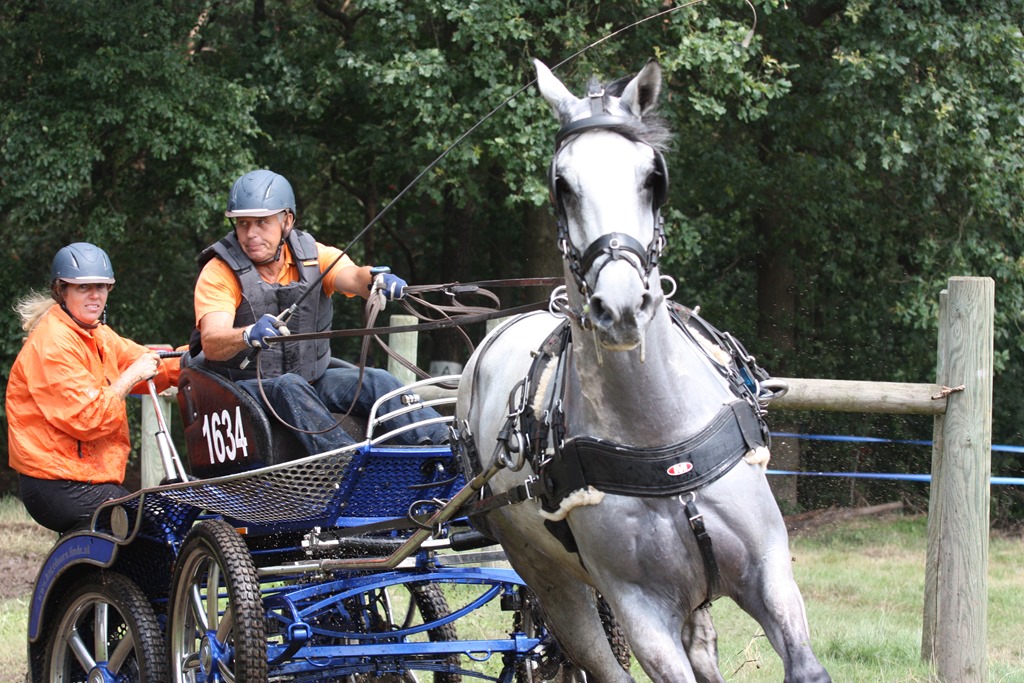
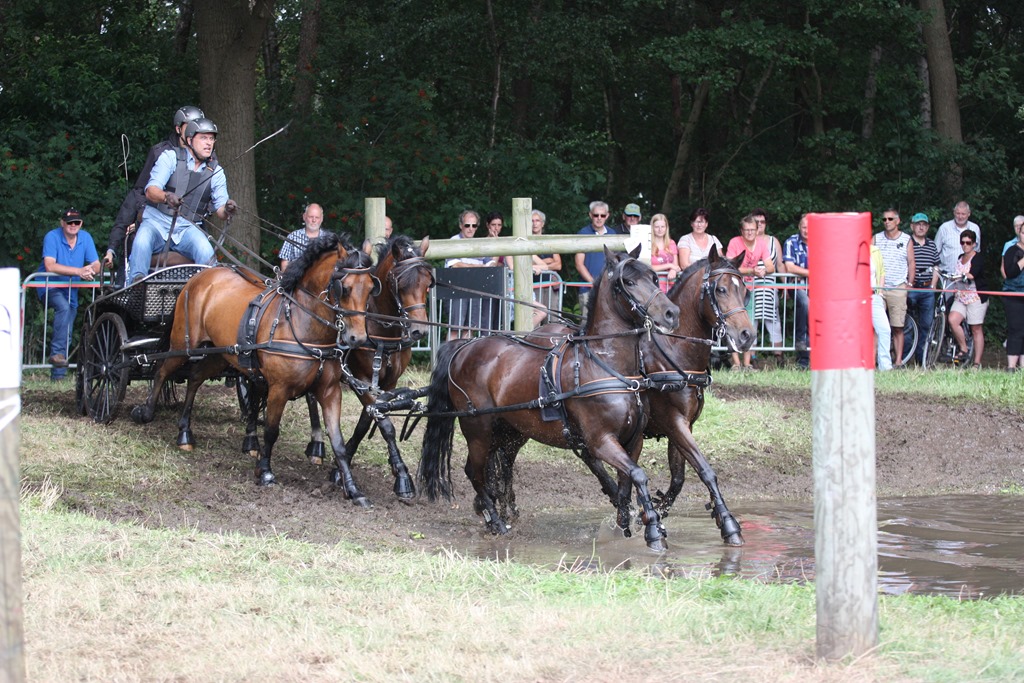
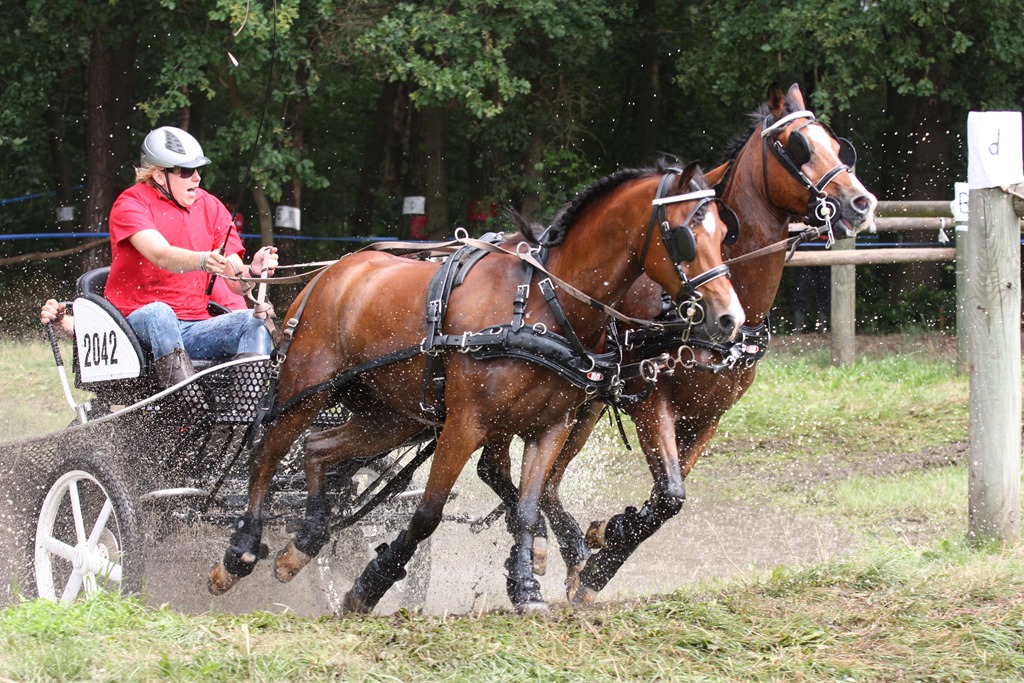
    The local horse and carriage club held its annual horse driving trials (samengestelde menwenstrijd in Dutch) last weekend. On the Sunday, the Marathon was held, and I went along to take photographs at one of the sets of obstacles near our house. The full set of my photos is up on Flickr, but here’s a taster:

    20140713-1135-13

    20140713-1304-12(001)

    20140713-1513-27

    20140713-1353-39(001)

    20140713-1205-30

  • Taking The Kids For A Spin

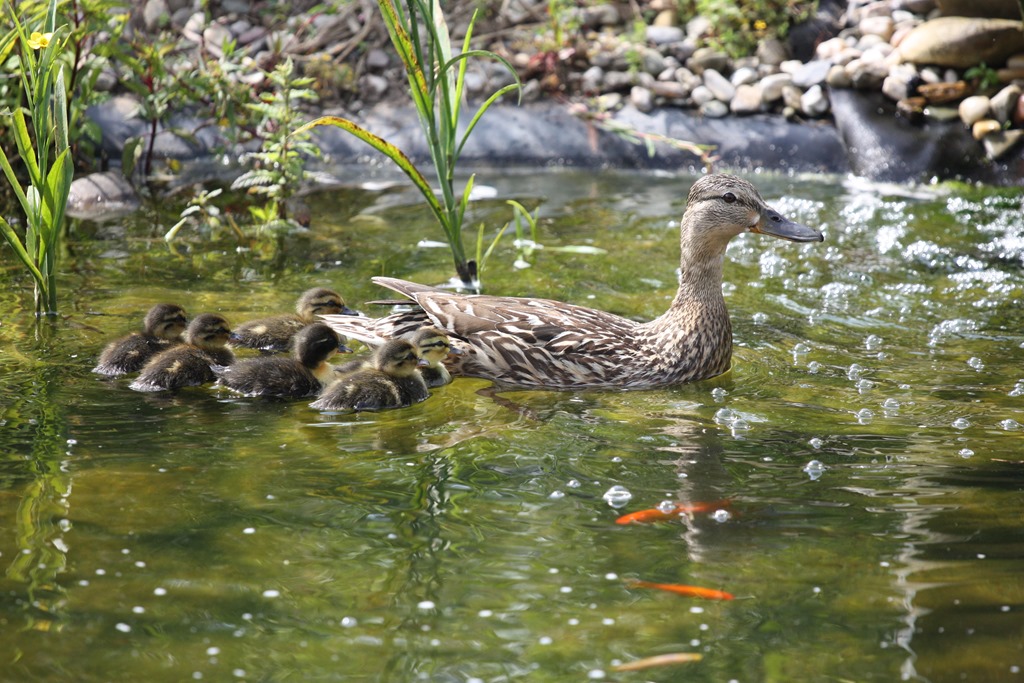
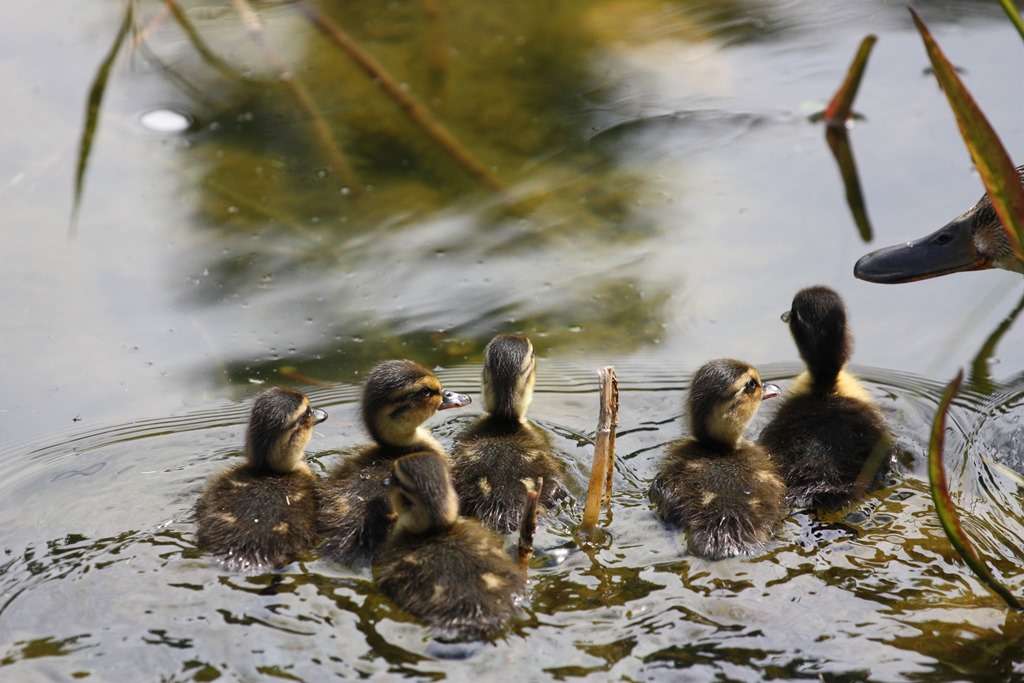
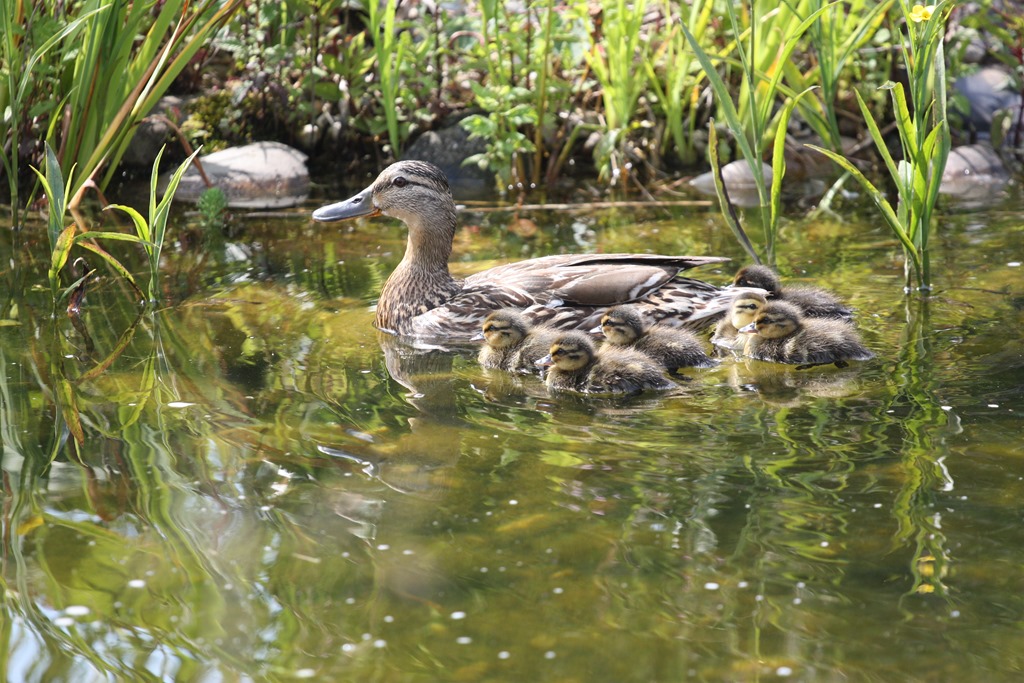
    I’m not sure whether it’s the same duck, but a mallard attempts to nest in the shrubs by our pond every year. It’s mostly unsuccessful – last year the nest was abandoned, and earlier this year, something (a marauding crow?) took the eggs. However, this year, the mallard had a second attempt and has hatched six ducklings. The first we were aware of this was a couple of days ago, when she took them out for a spin on the pond.  Until then, we hadn’t realised that she had returned to the nest and had been brooding a second batch of eggs. She and the ducklings now seem to spend most of the time in the nest hidden in the shrub. Just as well, otherwise our dog Watson would be disturbing them.

    20140703-1106-35

    20140703-1106-09(001)

    20140703-1106-12

    20140703-1106-53

  • Noctilucent Clouds

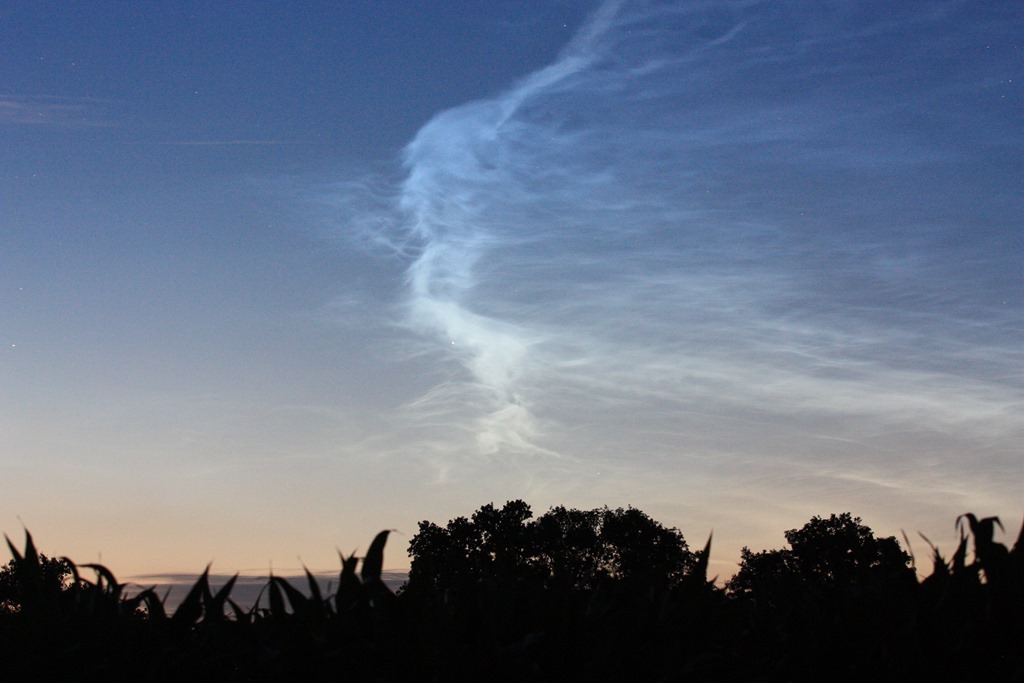
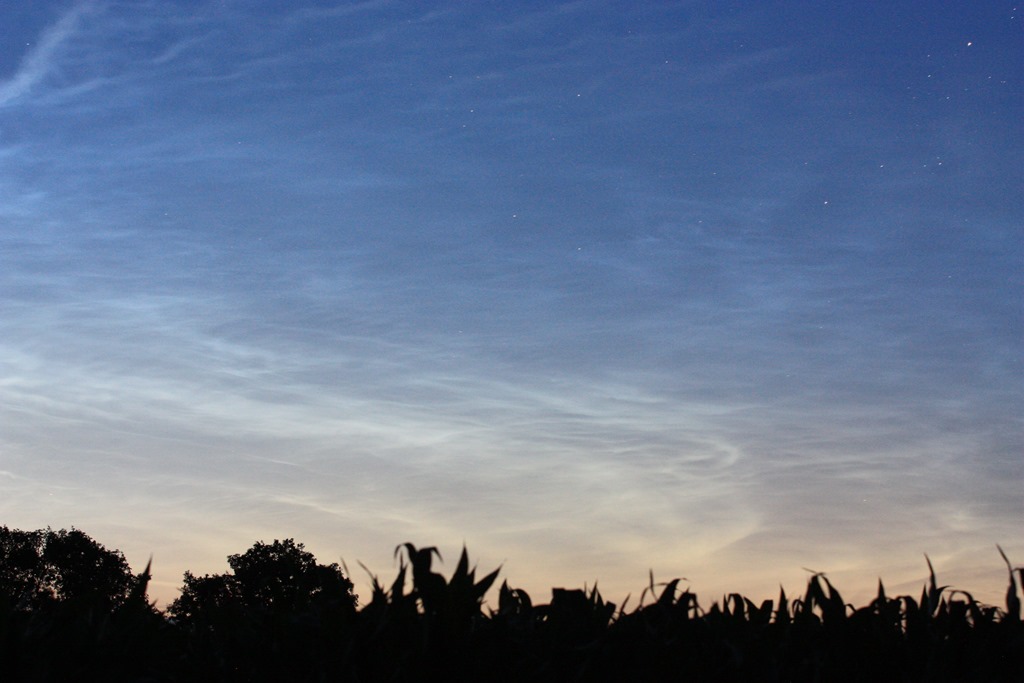
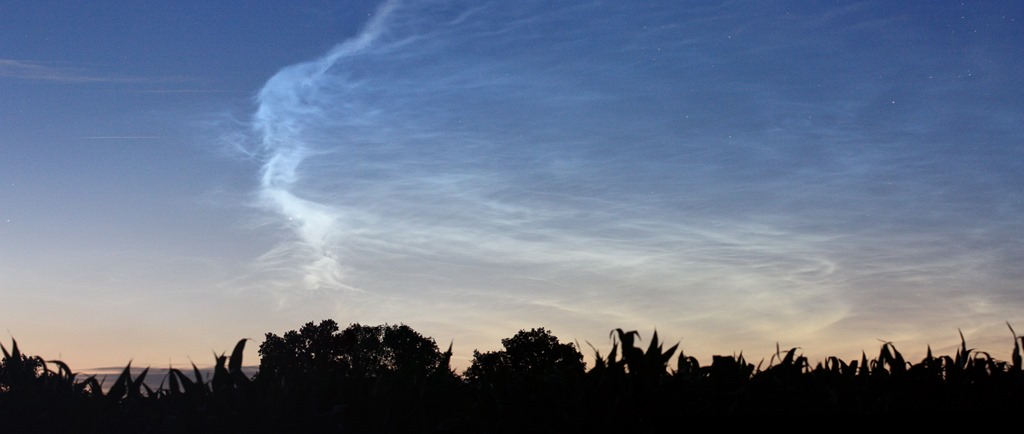
    When I took the dogs out last night at 11pm, I noticed that there were noctilucent clouds showing up above the Northern horizon. I dashed back and grabbed the camera for a couple of shots before they faded from view:

    20140703-2340-24

    20140703-2341-12

    20140703-2340-57 Stitch

    These are time exposures of ten seconds, so the sky appears brighter than in fact it was (you can also see some stars). This is the first time that I’ve ever been aware that I was looking at this particular meteorological phenomenon. 

  • Still Trying To Nail It

    For the past three weeks, I’ve been trying to nail what my next Windows Tablet will be. And I still can’t decide between the Lenovo ThinkPad 10 (TP10) or the Microsoft Surface Pro 3 (the Core i3 model). I keep going back and forth trying to look at the pros and cons of both tablets in an effort to choose. To be honest, it’s a bit of a Luxury Problem, because my current tablet – a Lenovo ThinkPad Tablet 2 (TPT2) – is still serving me well after 18 months of use. Overall, I’ve been very pleased with the TPT2, but the siren call of new technology is singing to me, and I’m finding it difficult to resist. So I thought I’d use this post to compare all three tablets with each other, and see if that helps sharpen up the pros and cons as I see them.

    Dimensions
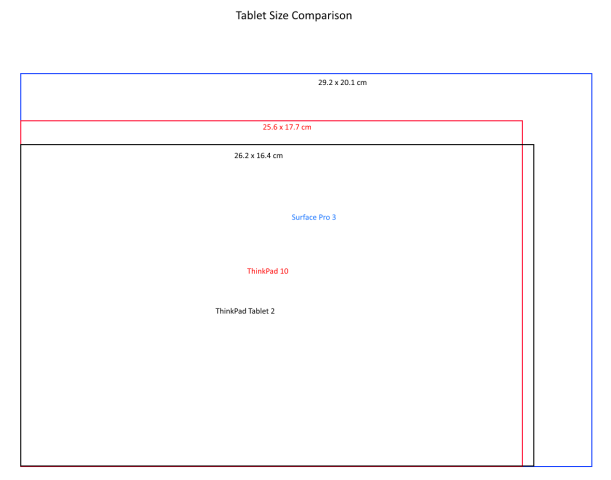
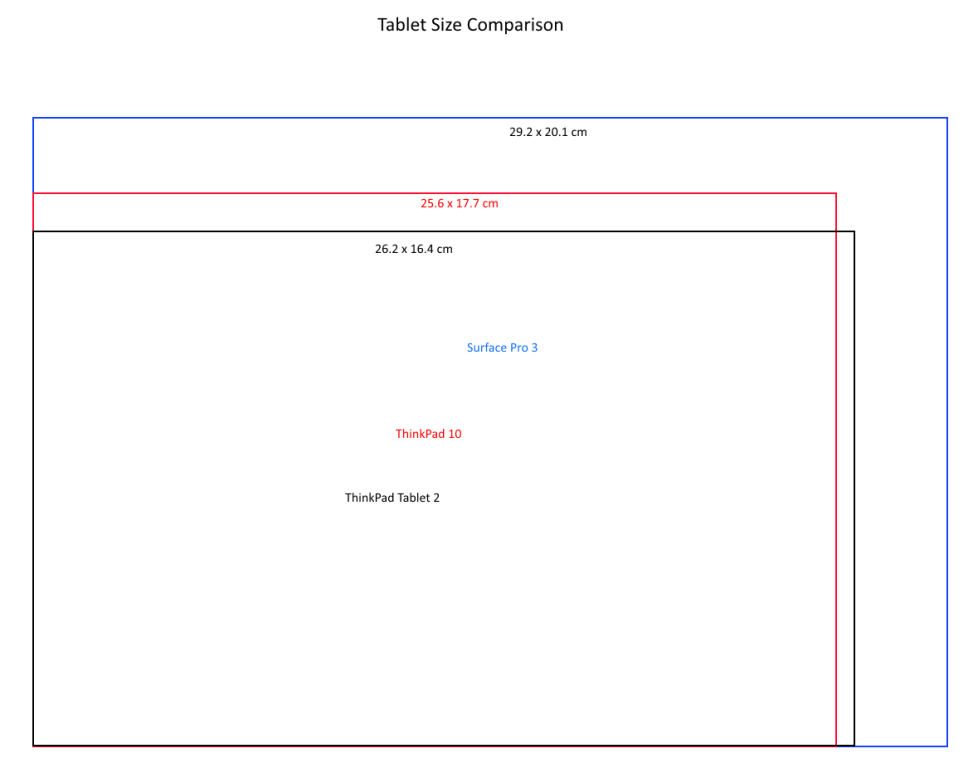
    Tablet Size Comparison The Surface Pro 3 (SP3) is the biggest and heaviest (at 800 gm.) tablet of the three. The TP10 is roughly the same size and weight (610 – 600 gm., depending on whether it has WWAN or not) as my TPT2 (610 gm.), but has a slightly different aspect ratio. Whilst I haven’t had an opportunity to compare all three side by side in real life (and won’t until September, here in the Netherlands); reading the forums where these are discussed, I worry a little that the SP3 may be just a little too big and unwieldy as a tablet. The TP10, particularly with that changed aspect ratio, may be, as Goldilocks found, “just right”.

    Screen Resolution and Aspect Ratio

    The changed physical aspect ratio of the TP10 reflects the fact that the display screen ratio has also been changed: from 16:9 of the TPT2 to 16:10 of the TP10. It’s not just the ratio that has been changed, but also the resolution. The TPT2 has a screen resolution of just 1366 x 768 pixels, whereas the TP10 has 1920 x 1200. Now, I say “just”for the TPT2, but quite honestly, for the size of the device, the resolution is perfectly adequate. Nonetheless, the higher resolution of the TP10 is clearly an improvement, and the 16:10 aspect ratio even more so, as far as I’m concerned. So how does this compare with the SP3? It has to be said that the SP3 has the upper hand. Not only does it have a resolution of 2160 x 1440, this also gives it the best aspect ratio of 3:2. For reading books and documents in portrait mode, this is pretty close to what I want. The 16:10 ratio of the TP10 is in second place (with my trusty TPT2 coming in at third place with 16:9). However, if one compares reading quality, as expressed by pixel density, then in fact the TP10 comes first: it has a pixel density of  224.17 pixels per inch, while the SP3 has 216.33 pixels per inch. Obviously, the TPT2 comes third with 155.16 ppi. In summary, for me, the SP3 display is the front runner, but the TP10 is close behind.

    Performance

    On paper, there is no contest; the Core i3-based SP3 wipes the floor with both of the Atom-based ThinkPad tablets. Looking at the CPU Passmark benchmarks, then we have:

    • SP3: 2,278
    • TP10: 1,970
    • TPT2: 679

    The SP3 is over three times as fast as my TPT2. However, for my usage (Word, Excel, OneNote, Mail, Windows Live Writer, web browsing, playing media, Metro Apps), the TPT2 has proved perfectly adequate. Yes, extra power would be welcome on occasion; but essential? Not for what I use my tablet for. I understand that, for many people, more power is what they need. That’s not the case for me – at least not with my current usage patterns and scenarios. In summary then, the TP10 would give me a boost in power over the TPT2. The SP3 would give me a further boost in power over the TP10, but whether I really need it is a moot point. More likely, this would be gilding the lily.

    Fan Or No Fan?

    The biggest stumbling block for me is the fact that because the SP3 has more performance than the TP10, it requires a cooling fan. The TP10, like the TPT2 before it, is fanless. Personally, having experienced a tablet that is fanless (my TPT2), I really do not want to replace it with a tablet that has a fan. That would seem to be a huge step backwards as far as I’m concerned. Now I know that Microsoft claim that the fan in the SP3 is silent; but reading the forums, it’s clear that it is not. It’s true that at the moment all the real world experience is coming from people who have SP3 models that are fitted with the more powerful Core i5 processor. The Core i3 models (which should run cooler) won’t be available until next month. Nevertheless, it’s a concern. An additional point is that the SP3 is one of the first examples of an Intel Core-based tablet that uses InstantGo (formerly known as Connected Standby). Reading the forums, it is apparent that the bugs have not been fully ironed out. There are examples of people finding that their SP3 has turned itself on in their shoulder bags, with subsequent overheating. As a result, some people are posting ways to turn off InstantGo, which seems to me a pretty drastic course of action. My TPT2 has InstantGo, and, after some initial teething issues, solved by software updates, it now performs faultlessly, and I would not want to lose it. A fanless tablet, even if it did turn itself on in your shoulder bag, would only run the risk of unwanted battery drain, not meltdown. In summary, therefore, the fanless TP10 easily wins this round over the SP3.

    Pen Support

    All three devices (the TPT2, TP10 and the SP3) support active pens for accuracy and pressure sensitivity. The ThinkPads use Wacom technology, whereas the SP3 now uses N-Trig technology (earlier Surface Pro models also used Wacom). There are many heated discussions over which technology is superior, particularly amongst artists. However, since my purpose for wanting to have a pen is for simple notetaking and scribbled drawings, I will be happy with either. Both are far superior to the capacitive pens sold as accessories for iPads. The TPT2 came with a very thin pen that can be stored in the tablet itself. However, I tend to use a normal-sized Wacom pen when writing long screeds. The pens supplied with the TP10 and SP3 are of normal dimensions, which unfortunately means that they are too big to be stored in the thinner tablets. In this category, therefore there is nothing to choose between the TP10 and the SP3, as far as I am concerned.

    Cameras

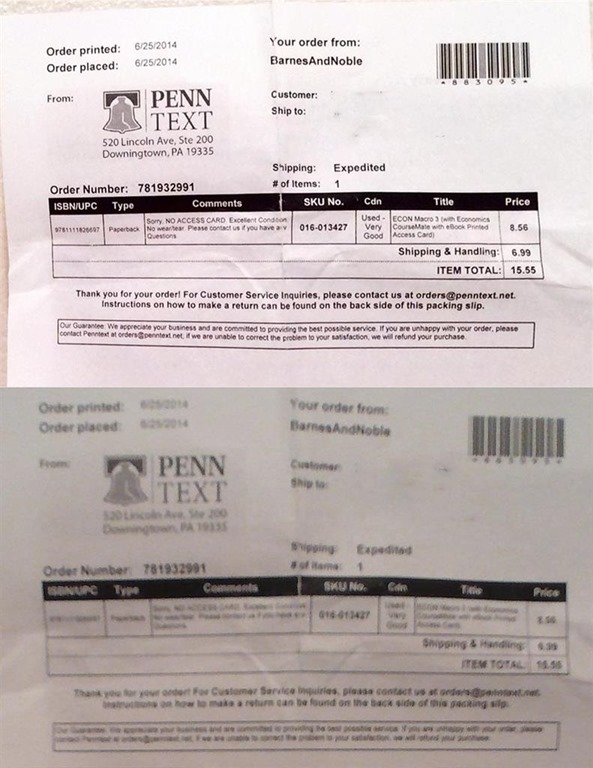
    I was very surprised to discover recently that the rear camera in the SP3 was a fixed-focus device, rather than auto-focus. A fixed-focus camera is very limited in what it can do. Photographing documents, and similar close-up work, will be difficult, if not impossible. When this was raised in forums, lots of people jumped in to say that they would never use their tablet for making photos anyway, but always rely on their smartphones. While this is true (and my Nokia Lumia 1020 will knock the socks off any tablet camera), it does rather seem to miss a fundamental point. Microsoft are presenting the SP3 as a premium device for professionals. If Microsoft want the SP3 to be bought in large numbers by organisations, then it has to be a serious platform for Line-of-Business applications. Many such applications, these days, will want to include photos captured by the platform. For example, when the contractors arrived at our house to install and commission the solar panels and electric inverter, the team leader had an iPad with a LoB application. It contained the work order details. Once the installation was commissioned, he used the iPad camera to photograph the serial number barcode of the inverter, and the serial number was used to activate the monitoring system in the cloud. He also photographed my paper copy of the work order, now complete with my signature, and the electronic copy was added into the business process application. The iPad has an auto-focus camera, and can be used in these sorts of applications. The SP3’s fixed focus camera can’t. Here’s an example (taken from a post on the Microsoft Surface forum) of the same document photographed by an iPad (auto-focus) and the SP3 (fixed-focus) cameras: iPad and SP3 Camera Comparison I’m sorry, but Microsoft should be ashamed of this. A common use of tablets in the field is with insurance adjusters. They will inspect a loss, taking a number of photographs along the way, notate the damage on them with a pen by circling the damage and email the pictures to the claims handler with their recommendations. The Adjusters need to take long shots and close ups (hat-tip to Bronsky for this example). The SP3 cannot be used in this scenario. My old TPT2, and the TP10, can. They both have auto-focus lenses capable of taking close-ups and wide-angle shots. Once again, Microsoft snatches defeat from the jaws of victory. As I said, most of the time I will use my Nokia 1020 for taking photos, but in practice, both my TPT2 and the TP10 cameras will far surpass the toy camera that Microsoft has put in the SP3. So, while I could live with the camera that the SP3 has, it certainly tarnishes the “premium” moniker that Microsoft would have us believe that the SP3 carries.
    Sensors

    Smartphones and tablets are equipped with a range of sensors these days, whilst laptops are not. The TPT2, TP10 and the SP3 all have a gyroscope, accelerometer, magnetometer and an ambient light sensor. In addition, however, the TPT2 has a GNSS sensor, which can provide GPS positioning data to the Windows 8.1 Location Service. At this point, it’s not clear whether the TP10 includes the same sensor. Lenovo’s documentation implies that all models of the TP10 have it, yet Lisa Gade found in her review of the TP10 that the model under test did not include GNSS capability. I’ve asked Lenovo if they can clarify the issue. One thing is clear, though, the SP3 does not have a GNSS sensor. And again, I find this strange, given that the SP3 is supposed to be a premium device for professionals. Microsoft state in the SP3 specifications that it has a “digital compass” for its Location Service. Do they take us for fools? A compass is not sufficient to provide accurate position data. In this category, therefore, the TPT2 is currently out in front, but if it is confirmed that the TP10 also has a GNSS sensor, then it will join the TPT2, and the SP3 will be in third place. [Addendum: Lenovo has confirmed to me that all models of the TP10 have a Broadcom 4752 GPS chip in them to provide GNSS data] Is a GNSS sensor essential for me? Honestly, no, but it is very nice to have. A number of the apps that I use require accurate position data (e.g. mapping, navigation and astronomy apps), and while I could provide this via a bluetooth GPS device to the SP3 (and the TP10, if necessary), it’s very convenient to have this built into the tablet directly.

    Networking

    All three devices support WiFi and Bluetooth 4.0 networks. The SP3 also supports the newest, fastest variant of WiFi: 802.11 ac in addition to the 802.11 a/b/g/n specifications. This puts the SP3 in front of the TPT2 and the TP10 in this respect. However, there are currently no models of the SP3 that are equipped with WWAN capability, whereas both the TPT2 and the TP10 have models equipped for mobile networking. Once again, just as for the camera quality, this could be an important differentiator for Business users. Is this a showstopper for me? No, it isn’t. Although my current TPT2 is equipped with WWAN, I very rarely use it, and on the occasions that I do, I could just as easily pair it with my Nokia 1020 to provide internet access to my tablet. The SP3 also does not have NFC, whilst some models of both the TPT2 and the TP10 do. This feature is more commonly found in Smartphones, but it could just take off in tablets as well. This is another “nice-to-have” feature as far as I’m concerned. Its absence is not a showstopper. Overall, therefore, given that I could live without WWAN capability, NFC, and do not need 802.11 ac speeds (or indeed have them in our home network), then there is nothing to choose between the SP3 or TP10 in this category.

    Summing Up

    I’ve tried to sum up using the table shown below. I haven’t assigned weightings to the categories, but if I did, then the dimensions/weight, display and noise categories would be the most important to me. You’ll notice that I have not got a battery life category. I’m assuming that both the SP3 and the TP10 would be sufficient for me.

    Category Front-runner
    Dimensions/Weight TP10
    Display SP3
    Performance TP10 (sufficient)
    Noise (fan) TP10 (fanless)
    Pen Support SP3 = TP10
    Cameras TP10
    Sensors SP3 = TP10
    Networking SP3 = TP10

    The one area where the SP3 clearly comes out on top is in the display category, because of its superior resolution and 3:2 aspect ratio. Whilst, on paper, the SP3 clearly wins in the performance category, the TP10 has sufficient performance for me, so I’ve put that first. The SP3’s superior performance also comes at a cost for me: that damn fan. In fact, I’m beginning to think that the whole case one way or another, balances around the question of the fan. If the Core i3 model of the SP3 can really minimise the use of the fan, and the problems with InstantGo resolved, then it becomes more attractive. Then the attention shifts to the dimensions and weight category. So it looks as though, at this point in the technology cycle, while the TP10 is a better fit with what I am looking for in a tablet, I must resist the temptation to pull the trigger until after some reports of the Core i3 model of the SP3 have been published, and I’ve had a chance to see, and heft, both the TP10 and SP3 in the flesh…

    Addendum

    I reached a decision (of sorts) on the 6th September 2014, and wrote a post on it. The bottom line:

    Now that a wider range of TP10 models are available here in the Netherlands, I could get a TP10 (faster, with a better display, and twice the RAM) to replace my existing TPT2 for €620. I definitely won’t be going for the SP3 (at €819) – too many compromises and issues for me. I could also equally continue using my TPT2 quite happily and wait to see what an SP4 has to offer. There’s no rush.

  • Seeing the Future

    I was pulled up short today by the caption under the photo in this Guardian piece:

    “Xeno, an interactive monster with pullout snot, farting capability and 40 different expressions”.

    God, that will be me in not more than 20 years…

    And with that name, won’t the Church of Scientology be seriously thinking of reaching for their lawsuits?

  • British Bureaucracy Strikes Again

    A few days after I wrote about my brush with British Bureaucracy, it’s happened again. This time it’s with the UK’s Passport Office.

    My UK passport is due for renewal. The last time I did this, I just trotted along to the British Consulate in Amsterdam with all the necessary forms and photos, together with my old passport, and got my new one sent to me within the week.

    Now I discover that, for reasons of efficiency, no British consulates do this anymore. Passport renewal has to be done through a central passport office based in the UK. As a result, there’s now a huge backlog of nearly half a million applications waiting to be processed. Efficient? I think not. Naturally, there are long delays in turnaround times.

    I went online to fill out the passport renewal form and discovered that not only do I have to send in my old passport, I also have to submit any other passports that I hold. Send in my Dutch passport, only to have it languish in an office somewhere for months until they get round to dealing with my application? I don’t think so. I know what will happen – I’ll have a family emergency with my brother in Scotland, and be unable to travel because I would be without a passport.

    So I completed the form just giving the details of my UK passport and handed over my credit card details. At that point, you’re issued with a further form that you have to print out and fill in, and send off together with your supporting documentation and current passport.

    I notice on this form, it softens the requirement slightly. It says, for non-British passports:

    “We strongly prefer to receive the passport. However, in exceptional circumstances where you may need to retain the passport, we will accept a full colour photocopy of the entire passport (including all visa pages). We reserve the right to request the passport at a later stage as we examine your application. Please provide an explanation as to why you need to retain your passport.”

    So that’s what I did – sent them a copy, and giving them the following reasons:

    1. My brother lives in Scotland. He is 79 years old and has recently suffered a heart attack.
    2. The UK has opted-out from the Schengen Agreement, thus I need to produce my passport upon entry to Scotland.
    3. I understand that the Passport Office currently has a large backlog of applications, and there are long delays in the processing of applications.
    4. There is therefore an increased risk that if another family emergency arises, I would be unable to travel to Scotland at short notice. This risk is unacceptable to me.

    I have therefore enclosed a colour photocopy of my complete Dutch Passport, as required, together with a certified copy of the main page signed by a Dutch Notary. I trust that this will be sufficient to allow the processing of my British Passport renewal to proceed.

    We will see.

    Postscript: My new passport arrived today (21st July), five weeks after the old one was sent in. The Passport Office returned my old, now cancelled passport, and kept the certified copy of my Dutch passport. For some reason, they sent two separate packages by courier: one containing my new passport, and one containing my cancelled passport. I fail to see how this could be claimed to be more efficient; it was certainly more expensive than a single package containing both documents would have been…

  • On the Wrong Side of the Track – Both Sides!

    We live in the so-called Achterhoek region of the Netherlands – the name literally means “back corner”. It’s predominantly farmland and countryside, and tourism is, after farming, the major industry. Many Dutch people living in the densely populated Randstad come here on holiday seeking a bit of peace and quiet, and some, like us, retire here.

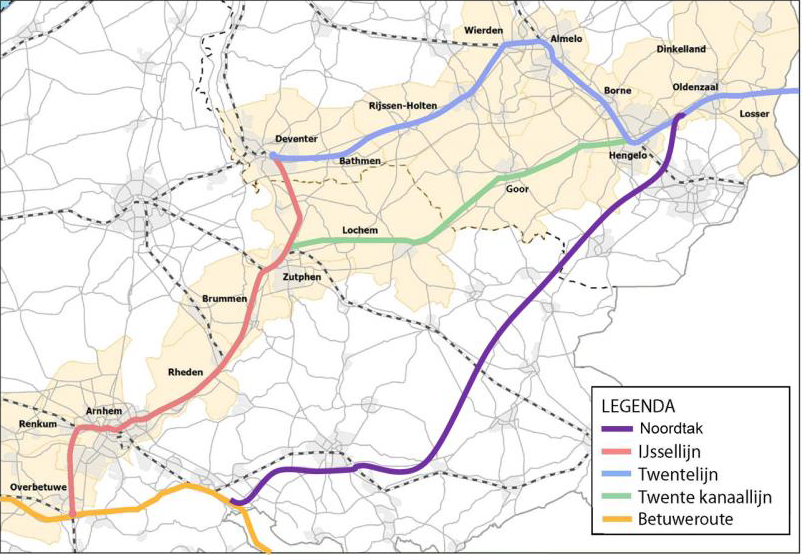
    As the years go by, the pressure increases on what remains of the countryside. The latest turn of the screw is the Noordtak Betuweroute. This is a proposal to lay a new railway line (the Noordtak – literally, the “North branch”) through the Achterhoek, connecting the current goods train line (the Betuweroute) at Zevenaar in the west through to the Dutch/German border in the east. At present, the Betuweroute currently goes south of Zevenaar to cross the border and connects with Emmerich and thence to Duisburg. This is the Zuidtak (the “South branch”).

    The Noordtak proposal was originally the brainchild of the Port of Rotterdam Authority, who were looking to increase the flow of goods from ships unloading in Rotterdam through to German industries in the Ruhr. There was a study into the Noordtak carried out in 2012 by the engineering firm Movares on behalf of the Dutch Ministry of Infrastructure and Environment. It looked at three alternative routes through the Achterhoek. When word got out about the two favoured alternatives, it galvanised protests from communities through which the routes passed.

    As a result, two of the three alternatives have effectively been killed, leaving just one. The Port of Rotterdam Authority then joined forces with the two provincial governments in the Achterhoek and commissioned a “Quick Study” of this third alternative route. The outcome, surprise, surprise, was what the PRA wanted. According to a press release issued jointly by the PRA and the Provinces, the proposed route would be “faster, safer, and less nuisance” than the rejected routes.

    But, guess what, it would pass quite close to us (it’s the route in purple in this map):

    Trace Noordtak 02

    We live near to the village of Heelweg, and it will be a lot worse for them. Heelweg actually consists of two hamlets, Heelweg-Oost and Heelweg-West (Heelweg-East and Heelweg-West). The Noordtak line would go straight through between them, a metaphorical stake through the heart of the community. As you might imagine, the inhabitants are not best pleased with the proposal, and we are joining forces with other action groups, such as the Gelderland’s Nature and Environment Federation, that are now springing up along the proposed route.

    Now you might think that this is simply a NIMBY reaction, and to some extent you would be right; whichever route such a railway takes, it is bound to affect someone. However, we feel that some of the bigger questions need satisfactory answers. What will the overall effect on the economy of the Achterhoek be? Even the press release mentioned above is cautious about this, admitting that:

    “The effect on the regional economy is difficult to estimate. Perhaps the maximum number of trains on the track (36 per 24 hours) is too small to make investment in a new goods train terminal cost-effective”.

    The press release also quotes a member of the regional government as saying:

    “There may well be indirect effects, such as an increase in industrial activity alongside, and in the area of the railway. This is, at this moment, not quantifiable in monetary terms.”

    Frankly, I find this ridiculous. Since the goods trains won’t be stopping anywhere in the Achterhoek, why should that be attractive for firms to build facilities alongside the railway? And if they do build, they simply cause more damage to the tourist economy by destroying the very asset that makes people want to come here and spend their tourist euros.

    A further question that needs to be answered is whether the Germans are wanting this new line. They have dragged their heels over connecting up with the Zuidtak, and all the signs are that they have little or no enthusiasm for connecting up with the Noordtak.

    The Dutch Minister for the Environment is due to give her decision on whether she supports the Noordtak proposal in the next few days. Even if she does support it, there will have to be a further, more detailed study done on the environmental impact of such a line. I would hope that an equally long hard look would also be taken at the economic justification for such a line. Many people are far from convinced that the figures would add up.

    We live in interesting times.

    Addendum 18 June 2014: The Minister has spoken, and she’s not convinced that the case for the Noordtak has been sufficiently proven, or that the figures in the “Quick Study” add up. She (or her successor) will take another look in 2020 to see if anything has changed that would require starting up a detailed study… So we can chalk that one up to a Minister showing commonsense. Nice to see.

    Addendum 25 January 2022: Well, here we are again. The Rotterdam and Amsterdam Harbour Authorities have been doing some hard lobbying over the past year, and the Noordtak is back on the agenda. There was a vote last November in the Second Chamber of the Dutch parliament on looking again at the route. 148 members voted for the motion, and one against. The sole vote against belonged to the only member of parliament who actually lives in the Achterhoek.

    The politicians in the local and provincial authorities have finally woken up and are now fighting back. They are demanding proper involvement in the ongoing research over the possible route, but perhaps more importantly are demanding research into whether there is a good business case for the Noordtak in the first place. The Germans are still lukewarm about connecting with the existing goods train line (the Betuwelijn), and it’s highly unlikely that they would want to connect with the Noordtak. They are looking to improve rail routes to their own harbours of Hamburg and Bremen.

  • More Visitors

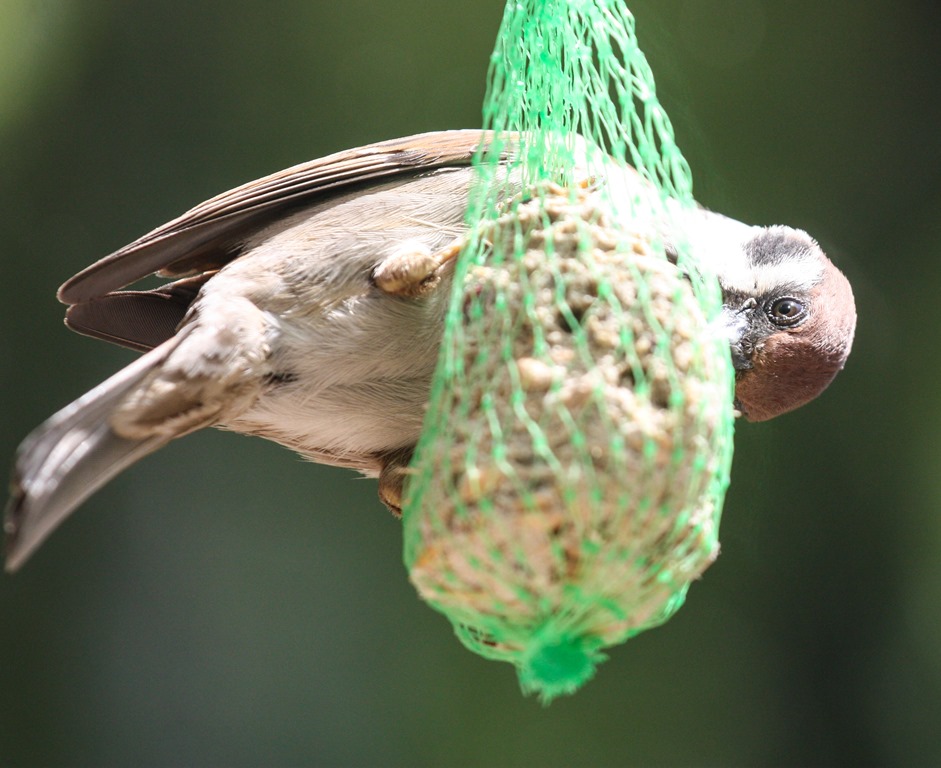
    Following on from the shots of a Coal Tit taken the other day, here’s a couple of a Tree Sparrow…

    20140610-1146-53(001) 

    20140610-1146-47(001)

  • British Bureaucracy At Its Finest

    The UK’s National Savings and Investments organisation – those lovely people who run the Premium Bonds – have finally woken up to the fact that it is now the 21st Century. For years, they would only do electronic transfers of prizes or payments to UK bank accounts. If you live overseas, they would send you a crossed warrant. The one time I got one of these, I trotted along to my local bank branch (now closed, for reasons of efficiency) and handed them the crossed warrant. They stared at it with a sense of wonder. Clearly, they’d never ever seen one before. It took them a while to find and fill out the requisite form to deal with it, and charged me for the privilege of doing so.

    A few days ago, I received an email from the NS&I proudly announcing that they could now do electronic transfers to international bank accounts. All I needed to do was to apply for the service, and it would be added to my NS&I account details. Well, you can guess what happened next – a simple request gets changed into a maze of twisty little passages.

    First, you have to log on to your NS&I account. If you have ever done this, then you will know that they have THE most convoluted sign-on mechanism that I have ever come across. It’s also time-limited. You have to complete it within five minutes. For some people, I can imagine that this will be a challenge.

    Once you’re on, you fill out an electronic form with all your bank details. Then, 24 hours later, you receive an email saying that there is a secure message waiting for you in your account. Back you go, sign in again, and the “secure message” simply tells you that there is an electronic document waiting for you elsewhere in their system. You leave their message section, and enter their document section to get hold of it. It needs to be downloaded, printed out, and posted back to them, together with yet more supporting documentation.

    And just what is this “supporting documentation”? For starters, they need a bank statement, less than three months old. It must be an original, or a copy of an original certified by a lawyer or notary. It cannot be a printed copy of an online bank statement. Er, hello, I haven’t had paper copies of my bank statements for years – I do all my business online – and the bank has closed my local branch, remember? So I’ve had to ask the bank specifically for a paper copy of my last statement. They were happy to oblige – just pay €5, sir, and you’ll get it within two weeks.

    Then I need to send the NS&I evidence of my identity. Er, hello, I’ve been through this before – they needed it when I moved to the Netherlands. They have my account details, we’ve had subsequent correspondence via post – they know who I am and where I live.

    Well, apparently the people in the NS&I’s international payments service section don’t know who I am or where I live. So I have to send them my current passport (no, I don’t think so…) or a certified copy of it, a letter or notification from my local tax authority, which must be dated within the last three months and include my name and address. Furthermore, I have to send them my tax identification number and my date and place of birth. The latter details have to be on a separate piece of paper; it is totally irrelevant that these details are also clearly given on my passport and all correspondence with the tax authority. It also appears to be irrelevant that I have done all this before.

    I have an appointment with a notary next week. He will be very happy to make a certified copy of my passport for this group of British bureaucrats and charge me for the privilege – again. Once I have received my paper copy of a recent bank statement then I can assemble and send all this information off to the NS&I – again.

    The irony of all this is that the email announcing the availability of this service was signed by a Ms. Jill Waters, “Assistant Director Customer Experience” of the NS&I.

    I’ve sent her an old-fashioned letter pointing out that, all in all, I felt this was not a shining example of a good customer experience…

  • A Cataclysm Down Memory Lane…

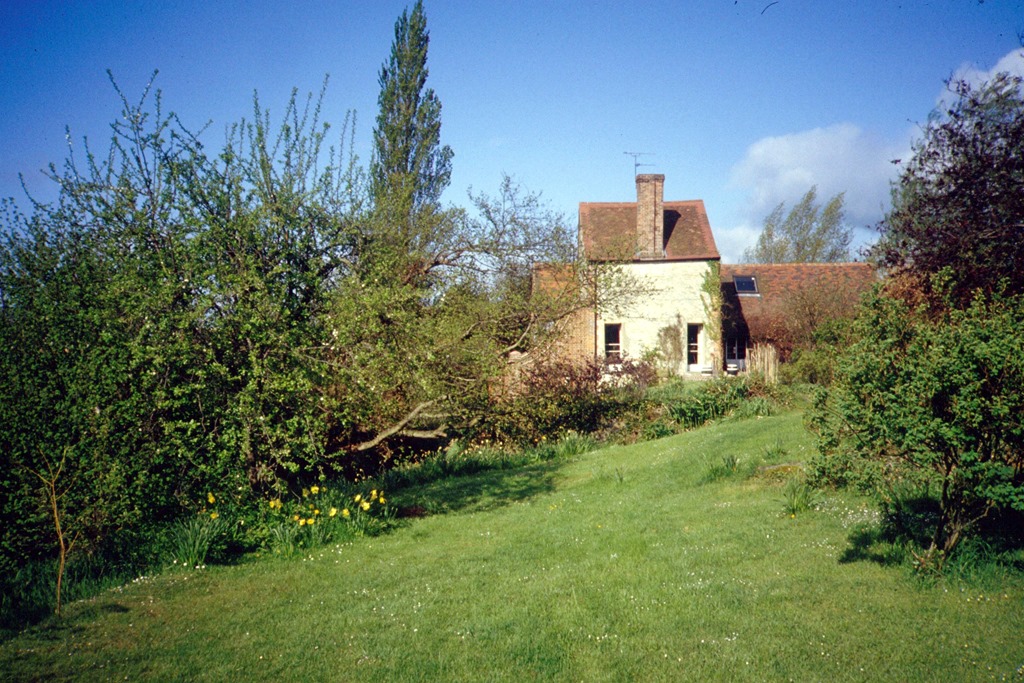
    Back in the early 1980s, I got to know William Clark, who was almost a father figure to my partner at the time. We would be frequent weekend visitors at William’s country retreat, a converted mill in the Oxfordshire village of Cuxham.

    The Mill

    Summer or winter, the house had charm and was filled with William’s memorabilia from his years in public service, the Observer newspaper, the BBC and the World Bank.

    The Mill

    Sunday lunches often had guests from the worlds in which William lived, and I found it a fascinating experience to be able to eavesdrop on their conversations.

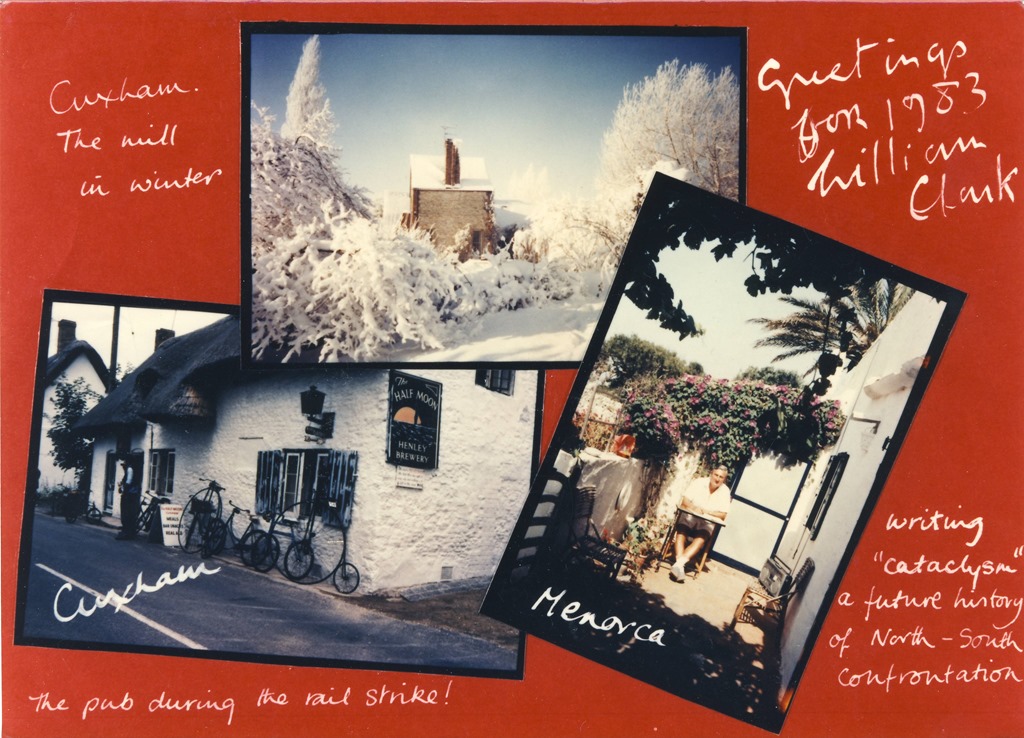
    In 1982-3, William was engaged in writing a novel – Cataclysm – a fictional scenario in which an international debt crisis in 1987 escalates into an all-out conflict between the developed and underdeveloped worlds. A minor plot point was the use of what today would be called cybercrime, but the word, and the internet as we know it, simply didn’t exist at the time. William, knowing that I worked in IT, asked me to read the drafts and comment on the technical aspects. I did that to the best of my ability, but I suspect that my crystal ball was even cloudier than his.

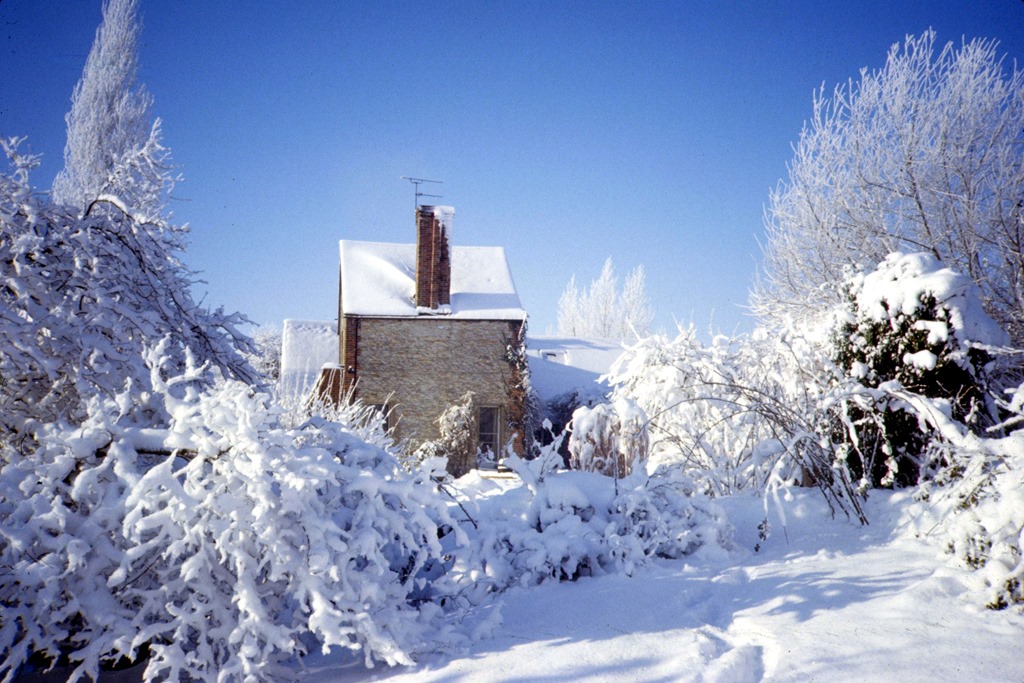
    His Christmas card of 1982 referenced both his writing of the novel and the photo I had taken of the mill in winter.

    Scan10014

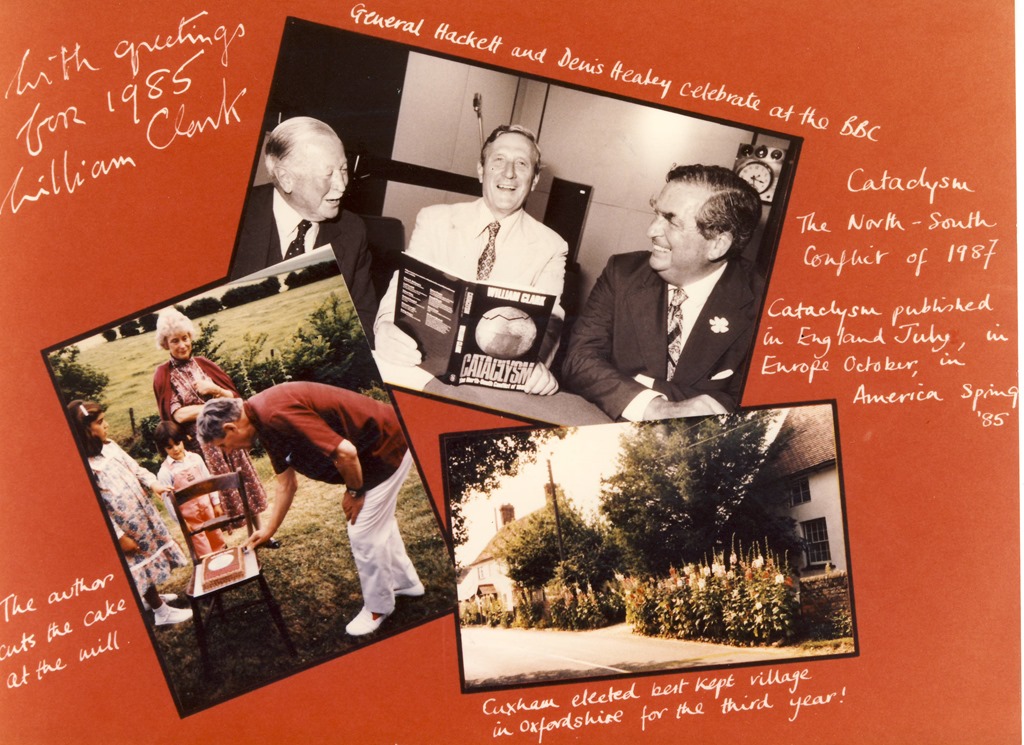
    Cataclysm was published in 1984, as that year’s Christmas card illustrates:

    1984-12-01

    I had a rather acrimonious breakup with my partner at around this time, so I’m afraid I lost touch with William, and he died, of liver cancer, in June 1985.

    I’ve often wondered how I would view the technical aspects of Cataclysm with the benefit of hindsight, so a couple of weeks ago, I went on to the Abebooks web site to track it down. I found a copy, which also apparently contained a letter signed by William, held by an Oxfordshire bookshop. I snapped it up, and it arrived yesterday.

    Cataclysm

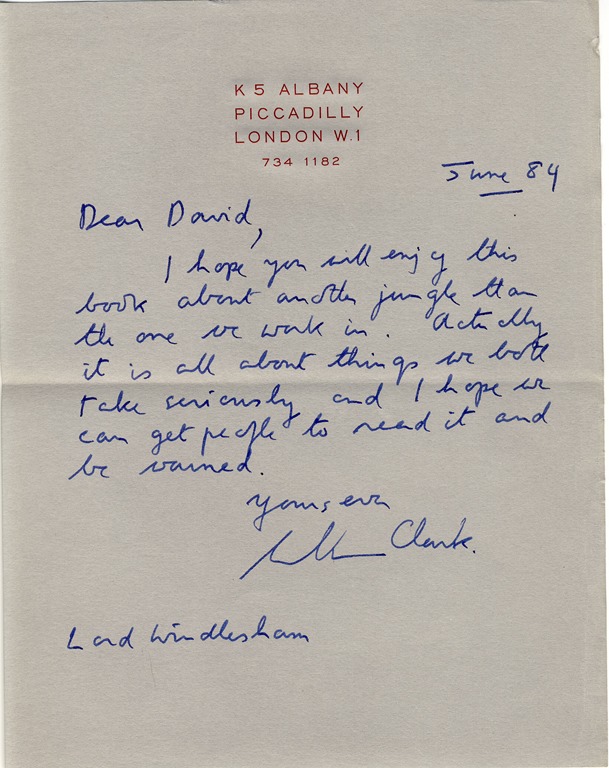
    I look forward (with a modicum of trepidation) to re-reading it. And, as promised, there was also a signed letter from William.

    William Clark

    It is written on William’s notepaper, with the heading of William’s London flat in Albany, and addressed, I believe, to David Hennessey, 3rd Baron Windlesham.

    A little piece of history.

    I recall William with much fondness. The house and garden at Cuxham would often echo to his cry of “For God’s Sake…” – with a prolonged emphasis on the second word. For all the exasperation that he was able to inject into the phrase, we all knew that there was a wink as well.

    The book, and the letter, will now reside in my library until they move on to the next owner.