
God knows, I need to stop thinking about how much of a disaster Donald J. Trump is, so I suppose this will do nicely… Doesn’t make me feel any better, mind you.
Year: 2017
-
The Great Work Begins…
The last time I blogged about our Broadband saga was back in September – time for an update.
Back then I wrote that there was good news – the company (the Communications Infrastructure Fund – CIF) financing the rollout of fibre optic cables had announced the green light to financing a further 5,000 FttH (Fibre to the Home) connections this year, which encompass all of the countryside addresses in our municipality (Oude IJsselstreek), plus parts of a further three (Montferland, Doetinchem and Bronckhorst).
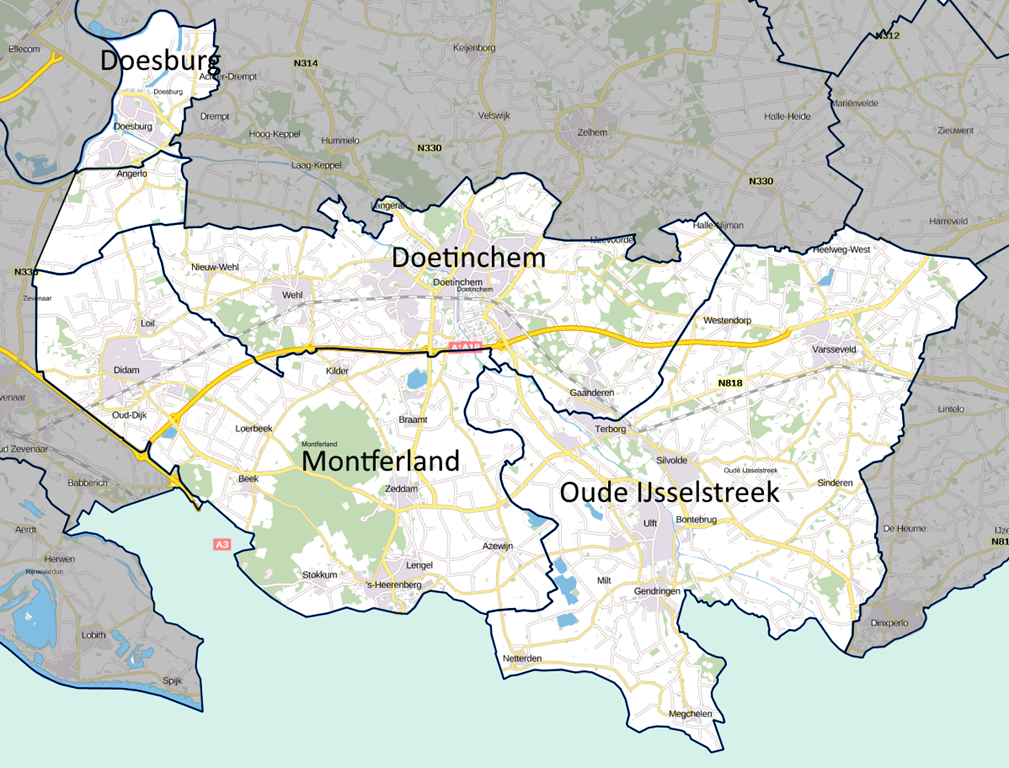
However, there’s many a slip ‘twixt cup and lip – Bronckhorst decided that they weren’t going to play ball with CIF, and instead go ahead with their own plan to lay empty ducts, hoping that they can do a deal with KPN (the largest Dutch telecom provider) to put network cables in them. As a result, CIF has rejigged their plan, and now intend to implement 5,670 FttH connections to all countryside addresses in Oude IJsselstreek, Montferland, Doetinchem, and a further small municipality: Doesburg. They’re calling this area “Achterhoek Zuid” (South Achterhoek).
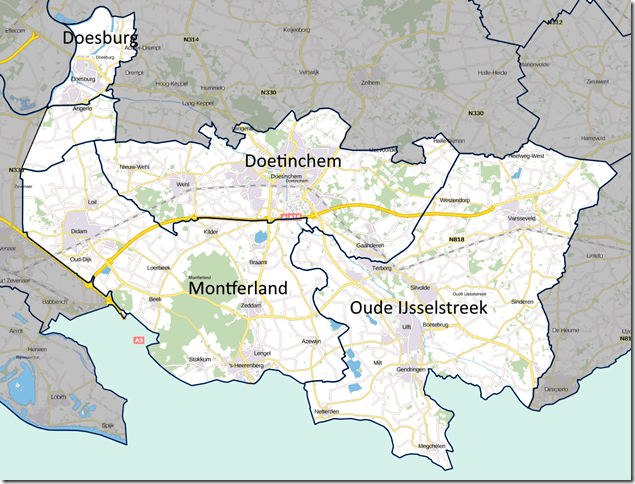
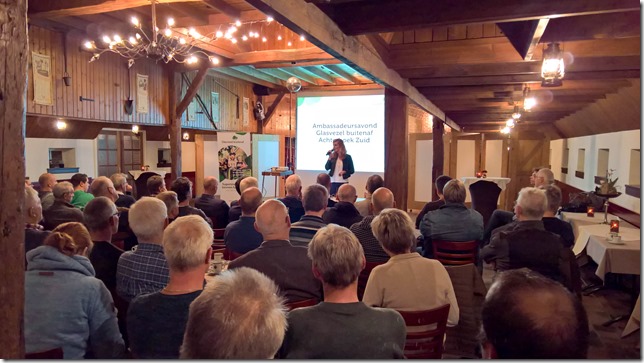
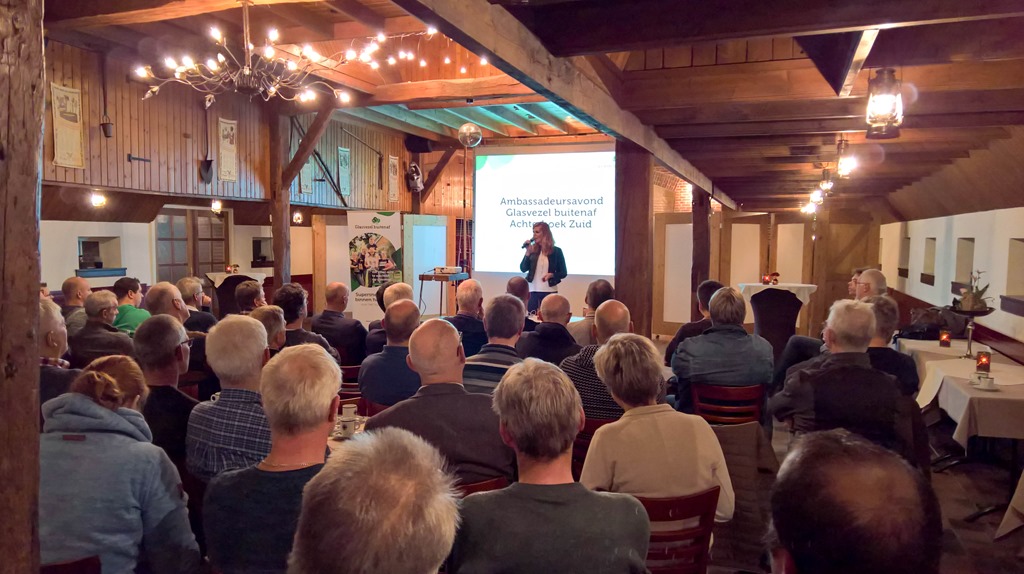
CIF work together with a cable infrastructure company, COGAS, under the name “Glasvezel buitenaf” and last week, they organised a meeting for local volunteers (“ambassadors”) to give out information about the campaign.
The campaign starts in earnest in the last week of November, when all 5,670 households will receive information about the project, and invitations to public meetings.
The Great Work Begins…
-
Aibo – Mark II
I see that Sony have just announced a new version of Aibo, the robot dog.
I must admit I was rather taken with the first version of Aibo and half-seriously thought about getting one until Sony pulled the plug in January 2006.
This new version looks like a major advance, in that it will be connected to AI services in the cloud to power its learning capabilities. Of course, that probably also introduces all sorts of cybersecurity risks as well, so I hope Sony are prepared for the day when all the Aibos in the world rise up against their owners.
However, I think that if I were to get a second generation Aibo, Watson would not be best pleased, as shown in this test of a first generation Aibo in a Sony laboratory.
I suspect that Watson would make equally short work of an Aibo.
-
Temptation
Yesterday I went to Arnhem to listen to a pair of the Kii Three speakers. They were being demonstrated in WiFi Media. They are a new product from a young company, and have had very good reviews in the audiophile press.
I have to admit that the speakers sounded very good. I’ve lived with a pair of Quad ESL57s for forty years (refurbished last year), and the Kii speakers were the first I’ve heard to make me think about a divorce.
I think if the Kiis were Roon Ready, I’d be signing papers. I asked about this, but Thomas Jansen, the Kii product manager, wouldn’t be drawn other than to say it would require a new model of the Kii Control to deliver this (and I’ve since heard that there is a rumour than a new control unit with expanded capabilities is under development).
I should probably sleep on the idea of selling all my Quad kit just at the moment, but I am rather tempted to ask for a home trial…
-
Le Roi Est Mort – enfin
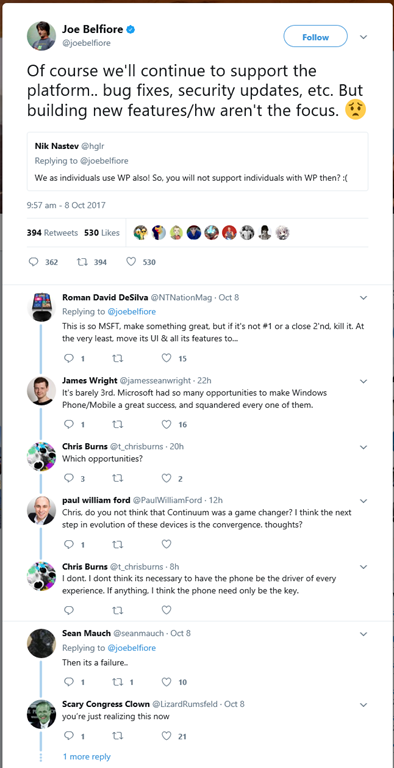
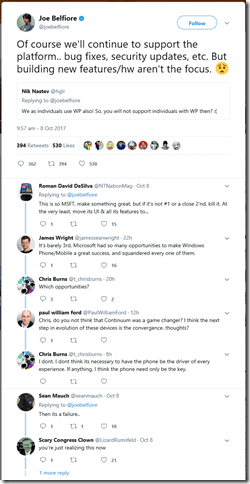 So Microsoft has finally admitted that the Windows Phone (or more precisely, the Windows Mobile operating system) is frozen. And as befitting the times where formal policy statements are apparently no longer issued via press announcements, the news was delivered via a series of tweets from Joe Belfiore.
 This may not be quite the same as saying that it’s dead – but that is how the news has been greeted by the technical press and the market. It may not be dead, but it’s certainly on life support, and Microsoft will finally switch it off in the not too distant future. There will be no new Windows Phone hardware, and Microsoft stopped manufacture of its last phones (the Lumia 950 and the Lumia 950XL) back in mid-2016.
The sad and sorry saga of Windows Phone and all the attempts at trying to craft the software and hardware are well covered by Peter Bright in his Ars Technica article.
I’ve been using a Windows Phone since December 2011, and I continue to love it. The user interface is still a joy in comparison with iOS or Android. However, it is undeniable that the market does not love Windows Mobile, and frankly, many of us continue to harbour the suspicion that neither did Microsoft. As Peter points out in his article, there have been fumbles and missteps made.
Up until now I’ve not been bothered by the limited number of apps available for the phone – I’ve always found an app to do what I want.
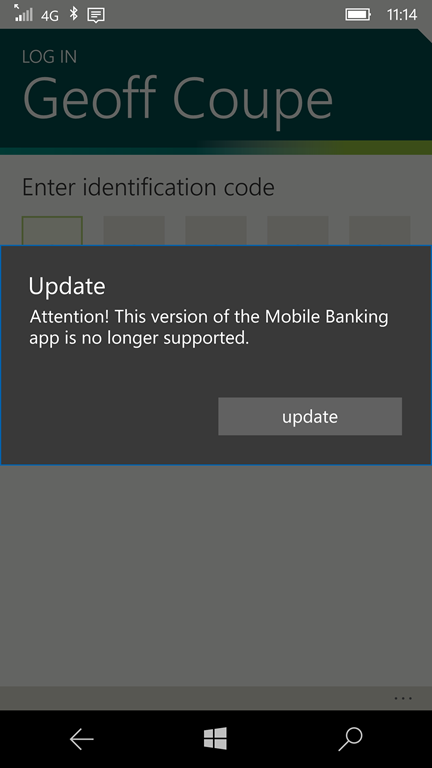
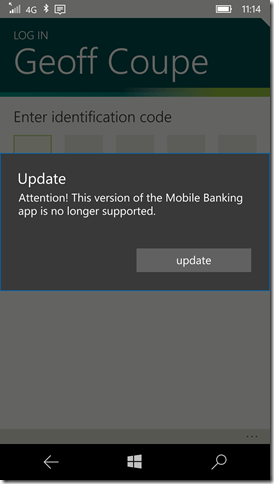 However, this month my bank has dropped its banking app from Windows 10 Mobile, and I now have to use the web browser to access the internet banking service. I personally find that this is not as good an experience as with the old app. I also am not impressed by the way the bank casually rubs salt into the wound by displaying the “update” button. If you click it, it doesn’t actually deliver an update. Basically, it’s more of a “tough shit” button.
I’ve also noticed a trend that for many new networked devices, they are increasingly reliant on being set up via a smartphone app, rather than via a web browser. And naturally, the app is only available for iOS and Android. Similarly for new services delivered via the internet – if there’s an app, there won’t be a version for Windows 10 Mobile.
So I fully expect that at some point in the (near?) future, there will be a device or service that I need that will force me to acquire an iPhone or Android phone to use it.
I really don’t look forward to that day. My current phone is a Lumia 950, and despite it being no longer manufactured, it still has advantages (to me) over the current range of Apple and Android phones. The camera, in particular, is still outstanding. And I have a spare battery waiting in the drawer for when my current battery runs out of puff. Replaceable batteries in smartphones are a rarity in these days of throwaway consumer goods.
As Peter Bright says in his article:
For now, all we can do is mourn: the best mobile platform isn’t under active development any more, and the prospects of new hardware to run it on are slim to non-existent.
As for me, I switched to an iPhone more than a year ago. Every day, I’m struck at how the main user interface is basically that of Windows 3.1’s Program Manager, and iOS 11 has been fantastically unstable for me. I don’t enjoy iOS in the way I enjoyed Windows Phone. But it’s actively developed, and third-party developers love it, and, ultimately, those factors both win out over Windows Mobile’s good looks and comfortable developer platform.
I get the distinct impression that Satya Nadella, Microsoft’s CEO, is much more focused on the business world and cloud services than on consumer devices. Windows Phone has just joined Zune, Microsoft Band, the KIN phone, Windows RT, the Surface Mini, and Windows Home Server on the scrapheap.
Addendum: Peter Bright has followed up with an article titled: With the end of Windows on phones, how does Microsoft avoid being the next IBM?
It’s a damn good question. IBM is totally irrelevant these days as far as consumers are concerned. Microsoft seems hell-bent on heading the same way. In ten years time, will people be asking: Windows? What is Windows?
-
A Stranger in a Strange Land
Joris Luyendijk is a Dutchman who has been living in Britain for the last six years, writing articles for the Guardian. He is a writer, journalist and anthropologist, specialising in Arab and Islamic countries.
He’s recently written an article in the Prospect magazine, provocatively titled: “How I learnt to loathe England”. It’s a good article (i.e. I mostly agree with his analysis). One thing that at first surprised me was that he supports Brexit (I don’t), but as he says:
…by the time the referendum came, I had become very much in favour of the UK leaving the EU. The worrying conditions that gave rise to the result—the class divide and the class fixation, as well as an unhinged press, combine to produce a national psychology that makes Britain a country you simply don’t want in your club.
And that was a novel perspective; the reaction that the EU might well be better off without Britain: good riddance, and don’t let the door hit you on the way out… There may well be something to be said for that stance.
As I head on into my twilight years, the possibility that I will end up living here alone in the depths of the Dutch countryside becomes real, if I outlive Martin. In such circumstances, I may well end up as a “stranger in a strange land”, but quite honestly, I think I would prefer that to a return to what England seems to be becoming.
-
Amsterdam Weeps
Here’s one of the tributes to van der Laan, performed in one of the nightly talkshows on Dutch TV, “The World Keeps on Turning”. I’ve done a (shaky) translation of the text that’s on the page:
The original song is from 1964, written by Kees Manders and sung by Rika Jansen. It was rewritten for us by F. Starik and is sung by Glennis Grace, born in the Jordaan (a district in the centre of Amsterdam), together with a mixed choir consisting of The Swans Choir, The Army of Salvation Amsterdam Staff Songsters, and The Choir of the National Opera.
Text: Amsterdam cries text F. Starik.
As a father you stood for the city of Amsterdam
for whomever was rich or poor, every woman, every man
from the Bijlmermeer to me at the corner.As a father, you stood up for us all
for the homeless guy, come but outside
then we get up – I have fire in my headAs a mayor with a heart for the city,
for everyone a clap on the shoulder, a hand on the heart
and sometimes there was a late hour
when you turned the tables on a jokerAmsterdam weeps where once it laughed
Amsterdam weeps, now it feels the pain
Amsterdam weeps where once it laughed
Amsterdam weeps, because the fun has goneas a father you stood for the city of Amsterdam
for Nouri, Ajax, for kutmarokkanen and Surinamese and
the angry white man –As the friend that you were, Eberhard van der Laan,
for city council, for the junks and the whores
and that it will all go wellthanks man, for everything, though you go too early
and awkward as it sounds from many pubs, you were there for us
you carried us, you were like a father,
how we will miss you, you who bore usAmsterdam weeps where once it laughed
Amsterdam weeps, now it feels the pain
Amsterdam weeps where once it laughed
Amsterdam weeps, because the fun is gone. -
Paying Tribute to a Public Servant
Eberhard van der Laan, the mayor of Amsterdam, died yesterday. Everyone has been paying tribute to him. This news story says that flags throughout the city were flown at half-mast today. Actually, flags were flown at half-mast throughout the whole country.
He will be missed.
-
Public Service
Some officials know what public service means and fulfil their duties to the best of their abilities, serving the public good. And the people react accordingly.
Eberhard van der Laan, you’ve set an example to us all.
-
The Saga of Broadband Internet – Part III
I last blogged about the poor state of broadband internet here back in February. At that time things were not looking very good. The company (the Communications Infrastructure Fund – CIF) financing the rollout of fibre optic cables had made a start in two Local Authority areas, and had promised to make a start after the summer in two others. However, it was not yet able to commit to further projects with the remaining seven Local Authority areas (including ours), and this had led to tensions between it and those municipalities.
As a result, the municipalities came up with their own plan to lay empty ducts and hire these out to other parties to put their own network cables in. Personally, I viewed this plan as a long shot for a number of reasons, not least the fact that it would need an investment from our Local Authority of €3.6 million – money which they do not have lying around.
Still, back in February, CIF had said it would be able to announce news on further plans in September. Well, here we are, and there does seem to be some good news for a change.
CIF has now made a start on a further two areas, as promised, for a total of 3,500 Ftth (Fibre to the Home) connections in the Aalten and Oost-Gelre municipalities. Households and companies in the countryside there have until the 23rd October to sign up for a connection. If 50% of them do so, then CIF will go ahead and lay the network. If the 50% isn’t reached, there will be no network laid. It really is now or never…
CIF has also announced that their investors have given the green light to financing a further 5,000 Ftth (Fibre to the Home) connections this year, which encompass all of the countryside addresses in our municipality (Oude IJsselstreek), plus parts of a further three (Montferland, Doetinchem and Bronckhorst). Once again, at least 50% of the households and companies in the countryside areas have to sign up for a FttH connection before CIF will go ahead and lay the network. Signing-up will be possible during a six week period which will (I hear) start in November.
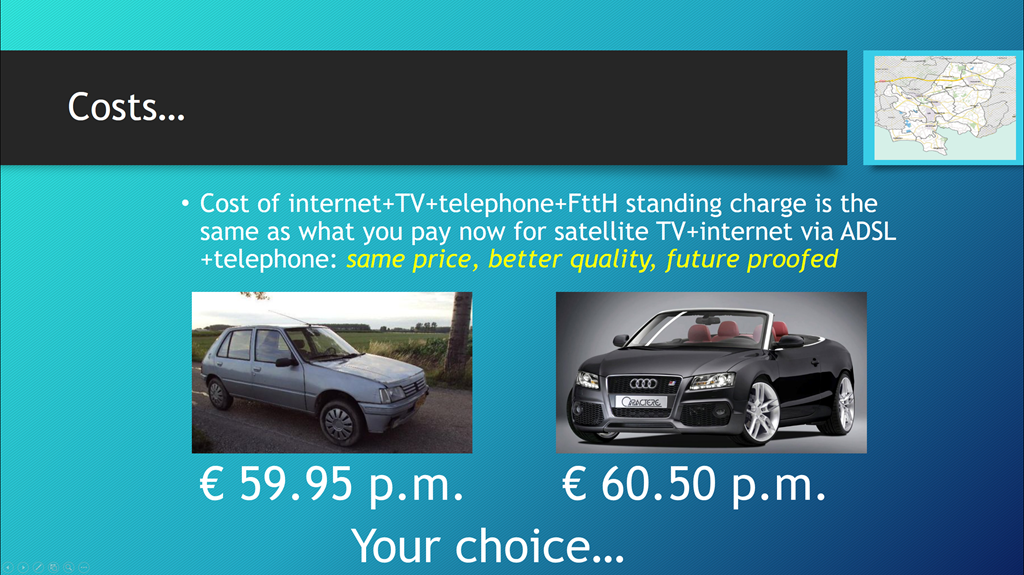
We’ve been lobbying for FttH connections here in the outlying areas of Oude IJsselstreek for almost three years now, and at last things seem to be on the point of moving forward. During that time, we’ve built up a group of “ambassadors” who can explain to their neighbours why signing up for FttH makes sense. The cost case is usually the most important aspect to the Dutch(!), and it’s actually straightforward: the monthly cost of an “all-in-one” (internet, telephone and TV) subscription, plus the monthly standing charge for the FttH connection is the same as what they are currently paying for their (slow) internet and telephone connection via ADSL, together with their satellite television subscription (satellite TV is the norm here in the countryside). In our presentations to groups, the English language version of this would be:
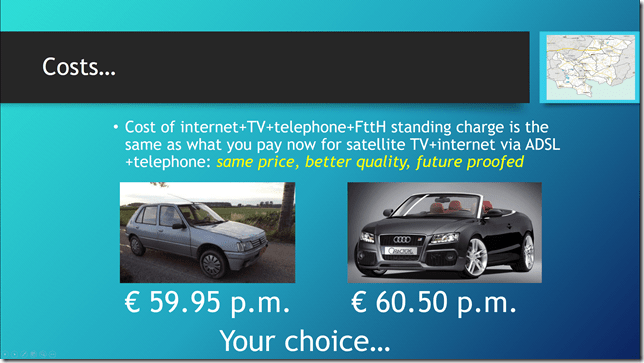
Of course, now the real work begins, leading up to November, when we have to get at least 2,500 subscribers (the 50%). Given that here in Oude IJsselstreek there are only 2,441 potential subscribers (according to data we have from the municipality), we are going to have to ramp up efforts beyond our borders and drum up subscribers in the other municipalities. It’s going to be all hands to the pump over the next few months…
-
Falling Short
I watched the live stream of the Microsoft keynote at IFA 2017 today, or at least I tried to. It was supposed to start at 14:00 CET, but for the first 18 minutes, there was no live stream, only music playing, and then, suddenly, we were thrown into the keynote, midway through the presentation by Microsoft’s Terry Myerson.
I know that Mr. Myerson is an important person at Microsoft (being the Executive Vice President Windows and Devices Group Engineering, Microsoft Corporation), but really, someone should tell him that he is not at all good at presenting. It was something of an embarrassment.
Even what he had to say struck me as falling short. He was extolling the virtues of the forthcoming “Windows 10 Fall Creators Update”, but it does irritate me that the claims made so clearly fall short from the reality. For example:
We have reimagined our Photos Application to deliver remixed experiences for telling your stories with photos, videos, music, 3D, and even inking.
Yes, but you can’t organise and search your photos as you could with Microsoft’s earlier photo applications (now dropped by Microsoft in Windows 10). And then there was:
You can save all of your creations in OneDrive Files On-Demand, accessing your cloud files like any of your other files on your PC, without using up your local storage space.
Yes, but you can’t search them, like any of your other files on your PC…
There followed another couple of presentations that did not exactly set the keynote on fire, and the session closed with a pitch from Nick Parker (Corporate Vice President Consumer Device Sales, Microsoft Corporation) which was at least delivered with some conviction and passion. But even he ended with a video (apparently produced by the BBC, despite the Microsoft logo tacked on at the end) that was not related in any way with the mainstream businesses of Microsoft. It had clearly been chosen to tug at the heartstrings (and was effective enough at that), but had no connection at all with the rest of the keynote’s focus and content.
Very disappointing.
-
Search in Microsoft’s Photos App – Simply Not Good Enough
Another day, another rant at Microsoft. And once again, my despair is directed towards the team developing the Photos app in Windows 10.
Ever since the Photos app had its debut in Windows 8, back in October 2013, it has been unable to search metadata in photos. This, despite the fact that its predecessors, Windows Photo Gallery (first introduced in Windows Vista back in 2007), Windows Live Photo Gallery (first introduced back in 2009) and Windows Photo Gallery 2012 were all able to do this. Microsoft, in its infinite wisdom, has now withdrawn all of these products from the market leaving only the miserably limited Photos app in place.
Over the past four years there have been features added to the Photos app, but for the most part they have been akin to rearranging the deckchairs on the Titanic. Fundamental features present in the withdrawn Windows Photo Gallery 2012 are still not there.
So it was with some interest that I read the other day that Search would at last be introduced to the Photos app. Since I’m a Windows Insider, it meant that I should get a preview of the app with the Search function in it. Well, it’s now arrived (version 2017.350631.13610.0 of the app) on one of my test laptops, and it turns out to be a huge disappointment.
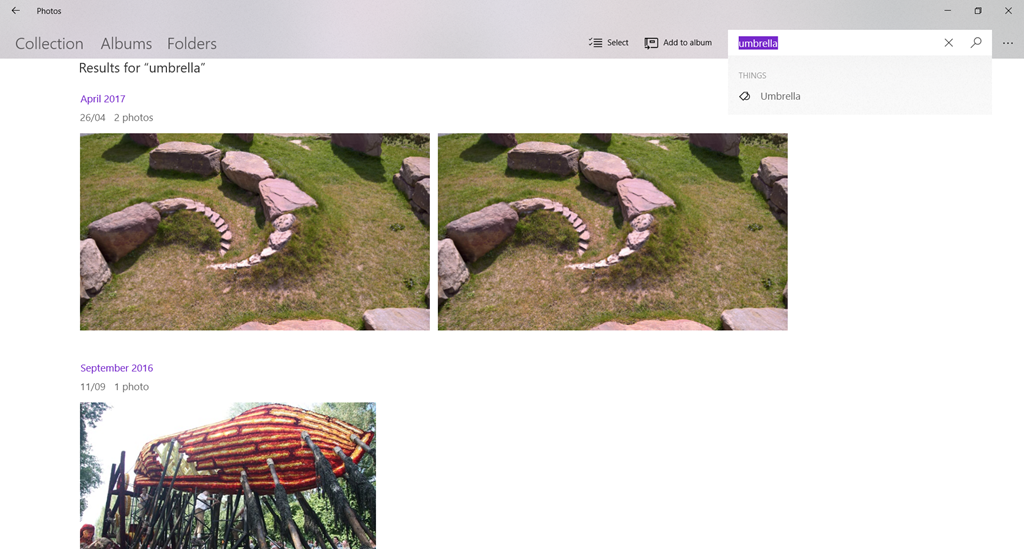
The reason that I’m disappointed is that the Photos app still does not search photo metadata, instead it uses a Microsoft-built A.I. system that attempts to assign tags to your photos. I say “attempts” because currently it gets things more wrong than right. For example, here are my most recent photos that the Microsoft A.I. system thinks are photos of an umbrella:
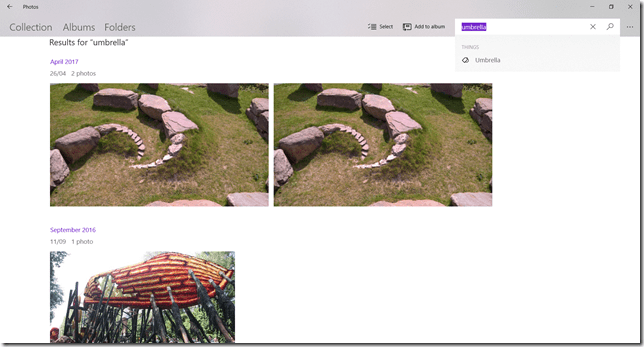
Note that “umbrella” is not a word that I have chosen, the term has been assigned by the A.I. system, and popped up as a suggested search term.
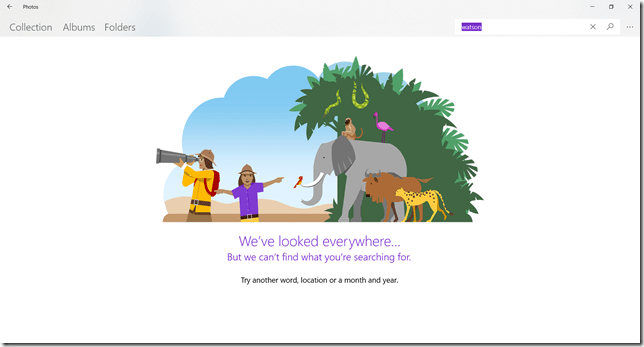
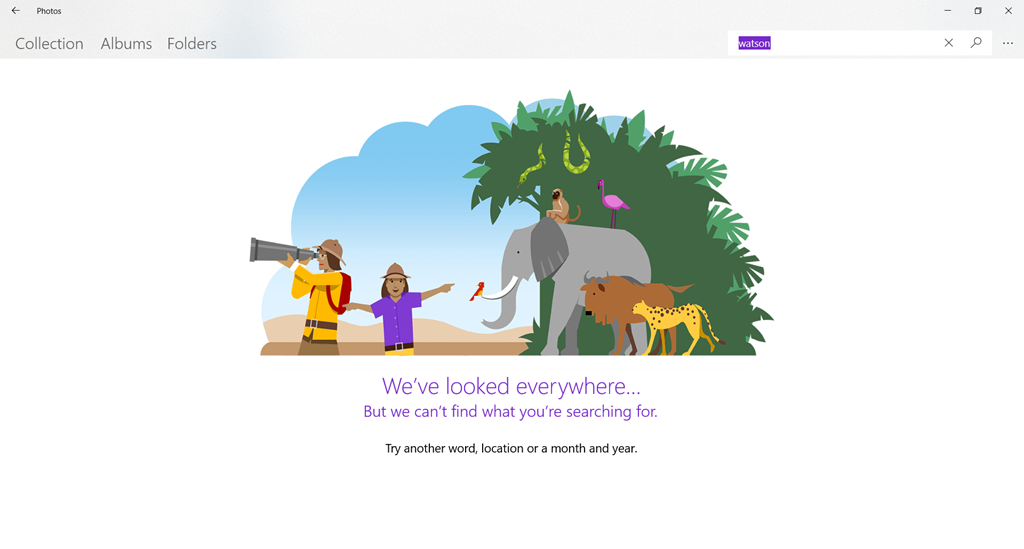
I can’t search using my own terms. For example, if I try searching for photos of our dog, Watson, there are zero results:
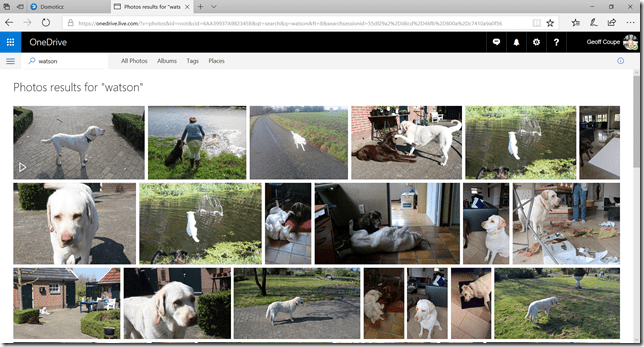
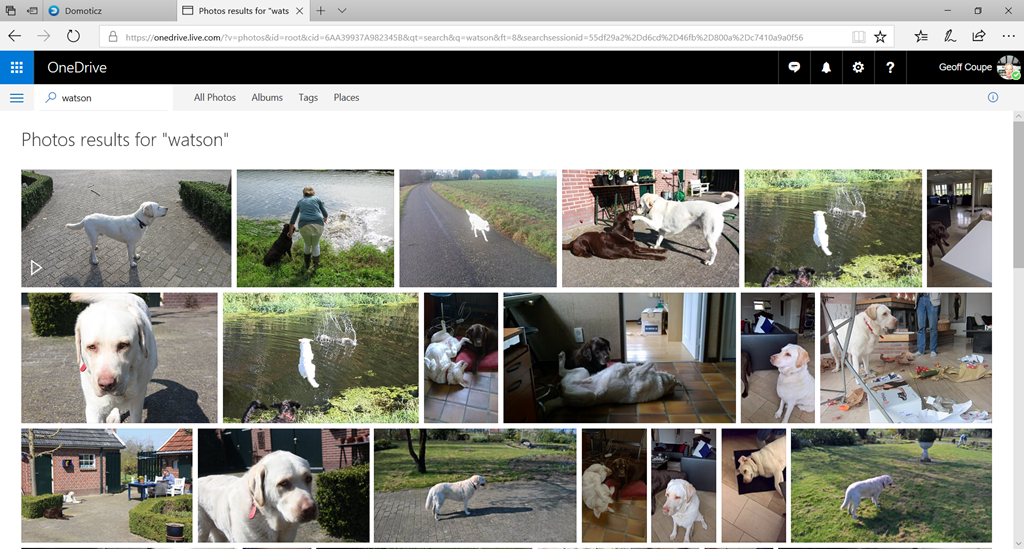
The OneDrive search engine is certainly indexing my photo metadata, because if I search for “Watson” on OneDrive, it finds all the photos to which I have assigned the tag “Watson”:
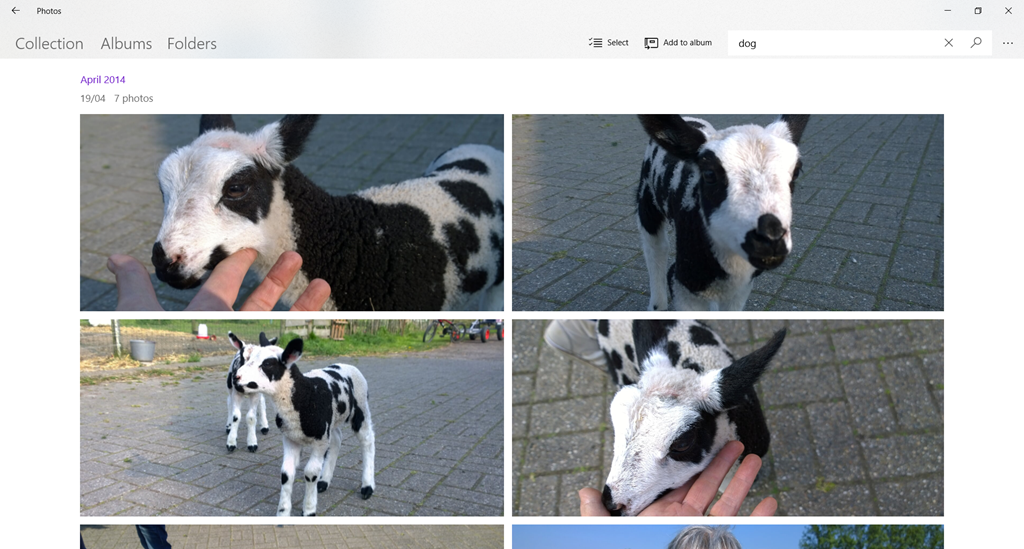
At least the A.I. system knows about dogs, because I can search using “dog”. However, while that does return at least some of my pictures of Watson, it also thinks a lamb is a dog:
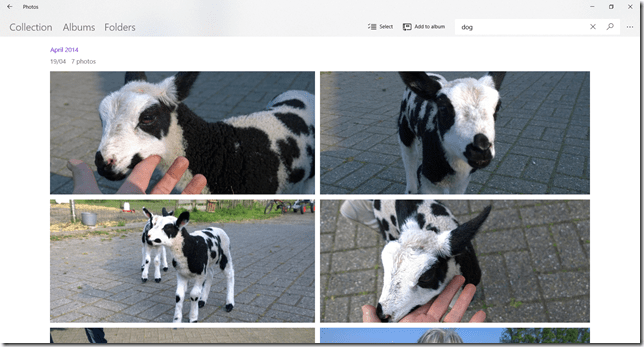
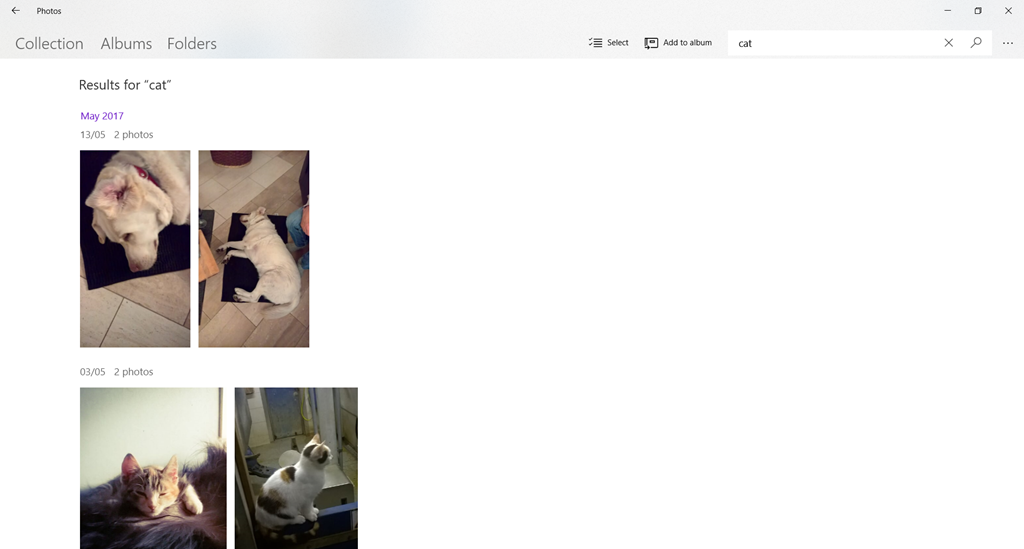
The A.I. system does recognise the search term “cat”. Unfortunately, it’s even worse at recognising cats than dogs. It returned 45 photos that it claimed were of cats. It only correctly identified three photos of cats – the rest were of dogs (usually Watson), and one was a picture of a hand. Actually, I have 56 photos of cats in my collection.

There is currently no way to correct misidentified photos, so searching, it seems to me, is little better than a hit-and-miss affair at the moment. First, you’ve got to hit on a search term that the A.I. system uses, and then you’ve got to hope that it won’t return any misses in the results.
The A.I. system also indexes the faces of people in your photos. Once again, there is no way to either assign a name to a face, or merge what the system thinks are different people into the one person. Both of these features were available in Windows Photo Gallery 2012, which I remind you was available five years ago, but which Microsoft has now withdrawn.
I really wish that the Photos team would proceed in a more logical manner and provide features that put the Photos app on a par with what we had with Windows Photo Gallery before they introduce half-baked new features that do not advance the usability one jot.
-
Microsoft: One Step Forward, Two Steps Back – Again
Once upon a time, back in 2013, Windows had a feature called “Smart Files”. I found it very useful – I was able to use Windows Explorer to search all of the files stored in my OneDrive, even though the majority of the files were only stored in OneDrive, and not copied to my local computer. It was a step forward.
Then, in November 2014, Microsoft pulled the feature, claiming that some users found it difficult to use. Two steps back.
This resulted in an outcry from people who used (and loved) the Smart Files feature, with the result that Microsoft backtracked and promised that Smart Files would be re-engineered and returned to Windows at some point in the future.
That now looks to be later this year – three years since Smart Files was removed – with the announcement today that the “OneDrive Files On-Demand” feature is rolling out to Windows Insiders.
Despite the clumsy new name, this did sound like Microsoft was at last taking a step forward again, so, being a Windows Insider, I installed it on my PC. And, of course, the reality is deeply disappointing.
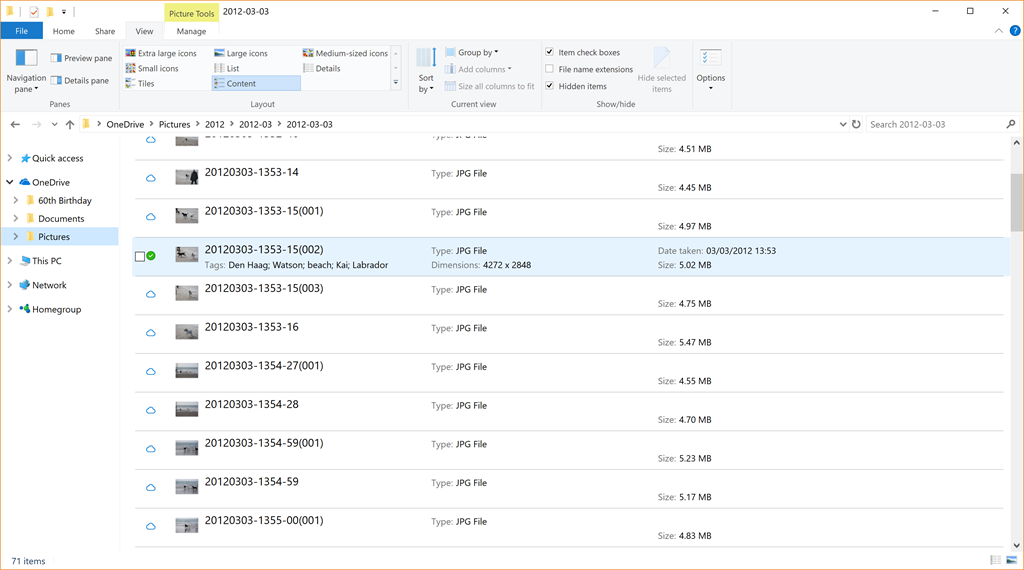
The problem is that, unlike the original Smart Files feature, metadata from the files stored in OneDrive is not retrieved and stored in the placeholder files, so using the “Search” function in Windows Explorer won’t work on these files. Only files that have been fully downloaded and stored on the PC will have the metadata present. Here’s an example:
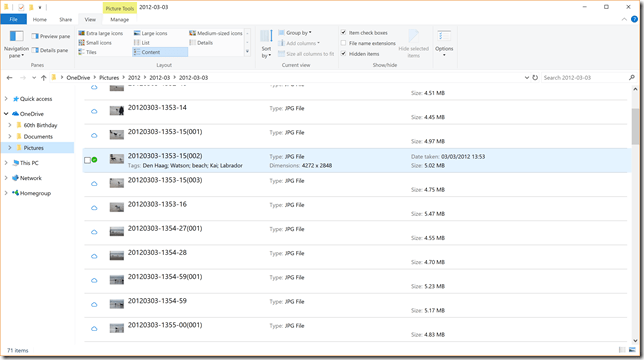
In this folder of 71 photos held on OneDrive, only one (the photo shown selected in the screenshot) has been fully downloaded to the PC, the other 70 photos are still in the OneDrive cloud. They are listed as being present, with thumbnails, filenames and size, however, you can see that no other metadata from these files is present. The downloaded file naturally has all the metadata present: the photo tags, date taken, copyright information, camera used and so forth.
This means that, as the OneDrive Files On-Demand feature currently stands, it is useless to me. I can’t search my online files directly from my PC.
Two steps back again. Thanks, Microsoft. Another fail.
-
RIP Kai
We had the older of our two Labradors put to sleep this morning. He was 14 years and two months old, which for a Labrador, is a long life. I think we can say that he had a good life as well.
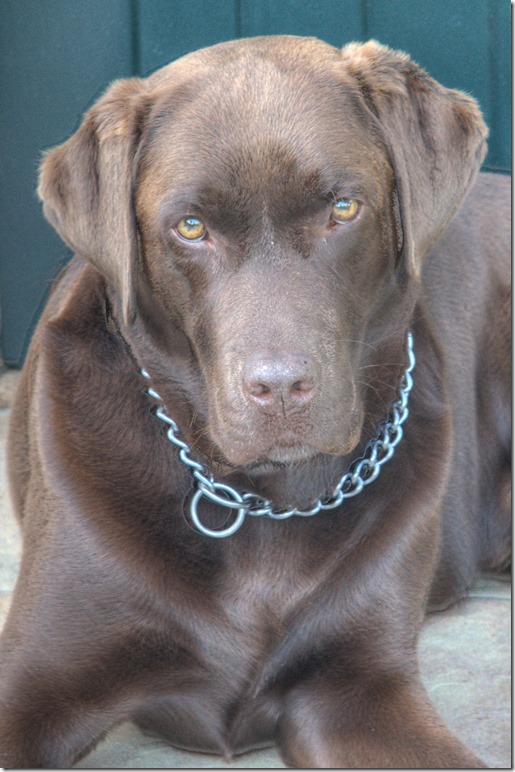
Kai came into our lives shortly after we moved to the farmhouse, 11 years ago. He was then three years old. His first owners had moved from a house into a flat, and it was clear to them that Kai was not happy with the downsizing, so with heavy hearts they asked the breeder to try and find new owners for him. We were the lucky ones.
After Kai had settled in here, he had a visit from his previous owners. We were all curious to see how he would react. When they left, he followed them down to the entrance of the driveway, and then lay down, as if to say: “you can go, I’m OK here…”.

He had plenty of room to roam around in, both in the garden, and in our field at the back of the property.
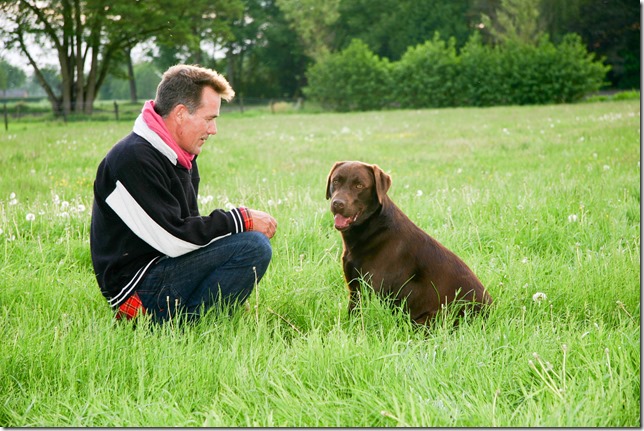
Like all Labradors, he loved water. Fortunately, he learned not to go into our two ornamental ponds, but loved swimming in the nearby river.
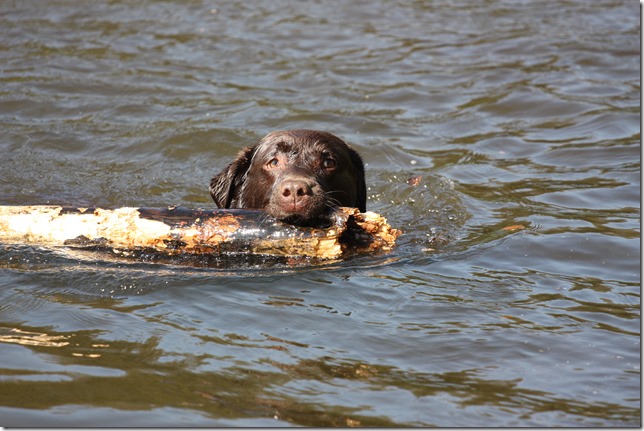
He could look very regal, or let his hair down…


Watson arrived in September 2009, and Kai learned to tolerate a boisterous newcomer.

They actually got on well together.
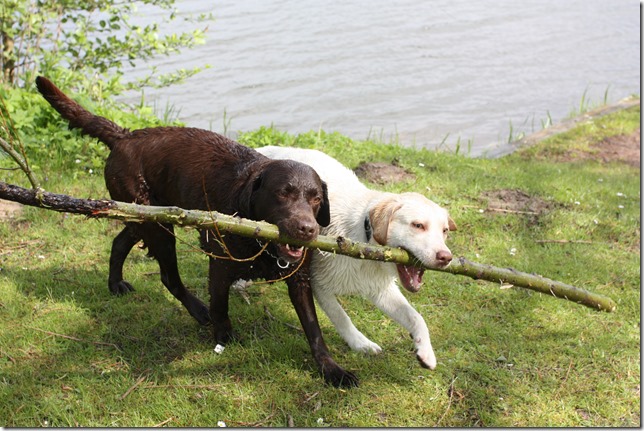
In March 2016, Kai turned 13. He was getting very slow and spent most of his time snoozing gently. Often he seemed to be dreaming of running, because he’d run in his sleep. Chasing dream rabbits, probably. He’d pad around the garden to inspect his estate a couple of times during the day, but I could no longer take him out with Watson, because he couldn’t walk as far or as fast as us. Martin would take him out for a short walk whilst Watson and I headed off to the woods. At the time, the vet said that Kai’s heart and lungs were still functioning well, and his quality of life was good, but she was clearly signalling that the home stretch was in sight.
A week ago, he spent most of the day resting on his cushion, and had difficulty walking. The following days, he was up and about again, but this morning he had extreme difficulty staying on his feet. We called the vet, and her diagnosis was that he had reached his final destination.
This crossed-paw pose was very characteristic of Kai, he did it a lot. We’ll miss it, and him…

-
The End of the Nightmare?
A rather good piece by Graham Bobby: The End of the Nightmare.
The only bit I would argue with is his penultimate sentence, asking us to pray for Trump. I rather think that, if prayers did any good whatsoever, they would be better spent on the rest of us.
That big red button is still there and must be getting more tempting by the day to Trump.
-
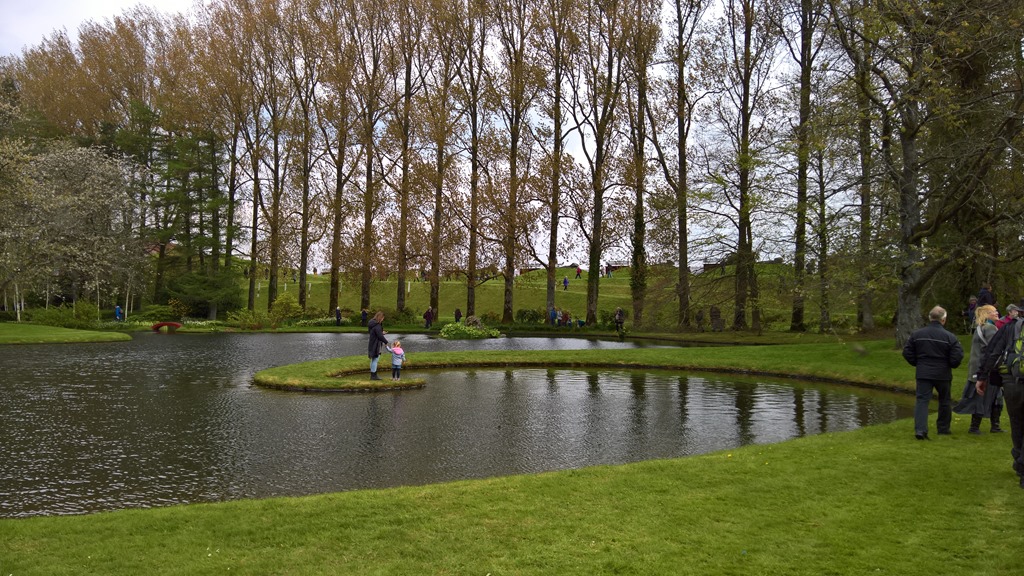
The Garden of Cosmic Speculation
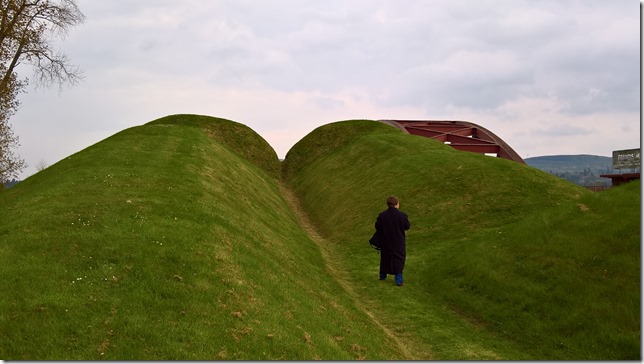
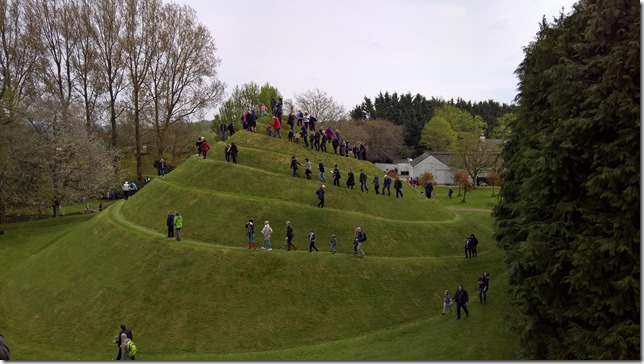
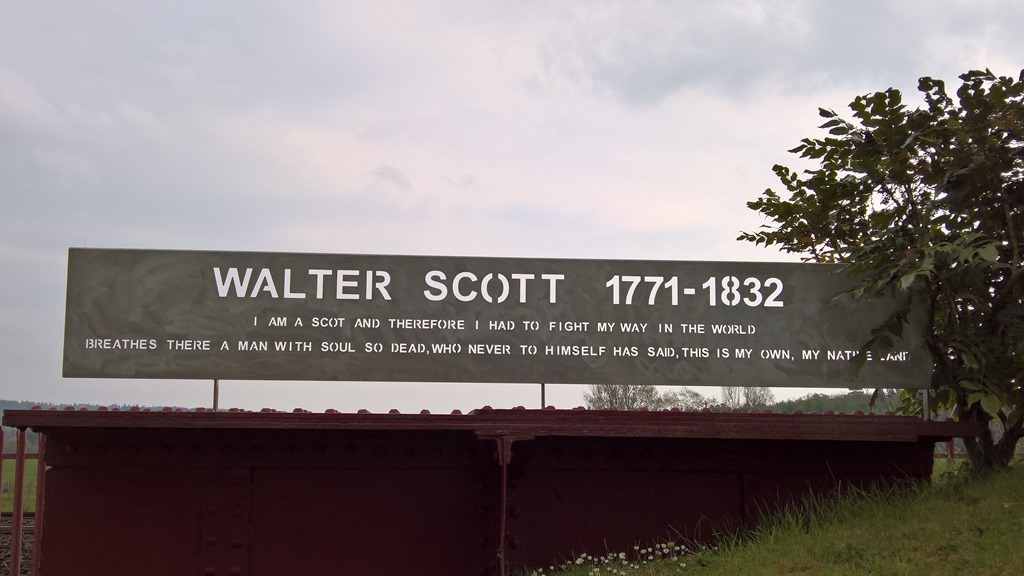
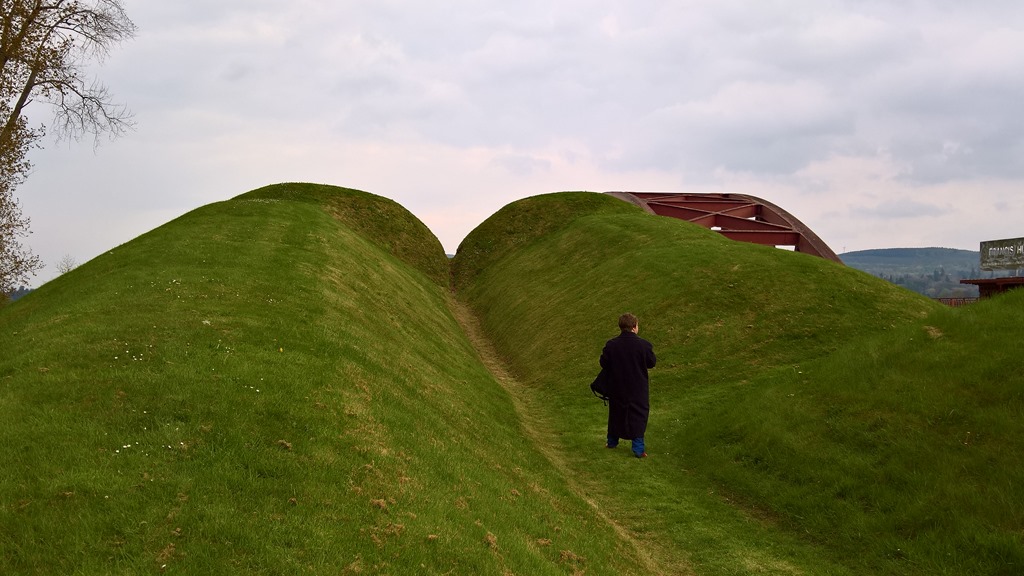
As well as visiting the Crawick Multiverse last week, I also visited another of Charles Jencks gardens: the Garden of Cosmic Speculation. Whilst both gardens share common themes, and the use of sculpted landforms, there were also marked contrasts between the two. Perhaps the biggest was the fact that at the Multiverse, there were just two other visitors aside from my brother and me. At the Garden of Cosmic Speculation, I was one of over 2,500 visitors… This was no doubt caused by the fact that the GoCS is open to the public for just one day each year, whereas the Multiverse is open every day. The Multiverse is also relatively new – it was opened in June 2015 – whilst the GoCS was established in 2003.
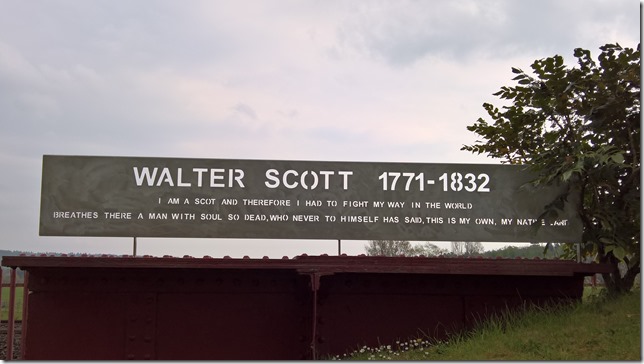
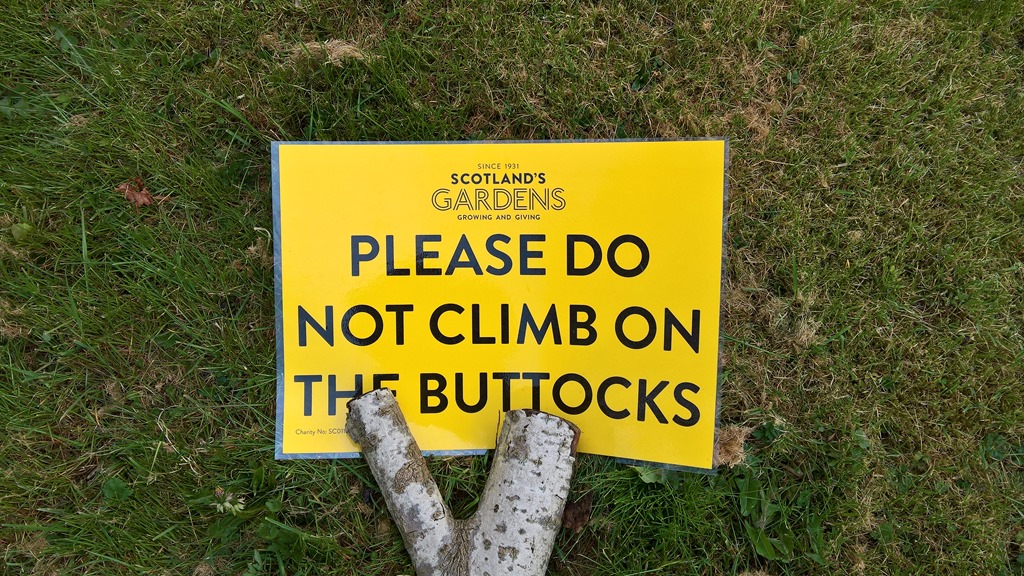
At the visitors’ entrance is the Garden of Worthies – a row of plaques – leading to the Buttocks, complete with a notice on this day:

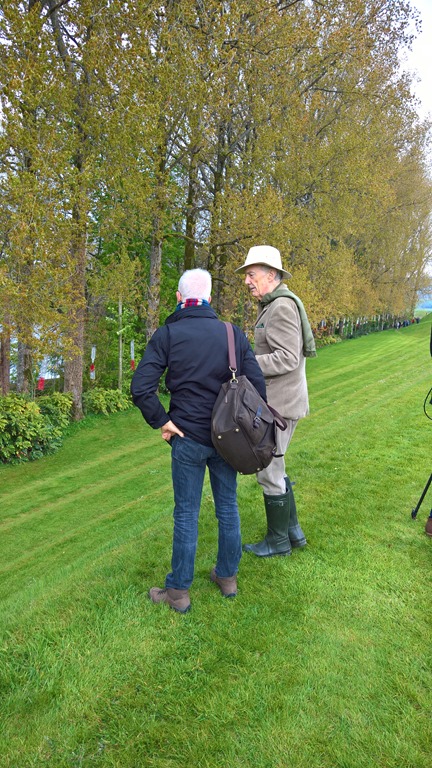
Along the way, I passed Charles Jencks himself:
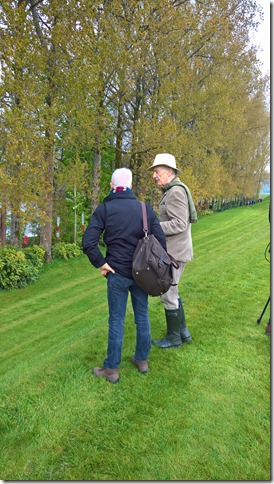
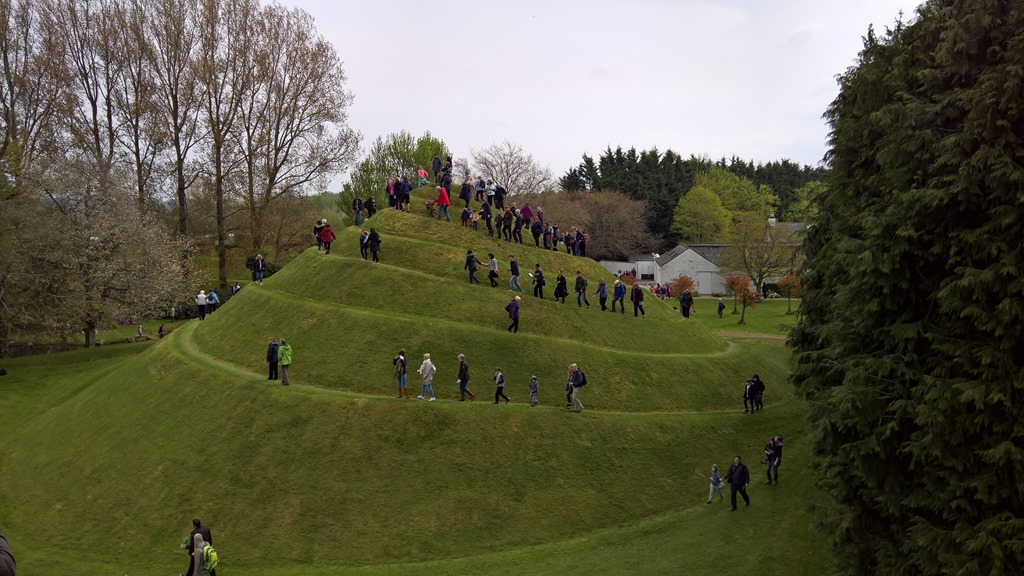
The garden contains Jencks’ signature landforms, and the Snail Mound was extremely popular with visitors:

Another stunning garden.
-
The Crawick Multiverse
Just back from a week in Scotland, visiting family living in Kirkcudbright. During the week, my brother took me to the Crawick Multiverse, a landscape work of art created by Charles Jencks.
 The Crawick Multiverse http://www.crawickmultiverse.co.uk/
 The Crawick Multiverse http://www.crawickmultiverse.co.uk/
It’s stone circles for the 21st century, because it incorporates current cosmological theories into landforms. Quite stunning.
-
Floating and Voting
Tomorrow, the 15th March, we in the Netherlands go to the polls to vote for our political candidate of choice. Note that I didn’t say “to vote for our next government” – with 27 political parties to choose from on the ballot paper, it is inevitable that we’ll end up with yet another coalition government.
As well as the mainstream parties (8 or 11, depending on your definition of “mainstream”), the parties also include the “Non-Voters” party (12 candidates), the “Pirate Party” (with 37 candidates) and the “Jesus Lives” party (6 candidates). Somehow, I don’t think Jesus stands much of a chance. Perhaps he needs to hitch his wagon to the “Political Calvinist Party” – the evangelical Christian party, with their 30 candidates – not one of them a woman, because a woman’s place is of course in the home, and certainly not in politics. Yes, it’s the 21st century, but clearly not for some people.
And as usual, Geert Wilders has been generating more heat than light. His manifesto – actually a list of 11 bullet points covering less than one side of an A4 page – lays bare his anti-Muslim and anti-EU soul. He must be fully aware that he hasn’t got a hope of forming a government – few other parties will touch him with a bargepole in a coalition – and one suspects that he only does it to provoke. What is worrying is that his probable strategy – to pull the other parties to the right – appears to be working, at least in the case of the VVD, led by the current prime minister, Mark Rutte. Wilders appears to have goaded Rutte successfully into matching his rhetoric. Rutte is increasingly trying to appeal to Wilders’ PVV voters, and that’s a very dangerous, and populist, game.
Then we have Erdoğan butting in, and inflaming the passions of the Dutch citizens who have dual Dutch and Turkish nationalities. His “Nazi” rhetoric hasn’t exactly helped Dutch-Turkish relations of late, but then, one suspects, it wasn’t intended to.
And on top of all this, our newspaper, de Volkskrant, has been full of vox-pop pieces on floating voters, there seems to be a veritable flood of them. I confess that I am bewildered by the number of people who seem incapable of making up their minds. The choices are clear, at least to me. Tomorrow I’ll be following in my father’s footsteps and voting left-wing. He was a lifelong socialist, as am I, and believed in a caring society. My vote will be going to the Dutch Labour Party (PvdA), and to a woman. Sorry about that, Calvinists.
-
Media in the Home – The State of Play, part 3
This weekend has seen a major upgrade in our HiFi system. I’ve replaced both the QUAD 44 preamplifier and the QUAD 405 power amplifier. Bought back in 1981, they’ve both given sterling service, but ever since I had our QUAD electrostatic speakers refurbished last year, I’ve been looking at QUAD’s new Artera range of equipment to drive them.
The plan was to replace the QUAD 44 preamplifier with the Artera Link, and the QUAD 405 with the Artera Stereo. However, even though the Link was unveiled a year ago at the 2016 Sound and Vision show in Bristol, production of the units has only just begun.
I am now the proud owner of an Artera Link, and it joins the recently purchased Artera Stereo to give new life to our music.
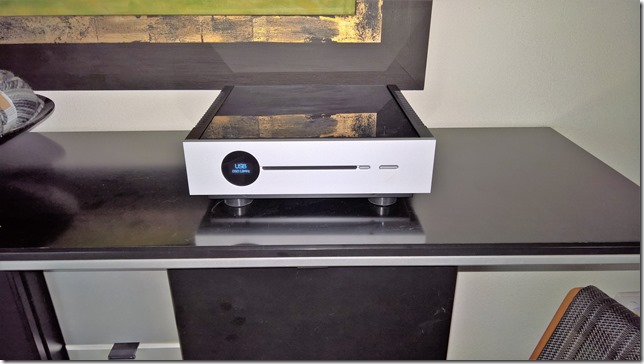
I chose the Artera Link because it can be connected to the network; it is a streaming device, in addition to being a CD player, preamplifier and a high-end DAC. I’m taking a bit of a gamble here; the current streaming capabilities of the Link don’t interest me any more. It supports UPnP, AirPlay and Spotify Connect. UPnP is an example of the “lowest common denominator” approach to solving a problem and while it is a de facto standard in the market, it’s really not well-suited to delivery of high-quality audio streams. AirPlay is a bit better designed, but again, it doesn’t support high-quality audio streams, e.g. DSD. And while Spotify has a huge music library available for streaming, the audio quality of its streams is not (yet) HiFi.
What I really want is for the Artera to become a Roon-certified network player.
This is something that QUAD will have to develop in conjunction with Roon Labs, but if QUAD see it as a market opportunity, it’s well within the realms of the possible. Once developed, new firmware can easily be deployed to the Artera Link via the network.
In the meantime, I’ve integrated my Artera Link into our Roon system via a USB connection to a Sonore microRendu. The latter is already a Roon Ready-certified device, so I can use it to feed FLAC and DSD audio files to the Artera Link.
However, the icing on the cake would be for the Artera Link itself to become a Roon Ready device. That would mean fuller integration into Roon, for example being able to control the volume and digital filters of the Link from within Roon. Hopefully enough of QUAD’s customers feel the same way to persuade QUAD to take the step.
Addendum, May 2017: I’ve sold the Sonore microRendu and replaced it with a humble Raspberry Pi 3, running DietPi and Roon Bridge software. To my old ears, this sounds just as good, but at a fraction of the price of the microRendu.
Addendum, February 2018: I’ve now replaced the Raspberry Pi with an Allo USBridge. This is claimed to be a step up in audiophile quality from the RPi. I’m not sure that my ears are up to the task of hearing the difference, but I can now re-use the RPi in a project elsewhere.
Addendum, August 2020: I’ve sold the Allo USBridge and gone to a Raspberry Pi 4 running RoPieee (which installs Roon Bridge). My ears can’t tell the difference, so I can enjoy the music.
-
The Continuing Saga of Broadband Internet
It’s been 15 months since I blogged about the poor state of broadband internet in our area. In that time, steps both forwards and back have occurred, so I thought it would be useful to summarise the current state of play in our household.
We are still no closer to getting fibre optic cables laid in our neck of the woods, despite some initiatives from commercial companies. Our hopes were raised last year with announcements that ten Local Authorities (including ours) had signed a declaration of intent with an investment company to finance the commercial rollout of a fibre optic network. The company had already done similar projects elsewhere in the Netherlands, and things were looking good. However, after starting two projects in neighbouring Local Authorities, things seem to have slowed right down. The company refuses to commit to further projects in the remaining areas, and has said we must wait until September before any further news. The Local Authorities will be exploring other alternatives, but I see little hope of getting a fibre optic connection here to the Witte Wand before at least the end of 2018.
So, what to do in the meantime? In the absence of fibre optic, some are saying that its time has passed, and that broadband internet will be delivered to the home by 4G and 5G networks. It’s certainly true that 4G can help, but it is not a complete solution, and it is an expensive alternative. It’s far too early to predict what will happen with 5G – the technology is still being developed, and I suspect that when the telecom companies make their initial investments, they are going to look to recoup their costs as quickly as possible. So when 5G does finally arrive, I’ll wager it won’t be cheap.
Last year I mentioned that KPN had introduced a “4G fast internet for the home” product. Since then, T-Mobile has introduced a similar product. Although cheaper than KPN’s product, it still costs €50 per month for 100GB, and once your data allotment is used up, you have to buy extra blocks of data if you want to continue access to the internet.
I’ve decided, as a (hopefully) temporary solution, that until the arrival of a fibre optic cable to our door, I will supplement our slow ADSL internet connection with a second, separate, 4G internet connection from T-Mobile.
In effect, it doubles our internet costs from €50 per month to €100 per month.
On the other hand, while the 100 GB per month data allowance lasts, our internet download speed goes from 4 Mbps to 40 Mbps, and our upload speed goes from less than 1 Mbps to at least 35 Mbps. T-Mobile also offer free access during the night (midnight to 6 am), and they are currently trialling free 50 GB bundles during weekends.
I don’t want to stop our current ADSL subscription with XS4ALL (a Dutch ISP). For one thing, the subscription also covers our telephone usage, and T-Mobile do not support telephone usage in their 4G for the home package. Another reason is that our data usage is more than 100 GB per month (I’ve often seen it reach 200 GB).
So I needed some way to manage simultaneous access to two internet service providers, in a transparent manner.
A neighbour working in IT suggested the solution: use Sophos UTM Home Edition running in Hyper-V on my Windows 10 server that I use for our home cinema. With his help, I set it up, and after a couple of head-scratching moments, it’s been running flawlessly. Sophos UTM is firewall and router software that usually runs on dedicated hardware, but running it in a virtual machine on a server that is doing other things means I can kill two birds with one stone. It’s also free for home use. I have it set up so that the 4G connection is used preferentially, but if it goes down, or my monthly data allocation is used up, then the system automatically switches to the ADSL connection, and this is transparent to all the computers on the internal home network. Here’s a picture showing the two external internet connections and part of the internal home network.
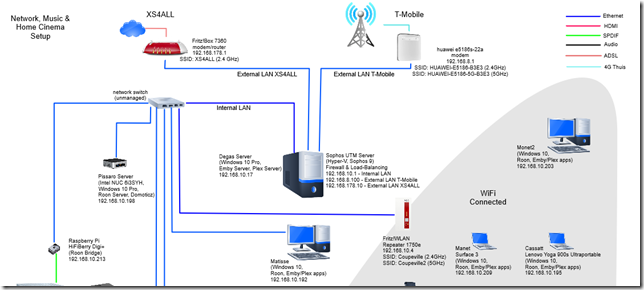
I’ve just completed my first month of operation of the new setup, and so far, it seems to be working well. However, it does come at a cost. As I wrote last year, those of us in the Dutch countryside must remain in the slow lane, or pay through the nose for fast internet.










 Geoff Coupe's Blog