Reflections on life at “De Witte Wand”…

Category: Architecture

  • A Visit To The Depot

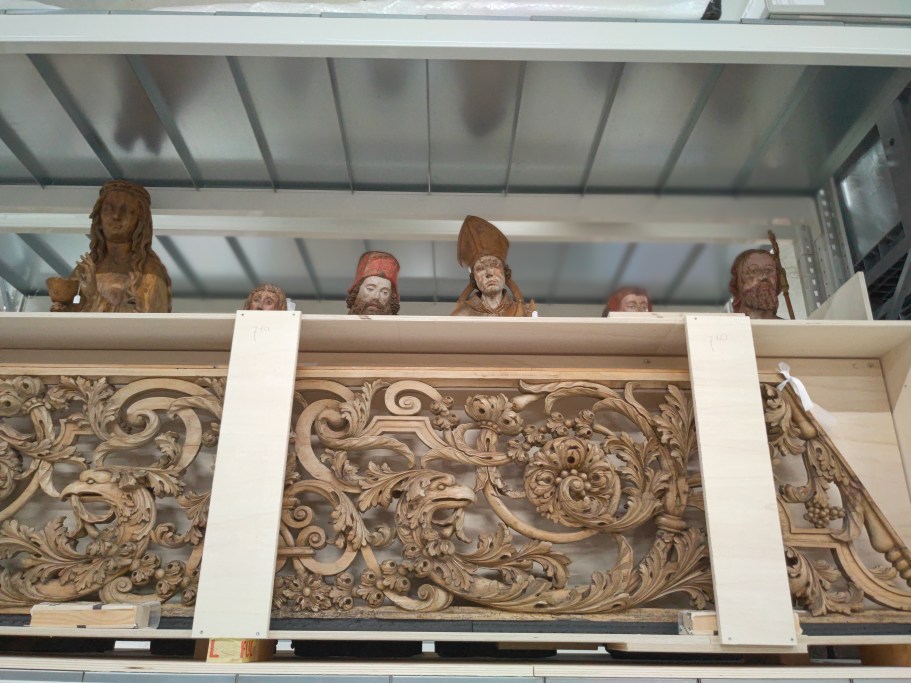
    The Boijmans Van Beuningen museum in Rotterdam has a vast collection of items, of which only about 6 to 8% of which are on display at any one time. The rest were being housed in a variety of locations in the Netherlands, including the basement of the museum.

    The basement was flooded in 2013, thus prompting a plan to build a new storage facility close to the museum that would be capable of housing the entire collection.

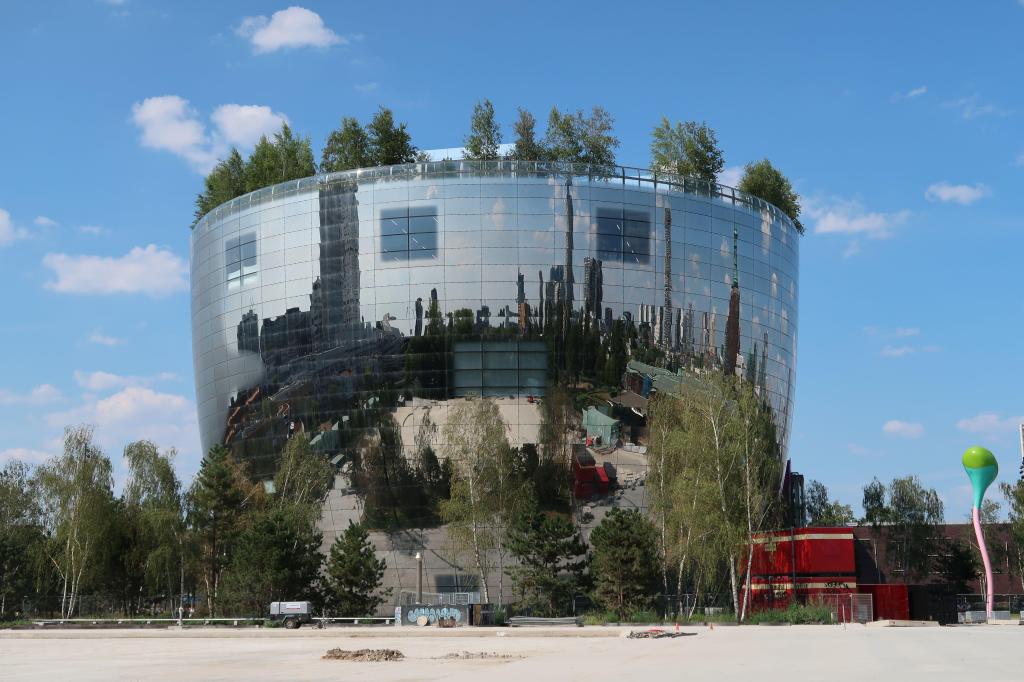
    This became the Depot Museum Boijmans van Beuningen – simply and aptly known to Rotterdammers as “De Pot” (the Pot).

    Depot Boijmans Van Beuningen, the art storage museum housed in a curved mirror glass building. Opened November 2021

    Unlike most museum storage facilities, it is open to the public and I visited it yesterday for the first time in the company of two friends.

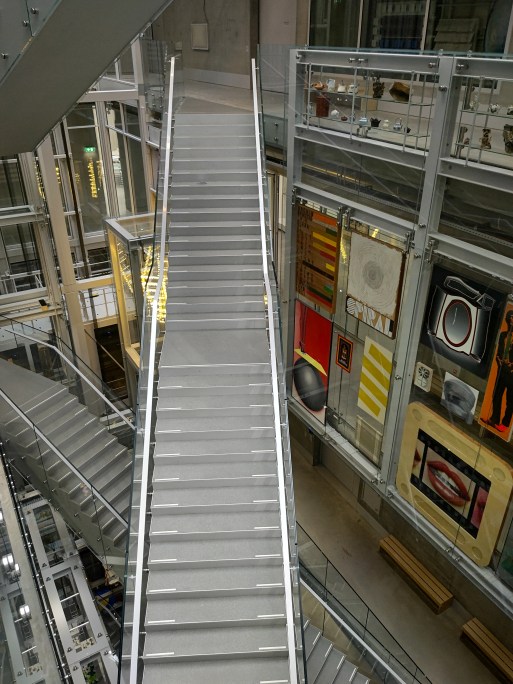
    I was most impressed by it. It has a central atrium criss-crossed by stairs connecting the six floors, with some of the collection being displayed in glass cases around the atrium. Information about the objects is revealed via the Depot App used to scan QR codes next to the objects.

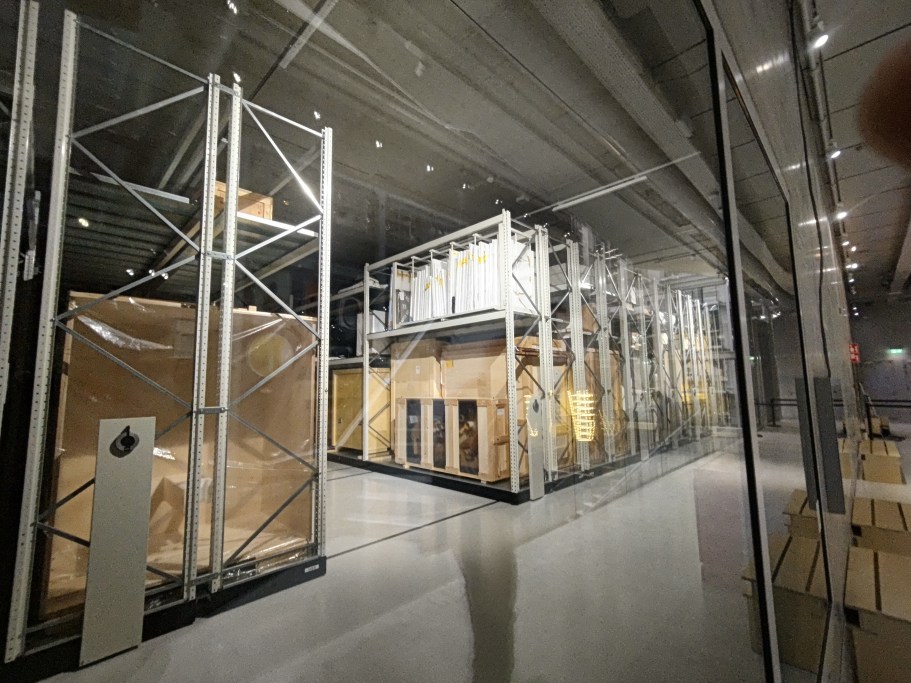
    There are passenger lifts and a massive freight lift used to get the pieces to the storage rooms. All the storage rooms are climate controlled, and short tours of small groups are given by the curators.

    There are areas where themed exhibitions are held, and the current programme is to be found on the Depot website.

    The rooms where the curators and conservators work can be viewed via windows in the atrium.

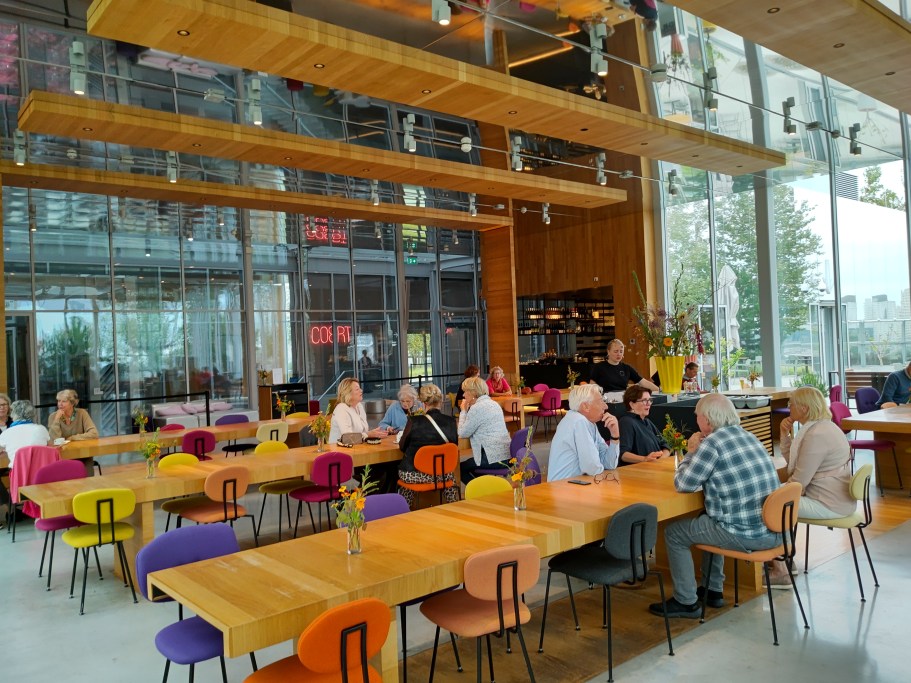
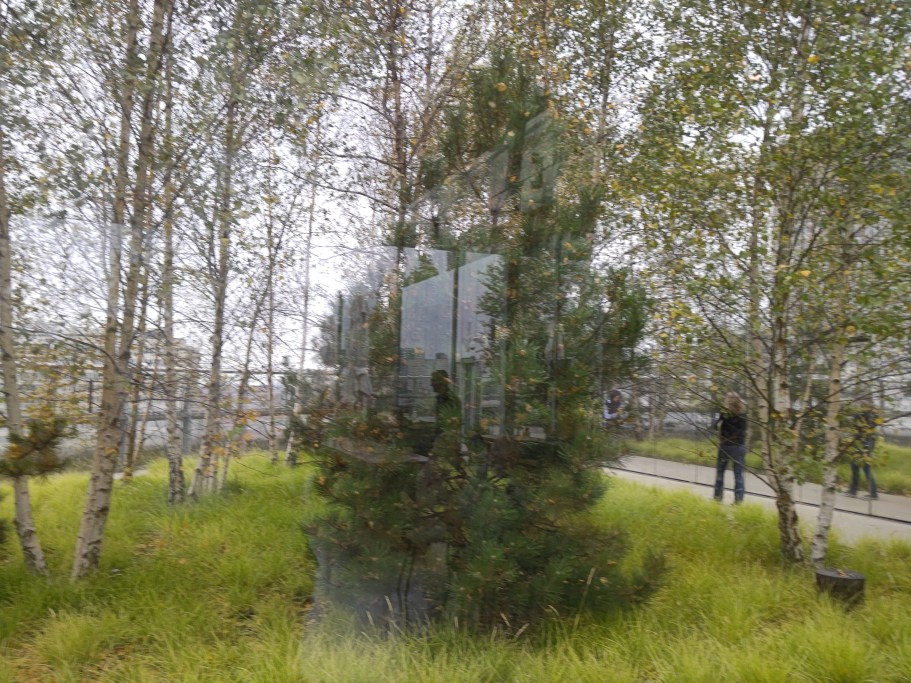
    The Depot is topped off with a roof garden and restaurant.

    When the Depot first opened in 2021, the Architecture critic of the Guardian was a bit sniffy about it, but I found it an interesting place to visit and learn from. Of course, with over 155,000 objects in the museum’s collection, each visit can only make a tiny scratch on the surface.

    The Boijmans van Beuningen museum itself is currently closed until 2030 for major renovations. When it reopens, there will be more space to reveal their collection. If I’m still here, I look forward to that.

  • RIP Charles Jencks

    The architect Charles Jencks has died. I first came across him via a book: The Garden of Cosmic Speculation, which fascinated me.

    TheGardenofCosmicSpeculati3778_f

    As the book’s blurb said, it was

    A unique and compelling narrative of one of the most important gardens in Europe designed by the internationally celebrated architecture critic and designer, Charles Jencks.

    About 10 years later, I visited two landscapes designed by him: the Crawick Multiverse and the Garden of Cosmic Speculation itself. Neither disappointed.

    I see from his obituary that Jencks included the architect Bruce Goff in his pantheon of Post-Modern architects. That’s another name that resonates with me, and has done so for nigh on 60 years, since I first saw pictures of the Bavinger House, and fell in love with it. Alas, all things must pass – the Bavinger House was demolished a few years ago. Hopefully Jencks’ monumental landscape designs will last somewhat longer. 

  • Going Up In The World

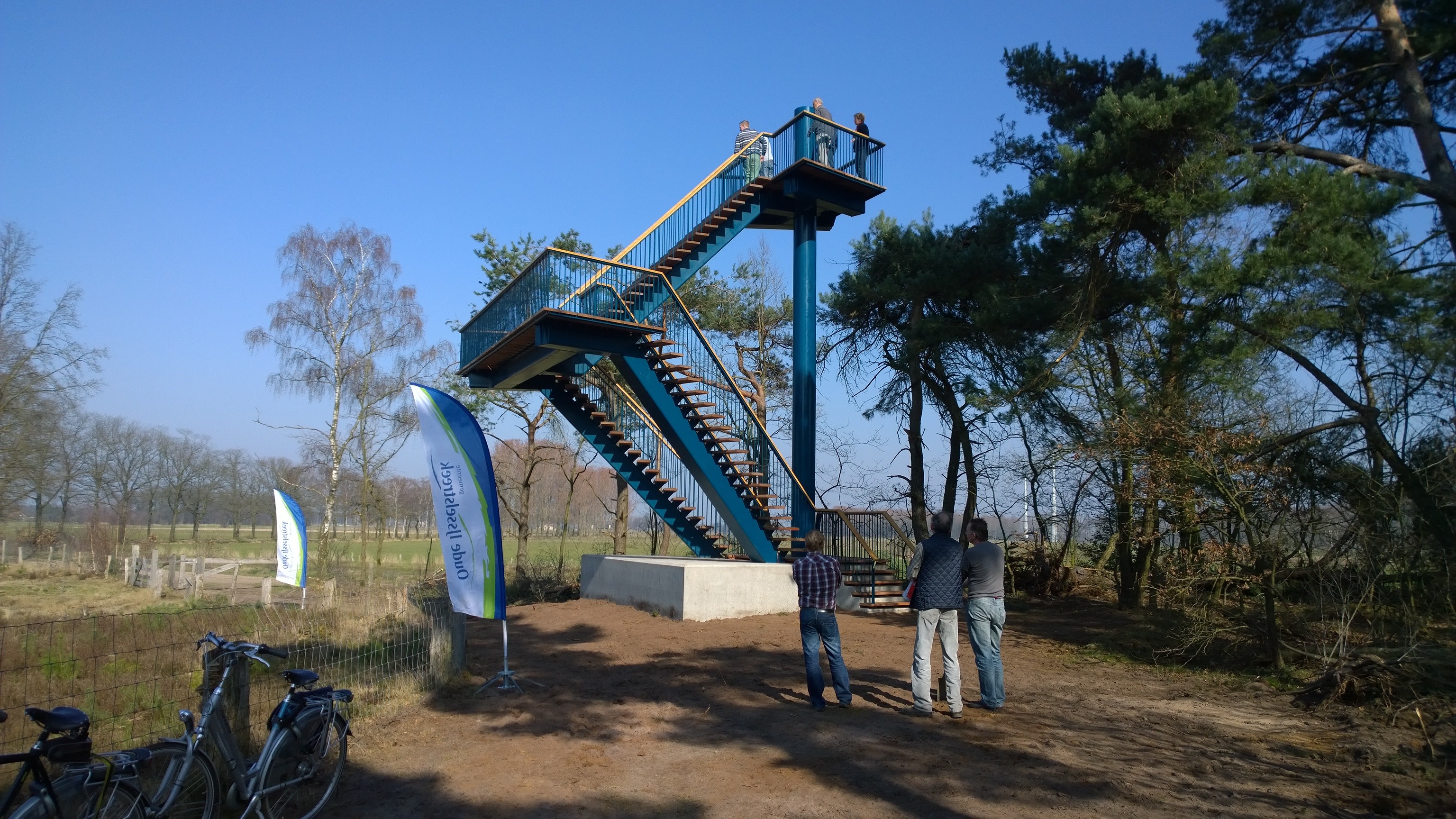
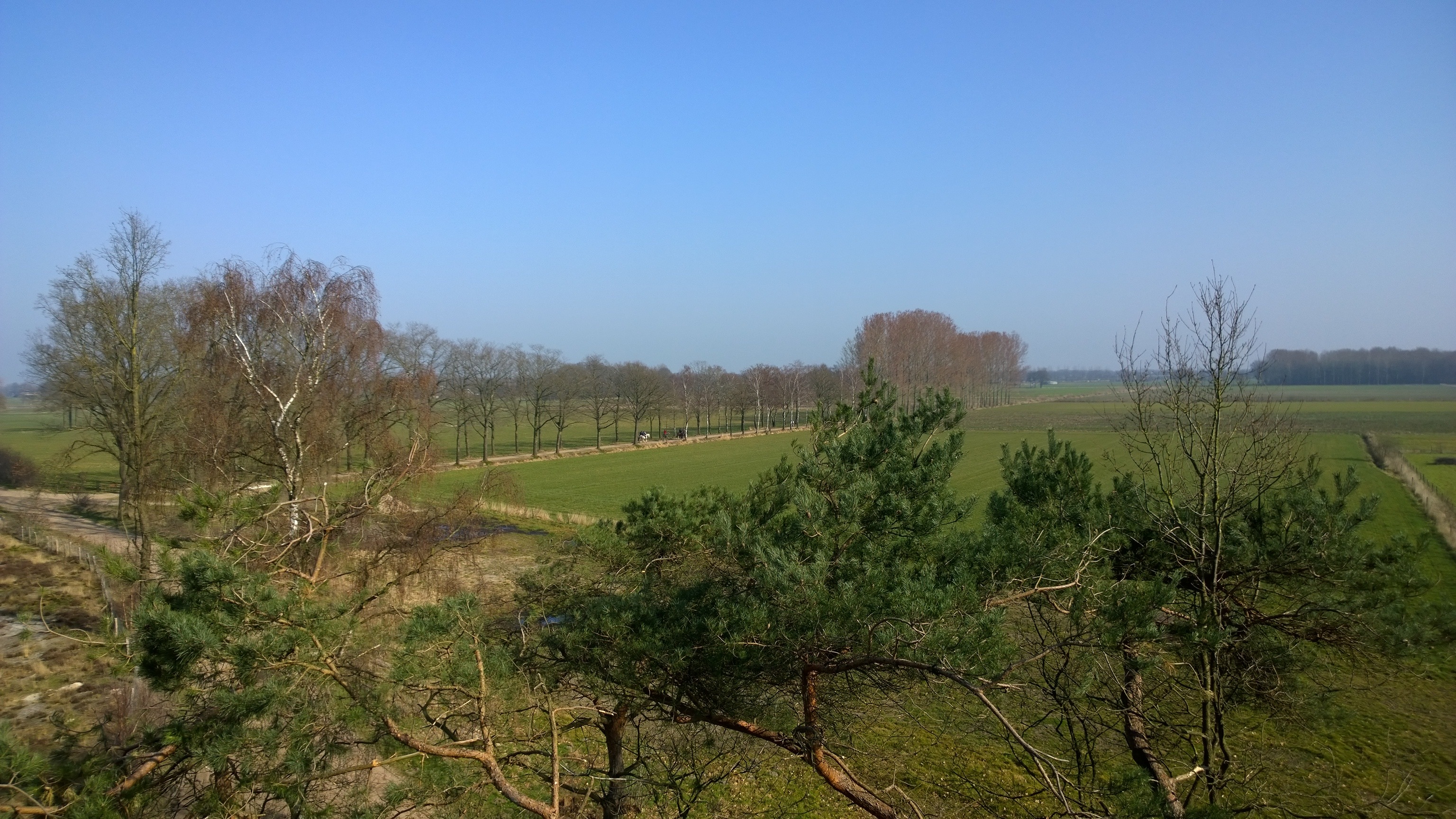
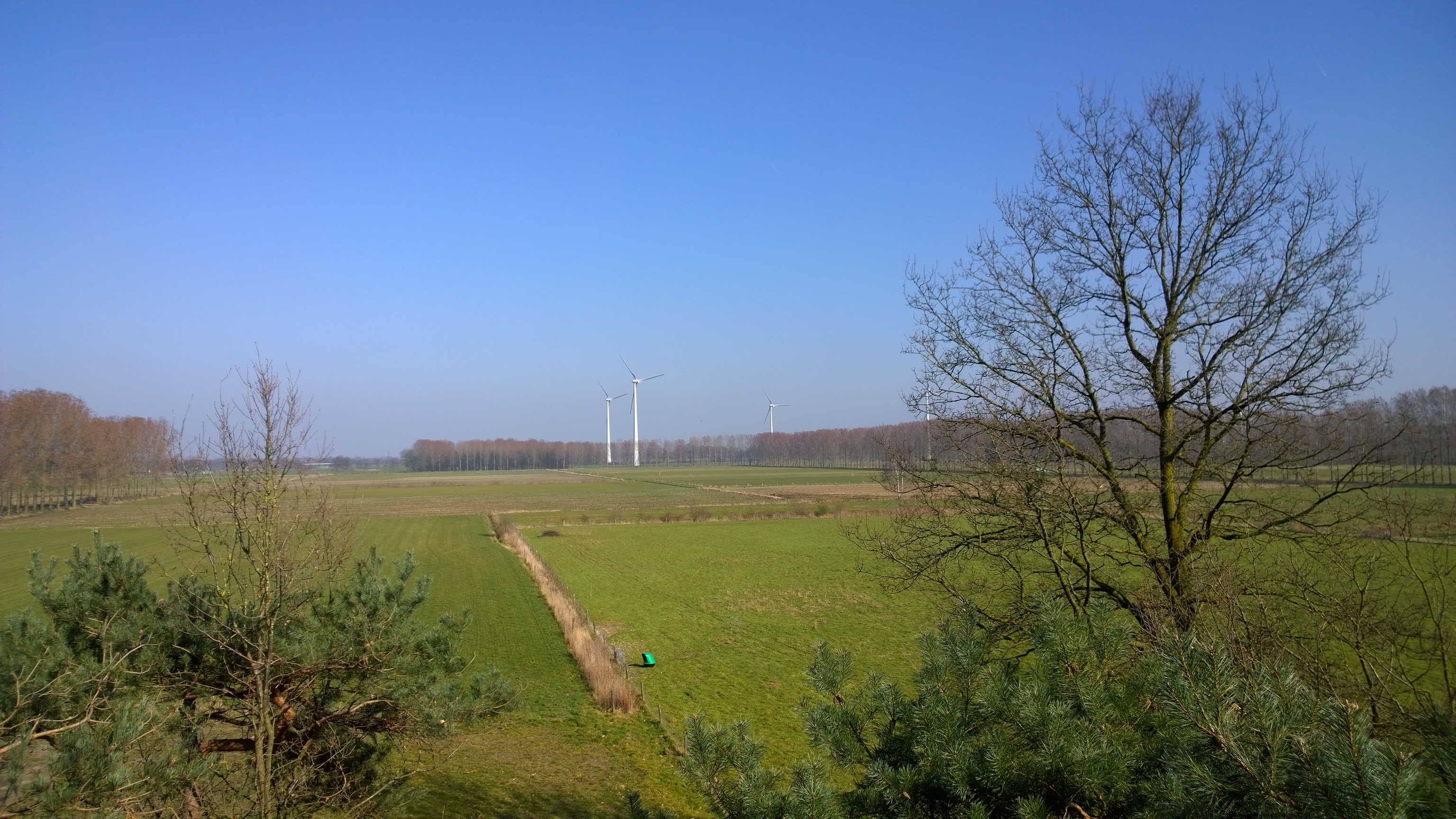
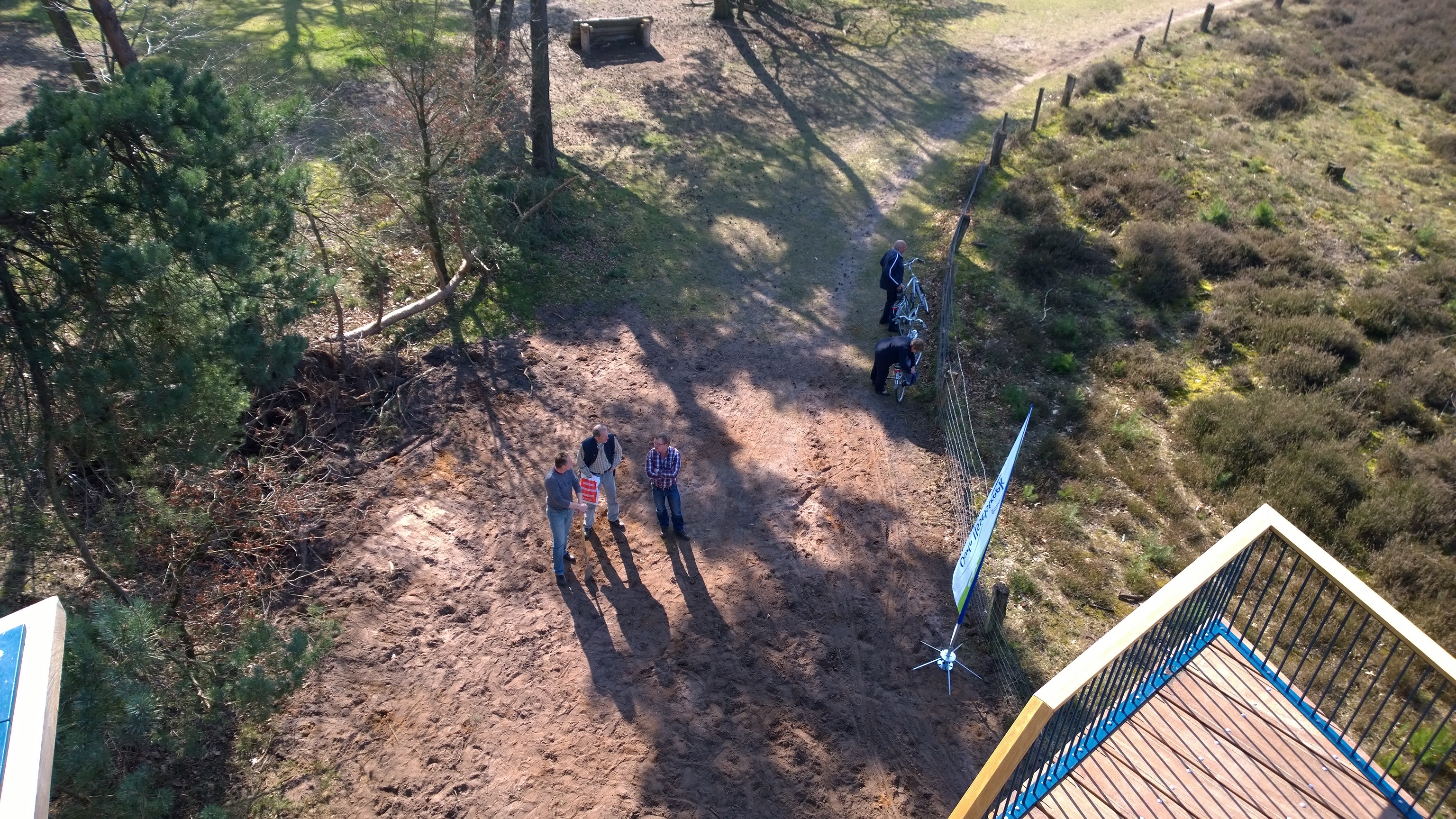
    Observation Towers have a long history. One has just been officially opened in a nature reserve nearby. It gives views over the Vennebulten woods and the Zwarte Veen fields. I went along yesterday to take a look. I willingly concede that it offers a new perspective on the surroundings, but a little bit of me thinks that it has the air of a modern day folly about it.

    20140101-1512-55

    And the views:

    20140101-1512-55

    20140101-1512-55

    20140101-1512-55

    20140101-1512-55

  • The Book Mountain

    After that last post, I needed something to give me hope. Perhaps the news of the opening of the Book Mountain and Library quarter in Spijkenisse, here in the Netherlands, is something to restore my spirits.

  • Suffer From Vertigo?

    Here’s a video taken by someone who works on radio transmission towers. You have to have a head for heights for that job.

    At one point, the commentator says: “there’s no quick way down”. Well, there is, but it would be a one-way trip, I fear.

    (hat tip to Richard Wiseman)

  • A Day Out

    Yesterday I left Martin in charge of the dogs while I travelled to Rotterdam for a day out with a couple of old colleagues. I arrived at midday, and the original plan was to stroll from Central Station down to the Veerhaven, catch a water taxi there and cross the Maas river to the Hotel New York for lunch.

    Alas, we had hardly started walking when the heavens opened, and what can only be described as a tropical downpour commenced. As a result, we abandoned that plan, and took shelter in the museum Boijmans van Beuningen instead. We had intended visiting it after lunch anyway, so we thought that we would switch to having lunch in the museum. It has a roomy restaurant overlooking a park, thus plan B was looking good.

    We should have been alerted to the fact that yesterday was Friday the thirteenth by the downpour…

    We bought our museum tickets, and announced to the cashier that we would go straight to the restaurant first for lunch before strolling around the exhibits. “Ah”, she said, “sorry, but the restaurant is closed for renovation; only the coffee bar is open”. She pointed to the coffee bar next to the museum entrance and our hearts sank. The coffee bar was small, crowded, and with very little in the way of choice of food. Still, we decided to have coffee while we ruminated on the date.

    We enjoyed the Notion Motion installation by Olafur Eliasson. A very effective visual experience using very simple means. I was personally less impressed by the work of Thomas Demand, although I can appreciate the work that went into constructing it.

    One thing that we all wanted to see was the exhibition of the work of Han van Meegeren, who became (in)famous in the 1940s as the man who faked Vermeers. It’s definitely an exhibition worth seeing. It captures the scandal that rocked the art world very well. The museum itself was at the centre of the storm, since, in 1937, the ambitious director of the museum, Dirk Hannema, wanted to purchase The Supper at Emmaus by Vermeer which had just been discovered. Of course, this was actually a forgery by van Meegeren. Hannema managed to raise 520,000 guilders – a huge amount for the time – and purchased the painting. Ironically, one of the first things that the museum did was to have the painting restored. Ironic, since it wasn’t a 17th Century painting, but something that had been painted the year before on a 17th Century canvas.

    The thing that struck me, looking at these paintings, was how bad they are. I know I’m no expert, but I would never have said that these were genuine Vermeers in a million years. And yet, the art historians at the time, notably one Dr. Abraham Bredius, fell over themselves in praise. There’s a book in the exhibition, a compendium of great works of art with texts by prominent art critics. It is open at the page depicting The Supper at Emmaus, and the text is by Bredius. It is no exaggeration to say that Bredius is fulsome in his praise, embarrassingly so. It is hard to read it today without bursting into laughter mixed with pity at poor Bredius’ total misjudgement.

    Was this a case of the Emperor’s New Clothes syndrome or mass hysteria? Clearly, someone must have planted the idea that these were genuine Vermeers at the start. Was he mistaken, or was he in on the game? Whoever it was, I don’t think it was Bredius, as he seems to have been a target of van Meegeren. But Bredius certainly fell for the forgeries; hook, line, and sinker.

    The video of the story on the museum’s page is worth watching, and the English Wikipedia entry is definitely worth reading for the full sordid story of greed on all sides. Strangely, the Dutch Wikipedia entry is less revealing… Perhaps the Dutch are still embarrassed by the affair, or they don’t want to view van Meegeren as anything other than a hero, when in fact he was a criminal and a Nazi sympathiser.

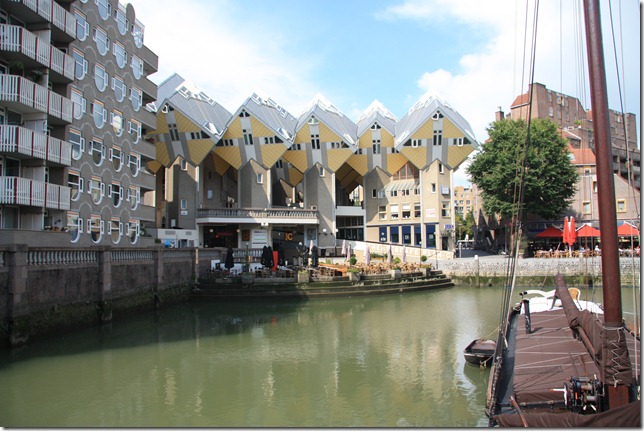
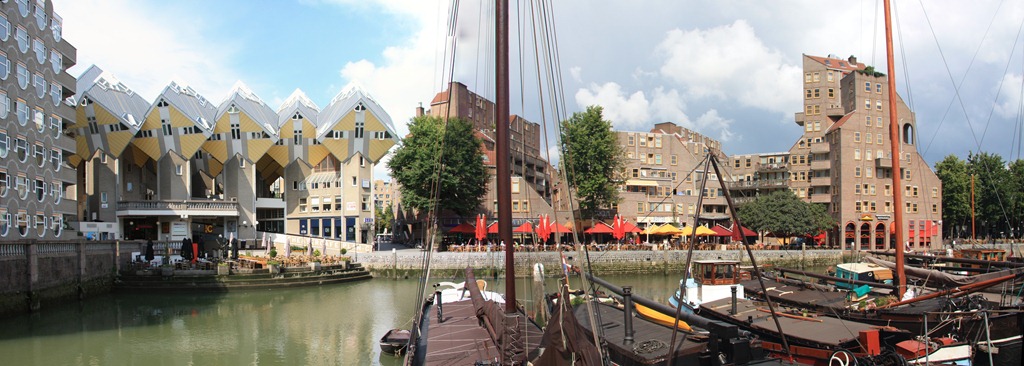
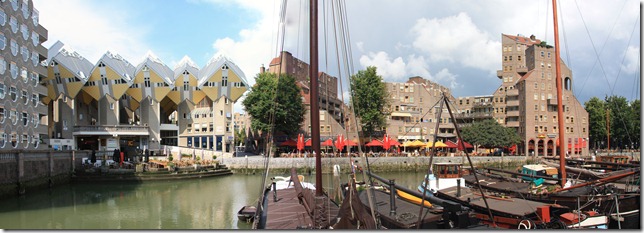
    After the museum, we strolled down to the Oude Haven, passing the Erasmus Bridge, and there, in the shadow of the Kubuswoningen, finished off our jaunt with a few beers and bitterballen.

    20100813-1506-26 Stitch

    20100813-1525-52 Stitch

    20100813-1530-02

    20100813-1525-52

  • The Bavinger House – Now In Glorious Technicolor!

    A while back, I mentioned the impression that Bruce Goff’s Bavinger House had made upon me at the tender age of 12. As I said at the time, I saw pictures of it in a book borrowed from the Public Library.

    Now, I discover that the Bavinger House is being conserved, and there is a web site for it. What really gobsmacked me is that, for the first time in my life, I have now seen colour pictures of the house – that old library book, and any image I have seen on the web up until now, was in black-and-white.

    It is even more beautiful than I had ever imagined. In an alternative universe, I would really love to have lived in that house.


    Addendum 5th June 2016: Sadly, I have to report that the web site for the Bavinger House no longer exists. What is even worse is that the house itself also no longer exists. Wikipedia reports that it was demolished last month. Alas.

  • The British Museum

    I visited the British Museum last Sunday. It was the first time that I had seen the remodelled Courtyard. Very impressive. I took lots of shots, and here is the resulting Photosynth.
     
    (tip: when viewing the Photosynth, switch to Grid View to select another set of photos shot from a different point in the Courtyard)

    Addendum: And of course Microsoft has now scrapped the Photosynth product and technology, so none of these links work anymore. It’s dead, Jim.

  • Foreclosure on the Shire

    I first reported on The Shire – a Tolkien-themed housing development in Oregon almost two years ago. I see that good taste has prevailed, and that foreclosure proceedings against the developer are being brought. While I do feel somewhat sorry for the developer, I thought at the time that the project was doomed from the start.
  • Wind-powered Skyscrapers

    Architect David Fisher has come up with the idea of skyscrapers where each floor can rotate independently, driven by wind turbines. Intriguing, although I assume that the kitchen and bathroom units will hug the central, static, core of the building. Otherwise, rotating plumbing could present some interesting engineering challenges.
  • Nothing Can Go Wrong…

    Geoff Manaugh, over at BLDGBLOG, has an intriguing entry on RoboVault, a robotic storage facility in Florida. It’s also worth visiting RoboVault’s actual web site, if only to hear the corny voiceover extolling the virtues of the facility. Mind you, if the web site is anything to go by, I don’t think I’d entrust anything of value to them. The web site is peppered full of spelling mistakes and bad grammar. Nothing can go wrong… go wrong…. go wrong…
  • Hotel Skeletons

    Over at BLDGBLOG, a very Ballardian postdrained swimming pools and all. Very spooky, possums.
  • Bruce Goff

    When I was about 12 years old, I came across a book in the public library that had a few pictures of the strangest house I had ever seen. It was the Bavinger House, designed by Bruce Goff in 1950 and completed in 1955. I instantly fell in love with it, and dreamt of being able to live in a house like that. I thought about it again today when I saw lots of pictures on Flickr of another Goff design: the Duncan House. Apparently, the Duncan House is now a Bed and Breakfast, so, who knows, one day I might even get to stay (even if for just one night) in a Goff house.
  • Gaudí’s Glory

    Jonathan Jones has a good piece on the life and work of Anton Gaudí in today’s Guardian. Barcelona is my favourite city in part because of Gaudí’s glorious architecture. If you ever get the chance to visit Casa Batlló, jump at it; you won’t be disappointed.
  • The Broken Column House

    Pruned has an intriguing entry about the architectural follies in the Désert de Retz. Money and decadence, how often they seem to combine in our species…
  • Luscious Libraries

    This verges on book pornography for me. I long to be present in these libraries. The only ones that I’ve managed to visit are the Boston and UC Berkley libraries. I see that the Netherlands has a couple of candidates – those I have to see. But, oh, isn’t the library in Rio simply to die for?
  • Drains

    Geoff Manaugh, over at BLDGBLOG, has an interview with Michael Cook about drains illustrated with some spectacular photographs. Do go and read it and enjoy the view. 
  • Wine Bottle Grotto

    Now, there’s an idea for our empties… Considering we generally polish off a bottle a day, it should take us less than fourteen years to complete it, assuming we don’t die of liver cirrhosis beforehand… 
  • Grow Old Along With Me…

    It’s fifteen months now since we moved into the farmhouse that is now our home. The farmhouse has always been known locally as "De Witte Wand" – the White Wall. This struck us as a bit odd, since there is no white wall in sight anywhere on the property. It’s a brick building. We asked our neighbours about the name, and one of them said that originally, the farmhouse on this site was not built of brick, but of wattle and daub. The walls would then have been whitewashed, hence the name.

    At some point in the farmhouse’s history, the wattle and daub walls have been replaced by bricks. The original timber frame was kept during the rebuilding, but the roof was enlarged. You can see the original roof frame in the attic, inside the larger frame that now supports the bigger roof.

    060331-1032-15 

    We don’t know when that was done. We do know that the farmhouse has been on this spot since at least 1828. We know that because it is marked on a Kadaster (Land Registry map) that was made in that year.

    Here’s a photo of the farmhouse taken at some point in the 20th century, when it was still a working farm. As you can see, it is a brick building by the time of this photograph.

    20070616-1202-32 

    The original of this photo is in the possession of the family that originally farmed here. It shows the front of the farmhouse, where the family would have lived. The rest of the farmhouse was the stall for the cows and the stable for the farmhorse. The outbuilding was where the pigs were kept. The family sold off the farm and some of the land, I think in the early 1970s. The farmhouse was bought by a doctor, who used it as a weekend cottage until 1980. At that point it was put back on the market and sold to the people who lived here until we bought it from them last year. Here’s an aerial shot of the farmhouse as it was in 1980.

    20070619-1040-10 

    You can clearly see what was originally the large entrance to the cow stalls at the rear of the house, although by this time the doorway has been replaced by French windows. The couple who bought the farmhouse in 1980 did extensive renovation and remodelling of the interior space. They also developed the gardens that surround the house.

    Since buying the house, we have done little major work on the interior, apart from putting in a new kitchen. The gardens are being reshaped by Martin to become his concept and design. We’ve had no regrets about moving here, and hopefully we can continue to enjoy this house for many years to come.

    20070208-1307-31 

    20070123-0845-37