Reflections on life at “De Witte Wand”…

Category: Books

  • Isle of Man Guide

    I see that the University of California has scanned a copy of a book originally published in 1909: The Isle of Man, written by Agnes Herbert and illustrated by Donald Maxwell.
     
    Isle of Man 1909 cover 
     
    It’s a fascinating read. Miss Herbert lived on the Island, at least for a time, so she describes the society and customs of the times with probably a greater degree of accuracy than many. She has a rather dry wit as well: 
    A young man introducing a new-found ladye to the man with whom he is holidaying shrouds the presentation in the mystery of, "My friend – my friend." If they are not friends, they are "fiongsays." It is one of the compensations of the lower orders that an engaged couple can go away for a summer holiday together without appreciably disturbing Mrs. Grundy. If this beneficient arrangement could be extended, a much greater knowledge of one’s "fiongsay" could be arrived at, and the dangers of the matrimonial precipice reduced to a minimum. This by the way.
    Inevitably, she has a chapter on Manx Folklore, which, even in my day, was still strong. Nonetheless, it was but a pale shadow of what it must have been like in 1909, but even then, Agnes Hebert detects the waning:
    Every Manx boy and girl of to-day who is born into this world alive starts with a belief in fairies, but nowadays the faith is crushed in early youth. There is nothing to foster it. Romance and lodging-house keeping do not run together. There is no connexion between a seaside landlady and romance. She is quite the most realistic thing in Nature.
     
    I know from personal experience that in the more remote corners of the Isle of Man many of the cottagers believed in fairies and spirits generally, up to twenty years ago. At that time, as a child, I saw much of the natives, and chatted with many old and middle-aged and young who did not doubt the existence of the "little people," ot the "good people," in the least. The word "fairies" was always ostentatiously avoided, as the small sprites were supposed to dislike the use of it exceedingly.
    She translates the Manx word Phynnodderee as troll, but mentions that in Cregeen’s Manx Dictionary, he gives the meaning as "satyr" (which he does, I checked). I can’t help feeling that she is closer to the mark, given the Scandanavian influences that lie deep-rooted in the Island.
     
    All in all, this is a terrific book. Thank goodness for the internet!
     
  • Dumbledore Was What?!

    Well, according to JK Rowling, Albus was a friend of Dorothy. Damnit, we’re everywhere…
  • BibliOdyssey: The Book

    Peacay, over at his BibliOdyssey site, announces that an honest-to-goodness book will shortly be published containing a selection of the images he has found on the Internet. For bibliophiles everywhere, it sounds like a wonderful Christmas present.
  • Well-Deserved

    I see that Doris Lessing has won the Nobel prize for literature. It is well-deserved. To understand why, go and read this.
  • The Meme of Unread Books

    Nicholas Whyte points out that you can search through the contents of LibraryThing to produce a list of the top 10,000 unread books. Here’s the first 100. Those in bold, I’ve read; those in italic, I’ve started but couldn’t finish…
     
    1. Jonathan Strange & Mr Norrell (149)
    2. Anna Karenina (132)
    3. Crime and punishment (121)
    4. Catch-22 (117)
    5. One hundred years of solitude (115)
    6. Wuthering Heights (110)
    7. (No title) (104)
    8. Life of Pi : a novel (94)
    9. The name of the rose (91)
    10. Don Quixote (91)
    11. Moby Dick (86)
    12. Ulysses (84)
    13. Madame Bovary (83)
    14. The Odyssey (83)
    15. Pride and prejudice (83)
    16. Jane Eyre (80)
    17. A tale of two cities (80)
    18. The brothers Karamazov (80)
    19. Guns, Germs, and Steel: the fates of human societies (79)
    20. War and peace (78)
    21. Vanity fair (74)
    22. The time traveler’s wife (73)
    23. The Iliad (73)
    24. Emma (73)
    25. The Blind Assassin (73)
    26. The kite runner (71)
    27. Mrs. Dalloway (70)
    28. Great expectations (70)
    29. American gods : a novel (68)
    30. A heartbreaking work of staggering genius (67)
    31. Atlas shrugged (67)
    32. Reading Lolita in Tehran : a memoir in books (66)
    33. Memoirs of a Geisha (66)
    34. Middlesex (66)
    35. Quicksilver (66)
    36. Wicked : the life and times of the wicked witch of the West … (65)
    37. The Canterbury tales (64)
    38. The historian : a novel (63)
    39. A portrait of the artist as a young man (63)
    40. Love in the time of cholera (62)
    41. Brave new world (61)
    42. The Fountainhead (61)
    43. Foucault’s pendulum (61)
    44. Middlemarch (61)
    45. Frankenstein (59)
    46. The Count of Monte Cristo (59)
    47. Dracula (59)
    48. A clockwork orange (59)
    49. Anansi boys : a novel (58)
    50. The once and future king (57)
    51. The grapes of wrath (57)
    52. The poisonwood Bible : a novel (57)
    53. 1984 (57)
    54. Angels & demons (56)
    55. The inferno (56)
    56. The satanic verses (55)
    57. Sense and sensibility (55)
    58. The picture of Dorian Gray (55)
    59. Mansfield Park (55)
    60. One flew over the cuckoo’s nest (54)
    61. To the lighthouse (54)
    62. Tess of the D’Urbervilles (54)
    63. Oliver Twist (54)
    64. Gulliver’s travels (53)
    65. Les misérables (53)
    66. The corrections (53)
    67. The amazing adventures of Kavalier and Clay : a novel (52)
    68. The curious incident of the dog in the night-time (52)
    69. Dune (51)
    70. The prince (51)
    71. The sound and the fury (51)
    72. Angela’s ashes : a memoir (51)
    73. The god of small things (51)
    74. A people’s history of the United States : 1492-present (51)
    75. Cryptonomicon (50)
    76. Neverwhere (50)
    77. A confederacy of dunces (50)
    78. A short history of nearly everything (50)
    79. Dubliners (50)
    80. The unbearable lightness of being (49)
    81. Beloved : a novel (49)
    82. Slaughterhouse-five (49)
    83. The scarlet letter (48)
    84. Eats, Shoots & Leaves: The Zero Tolerance Approach to Pu… (48)
    85. The mists of Avalon (47)
    86. Oryx and Crake : a novel (47)
    87. Collapse : how societies choose to fail or succeed (47)
    88. Cloud atlas : a novel (47)
    89. The confusion (46)
    90. Lolita (46)
    91. Persuasion (46)
    92. Northanger abbey (46)
    93. The catcher in the rye (46)
    94. On the road (46)
    95. The hunchback of Notre Dame (45)
    96. Freakonomics : a rogue economist explores the hidden side of… (45)
    97. Zen and the art of motorcycle maintenance : an inquiry into … (45)
    98. The Aeneid (45)
    99. Watership Down (44)
    100. Gravity’s rainbow (44)
  • Yet Another One

    Since the publications of Dawkins’ The God Delusion last year, there have been a number of books published in riposte. The latest is John Cornwell’s Darwin’s Angel: an angelic response to The God Delusion. And it seems to be yet another example of a writer who deliberately misrepresents what Dawkins actually wrote. In order to prepare for a radio interview with Cornwell, Dawkins read Darwin’s Angel, and he was so surprised by the way that his views had been twisted, that he wrote a response here. As Dawkins says, it is difficult not to think, on the face of the evidence in the book, that Cornwell is being anything other than mendacious, spiced with petty malice. 
  • Deventer Book Market

    Last Sunday saw the 19th annual book market held in the town of Deventer. There were 878 stalls set out in the town. If they were laid end-to-end, that’s six kilometres of stalls groaning with books. I managed to pick up some bargains: The Science Book for €5 and a hardcover first edition of Robert Nye’s Merlin for €4. There was one stall devoted to pop-up books, which are a particular weakness of mine. They had a nice example of a pop-up devoted to the works of Alfred Hitchcock, and another that had pop-ups of six of Frank Lloyd Wright’s houses, but alas, the prices asked I could not justify to myself. Frankly, Amazon is far cheaper, even with the postage. And then there was the stall that had an amazing book on Magritte, a snip at €225 in place of the original price of €995. I left that one behind as well.
     
    20070805-1308-03 
     
    20070805-1321-37 
  • Out of the Tunnel

    That’s the title of the book by Rachel North that describes her experiences in the terrifying places of her life. First when she was raped and secondly when she was very nearly blown up in the bombings in London on the 7th July 2005.
     
    I mentioned here that I thought that the book would be worth reading. Now that I have done that, I can confirm that my feeling was right. It is a wonderful book. Her voice is human, true, solid, and deserves to be heard.
     
    The end of the book – when the light returns – reminds me somewhat of the glorious closure of Tony Kushner’s Angels In America:
    This disease will be the end of many of us, but not nearly all, and the dead will be commemorated and will struggle on with the living, and we are not going away. We won’t die secret deaths anymore. The world only spins forward. We will be citizens. The time has come.
    Bye now.
    You are fabulous creatures, each and every one.
    And I bless you: More Life.
    The Great Work Begins. 
    Thank you, Rachel for the book.
  • The Power Of Narrative

    Michael Bérubé has a terrific article on the effect Harry Potter has had on his teenage son. Absolutely worth reading. 
  • The Open Library

    The Open Library is a project that has as its goal nothing less than to make every book available via the internet to anyone. The project has just begun, so it’s very early days. Still, go and take a look.
  • What Book Are You?

    Apparently, I’m…


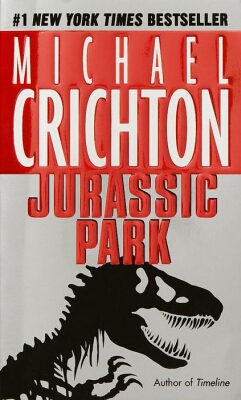
    You’re Jurassic Park!
    by Michael Crichton
    You combine all the elements of a mad scientist, a brash philosopher, a humble researcher, and a money-hungry attracter of tourists. With all these features, you could build something monumental or get chased around by your own demons. Probably both, in fact. A movie based on your life would make millions, and spawn at least two sequels thatwouldn’t be very good. Be very careful around islands.
    Take the Book Quiz at the Blue Pyramid.

    I rather doubt that a film (not "movie", if you please) based on my life would break even, let alone make millions, but there you go…
     
    (hat tip to Ario, over at Altering Labyrinth, for the link)) 
  • Phantom Limb

    I’m nudged, by not one, but three, entries on Norman Geras’ blog, to the realisation that I have a literary phantom limb. I clearly remember a hardcover edition of Nevil Shute’s On The Beach in my parent’s bookcase. Where the book ended up, I do not know. All that is certain is that it did not end up with me. And yet, I wish I had read it at the time. I saw the film (which Shute himself hated) and it haunted me. Time to track down a copy of the book for myself and to reattach it into my library.
  • The Canon

    Earlier this month I wrote about James Lovelock’s The Revenge of Gaia. In it, he calls for the creation of a guidebook to science:
    What we need is a book of knowledge written so well as to constitute literature in its own right. Something for anyone interested in the state of the Earth and of us – a manual for living well and for survival.The quality of its writing must be such that it would serve for pleasure, for devotional reading, as a source of facts and even as a primary school text. It would range from simple things such as how to light a fire, to our place in the solar system and the universe. It would be a primer of philosophy and science – it would provide a top-down look at the Earth and us. It would explain the natural selection of all living things, and give the key facts of medicine, including the circulation of the blood, the role of the organs. The discovery that bacteria and viruses caused infection diseases is relatively recent; imagine the consequences if such knowledge was lost. 
    Coincidentally, I came across a book published in May this year that sounded as though it might fit the bill, at least partially. That book is The Canon: A Whirligig Tour of the Beautiful Basics of Science by Natalie Angier. The publisher’s blurb sounded promising, too:
    The Canon is vital reading for anyone who wants to understand the great issues of our time – from stem cells and bird flu to evolution and global warming. And it’s for every parent who has ever panicked when a child asked how the earth was formed or what electricity is. Angier’s sparkling prose and memorable metaphors bring the science to life, reigniting our own childhood delight in discovering how the world works.
    Sounds good, doesn’t it? That’s what I thought too, so I bought a copy.
     
    But, oh, what a disappointment I am finding this book to be. Admittedly, I am not yet quite halfway through, but so far it is proving a real struggle to keep going. The problem is Angier’s style of writing which I find irritating quite beyond belief. The publisher might think she has "sparkling prose and memorable metaphors", but I feel as though I am constantly being bludgeoned over the head by the author’s clever-clever remarks and witticisms (well, she thinks they’re witty) and metaphors that, far from being memorable in a good way, make me go WTF?
     
    And when I say "constantly bludgeoned over the head", I do mean constantly. Hardly a sentence goes by without Angier wanting to slip something in. For example:
    …Georg Simon Ohm, a German physicist who determined the relationship between voltage, current , and resistance in an electrical current, and who is rumoured to have practiced yogic meditation when he thought nobody was around.
     
    From Ohm we get ohm, the unit used to measure resistance in an electrical circuit or device. And though no one expects you to master the nuances of units or their namesakes (except to remember who the real watt’s Watt was and what that Watt was not), the ohm is a good place to start talking about the electricity coursing through your cords, and what it says about all of us.
    That’s a fairly typical example of her prose, which strikes me as being far too precious for its own good. I feel as though I’m drowning in warm maple syrup. Against all this constant barrage of wordplay, the actual science is getting lost. Angier clearly loves science, as do I, but in her desire to convey the attraction she has had the effect, at least for this reader, of making me want to turn my back on this book. I’m sorry, I did want to like this book, but I only give it half a star out of five. Lovelock’s guidebook to science needs another author to tackle it.
  • What I Did Wrong

    That’s the title of a book by John Weir. I’ve mentioned it before, but now I see that Matthew Cheney, over at Mumpsimus, has a glowing review of the book. It’s on my pile of to-be-read books, but I see that I have to bump it up closer to the top.
  • A Book Recommendation

    I haven’t yet read it, but I think I will recommend Out Of The Tunnel, by Rachel North, sight unseen. Judging by her writing over at Rachel From North London, it will be worth reading. I’ve just ordered my copy.
  • The Angry Old Men

    There’s a good interview with Michael Moorcock over at Ballardian. He talks of his long friendship with J. G. Ballard, the themes in their books, and their influences. Worth reading. Which reminds me, it’s about time I re-read my favourite works of Moorcock: Gloriana, Mother London and King of the City. The latter has some wonderful splenetic rants on the cult of Princess Di.
  • Misrepresentation

    I suppose that I shouldn’t be surprised. After all, I saw it when the reviews starting coming in for Dawkins’ The God Delusion. By that, I mean the impression, on reading the reviews, that the reviewers either hadn’t actually read the book, or were seemingly incapable of understanding the words printed on the page in black and white.

    And now, with the publication of Christopher Hitchens’ God Is Not Great, I’m getting this very strong impression of deja vu.

    Here’s Richard Harries, a retired bishop of Oxford, and now a life peer, reviewing the book in The Guardian this weekend…

    Harries starts as he means to go on:

    First Dennett, then Dawkins and now Hitchens: and of these three recent diatribes against religion, Christopher Hitchens’s is the fiercest.

    My dictionary defines diatribe as "an invective discourse; a strain of harsh criticism or denunciation". Well, while I would concede that both Dawkins and Hitchens are both, shall we say, impassioned and florid in their discourse, I would never, in a million years, have associated the term diatribe to Dennett’s urbane and careful reasoning in Breaking The Spell. For Harries to suggest otherwise is my first yellow card, and leads me to wonder whether he has actually read the book in question. 

    He goes on to throw down a challenge: "But how is it that the majority of the world’s great philosophers, composers, scholars, artists and poets have been believers, often of a very devout kind? Hitchens avoids facing that question by three less-than-subtle sleights of hand."

    Just before we get on to examining the three less-than-subtle sleights of hand, I would simply like to observe that in the history of humankind, before scientific truths became established, being a believer was usually the default position. Often because it wasn’t prudent to be otherwise. And I might further add that Harries’ argument is simply a variation on the "nine billion flies can’t be wrong" argument. Just because people believe in something doesn’t necessarily make it true. Ask Prince Charles about the efficacy of homeopathy, for example. 

    Ok, so now back to Harries’ three points.

    First, he redefines in his own terms what it is to be Christian.

    Well, I don’t actually read in the Bishop’s review his own definition of what it is to be a Christian, so I don’t see a rebuttal here. Still, moving on. Harries states:

    The faith of Dietrich Bonhoeffer – a passionate follower of Jesus if there ever was one, who met execution for his part in the plot to assassinate Hitler with the words that for him death was a beginning – is described by Hitchens as "an admirable but nebulous humanism".  

    This is selective quoting. What Hitchens actually says is:

    Religion spoke its last intelligible or noble or inspiring words a long time ago: either that or it mutated into an admirable but nebulous humanism, as did, say, Dietrich Bonhoeffer, a brave Lutheran pastor hanged by the Nazis for his refusal to collude with them. 

    So Hitchens is not implying that Bonhoeffer was a humanist, as Harries would appear to want us to believe, but that Bonhoeffer’s stance, while being that of a "brave Lutheran pastor" was similar to that of a humanist.

    Moving on swiftly to Martin Luther King, Harries then states:

    Martin Luther King, whom he greatly admires, is assessed primarily on the grounds that his religious rhetoric was a tool required to galvanise the Bible-reading South against racism.  

    Well, actually, I think Hitchens is saying more than that. It is true that he does not feel that King was a Christian, but not in the sense that Harries would want us to conclude. For example:

    Christian reformism arose originally from the ability of its advocates to contrast the Old Testament with the New. The cobbled-together ancient Jewish books had an ill-tempered and implacable and bloody and provincial god, who was probably more frightening when he was in a good mood (the classic attribute of the dictator). Whereas the cobbled-together books of the last two thousand years contained handholds for the hopeful, and references to meekness, forgiveness, lambs and sheep, and so forth. This distinction is more apparent than real, since it is only in the reported observations of Jesus that we find any mention of hell and eternal punishment. The god of Moses would brusquely call for other tribes, including his favourite one, to suffer massacre and plague and even extirpation, but when the grave closed over his victims he was essentially finished with them unless he remembered to curse their succeeding progeny. Not until the advent of the Prince of Peace do we hear of the ghastly idea of further punishing and torturing the dead. … At no point did Dr. King – who was once photographed in a bookstore waiting calmly for a physician while the knife of a maniac was sticking straight out of his chest – even hint that those who injured and reviled him were to be threatened with any revenge or punishment, in this world or the next, save the consequences of their own brute selfishness ad stupidity. And he even phrased that appeal more courteously than, in my humble opinion, its targets deserved. In no real as opposed to nominal sense, was he then a Christian. 

    Here is the challenge thrown down by Hitchens, and what does Harries do? He totally ignores it. This would have been the opportunity for Harries to make his rebuttal, and to give us his definition of a Christian. But he is strangely silent. Back to Harries:

    Second, Hitchens dismisses most of the great intellectual believers of the past on the grounds that their cosmology was outdated. 

    I think Harries must have been reading a different version of Hitchens book to the one that I have. I did not find that Hitchens dismissed anyone on the grounds that their "cosmology was outdated", but on examples of their cruelty, ignorance and bigotry, usually based on some holy writ or other. Hitchens does not dismiss people who display rationalist thinking, e.g. Socrates. 

    Third, he refuses to consider any modern writing that queries his relentless onslaught. Take just one example, his fifth-form argument that religion is the cause of war. 

    Hallo, we’re in that parallel universe again. Hitchens does recognise that dogmatism is the problem, and that societies such as Stalin’s Russia and North Korea seek to replace traditional religion with a religion of the state. The substrate may be different, but the effect is much the same.

    Harries states: "Religion is rooted in our capacity to recognise and appreciate value; in our search for truth; in our recognition that some things are good in themselves". If he had used the word "reason" in place of "religion", then I would have agreed with him, but as his statement stands, I personally find it seriously wanting.

    And then comes:

    He seems to think that religion is the root of all evil. It isn’t. The problem lies with us, especially when we are organised in groups with a dominant ideology, whether secular or religious. His misdiagnosis is not just a baleful intellectual error, it has very serious consequences in the modern world, where religion is now such a major player. 

    It seems that Harries believes in some sense that religion is separate from us. I suppose the nature of his job would mean that he has to believe this, instead of the view of Hitchens (and myself) that gods and religion are self-evidently man-made. The fact that religion is still, as both Hitchens and I would concede, a major player in the modern world is not a cause for celebration, but continuing evidence that our brains are still running the original release of their operating system: homo sapiens 1.0, which has been with us from our prehistory.

    Harries’ conclusion is breathtaking in its naivety:

    Hitchens has written a book that is seriously harmful, not because of his attack on religion, some of it deserved, but because he will divert people away from the real problem: which is we human beings, both religious and irreligious.

    Hitchens’ whole point is that religion is something that is of human origin, it does not stand outside of humanity, despite the wish of Harries and those like him. Hitchens ends his book with a clarion call:

    Above all, we are in need of a renewed Enlightenment, which will base itself on the proposition that the proper study of mankind is man, and woman. … However, only the most naive utopian can believe that this new humane civilization will develop, like some dream of "progress" in a straight line. We first have to transcend our prehistory, and escape the gnarled hands which reach out to drag us back to the catacombs and the reeking altars and the guilty pleasures of subjection and abjection. "Know yourself", said the Greeks, gently suggesting the consolations of philosophy. To clear the mind for this project, it has become necessary to know the enemy, and to prepare to fight it.

    Amen to that.

  • Scary Magic

    I mentioned Kelly Link’s collection of short stories: Magic for Beginners back in March. I should have made a note that I have now read it.
     
    Despite what you may have concluded about me from my review of Cloud Atlas, I do appreciate spookiness in its place. And Kelly Lynn’s book doesn’t have "cheap spookiness", it has the real, genuine, gold-plated article. These stories are scary stuff. No outright blood and gore, but the more subtle kind of "what’s that lurking just out of sight" that will have you thinking "how on earth did she come up with that?" 
     
    In particular, the story Stone Animals is suffocatingly strange, because it’s almost so ordinary, about an ordinary family moving into a house. But the tension and weirdness is racheted up until on the last page, I went "What?" and my brain exploded.
     
    And I loved Catskin, which reads like The Brothers Grimm crossed with Kafka.
     
    A highly recommended collection.
  • Cloud Atlas

    I managed to take another book off my towering to-be-read pile today. This time it was a novel – David Mitchell’s Cloud Atlas. I started it yesterday, and it gripped so hard that I polished it off today. A set of six interlinked novellas, strung out along the theme of what makes us human and separated in time by thousands of years. Each novella has a unique voice and style, ranging from the historical novel, the detective novel, farce or science fiction.
     
    The whole book is in the form of an arc through time, travelling first forward through the centuries to the central novella, and then retracing the steps back to complete the other five novellas until it ends where it began, with the tale of a 19th century notary travelling in the Pacific. The climax of the central novella is wonderful – like the moment where a ball hangs in the air at the peak of its trajectory before falling back to earth. It may be bittersweet or elegaic; I don’t know, but it hangs there, perfectly. There’s much to enjoy along the way as well. I must admit The Ghastly Ordeal of Timothy Cavendish was great fun: “Sometimes the fluffy bunny of incredulity zooms round the bend so rapidly that the greyhound of language is left, agog, in the starting cage”. Gosh, I wish I’d thought of that line…
     
    Update: during a night of fitful sleep (my leg is still sore), I reflected some more on the conceits and motifs of Cloud Atlas. Some strike me as being a step too far, for example that all the lead characters throughout the ages share the same birthmark. Then there is the moment when the lead character in the third novella feels some mysterious pull towards the three-masted schooner on which the 19th century notary had travelled:
     
    Luisa is distracted by a strange gravity that makes her pause for a moment and look at its rigging, listen to its wooden bones creaking. … What is wrong? Luisa’s birthmark throbs. She grasps for the ends of this elastic moment, but they disappear into the past and the future.
     
    She also has another moment when she feels that she knows the Cloud Atlas Sextet, the music composed by Robert Frobisher, the lead character in the second novella in the book:
     
    The sound is pristine, riverlike, spectral, hypnotic…intimately familiar. Luisa stands, entranced as if living in a stream of time.
     
    We seem to be steering dangerously close to the territories of woo here. For me (ever the rationalist), that’s a pity, since I think that the stories are strong enough to stand on their own two feet, without what strikes me as a cheap appeal to spookiness. There are more straightforward links between the novellas anyway, and for me these are sufficient. A diary links the first and second novella, letters the second and third, an unpublished novel the third and fourth, a film links the fourth and fifth, and a recording device links the fifth and sixth.
     
    Mitchell uses other conceits as well. Events and characters mirror real life. For example, the lead characters in the second novella – an aging syphilitic composer, his wife and the composer’s amanuensis – are clearly inspired by Frederick Delius, his wife Jelka and Eric Fenby. The story of the third novella is like a remix of the Karen Silkwood affair. Mitchell also explicity connects, in order to separate, the events in his novel with the real life analogues. For example, the clerk in the music store telling Luisa that the Cloud Atlas Sextet by Robert Frobisher is “not exactly Delius, is it?”
     
    And of course, the Cloud Atlas Sextet is a musical analogue of the six novellas that make up Cloud Atlas.
     
    Oh, and SPOILER ALERT…
     
    I was disappointed by the LEXX-like revelation at the climax of the fifth novella; the scenes on board of Papa Song’s Golden Ark. I don’t think that the numbers work out. Twelve years service for a Fabricant before Xultation? I don’t think there is enough to go round, as it were, certainly not hundreds of thousands… And was that a deliberate typo: Solent Green?
  • Sloppy Thinking

    One of my many failings is that I acquire books faster than I am able to read them. One of the many books on the to-be-read pile is No God But God by Reza Aslan, a book about the origins, evolution and future of Islam.
     
    I see that Jeremy Stangroom is currently reading this very book. Unfortunately, in the book’s prologue he has already stumbled across a piece of such sloppy thinking that it does not bode well for my being able to read the book without hurling it across the room in disgust. The passage in question:
    It is a shame that this word, myth, which originally signified nothing more than stories of the supernatural, has come to be regarded as synonymous with falsehood, when in fact myths are always true. By their very nature, myths inhere both legitimacy and credibility. Whatever truths they convey have little to do with historical fact. To ask whether Moses actually parted the Red Sea, or whether Jesus truly raised Lazarus from the dead, or whether the word of God indeed poured through the lips of Muhammad, is to ask totally irrelevant questions. The only question that matters with regard to a religion and its mythology is “What do these stories mean”?
     
    […] After all, religion is, by definition, interpretation; and by definition, all interpretations are valid. However, some interpretations are more reasonable than others.