Reflections on life at “De Witte Wand”…

Category: Family

  • Parenthood Is No Place For Perfectionists

    While still shaking my head over the idiocy of David Jones, who claims that two same-sex partners cannot provide a warm and safe environment for their children, I came across a new book written by Andrew Solomon: Far From the Tree: A Dozen Kinds of Love. In it he:

    tells the stories of parents who learn to deal with their exceptional children and find profound meaning in doing so.

    He introduces us to families coping with deafness, dwarfism, Down syndrome, autism, schizophrenia, disability, with children who are prodigies, who are conceived in rape, who become criminals, who are transgender. While each of these characteristics is potentially isolating, Solomon documents repeated triumphs of human love and compassion to show that the shared experience of difference is what unites us.

    Solomon is himself the gay child of straight parents, and is now, in turn, a parent himself. Here he talks movingly and lucidly about the nature of vertical identities (those that we inherit from our parents) and horizontal identities (those that we do not share with our parents, and which we develop through our peer groups). This short video is worth watching.

    The Guardian’s Carole Cadwalladr also has an interesting interview with him.

    His book is now on my list to get. Perhaps David Jones should also read it. He might learn a thing or two.

  • A New Arrival

    Our nearest neighbours, Herman and José are currently celebrating (and having sleepless nights) because José gave birth to their second child last Tuesday. Her name is Linde.

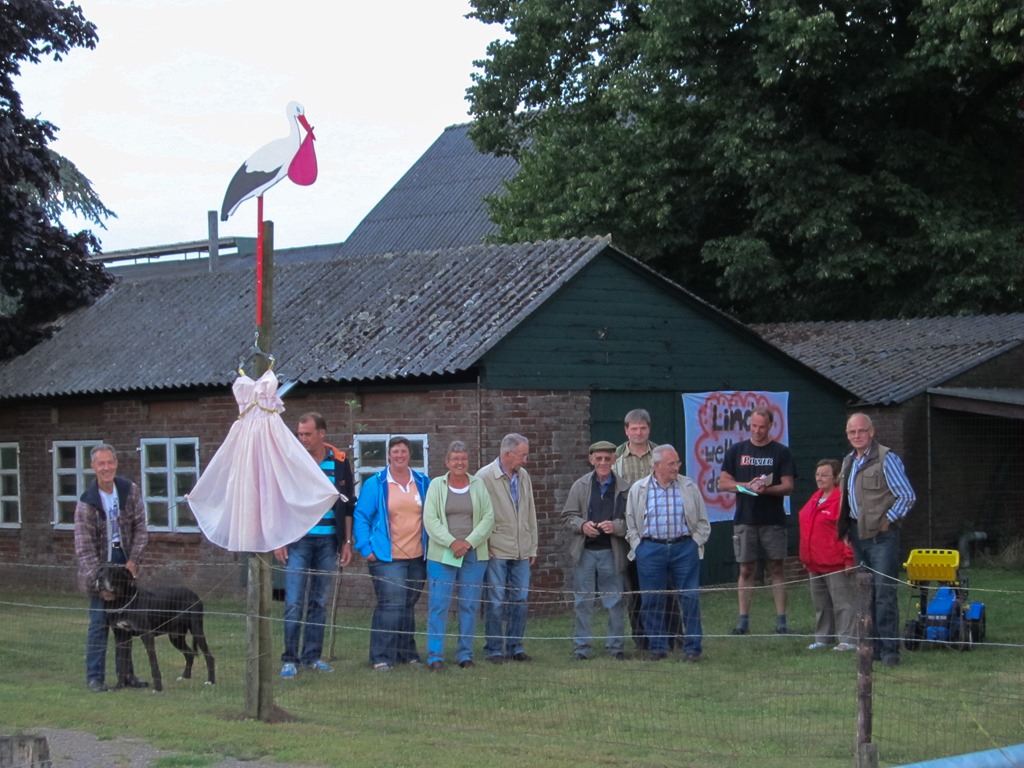
    Yesterday, as is traditional around these parts, we, the neighbours, assembled to erect a stork in the garden to proclaim the arrival of a baby.

    20120830-1955-07

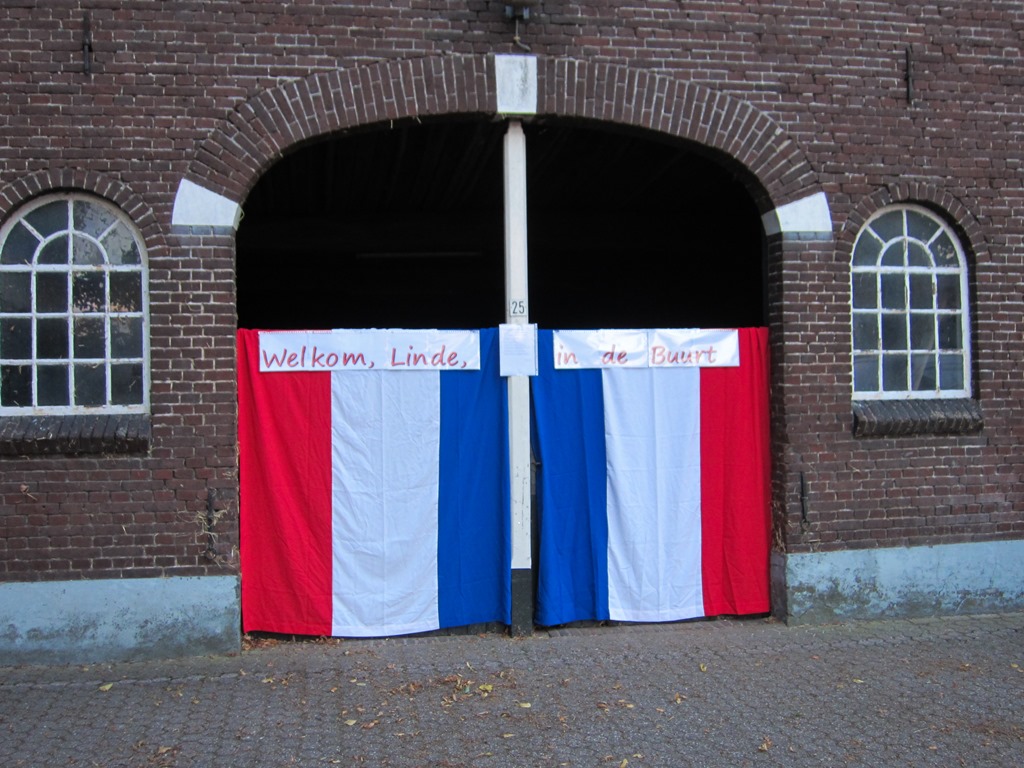
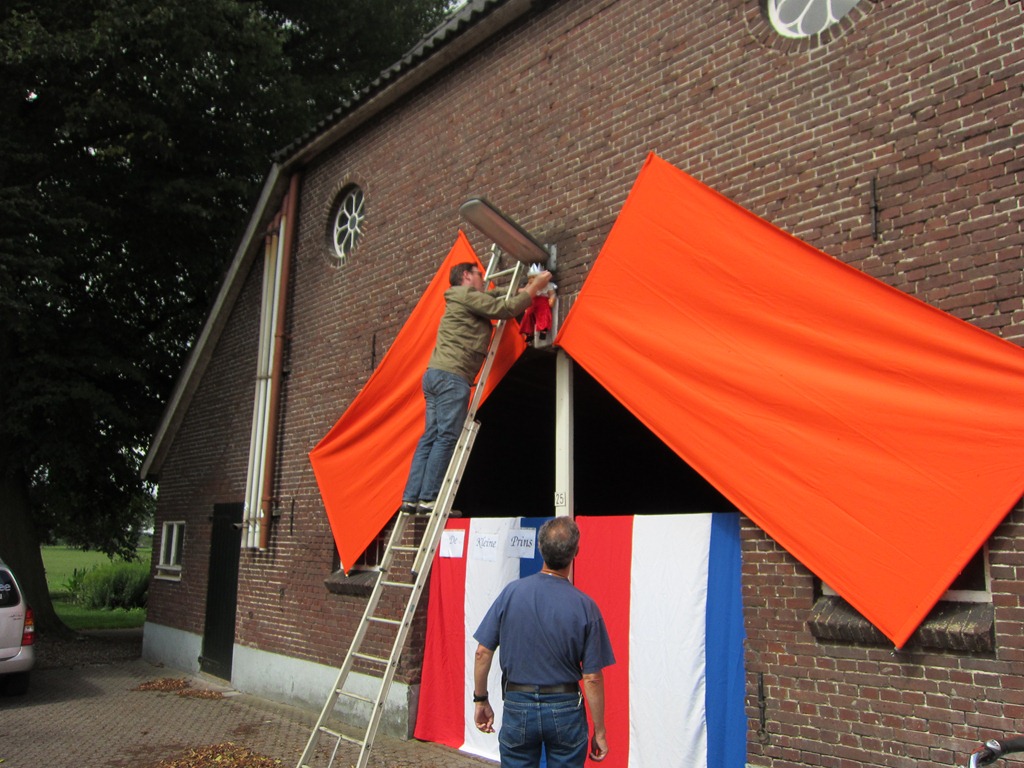
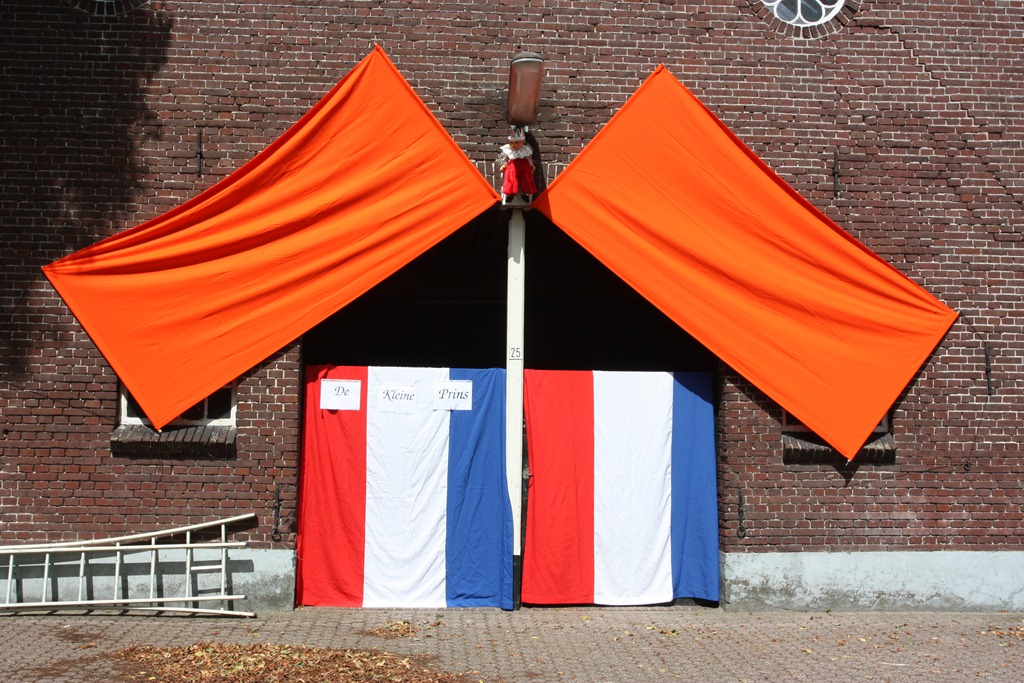
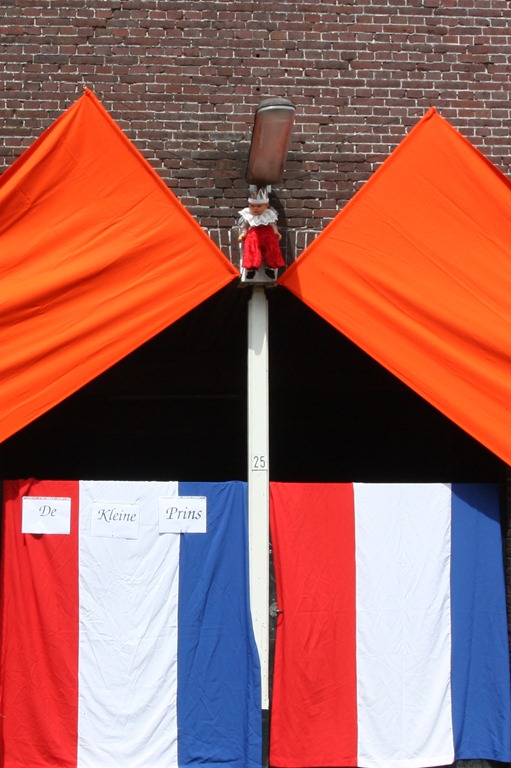
    Because Linde is a girl, Martin added the princess dress to indicate the fact. He also decorated the entrance to the cattle barn…

    20120830-1953-48

    The text reads Welkom, Linde, in de Buurt (Welcome, Linde, into the Neighbourhood).

  • A Letter to a Mother

    Abdellah Taïa wrote a letter to his mother. A letter in which he explained his homosexuality to her. I regret that I cannot fully understand the French of the original letter, but this translation retains, I think, much of the power and passion of the original.

    Once again, I must say that I have been lucky enough to never have faced the same battles in my own family, but I’m mindful of those who do.

  • Onward Christian Soldiers…

    I see that the Church of England has now formally submitted its response to the UK Government’s consultation on same-sex marriage. They’re against it. If I were a Christian, like Giles Fraser, then, like him, I would be both ashamed and angry at the Church’s stance. But I’m not a Christian, so I’m simply disgusted and appalled at their continuing bigotry, and not in the least little bit surprised.

    The summary of the C of E’s 13-page submission makes interesting reading. They’re against it because:

    Such a move would alter the intrinsic nature of marriage as the union of a man and a woman, as enshrined in human institutions throughout history.

    Marriage, as they very well know, has taken on many forms in human institutions throughout history. There is nothing “intrinsic” about it. And if we’re talking about human institutions here, then your God can damn well keep his nose out of my marriage, thank you very much.

    Marriage benefits society in many ways, not only by promoting mutuality and fidelity, but also by acknowledging an underlying biological complementarity which, for many, includes the possibility of procreation.

    I totally agree with the first part of this statement, marriage does benefit society in many ways, including promoting mutuality and fidelity. However, after stating this, the C of E wants to erect “keep-out” signs to prevent this being available to same-sex couples. How very charitable of them. And as for “an underlying biological complementarity” it’s certainly easier if a married couple already possess the right bits, but if they don’t, it still doesn’t rule out the possibility of procreation and raising children in a loving family.

    We have supported various legal changes in recent years to remove unjustified discrimination and create greater legal rights for same sex couples and we welcome that fact that previous legal and material inequities between heterosexual and same-sex partnerships have now been satisfactorily addressed. To change the nature of marriage for everyone will be divisive and deliver no obvious legal gains given the rights already conferred by civil partnerships. We also believe that imposing for essentially ideological reasons a new meaning on a term as familiar and fundamental as marriage would be deeply unwise.

    To claim that the CofE has “supported various legal changes in recent years to remove unjustified discrimination and create greater legal rights for same sex couples” is a downright lie. As Giles Fraser writes:

    In the main House of Lords debate in June 2004 the majority spoke against it and voted six to one in favour of a wrecking amendment. The leadership of the C of E will do anything to keep gay people out of the church. It uses the sickly language of welcome but won’t let gay priests (even celibate ones) become bishops and is prepared to cut the Church of England off from the Episcopal church in the US because they do. At every turn, the Church of England treats gay people as an unwanted headache.

    As I say, I am not surprised that the C of E objects to the proposals, they’ve cherry-picked the bits of scriptures to form the basis of their objections. The bible also condones slavery and the stoning of adulterers, but somehow society (at least in the West) has managed to move on from that. But what I do object to is their insistence that their beliefs should apply to the rest of us:

    In common with almost all other Churches, the Church of England holds, as a matter of doctrine and derived from the teaching of Christ himself, that marriage in general – and not just the marriage of Christians – is, in its nature, a lifelong union of one man with one woman.

    from page 2 of the submission, my emphasis in bold. As I said above, their god can keep his nose out of my marriage.

    Then there’s the usual cry of “allowing same-sex marriages will dilute traditional marriage”. Section 13, page 4, of their submission (bold in the original):

    We believe that redefining marriage to include same-sex relationships will entail a dilution in the meaning of marriage for everyone by excluding the fundamental complementarity of men and women from the social and legal definition of marriage.

    You know, it’s ironic. Here in The Netherlands, civil partnership was introduced for same-sex couples back in 1998, and then in 2001 full civil marriage for same-sex couples became available. There’s been no “dilution in the meaning of marriage for everyone” at all. There are still church weddings for those who believe, but importantly, every couple first goes through a secular civil marriage ceremony, performed by a civil servant authorised to conduct weddings. This has long been the case – certainly before same-sex marriage became available. And there have been no challenges to the European Court of Human Rights to force Dutch Churches to marry same-sex couples, as the C of E apparently fears will happen in the UK.

    The news of the C of E’s submission has appeared on the 12th June 2012. By coincidence, this is what we consider as our 14th Wedding Anniversary. Martin and I had a civil partnership ceremony on the 12th June 1998. In 2003, we had this upgraded to a full civil marriage. The C of E’s continuing scaremongering on this issue of same-sex marriage is just another example of how, to quote Christopher Hitchens, religion poisons everything.

  • Tracing The Family Tree

    I’ve mentioned my family tree on the blog before. That post got responses from distant relatives whom I never knew I had. So here’s another post, prompted by my brother and one of my cousins, in the hope that we might get back in contact with a particular long-lost relative.

    I’ll start with my maternal grandparents: Edward Thomas Johnson and Eleanor Johnson:

    Grandparents Kate & Ted Johnson 1942.

    They had six children, three boys and three girls. In order of age (eldest first), they were Claude, Olive (my mother), Hilda, Eric, Murray, and Eugenie.

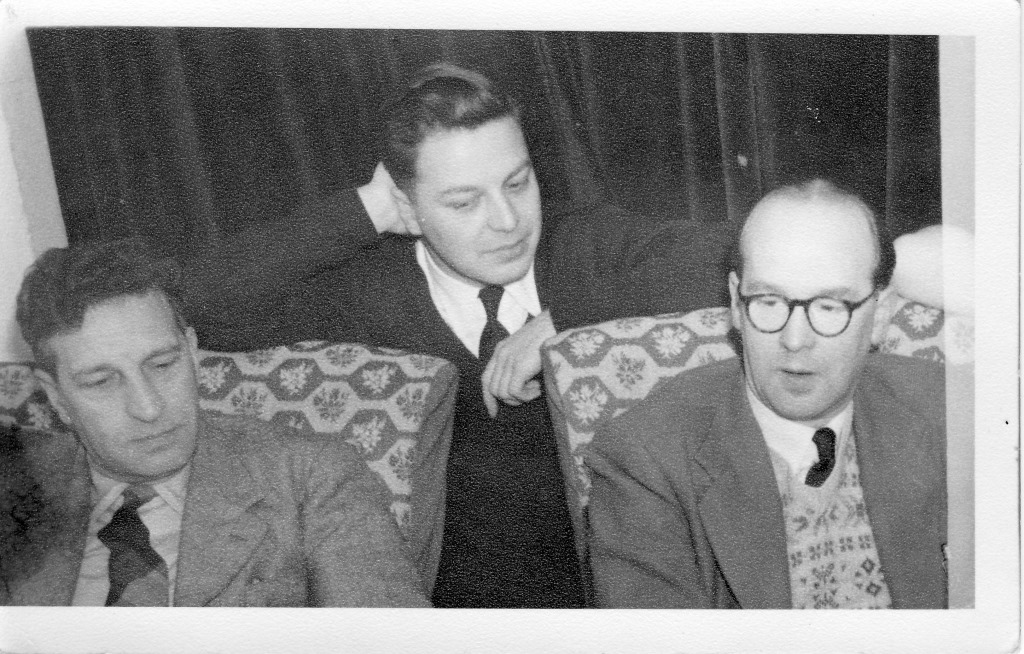
    This post concerns my uncle: Murray Johnson (born 7 October 1912, died 31 March 1988).

    Now, I only have a scattering of photos of Murray. Here are three examples: one as a toddler, one as a youngish man (on the right in glasses), and one taken in 1987, flanked by his nephews – me, the obviously gay one on the left in the picture, and my brother on the right.

    Family0152

    Family0158

    Murray, G & M, Richmond Park, July 1987

    Murray had three marriages. The first was to Jane Foreman. The second to Violet Gray, and the last to Barbara Pavitt. As a child, and a teenager, I can only ever recall Barbara, I can’t recall anything of his previous partners.

    Now, the point of this post is that Murray and Jane had a daughter: Juanita Johnson, born in 1940, in Brentford, England.

    My older brother tells me that Juanita was adopted, and thus grew up in a family other than either of her birth parents.

    So now: I have put this message in a virtual bottle and I have cast it out into the ocean of the internet.

    Should Juanita, or her descendants, ever retrieve this and would like to get in touch with us, then we would be delighted to hear from you…

  • Beside the Seaside…

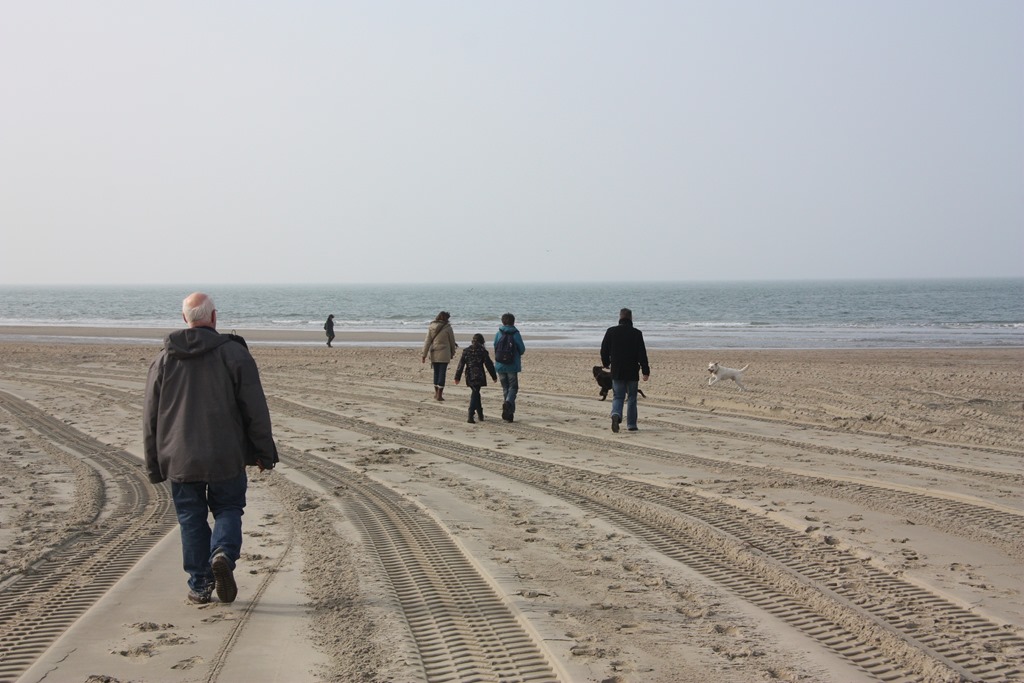
    We paid a short visit to friends in The Hague last weekend. The city lies on the North Sea coast, and many of its inhabitants go for weekend walks in the dunes or along the beach – usually whatever the weather.

    20120303-1410-45

    20120303-1351-27

    We, and the dogs, joined them. This was our younger dog Watson’s first experience of the sea. He loved it.

    20120303-1353-16

  • The Sins of the Fathers

    Richard Dawkins writes about the phone calls he received recently from journalist Adam Lusher, who began the first call somewhat as follows:

    “We’ve been researching the history of the Dawkins family, and have discovered that your ancestors owned slaves in Jamaica in the seventeenth and eighteenth century. What have you got to say about that?”

    Dawkins replied:

    “Your ancestors probably did too. It’s just that we happen to know who my ancestors were and perhaps we don’t know yours.”

    After a second call, in which Lusher demonstrated his total lack of understanding about genetics, the fruits of his labour were duly published in the Sunday Telegraph. The article is at best laughable, and at worst low, cheap and out of order – and that is apparently the view of a fellow journalist at the Telegraph.

    For the record, I can trace my family back to Sir John Gordon of Embo, who died in 1779. I note that my great-great-great-grandfather (George Home Murray) had two uncles on his mother’s side (Dr. John Gordon and George Gordon) who were both, as I understand it, plantation and slave owners in Jamaica. It’s not unusual.

  • “The Consequences Are Real”

    I’ve said it before, but I’ll say it again: I’m very lucky to be able to live in a country that has Civil Marriage for both same-sex and different sex couples. Some countries have only Civil Partnerships for same-sex couples, reserving Civil Marriage for different sex couples only.

    Many people think that these are, for all practical purposes, the same. But they are not. In Ireland, for example, the differences can have real consequences.

  • The Buurt’s New Baby

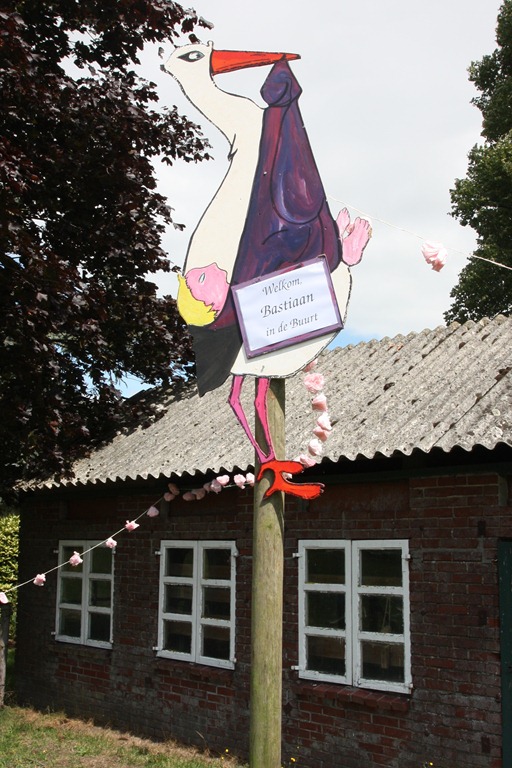
    It’s become something of a tradition here in this part of the Netherlands that when a baby is born, the neighbours (the buurt) will celebrate the fact by erecting a wooden stork, festooned with clotheslines of baby clothes.

    This week, our nearest neighbours had the birth of their first baby, a boy. Since we are noaste naobers to them, it fell to us to organise the decorations in celebration of the fact. So, together with the other neighbours, we did. Naturally, we had to have the traditional stork:

    20110723-1113-55

    But Martin thought that we should also push the envelope a bit. Since José and Herman have referred to their new baby as their “little prince” (kleine prins), we thought we’d take them at their word…

    20110723-1139-21

    20110723-1115-43

    20110723-1115-32

  • The Lace Anniversary

    Last Sunday, the 12th June, we celebrated our 13th (Lace) Wedding Anniversary. Our combined ages are now 120 years, we’ve been together for (almost) 30 years, and this is our fifth year of living in our farmhouse, De Witte Wand.

    All the above seemed like a good excuse for a party, so on Sunday over thirty friends (old and new) joined us for lunch in the garden.

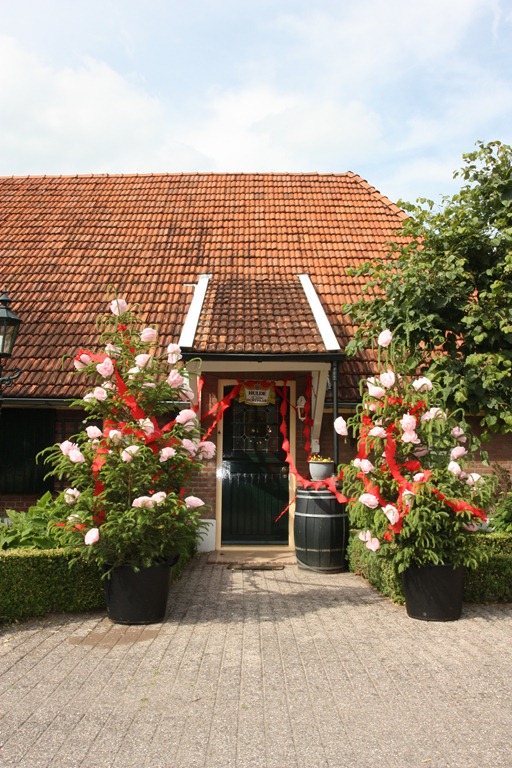
    Our new friends are from the neighbourhood, and they followed the local tradition of placing two fir trees decorated with paper roses outside the front door.

    20110612-1612-13

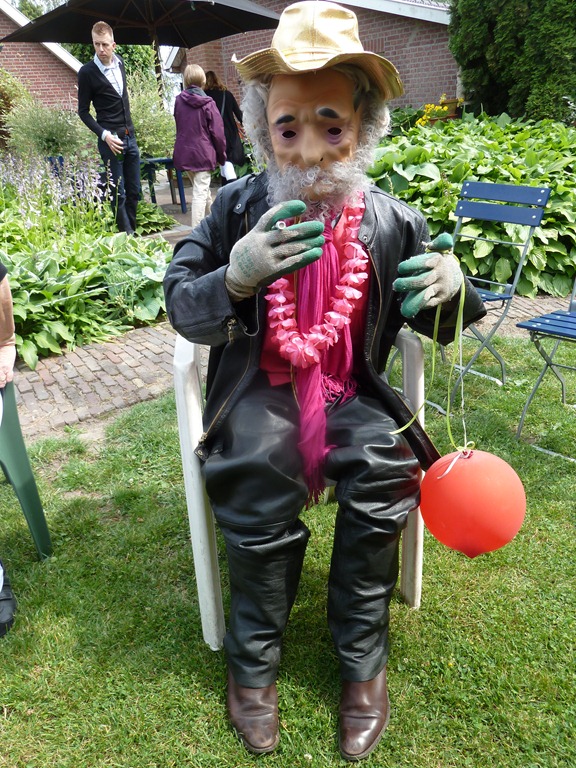
    As it was Martin’s birthday very recently, they also brought along an Abraham to mark the occasion.

    20110612-1548-27

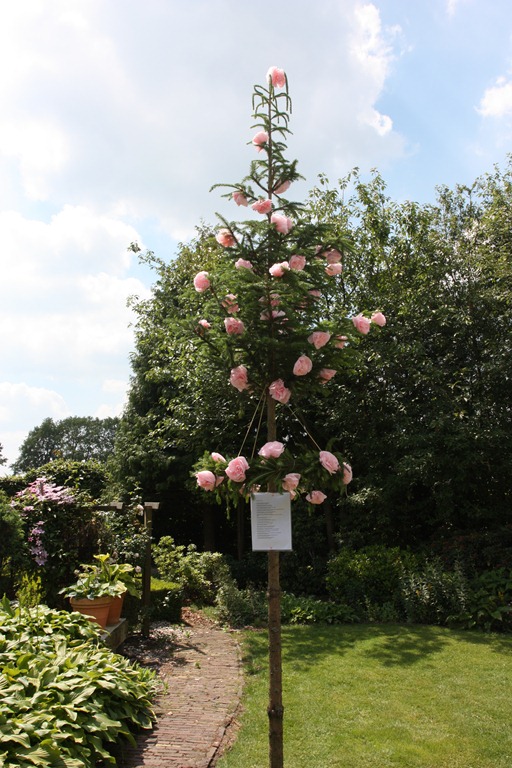
    And since we had put up a tent for the party in the garden, they planted a Meiboom (Maypole) next to it. Whenever a new building is erected in this part of the Netherlands, a Meiboom is placed next to it to mark the occasion.

    20110612-1224-26

    20110612-1227-36

    It’s also traditional to make speeches at these events. Fortunately, these were light-hearted, accompanied by joke presents (e.g. we were presented with walking sticks, a box to soak our false teeth overnight in, and two pairs of long-johns), so everyone was thoroughly entertained.

    The weather was kind, and I think a good time was had by all. Martin and I certainly enjoyed it. Our thanks to everyone who helped make it special, and particularly to our new friends from the neighbourhood who have welcomed us so warmly, and who went to great trouble to make this a special day for us.

  • Over The First Hurdle

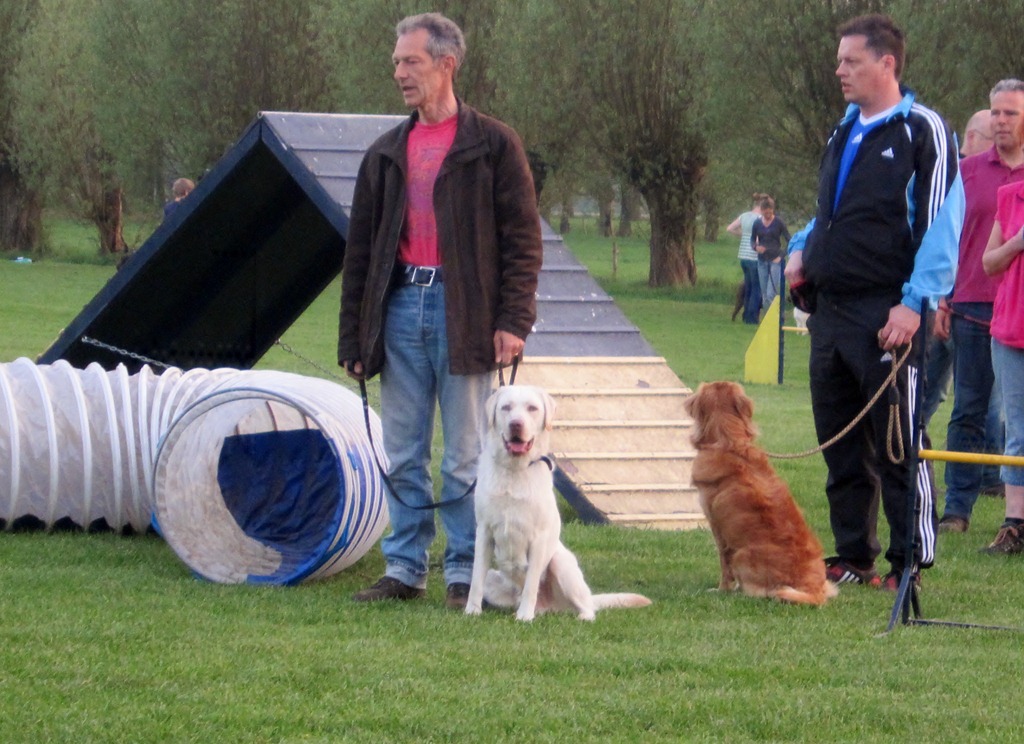
    Watson and I have been doing the first set of Dog Agility lessons. Yesterday evening came the moment I was rather dreading – the exam. However, I needn’t have worried Watson came through and did us proud – he passed easily with 115 points out of a possible 120 (the pass mark is 70 points).

    Actually, I think he could have scored even higher – it was my fault that he lost marks. One of the hurdles is to have the dog jump through a hoop. I was standing by him and gave him the command to jump through. I hadn’t realised that I should have been on the far side of the hoop before giving the command. And on another hurdle, I should have given him more clearance for his run-up, Oh well, I won’t make those mistakes again…

    20110420-2019-02

    Next week, we begin the next stage of training…

  • How Times Change

    I see that the Isle of Man will make civil partnerships available to gay couples living there as from next month.

    This is only five years after civil partnerships were introduced into UK law. I find that surprisingly speedy for the Isle of Man. After all, it took until 1992 before homosexuality was no longer illegal on the Island – a full 25 years after the UK decriminalised homosexuality.

    I was born and grew up on the Island, so bore witness to the anti-gay bigotry and prejudice that existed there. The atmosphere resulted in a number of suicides of gay people. It seems as though things have changed, although judging by the comments of Peter Murcott, a Methodist preacher, there are still some old style bigots knocking about there:

    “It will have a fundamental change in due course on how the next generation is brought up to conceive family life and ultimately it is going to introduce an anti-Christian attitude and it will be contrary to the beliefs of many other religions as well.”

    Of course, he’s right when he says that “It will have a fundamental change in due course on how the next generation is brought up to conceive family life” – people may come to realise that families come in all sorts of shapes and sizes, and that’s a good thing. But I rather think that Mr. Murcott sees the change only in negative terms.

    Addendum: I came across this video with Alan Bell who does a good job explaining the background to the change in the law. Bell is a Member of the House of Keys (MHK) – a member of the Manx Government.

  • The Wedding Party–A Mystery Solved

    I’ve got a pile of postcards and old photos that I inherited from my father. Many of the postcards he collected from places that he visited around the world, when he was a merchant seaman in the 1920s and 1930s. There are also lots of postcards of places in the Isle of Man, where he and I were born. As well as reproductions of 18th century engravings, there are photos; the earliest of which date from 1860. Here’s an example of one of these, showing Douglas Bay:

    IOM0070

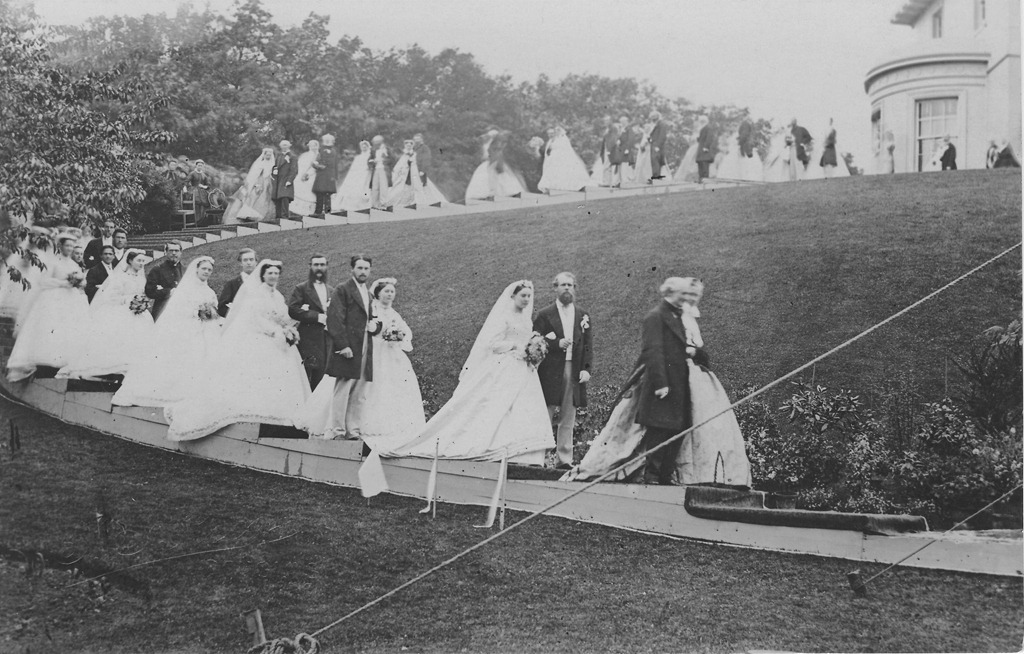
    But there is one photo that has always intrigued me. It shows a wedding party, in the grounds of what could be a rather grand house. Other than the fact that it certainly couldn’t be any of our family, I had no idea who these people were, or where the photo was taken. Until, that is, a couple of days ago…

    Here’s the photo:

    IOM0036

    My brother has finally solved the mystery – he came across the same photo in a book. It is the wedding of Louisa Jane Dumbell and Alfred Charles Elliot on the 23rd June 1866. Louisa was the daughter of a prominent Manx figure of the time, George William Dumbell. He founded his own bank in 1853, and it had a fairly chequered history until its collapse in 1900. However, in 1866, George was riding high, and he made sure his daughter’s wedding was a lavish affair:

    In 1866, on the occasion of the marriage of his daughter, Louisa,to Mr Elliott, of the Indian Civil Service, the most lavish expenditure was indulged in. The SUN columns described the bride’s dress as being of “white satin, trimmed with three rolls of satinround the skirt, bodice trimmed with Bruxelles point lace, with crystal buttons, Bruxelles lace veil, wreath of orange and myrtle,pearl ornaments, etc. She was attended by eight bridesmaids, and the wedding party completely filled the church at Braddan. A troop of workmen had been for weeks employed in erecting a. monster marquee in the grounds at Belmont, which were illuminated and decorated with fairy-like grandeur.” The wedding festivities terminated on the fourth day with a great ball in the Castle Mona Hotel.

    The photo shows the wedding party in the six-acre grounds of “Belmont”, the house that George Dumbell had built in 1835. And now, with the benefit of knowledge, I realise that I should have recognised the house in the photograph, because I played in the house and grounds as a child. One of my schoolboy friends was Michael Crowe, and his family lived in Belmont (which by this time had been split into two semi-detached , but still very grand, houses). We spent many happy hours playing in the very Rhododendron bush that you can see on the left of the photo. By the 1950s, it had grown to gigantic size, and it was our jungle and climbing frame all rolled into one.

  • Passing The Exam

    I was somewhat nervous this morning. Today was the day that Watson and I were taking an exam to see whether he was a well-behaved dog. We’ve taken a number of courses together, beginning with a puppy course a year ago, but now came the test of the final course, which would be adjudicated  by an independent examiner from the Dutch National Federation of Dogsports.

    The exam involves a number of different tests, such as seeing how Watson responds to commands, and how he behaves towards other dogs and people.

    I have to say that my confidence was not high – we did a dummy run a few weeks ago with our instructors, and Watson (and I) were bordering on the fail mark. The main problem area is that Watson is simply too over-enthusiastic about meeting people. The exam contains a couple of exercises that test how a dog reacts to people, and the idea is that he will remain quietly sitting when he’s in a group of people sitting at a pavement café, or when someone comes up and shakes hands with his owner. Watson, of course, loves people and jumps all over them at any opportunity. If he jumped up on people during the café test, it would be curtains – instant fail.

    So we started with the test of him walking beside me, as I traversed a course. The dog has to sit on command at three points in the course – at the beginning, halfway through and at the end. We managed to do that, although the examiner said later that he was amused by all the hand signals and “turn left!”, “sit!”, and “turn right!” commands that I was giving to Watson…

    Next up was the exercise of walking past food lying on the ground. The dog is supposed to ignore this and carry on. Watson has a habit of wanting to grab anything that smells as though it’s food, so I was a trifle worried about this. In the event, he walked past the food without reacting, so a quick sigh of relief, and then onto the most difficult test: the café test.

    We approached the four chairs, three of them occupied, and the fourth empty, waiting for me to take my place. Watson, of course, was immediately fixated on the three people; tail furiously wagging and bounding forward wanting to greet them. Just what I didn’t want. I managed to get him sitting beside me with some difficulty, and then came the second part of the test. Two of the three people want to stroke the dog under test, the third is supposedly afraid of dogs, and there must be no contact between that person and the dog being tested. Watson is not so discriminating; he wants to say hello to everyone… Thankfully, I managed to steer him towards to the two people that he should approach, and keep him away from the third. The end of the test is when he returns to a sitting or lying position next to his owner’s chair. It was only with some effort that I managed to do this – Watson wanted to carry on saying hello to all the nice people…

    After this, the rest of the tests were not so taxing. I stumbled through them, while reviewing in my mind what the outcome of the café test might be. Had we passed? Had we failed?

    Finally, all the dogs had been through the exam, and we all waited anxiously while the examiner and the instructors deliberated over the outcome. We were called into the canteen, and given the results: we had all passed!

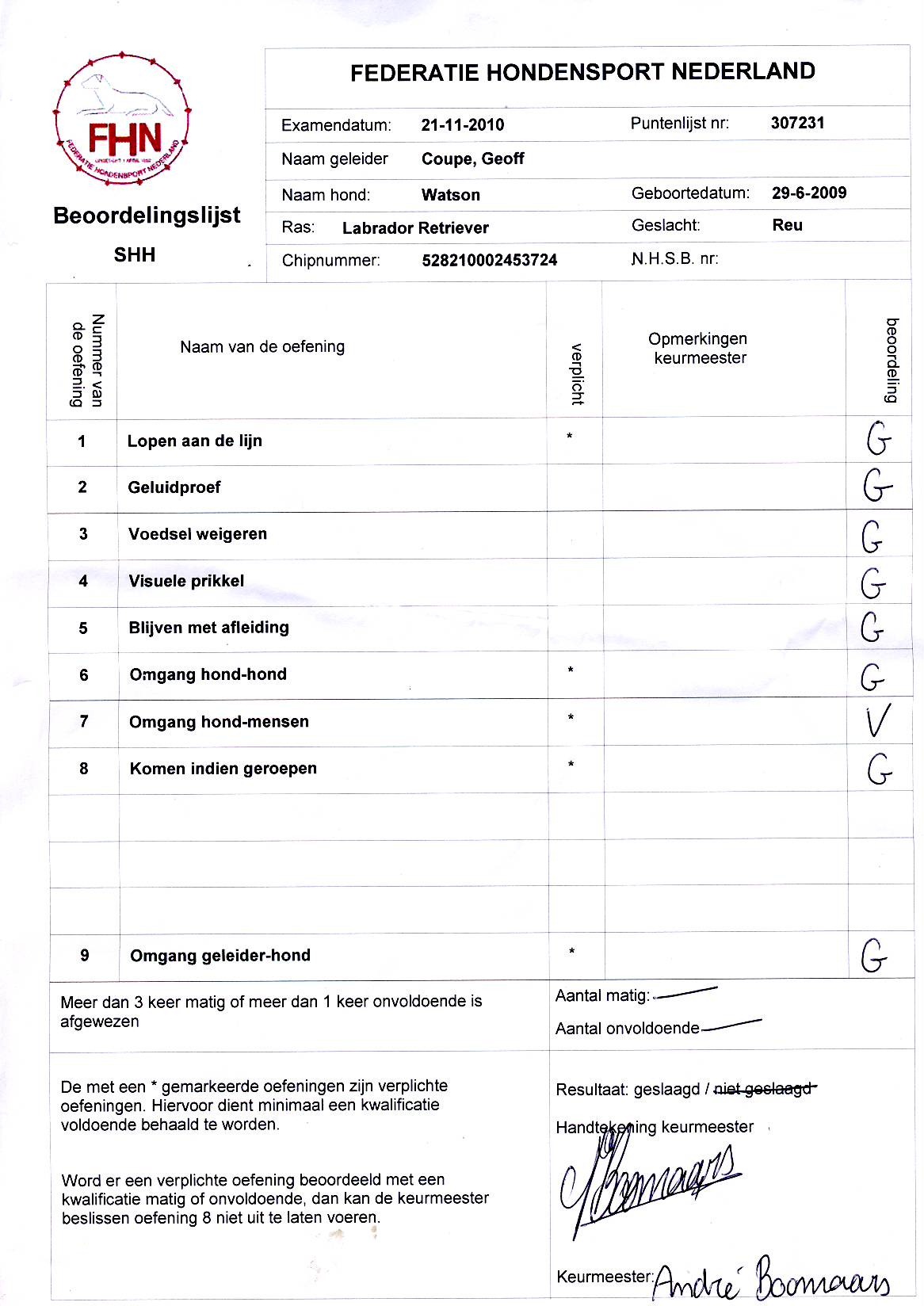
    Watson had done well. Only the café test got a “Voldoende” (sufficient) mark, the rest were all “Goed” (good). I must admit I was a little surprised at the overall high marks – but I am very pleased that Watson did so well. Here’s the evidence:
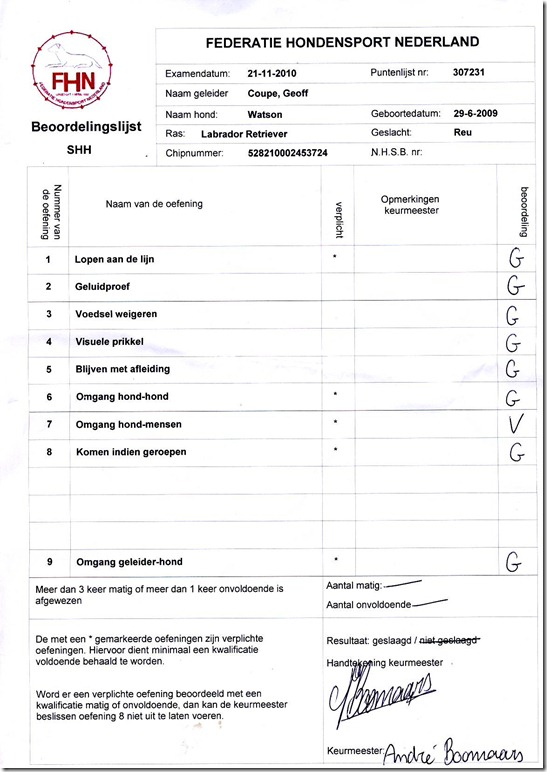
    fnh

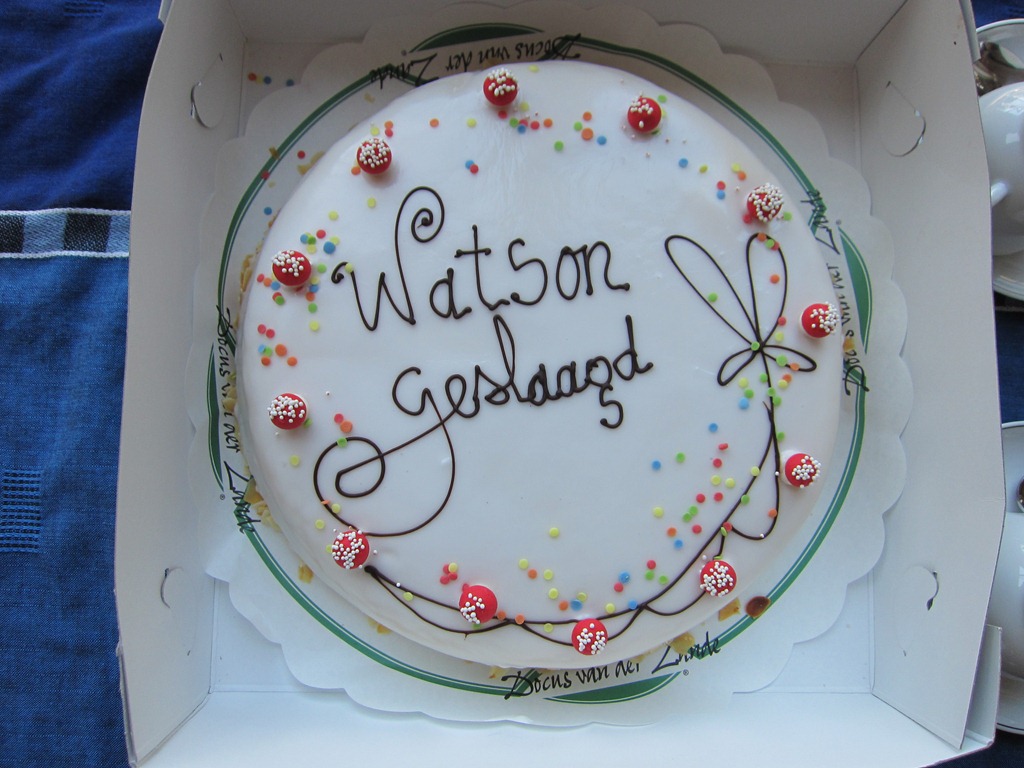
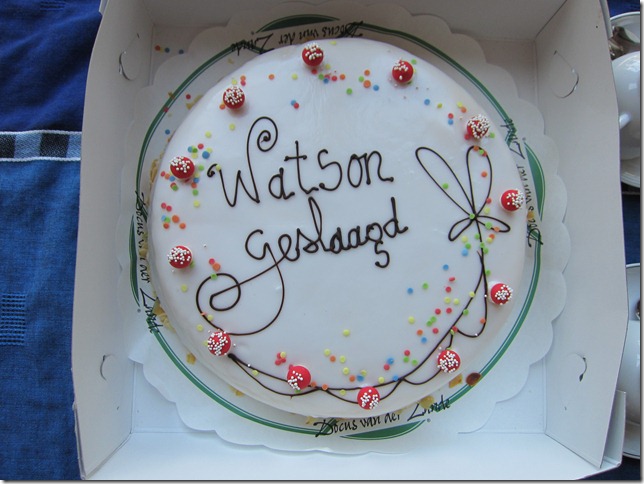
    With much relief, I headed home with Watson. As I turned into our drive, I noticed that Martin had decorated the entrance with bunting. He obviously had more faith in Watson that I did.  A fact that was given further evidence by the appearance of a cake decorated with the words “Watson Geslaagd” (Watson Passed) and friends and neighbours to celebrate.
    20101121-1318-16

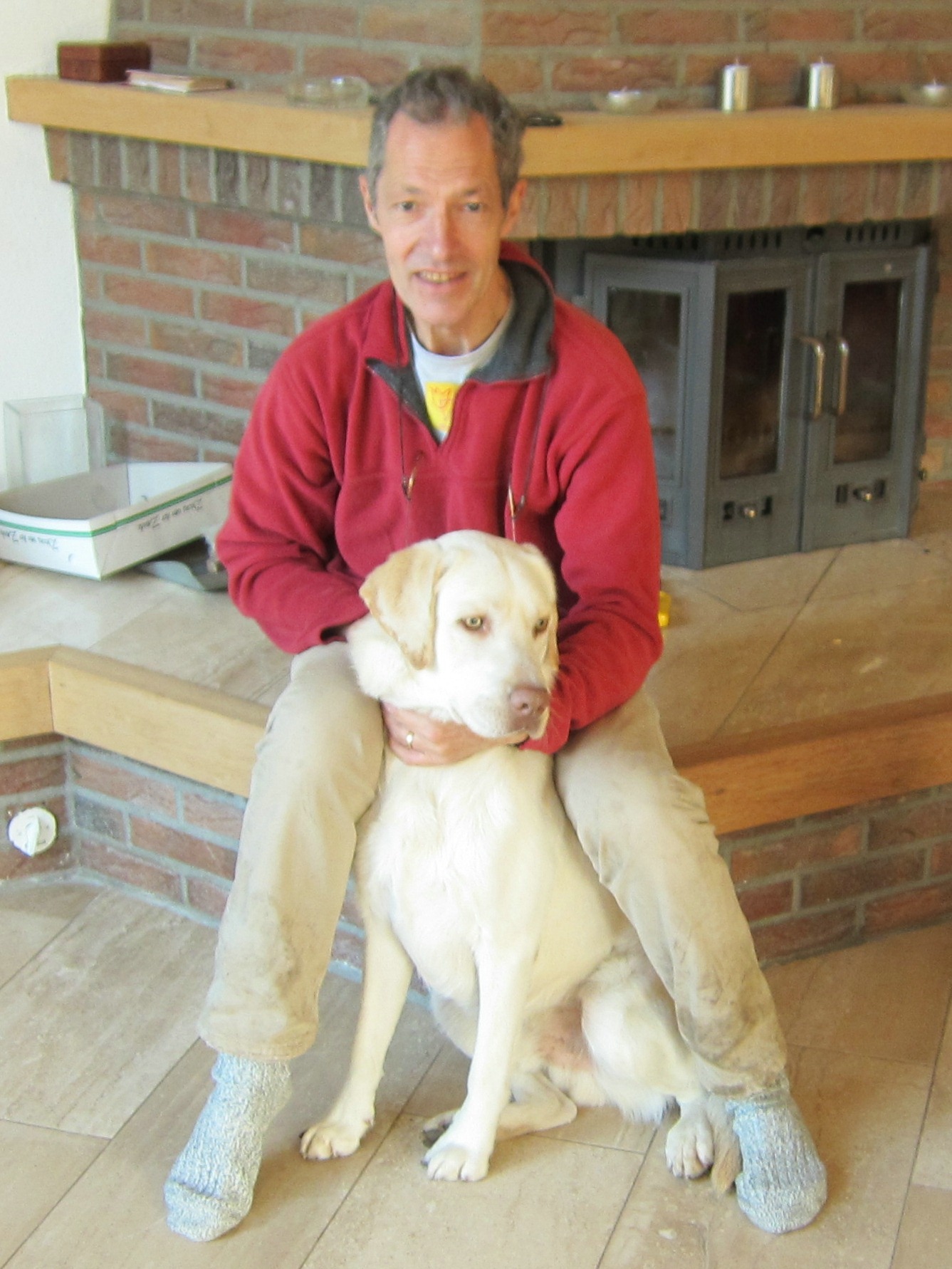
    Thanks to everyone: the instructors at Agility Club Achterhoek (Sandra and Jonna, not forgetting Wendy for the first puppy course), the support of friends and neighbours, and of course Martin, but most of all to Watson for coming through on the day. I’m proud of you.
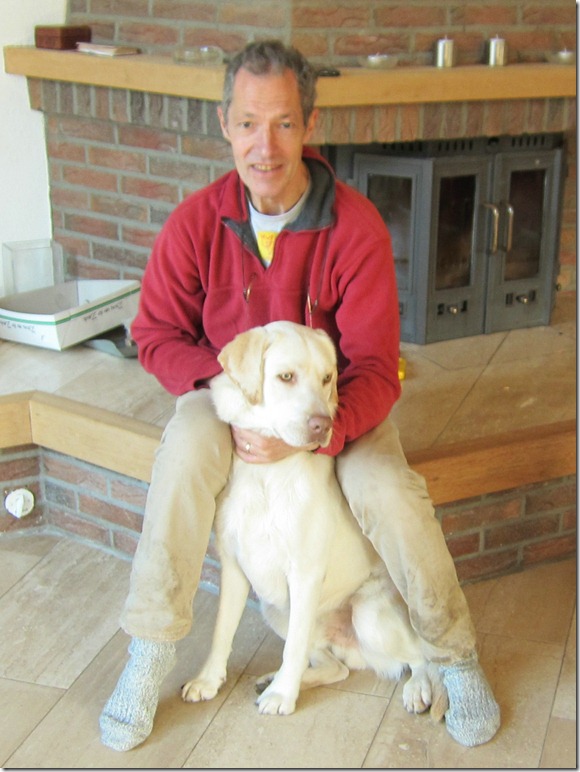
    20101121-1341-13

    …and if I look exhausted in the photo above, then so I was. And so was Watson – he slept practically all afternoon…

  • Dog Training

    I’m currently enrolled with Watson in a series of dog training courses. We’ve got an exam coming up in November, whereby I have to convince an independent examiner that Watson is well-behaved and obeys me. I can’t say that I’m full of confidence. Watson has a will of his own, and usually demonstrates that he does not yet see me as top dog.

    Having wrestled with training, I’m always impressed when I see other dogs who apparently obey their owners every command. Like these dogs in OK Go’s latest music video:

    Did you spot the goat?

  • Short Story

    Paul Burston, over at his blog, pens an (autobiographical?) short story about a mother and son. In just a page of short sentences and short paragraphs, a whole life is conjured up. That’s talent.

  • Chopped

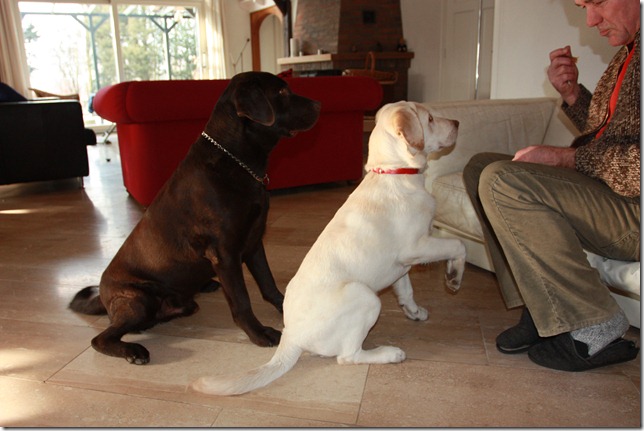
    We have two Labradors: Kai, who is now over seven years old, and Watson, who is now 13 months, and heavily into puberty.

    We became the owners of Kai when he was three, and he was already neutered when we got him. He has a gentle nature, and wins the hearts of everyone that meets him. Watson, on the other hand is a typical teenager, pushing the boundaries at every opportunity. He also pushes Kai around, while Kai just wants a quiet life.

    So we decided to level the playing field by neutering Watson.

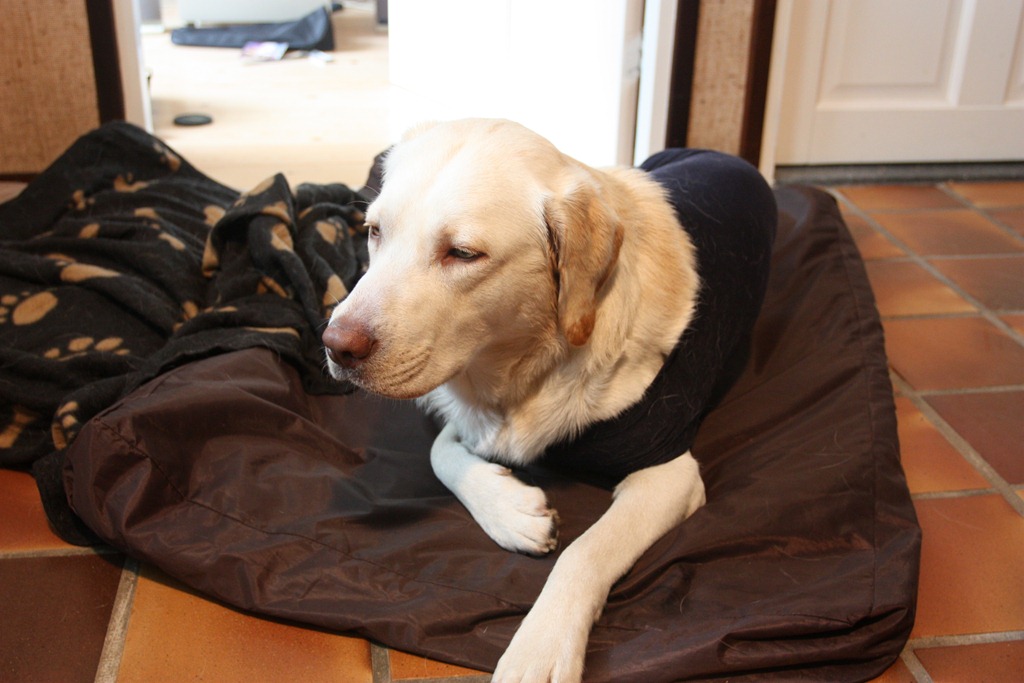
    This morning he went for the chop. That was done without problem. Now he is coming to terms with the fact that something has changed. He’s feeling a bit sorry for himself, but I’m sure that will pass. He’s also being subjected to the indignity of wearing a one-piece garment at the moment in an attempt to stop him licking his wounds.

    20100902-1634-23

    20100902-1634-05

    20100902-1636-58

  • One Year Old

    Watson, one of our two Labradors, is one year old today. He’s growing up very quickly. Here’s a shot from last October, and a composite shot taken today…

    20091004-1046-17

    20100729-1441-55 Stitch

  • Puberty Looms

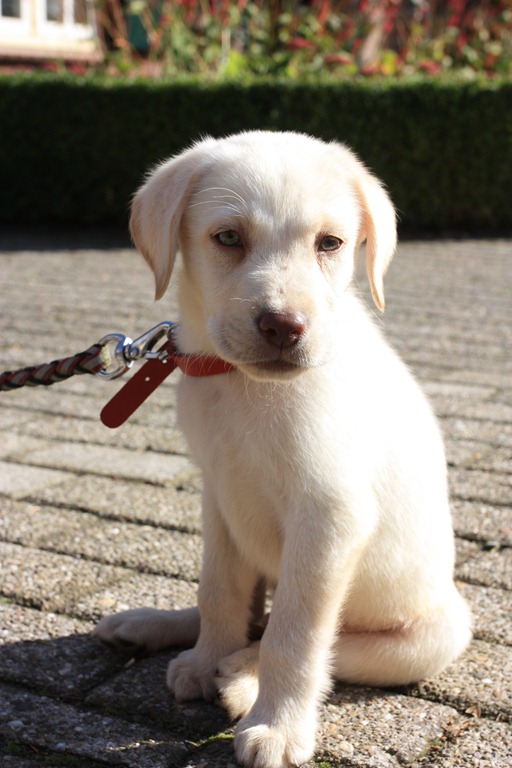
    Living with him every day as we do, it is sometimes hard to realise just how quickly our Labrador puppy, Watson, is growing. It’s just over four months since we took him home from the kennel, and then he weighed 3 Kg.

    20090930-1603-12

    Now he’s up to 20 Kg, and giving Kai a run for his money.

    20100212-1501-24

    Puberty looms. God help us.

    20100212-1504-06