A couple of months ago, we visited a local tree nursery and picked out a Magnolia to replace it. We also bought a smaller Magnolia and two small Japanese Maples for planting elsewhere in the garden.
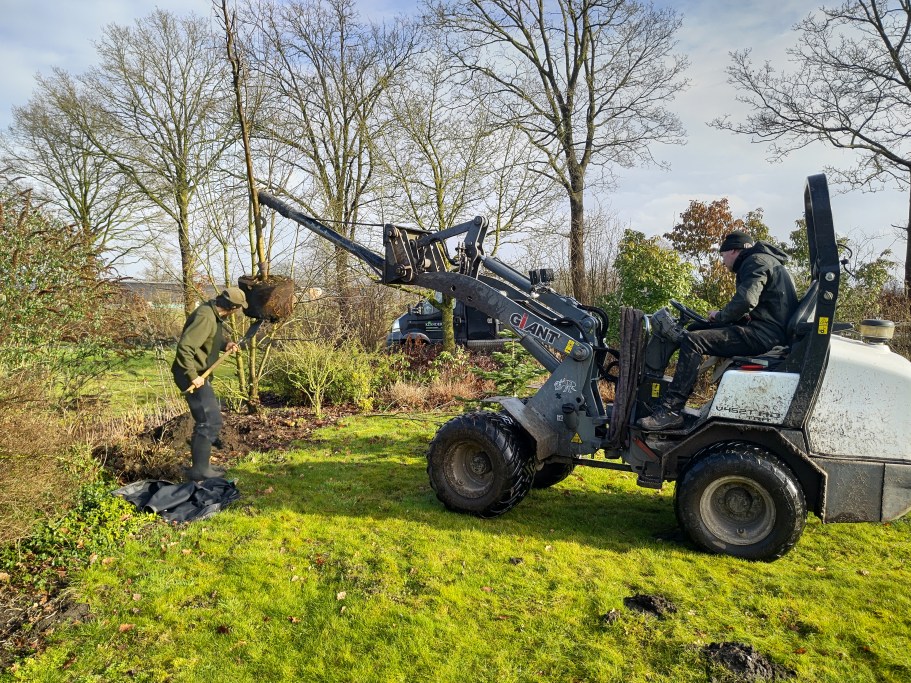
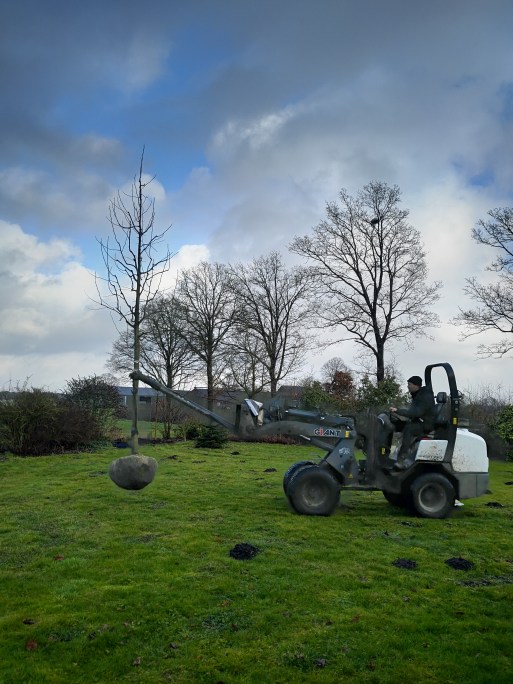
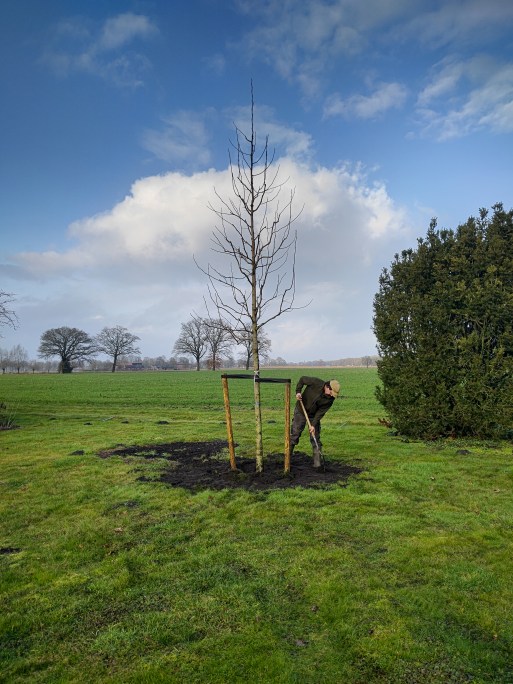
Last week, the Nurseryman and his assistant delivered and planted the trees.
I hope that this new Magnolia will eventually grow to the size of the old Cherry tree – not that we will be around to see it…
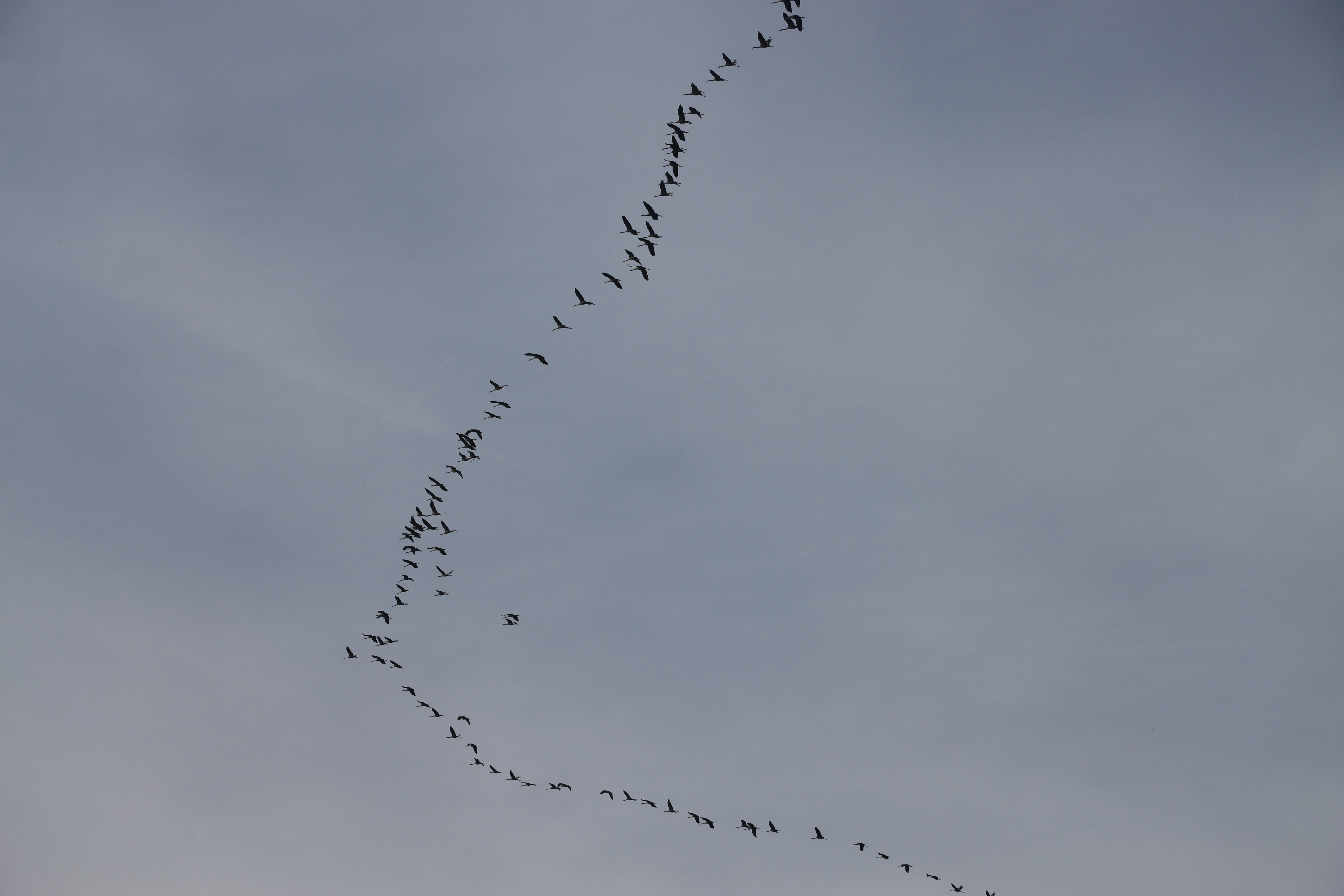
It’s that time of the year when flocks of birds are migrating south. There have been many flocks of geese passing overhead during the past couple of weeks, but a few days ago we had a flock of Cranes pass by.
I was out working in the garden, when I heard their distinctive calls in the distance. I grabbed the camera and got a few shots of the flock as they passed by high overhead. There were more than 180 birds in this flock.
There’s been a severe outbreak of Bird Flu this year that has struck the Crane population, so these were lucky survivors.
Regular readers may have spotted that something is different in the header photo of the garden in front of the house…
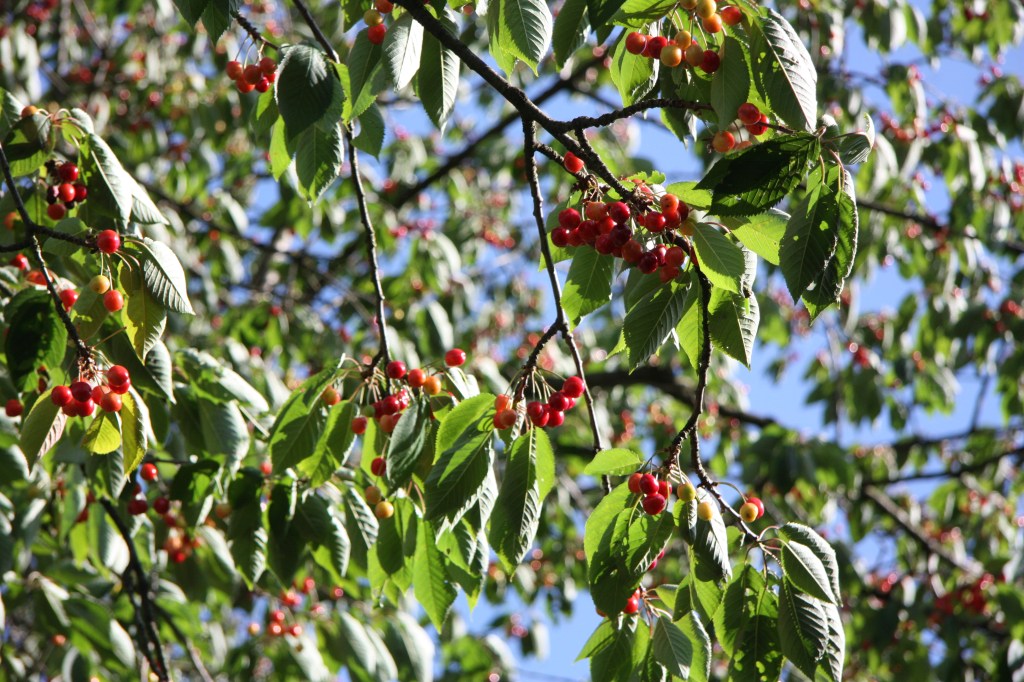
When we came here in 2006, the front garden had both a small pear tree and the imposing cherry tree.
The garden at the Witte Wand
We had a couple of years when the pear tree fruited, but then it stopped. The cherry tree gave fruit each year, but it was always a battle between us and the starlings as to who would get the cherries first.
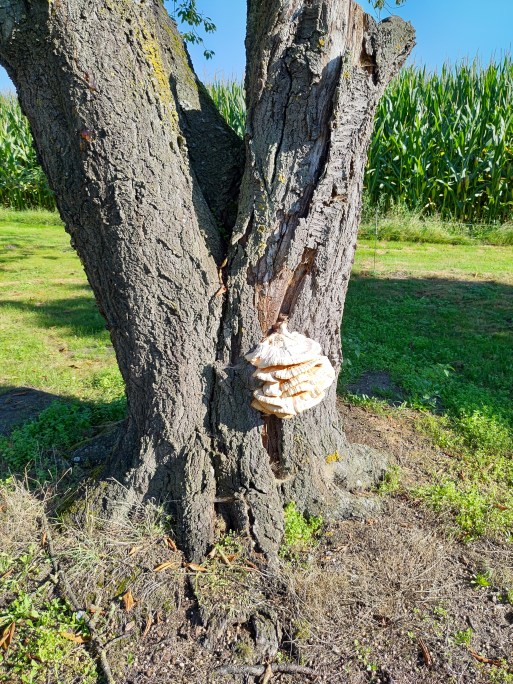
We had to cut down the pear tree in around 2022 because it had died, and then in 2023 the fungus on the cherry tree started to get the upper hand…
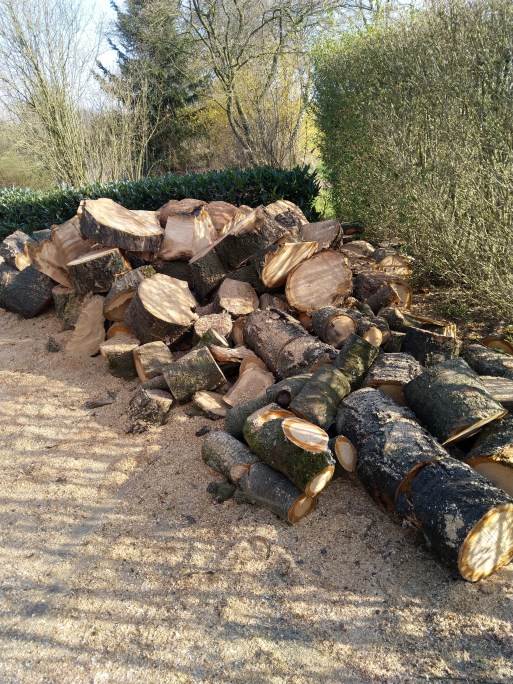
In March this year we decided the time had come to say goodbye to the cherry tree.
At least we have wood for the woodburner stove for the next few years.
We will shortly be paying a visit to a local tree nursery to pick out a couple of replacement trees. We won’t see them come to maturity, but hopefully the next owners of the “Witte Wand” will…
Our village Heelweg is split into two halves – East Heelweg and West Heelweg – separated by 1.5 kilometers.
There are two connecting routes: the Molenweg, which loops between the two centres and is 2.2 kilometers in length and the Bosboombroekerweg, which is the most direct route being 1.6 kilometers in length. The problem being that the Bosboombroekerweg is a track for parts of the route, and unsuitable for vehicular traffic other than farm machinery for large parts of the year. This also goes for cyclists who must then use the Molenweg. The issue there is that the road is narrow, and can be dangerous for cyclists as a result.
The village School is in West Heelweg, so schoolchildren living in East Heelweg are subjected to dangerous situations on schooldays.
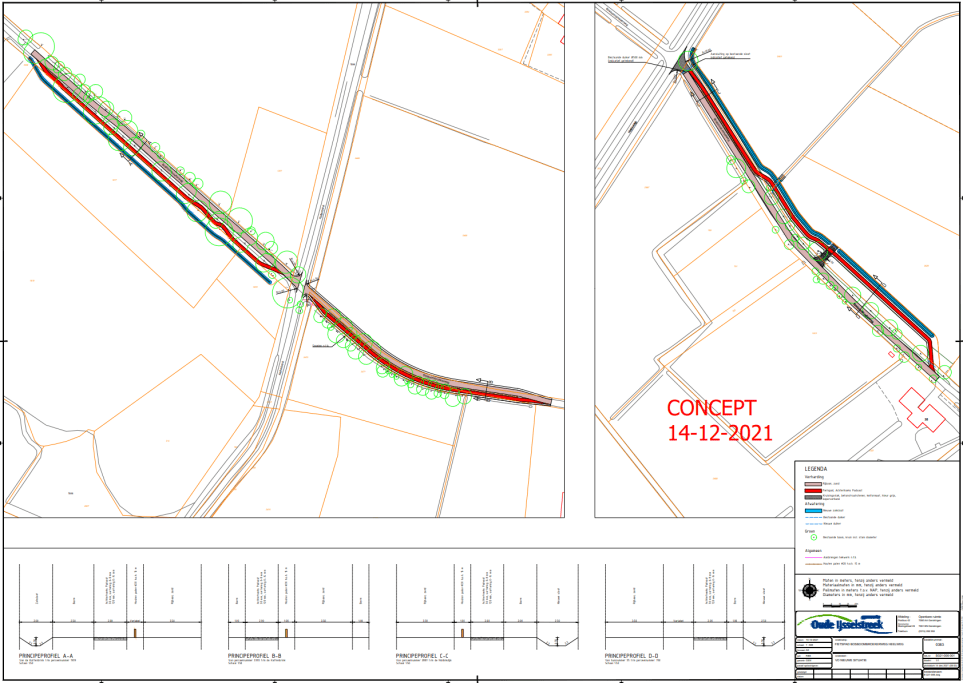
In 2017, our village community council (Heelwegs Belang) wrote to our local authority (Oude IJsselstreek) proposing that a cycle path be laid along the Bosboombroekerweg tracks so that schoolchildren – and other cyclists – could travel safely and more directly between the two parts of the village.
The local authority did initiate a project to make a plan for the construction of a cycle path. However, it took several years and discussions with landowners before a final design was ready:
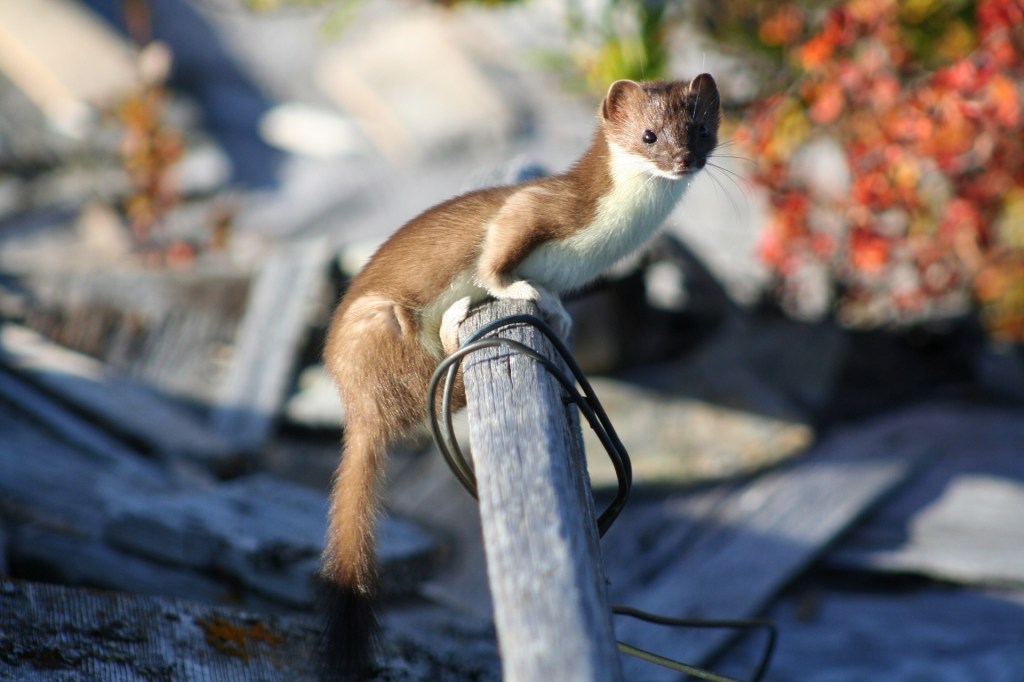
As part of the work, an ecological study was carried out, and a camera placed along the proposed route captured a photo of a weasel going about its business.
Stock image of a weasel; CC0 public domain license
Unfortunately, the weasel has thrown a spanner into the works.
As a result of the proof of the presence of a weasel, the local authority was obliged to seek a permit from the provincial authority for the work to be carried out. We were told that a decision on the granting of the permit would take a maximum of 26 weeks.
We’ve been waiting to hear the result of the decision for almost a year now.
The upshot is that work on the last section of the cycle path has been halted by the local authority until the provincial authority pulls its finger out and deigns to give them a decision on the permit.
It is five years and counting since we first proposed the cycle path… We’re still waiting…
Half a pound of tuppenny rice, Half a pound of treacle. That’s the way the money goes, Pop! Goes the weasel
Addendum 21 February 2024: the provincial authority has finally announced its decision and allowed the construction of the last section of the cycle path to begin. That won’t be until mid 2024 now, but at least the final hurdle has been overcome.
Addendum 2 September 2024: well, it wasn’t “mid 2024”, but work will finally begin on the 9th of September. The end is finally in sight…
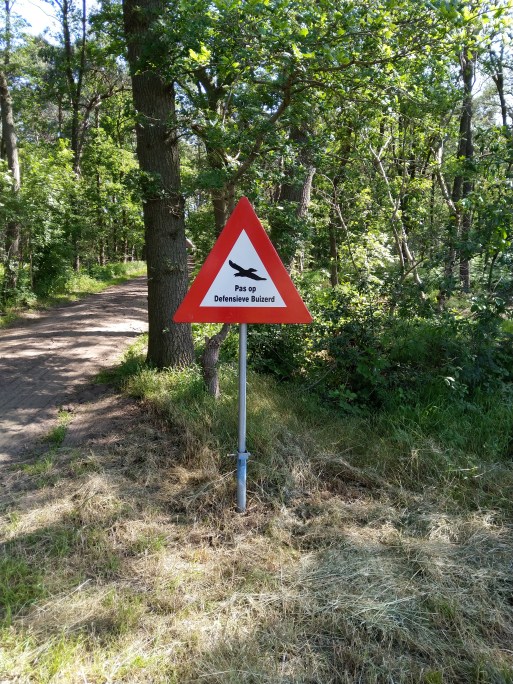
Took the dogs for a walk in the woods this morning, and we were greeted by this newly-erected sign at the entrance.
It says: “beware of defensive buzzard”. There’s obviously a nest up in the trees somewhere, but I couldn’t spot it. At any rate, we were not buzzed by a buzzard.
The last time I saw a buzzard’s nest in these woods was eleven years ago.
This does seem to be a rather ill-thought out decision for a company supposedly proud of its “green” credentials.
Farage has a long history of climate warming denialism. I doubt that this particular leopard has suddenly changed his spots. And now he is to act as a “spokesman” for the company? The mind positively boggles.
Today’s Guardian has a sobering article on what the environment could be like in 2050. The most worrying aspect is not the environment itself, but the impact it will have on human society. It’s perhaps not such a stretch to say, as the article does, that civilisation itself will be at risk.
The author suggests that the risk may be reduced:
When it comes to the science, the dangers can be substantially reduced if humanity shifts decisively away from business-as-usual behaviour over the next decade. When it comes to the psychology and politics, we can make our situation better immediately if we focus on hope in shared solutions, rather than fears of what we will lose as individuals.
I know I’m old and cynical, but I see little chance of that shift happening. Fasten your seatbelts, we’re in for a bumpy ride.
I see that the Guardianhas updated its style guide to introduce terms that more accurately describe the environmental crises facing the world, using “climate emergency, crisis or breakdown” and “global heating” instead of “climate change” and “global warming”.
All the political insanity that is currently rampaging through the world at the moment surely pales into insignificance compared to the existential threat that is the ongoing climate crisis? Indeed the latter will only exacerbate the former as time goes on.
A few months back, I read The Uninhabitable Earth, by David Wallace-Wells. Yesterday, I read in one sitting, We Are The Weather, by Jonathan Safran Foer. Wallace-Wells is a journalist, Foer a novelist. As you might expect, the books are very different in style, whilst both dealing with the subject of the climate crisis.
Foer’s book is a mixture of styles in itself, ranging from thought-provoking essays, to shocks to the brain from short chapters giving lists of factoids, to a “dispute with the soul” – a dialogue with himself over why it is that we seem unable to deal with the fact of the climate crisis. That’s all of us, whether you accept the science or deny it.
Foer offers a path to help mitigate the extent of the crisis: switch to a plant-based diet from a meat-based one. The link between farming animals and the climate crisis is the backbone of his book, and he makes a persuasive case. Livestock are the leading source of methane emissions, whilst nitrous oxide is emitted by livestock urine, manure, and the fertilisers used for growing crops. Nitrous oxide has significant global warming potential as a greenhouse gas. On a per-molecule basis, considered over a 100-year period, nitrous oxide has 298 times the atmospheric heat-trapping ability of carbon dioxide.
The Netherlands has just woken up to this inconvenient truth about nitrous oxide and other nitrogen compounds. We currently have what is known as the Stikstofcrisis (the nitrogen crisis), which arose this year when permit applications for an estimated 18,000 construction and infrastructure projects were stopped. Too high a concentration of these nitrogen compounds leads to a deterioration of nature and to a loss of biodiversity. A reported 61 percent of the nitrogen compounds produced comes from agriculture, with intensive livestock farming being one of the most important sources. So the farmers are up in arms about this, seeing the government placing the blame for the crisis on their shoulders. There have been protests and demonstrations.
The trouble is, we simply can’t go on as we did before. Things will have to change, but that process will be a painful one, whatever we do.
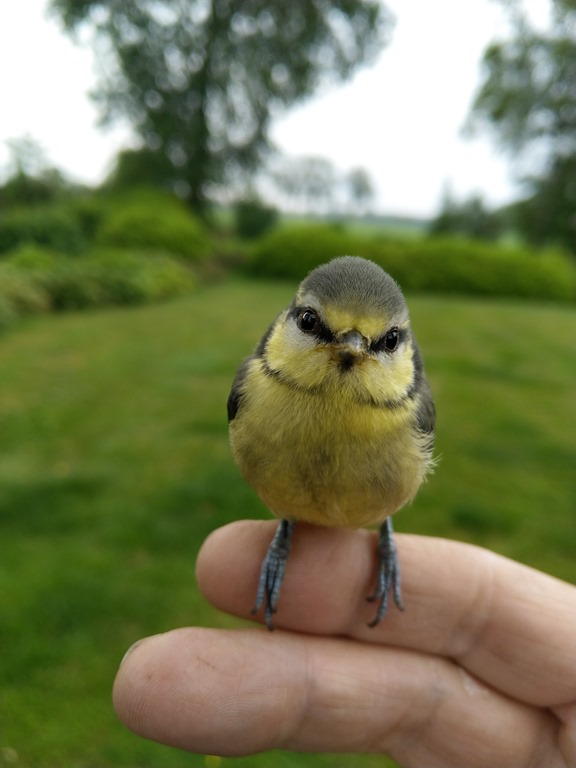
At the moment, we’ve got a variety of nests in the garden. The fledglings are now leaving the nest for the first time. This young Blue Tit knocked itself out by flying into one of our windows. Nothing seemed to be broken, but it didn’t seem to want to repeat the flying experience in a hurry. It was seemingly quite happy to have its photo taken before I transferred it to a branch in one of our plum trees.
The Guardian review of “The Uninhabitable Earth” by David Wallace-Wells has the subtitle “Enough to induce a panic attack…”
I can attest to that. I started reading the book today on the train to Amsterdam, and got thoroughly depressed. Considering that I was on my way to attend the birthday party of two friends, it probably wasn’t the best choice of reading material. Nonetheless, it’s an important book, delivering a wake-up call as solid as a punch to the solar plexus.
I think the most salutary lesson that comes through is that the effects of climate change are already with us, and that the scale will only ratchet up. The best we can hope for is to take action to ameliorate the extent; we cannot hope to reverse it and you can abandon all hope of stopping it.
And with his calm recitation of the facts of recent events – hurricanes, droughts, floods and the like – he makes it abundantly clear that we are not heading for an apocalypse, we are already living in its opening chapters.
Interesting article in the Guardian about the return of the wolf into Western Europe – they’re creeping into the Netherlands as well. Cue for impassioned debate about whether, as a protected species, they should be subject to controls.
It’s also a bit ironic, since the damage caused by wolves here amounted to a paltry €10,247 in 2017 (21 dead sheep). In the same year, damage caused by other protected species was €26,201,907 (wild geese) and €1,581,542 caused by Coal tits… Still, for the shepherds concerned, it can’t be pleasant to come across one of your flock with its throat ripped out…
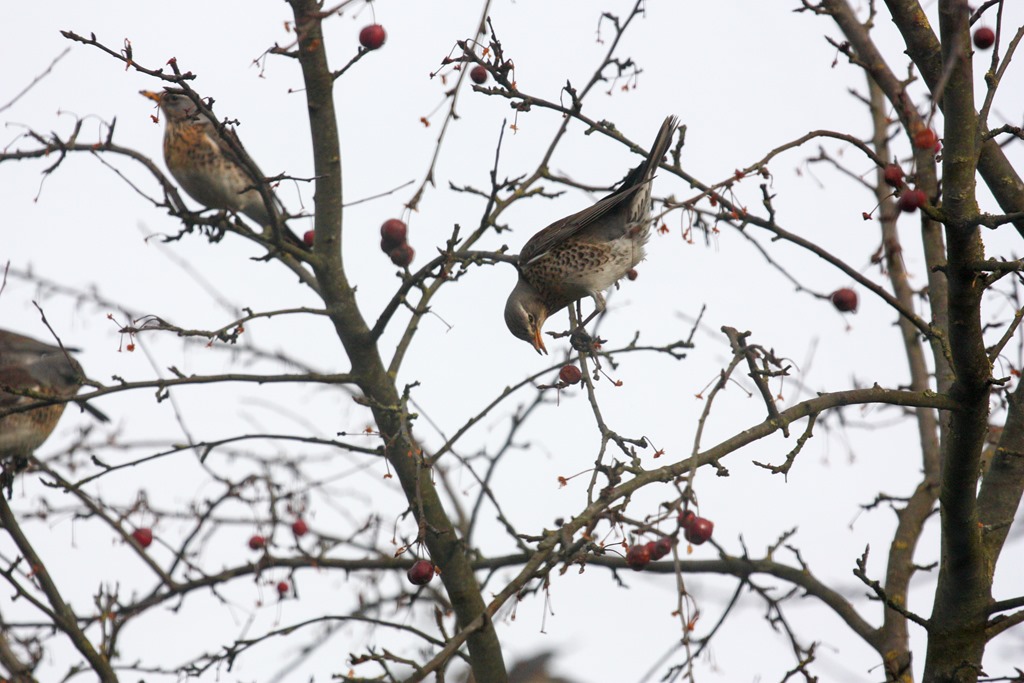
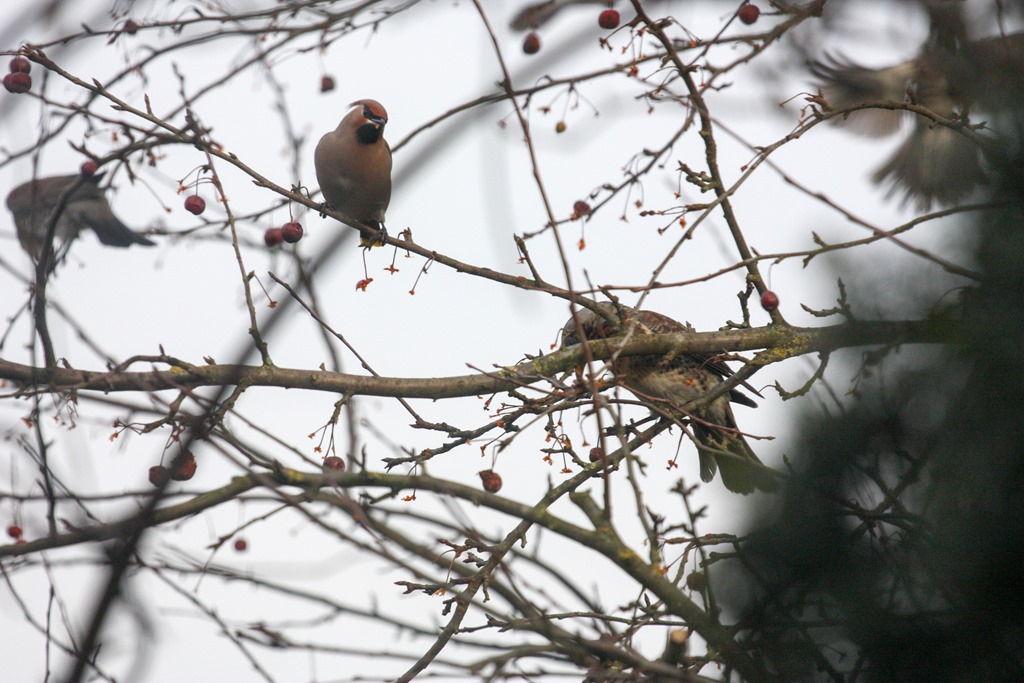
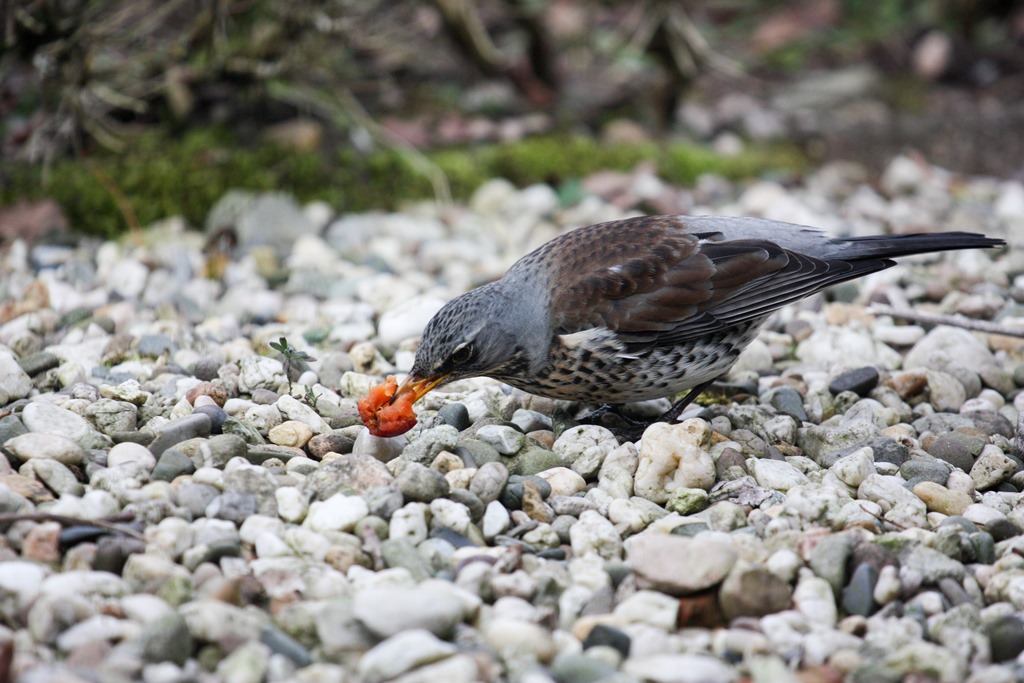
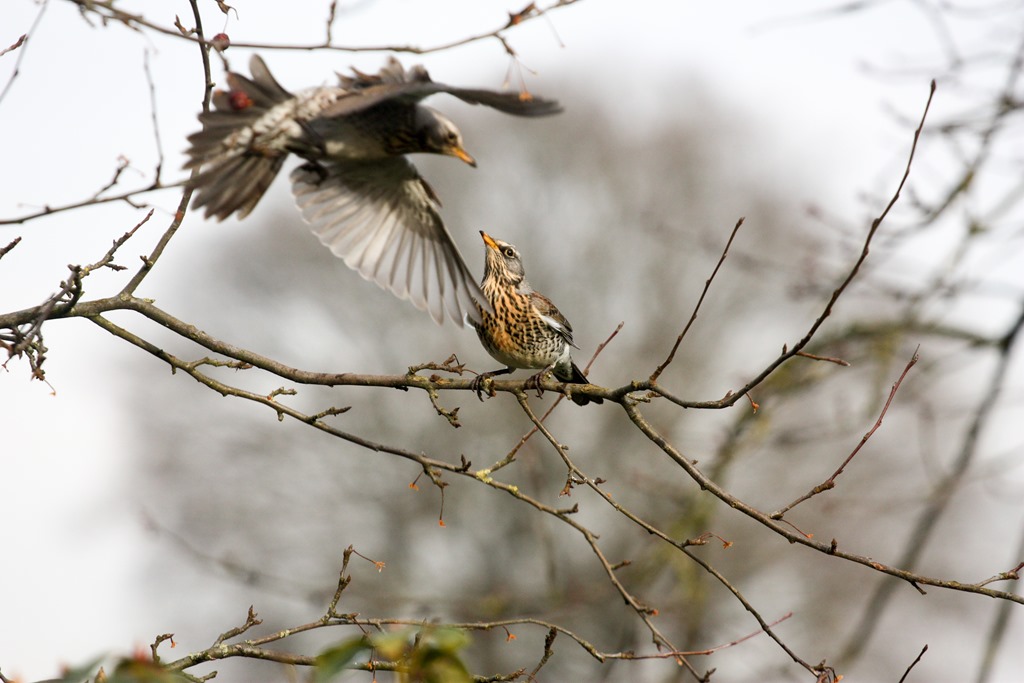
As if to provide a distraction from the ongoing horror that is Trump’s Presidency, we had a fleeting visit from a migrating flock of Fieldfares a few days ago. The flock had spotted the fruit still hanging on our small Japanese flowering crabapple, and descended en masse to strip the tree.
There must have been a hundred birds in our garden having a fine old time eating the fruit before moving on.
I also noticed a Waxwing that had joined in the fun.
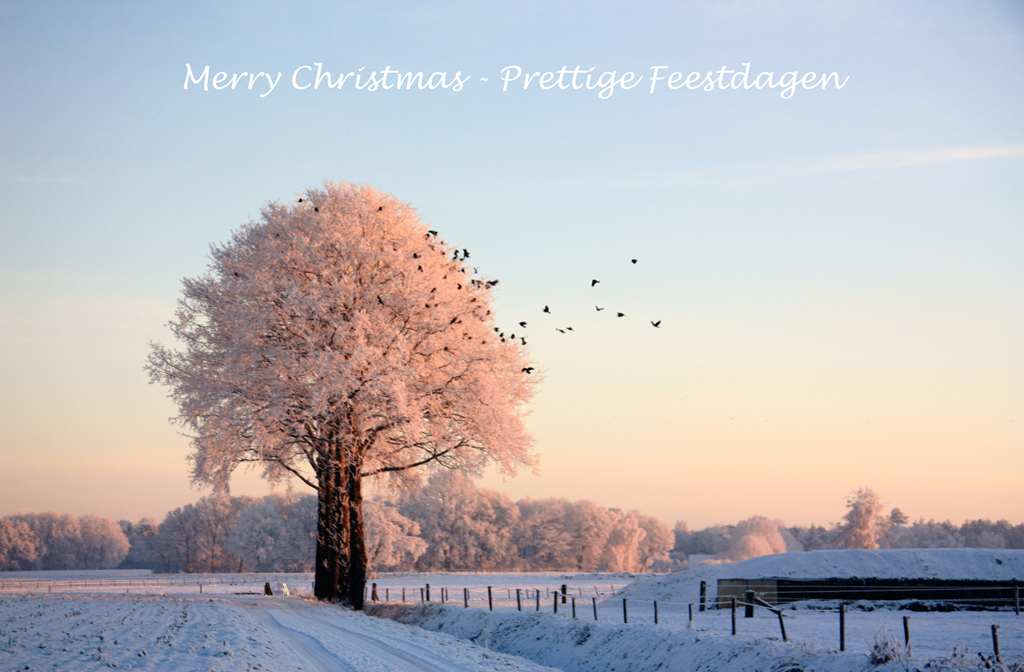
Our Christmas card this year features the row of seven oak trees in front of the woods where we walk the dogs. The photo was taken in January 2009. So far, this winter has been unseasonably warm. We are definitely not going to have a White Christmas…
I was saddened to learn today that Bill Hill died of a heart attack back in October 2012. Bill was a Scotsman who started out life as a newspaperman and became a typographer, but ended up working for Microsoft.
In this short video clip Bill explains why the world’s most important operating system is not Windows or OSX or Linux or Android. It’s Homo sapiens 1.0. It’s an operating system that first booted up about 100,000 years ago, and has never yet had an upgrade.
There’s more videos of Bill available here. A memorial, of sorts. RIP, Bill.
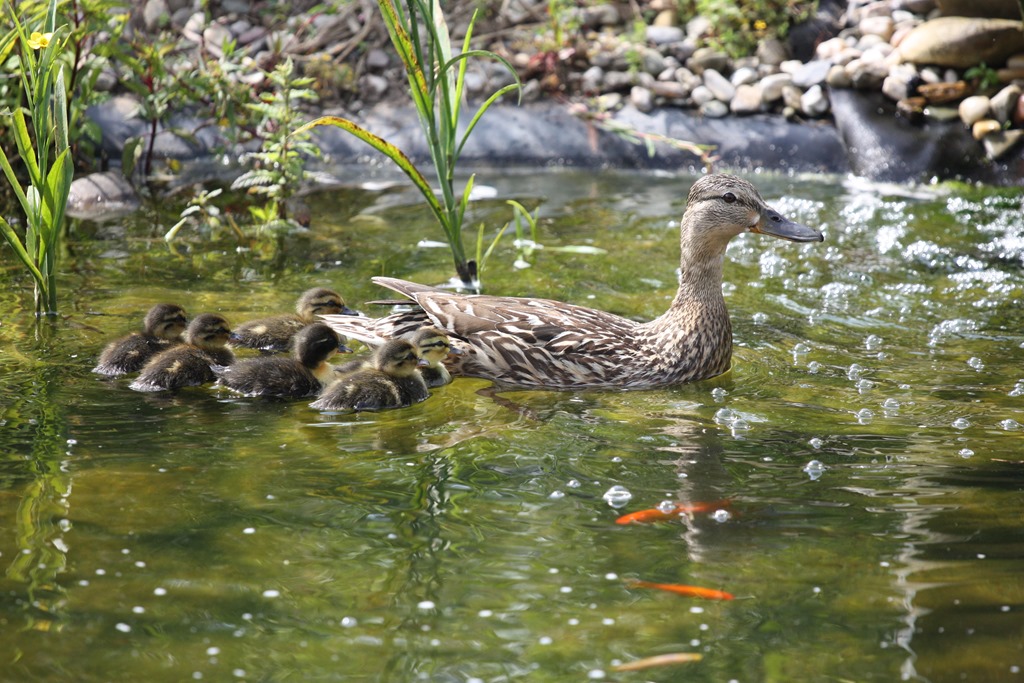
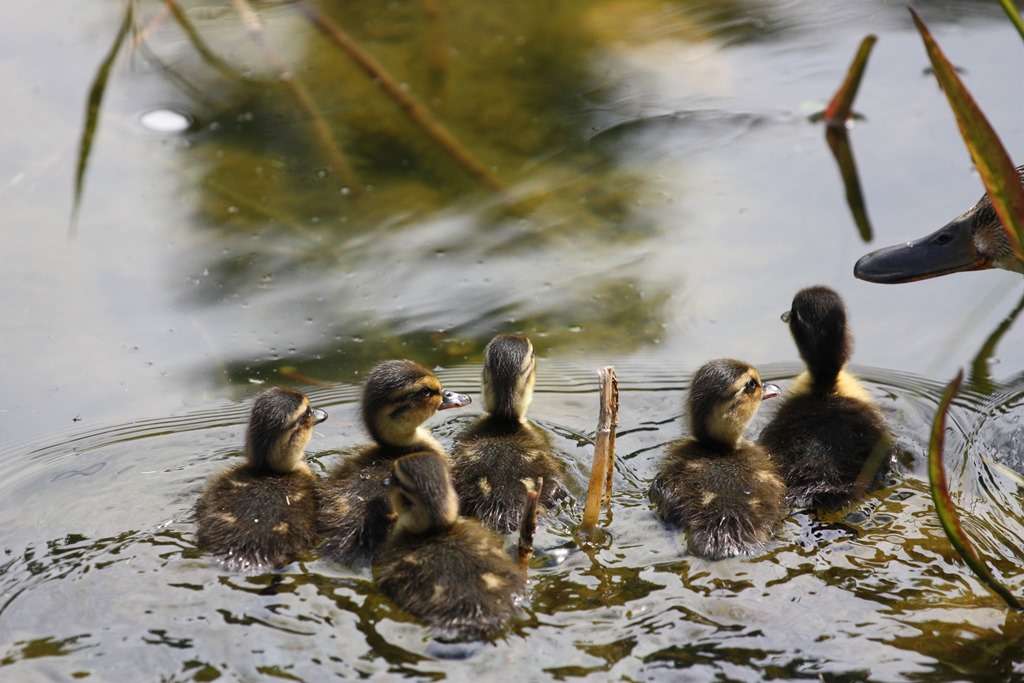
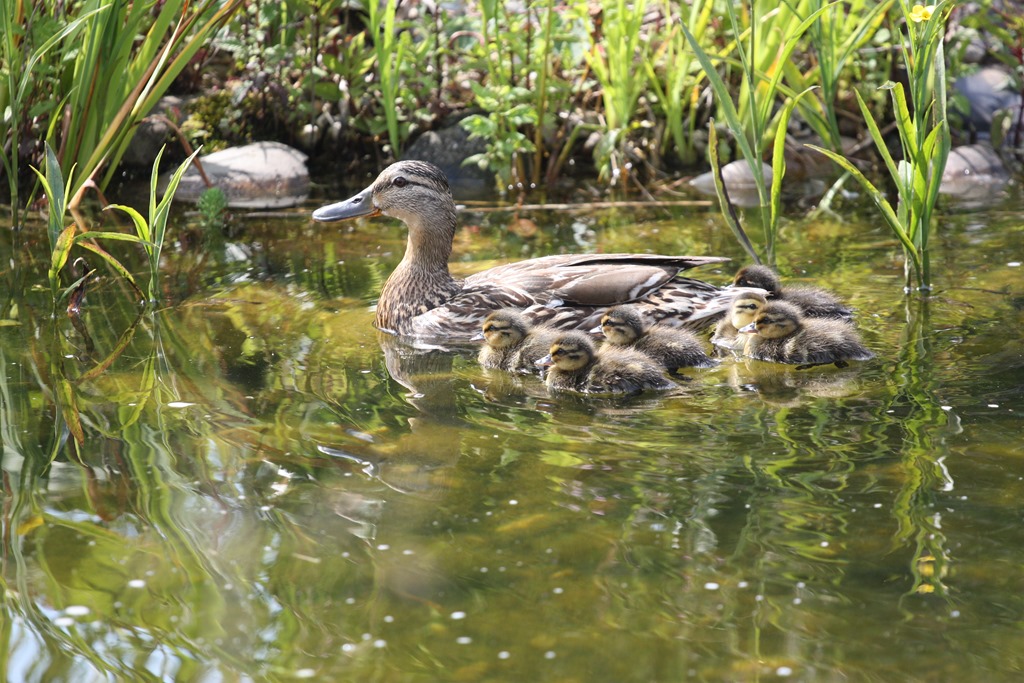
I’m not sure whether it’s the same duck, but a mallard attempts to nest in the shrubs by our pond every year. It’s mostly unsuccessful – last year the nest was abandoned, and earlier this year, something (a marauding crow?) took the eggs. However, this year, the mallard had a second attempt and has hatched six ducklings. The first we were aware of this was a couple of days ago, when she took them out for a spin on the pond. Until then, we hadn’t realised that she had returned to the nest and had been brooding a second batch of eggs. She and the ducklings now seem to spend most of the time in the nest hidden in the shrub. Just as well, otherwise our dog Watson would be disturbing them.
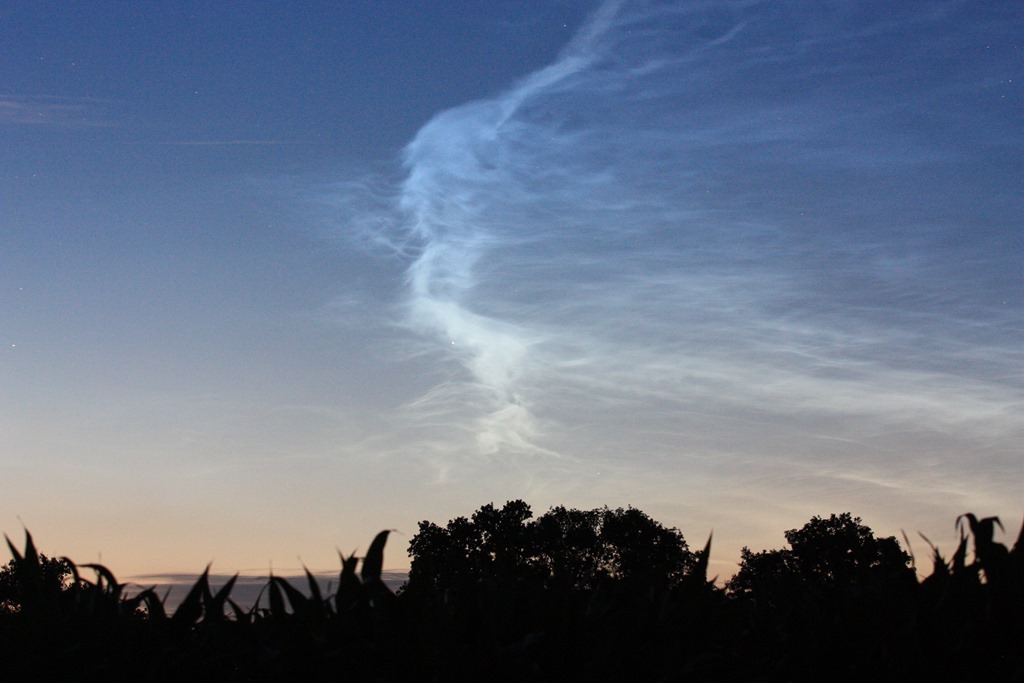
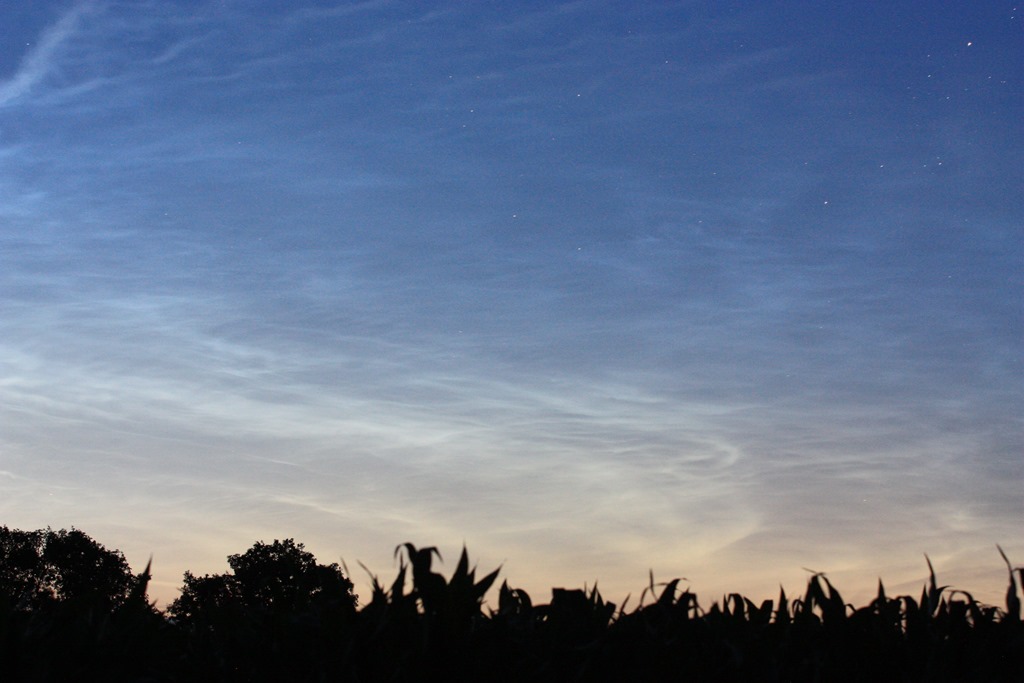
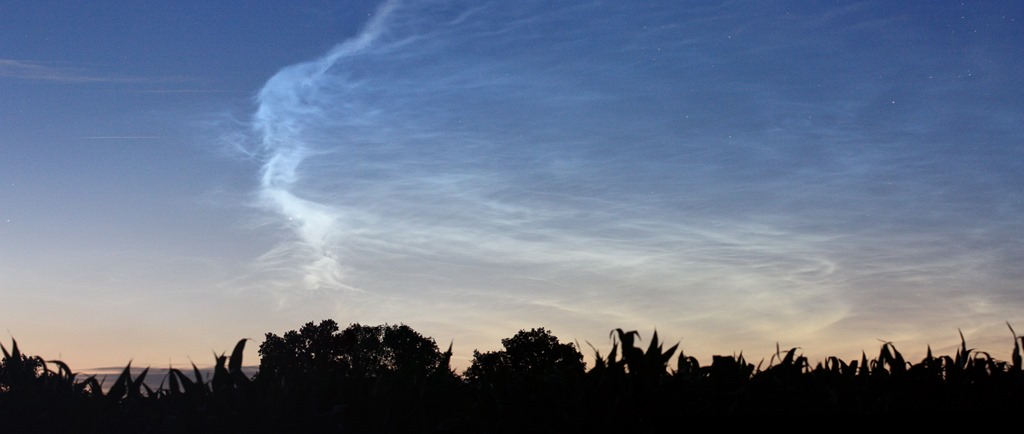
When I took the dogs out last night at 11pm, I noticed that there were noctilucent clouds showing up above the Northern horizon. I dashed back and grabbed the camera for a couple of shots before they faded from view:
These are time exposures of ten seconds, so the sky appears brighter than in fact it was (you can also see some stars). This is the first time that I’ve ever been aware that I was looking at this particular meteorological phenomenon.











 Geoff Coupe's Blog