Reflections on life at “De Witte Wand”…

Category: Nature

  • Not Jaws, But Claws…

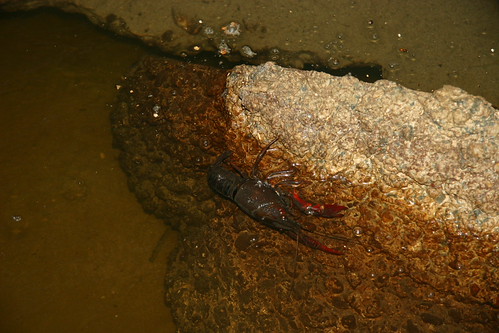
    I mentioned that we’ve discovered that we have crayfish living under the house. Today’s Observer carries a story about the American Red signal crayfish that is apparently ravaging the riverbeds of the UK. Oo-er. Looking again at the photo I took of the crayfish, it does appear to be red. Oo-er again… The final quote in the story sounds rather worrying:
    ‘They’re on the increase. They can live for months out of water and I can see a time when people will be beating them away from their back door with a stick,’ she said. ‘If nothing is done, they may become as common as rats in some areas.’
    Yet again, ooo-errr… Methinks I need to put crayfish on the menu pretty damn quick.
  • Gravity Tugboats

    The WorldChanging blog has an entry on an interesting new idea: using gravitational attraction to deflect asteroids. The Hollywood scenario of blowing up an asteroid that is on course to hit earth is not a good idea. Somewhat better might be to use rockets to nudge the asteroid out of the way. But now, a new idea has been proposed: simply park a large mass (say 20 tons or so) next to the asteroid for a year or two. The slight gravitational attraction between the asteroid and the large mass would be sufficient to alter the asteroid’s orbit. The catch is that to get a big enough change in orbit, you would have to do it 20 years ahead of when the asteroid would otherwise hit the earth. Still, NASA does have the NEO programme, which tracks asteroids that have a chance of hitting earth.
     
    And if you want to find out for yourself what the effect would be of an asteroid hitting your neighbourhood, then the University of Arizona has a handy-dandy computer program for you. Simply feed in your chosen parameters and find out whether you would be vaporised or merely treated to an impressive fireworks display.
  • Ministry of Silly Jumps

    This week’s New Scientist reports that a new species of lemur has been named after John Cleese – the Avahi cleesei. The John Cleese franchise is taking over the world, I tell you. I see that after his successful appearance as Dr. Twain Weck in the Institute of Backup Trauma, he appears to be coming back in a new webinar to be launched in five days time…
  • Taurids

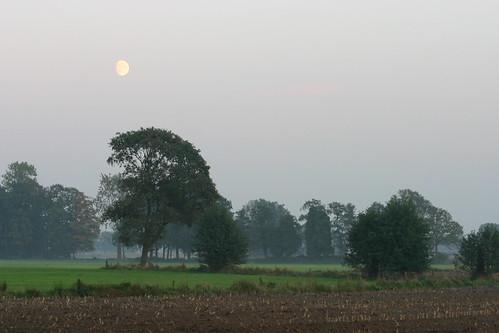
    It’s the time of year when the Taurid meteor shower comes around. There seem to be indications that this could be a good year, producing a higher number of fireball meteors than usual. Watch the skies!
  • Perceptual Illusion – #2

    Another interesting perceptual illusion. Don’t always think you see what you think you see…
  • Murine Melodies

    Lovely little story in The Guardian today about the fact that scientists have discovered that male mice sing songs. The songs are at an ultrasonic pitch, so aren’t normally heard by humans. The scientists slowed down the songs electronically to bring them into our range of hearing. I learned a new word too: murine.
  • Autumn Woods

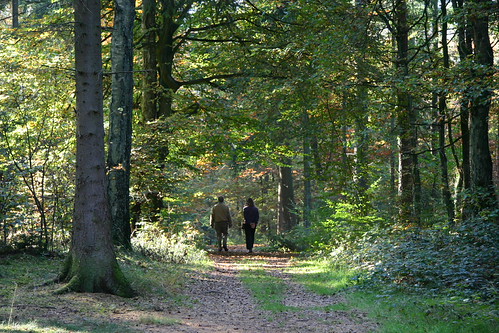
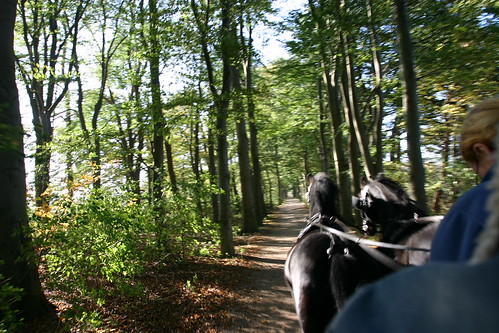
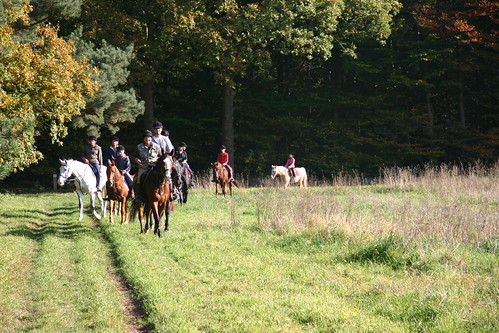
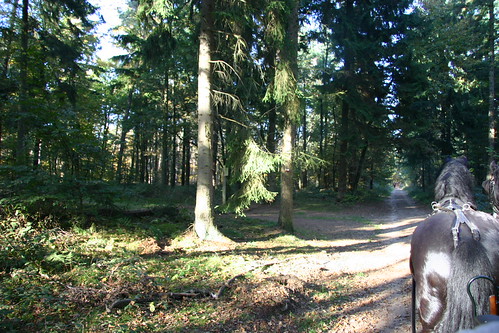
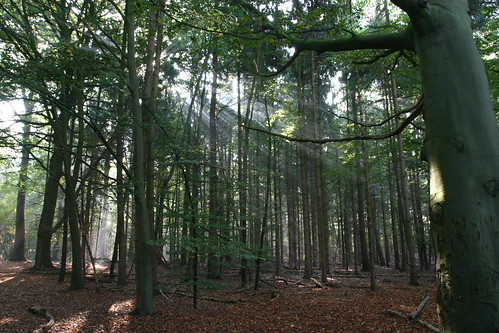
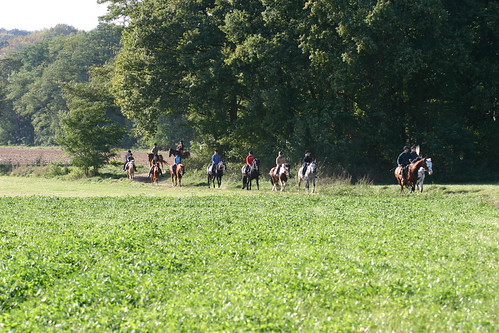
    Yesterday we went for a ride through the Bergherbos – the woods that lie between Beek, Stokkum, ‘s-Heerenberg, Zeddam and Braamt in the province of Gelderland in The Netherlands. We were lucky enough to be invited to ride in an open carriage drawn by two black horses. Wonderful weather, wonderful day. Some photos that attempt to capture the sense of it are below.
     

    051030-1455-45


    051030-1205-28


    051030-1345-20


    051030-1418-40


    051030-1445-39


    051030-1452-57


    051030-1337-27

     
  • Jack The Lad

    The owner of the riding school that we visited yesterday breeds both Labradors and Jack Russell terriers. Here’s a shot of one of the Jack Russells.
     
    (Ed and Chris – this one’s for you!)
     

    051030-1107-16

     
  • Autumn Trees

    Yesterday, we rode through woods in a horse-driven carriage. More on that later. One of the reasons for doing it was because the trees are showing their Autumn colours.
     
    Carl Zimmer, over at the Loom, points out that there are two main theories as to why the leaves turn red and yellow in Autumn. I had always thought that it was simply a side-effect of the trees preparing for Winter, but it turns out there is another theory that has been proposed to account for it. And now there’s some new theorising that seems to tie together both of the competing theories. Go and read Zimmer’s piece for more info.
  • What Lies Beneath

    As part of the process of selling our house, the buyers have commissioned a technical report on the construction and state of the house. So yesterday they turned up with a building engineer in tow whose task it was to examine it from top to bottom.
     
    This being Gouda, our house is built on piles, and the way it is constructed means that there is a hollow space underneath the house – totally inaccessible, apart from via a hatch in the garage floor. As part of the inspection, the building engineer raised the hatch and peered down into the pool of water that collects under every house built in this way. He suddenly called us over to take a look. I peered down and saw at first what I thought was a silhouette of two crayfish painted on the concrete base under the water. Just as I was thinking why would anyone bother to paint crayfish on the floor, I suddenly realised that one of the crayfish was moving…
     
    Yep, we have freshwater crayfish living under our house. Dunno how they got there, or what they live on, but they seem happy enough. So the next time I need to make Sauce Nantua, I’ll know where to go to get my fresh crayfish…
     

    051026-1345-37

     
  • Elephants and Their Dead

    Fascinating story in New Scientist this week about research that seems to show that elephants are one of the few other species besides our own that pay homage to their dead.
  • Perceptual Illusions

    Here’s a fascinating perceptual illusion: Dr. Angry and Mr. Smiles (scroll down on the linked page). Perhaps even more terrifying is the illusion that follows: Thatcher/Blair. Art imitates Life?
  • Nature’s Wonders

    I’ve noticed before how biologists seem to adore some of the most bizarre examples of Mother Nature’s work, so I particularly like this quote from Dan Nilsson on the Box Jellyfish: "These are fantastic creatures with 24 eyes, four parallel brains and 60 arseholes".
     
    Indeed.
  • Is there a Plan B?

    Back in May, I revealed my plan for getting a Wollemi Pine, since my better half won’t countenance having its close relative – the Monkey Puzzle Tree – anywhere near any garden of his.
     
    Alas, the plan has come to a screeching halt – and simple economics is to blame. The Guardian reports today on an auction of Wollemi Pines that has just been held in Sydney and the prices are way beyond what I can justify to myself (and more importantly, to my dear husband). There were 292 saplings that came up for auction, and it raised a total of £487,000. One batch of saplings went for a cool £4,200 per tree.
     
    Oh well, back to the conifers, I suppose.
  • Return of the 17-Year Cicadas

    There’s a fascinating film that has been made, documenting the 17 year life-cycle of cicadas. It’s called Return of the 17-Year Cicadas. Go and watch it here.
     
    Clearly made by people who love the cicadas – "In 2004, the residents of Bloomington, Indiana had the good fortune to be visited by one of the largest and most spectacular biological events on earth, the return of the 17-year periodical cicadas know(n) as Brood X." I’m not sure that the phrase "good fortune" is quite what I would have used – particularly when looking at the nymphs swarming over the ground, or the adults in their final frenzied mating flight. And Enya warbling on the soundtrack while trillions of the little buggers scurry about just didn’t resonate with me. Give me fluffy kittens, every time.
     
    Nonetheless, it’s a terrific little film about an interesting example of evolution. If you like it, and you want more, then check out Microcosmos – a full feature-length film on the lives of insects.
     
    (hat tip to PZ Myers over at Pharyngula)
  • The Ex-Parrot

    I’m not the only one who thought that we had stumbled into Monty Python territory on hearing the news that a parrot had died of bird flu in the UK. CuriousHamster over at A Big Stick and a Small Carrot also made the connection. And he quite rightly points out the note of hysteria that seems to have got sounded on stories about bird flu. There’s a difference between being informed and panicking unnecessarily. The UK press and media seem to have concluded there’s more money to be made in stoking the fires of panic.
  • Well, I’m Back…

    …he said, doing his best Sam Gamgee impersonation. For the last week we’ve been taking a short holiday in the province of Gelderland in The Netherlands. Getting to know the countryside that should, if all goes well on the house buying and selling front, become our home in about six months time.
     
    There are some pleasant places in the future neighbourhood, such as a couple of woods within walking distance of the house…
     

    051015-1144-35


    051015-1513-42


    051015-1144-57


    051015-0859-16


    051014-1841-58


    051018-1345-24

     
     Martin is already thinking about the dog he’s going to get to accompany him on long walks… He didn’t pass up the opportunity to examine labrador puppies. All together now: aawww!
     

    051018-1402-25

     
  • The Pterosaurs’ Trick

    Interesting new research reported on in this week’s New Scientist over how pterosaurs may have been able to fly.
  • Present Ideas

    Do you have people in your life who are difficult to buy presents for? Are you completely bereft of ideas of what to get them for their next birthday/anniversary/bar mitzvah?
     
    Well, here’s a suggestion – a coffee stirrer; although you’ll probably have to think of another use for the walrus baculum.
  • Don’t Eat This

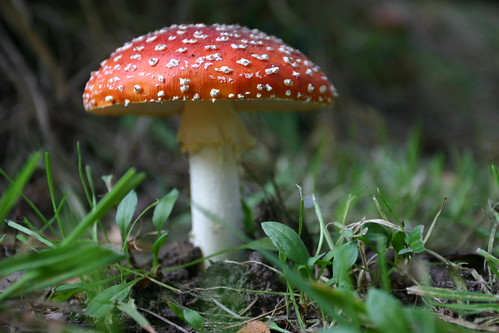
    We were visiting a friend this week, and she pointed out this mushroom growing outside her house. It’s Amanita muscaria – Fly Agaric – a highly poisonous mushroom. The toxins in it attack the central nervous system producing intoxication, hallucination and a euphoria similar to drunkenness. The poison will stay in the system for several months, even though the symptoms generally only last 12 hours.

    051005-0939-20


    051005-0939-43


    051005-0939-27