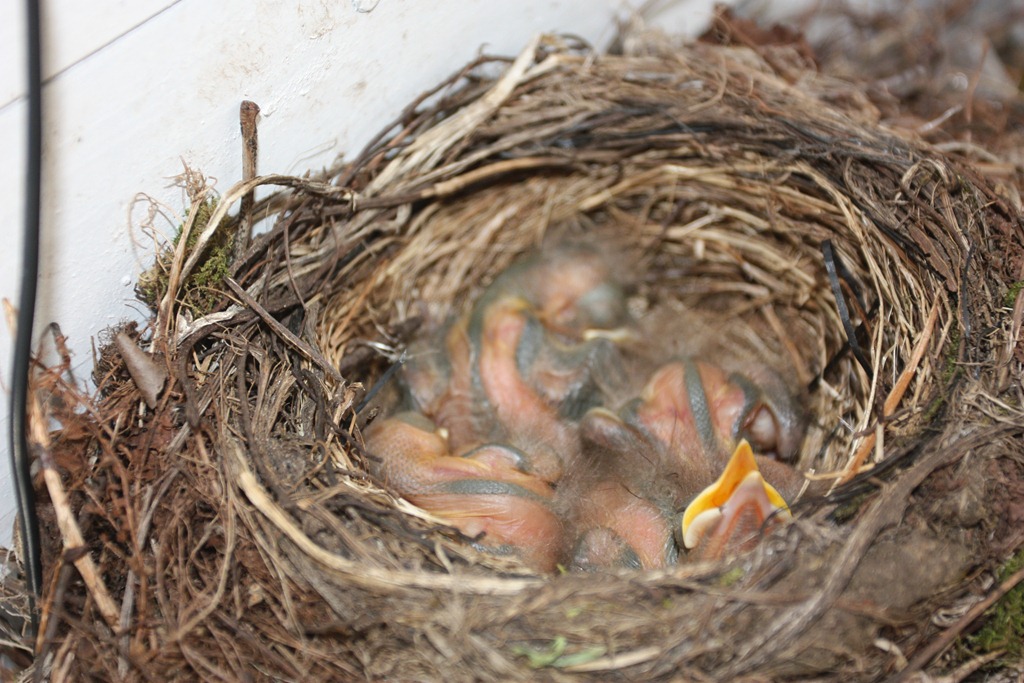
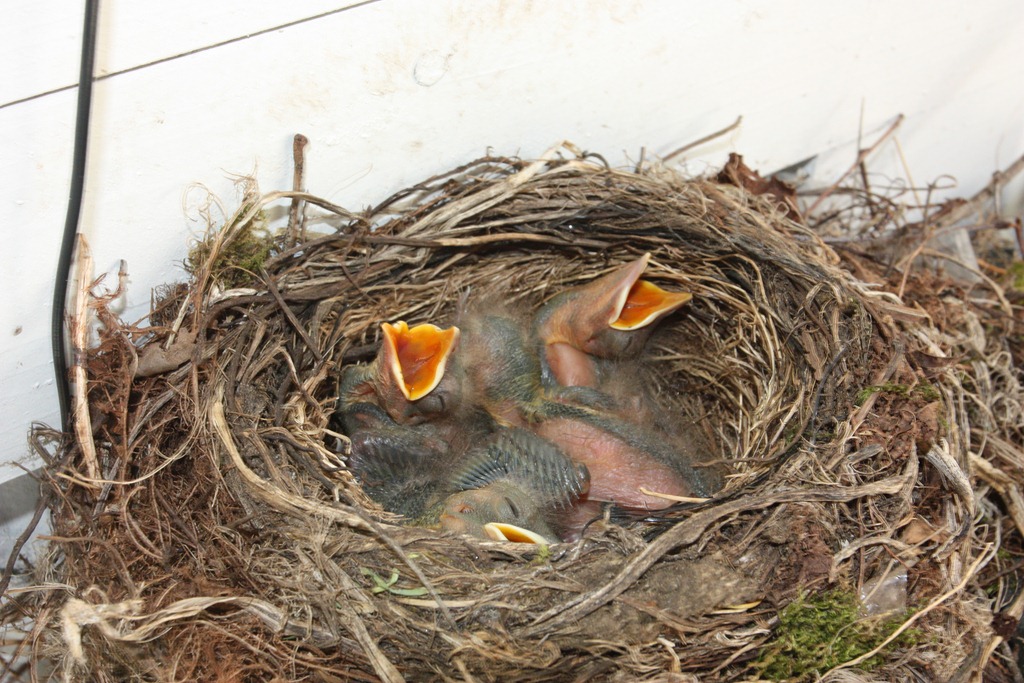
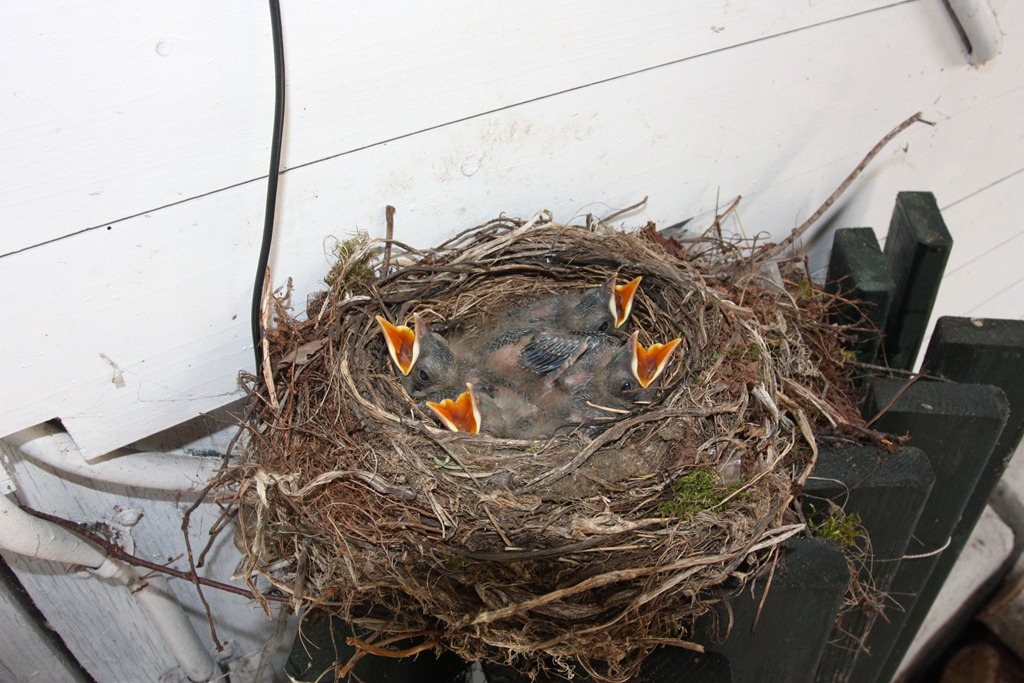
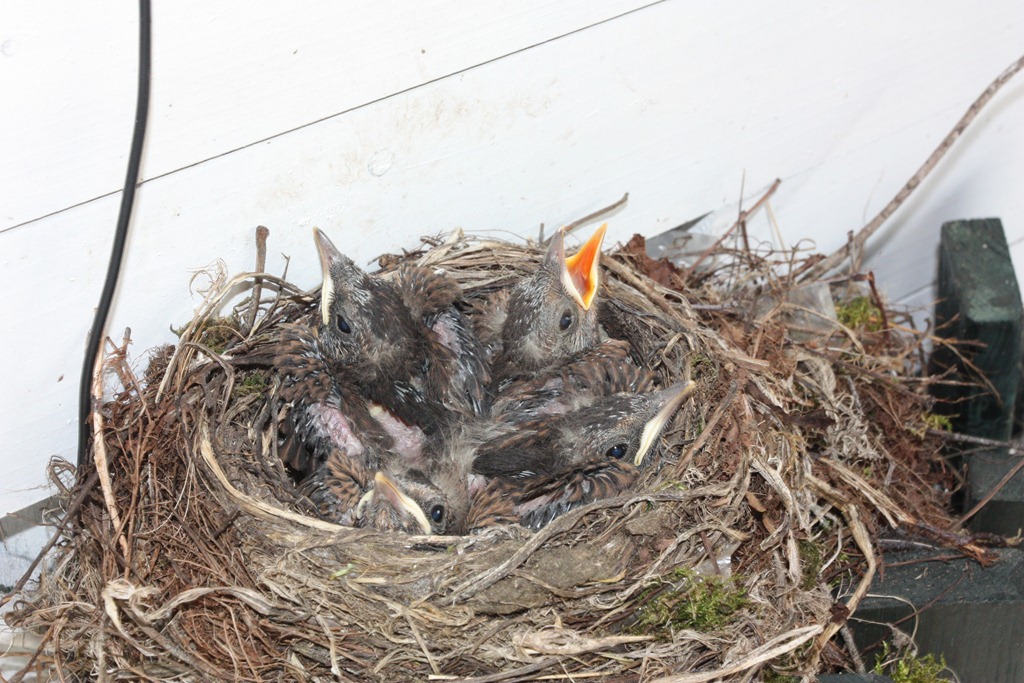
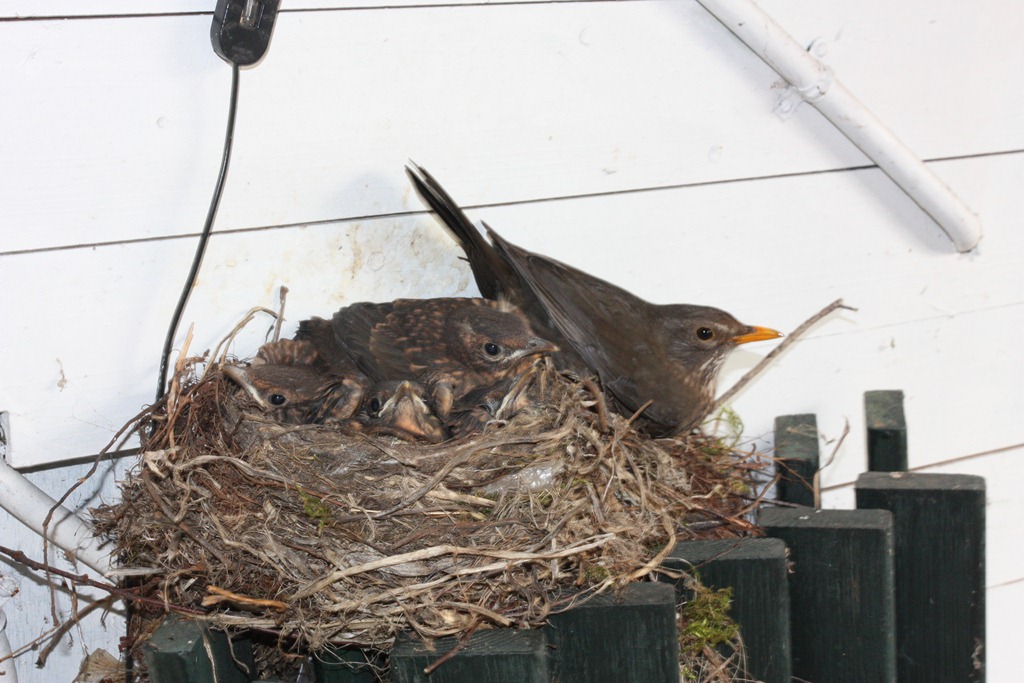
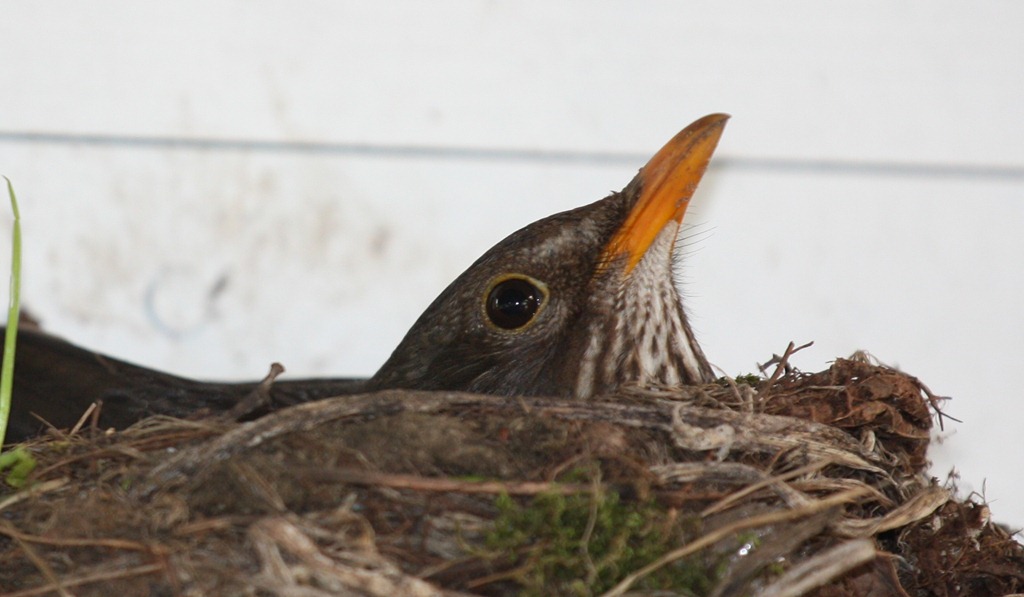
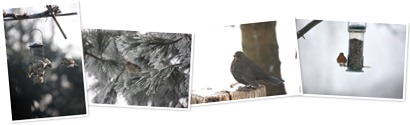
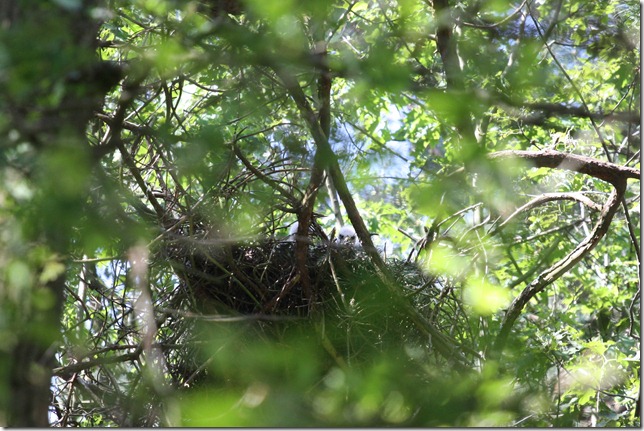
A Blackbird has built a nest in our woodshed. The nest is perched on top of a wooden frame that is leaning against the wall, and is at eye-level. It’s just below the equipment that supplies the current to the electric fence (to keep the dogs in the garden and the cows out), so when I switch the fence on or off, the blackbird and I stare eyeball to eyeball. It doesn’t seem to bother her at all.
Category: Nature
-
Spring Has Arrived
It seems as though Spring has arrived. We’ve been having good weather for the past week, and the daffodils and crocuses are in full bloom.
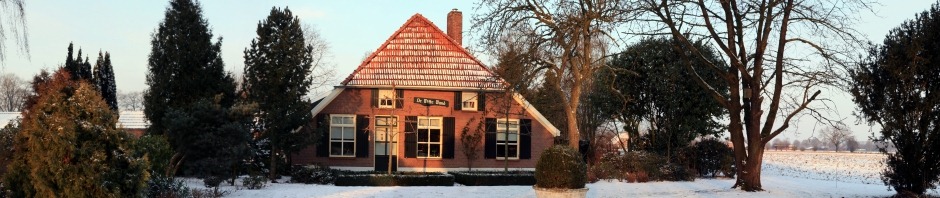
To celebrate, I’ve changed the blog header photo from Winter to Spring. From this:
to this (taken this morning):
Mind you, the downside is that now the garden’s woken up, there will be lots of work to do…
-
Cyclone Yasi
I hadn’t quite grasped the huge size of cyclone Yasi until I read this story that shows the extent of Yasi overlaid on other parts of the world. It is simply vast.
-
The Bird Feeder
There’s a couple of bird feeders hanging in the tree just outside my study window. At this time of year, there’s a collection of the usual suspects hanging around making use of them, or scavenging the seeds that fall to the ground…But today, there was a new bird feeder that took up temporary residence in the pear tree in the garden, eyeing up the potential meals… -
Winter Wonderland
If you don’t have to travel anywhere, it’s rather pretty outside. There have been several falls of snow in the past week, and the daytime temperatures are still below freezing. Driving in this is somewhat less pleasurable; fortunately, we’ve got most of the Christmas supplies in. I’m hoping that we can make one last run to the village for last minute supplies on Friday, and then we should be all set for a cosy Christmas.
-
A Taxonomy of European Birds
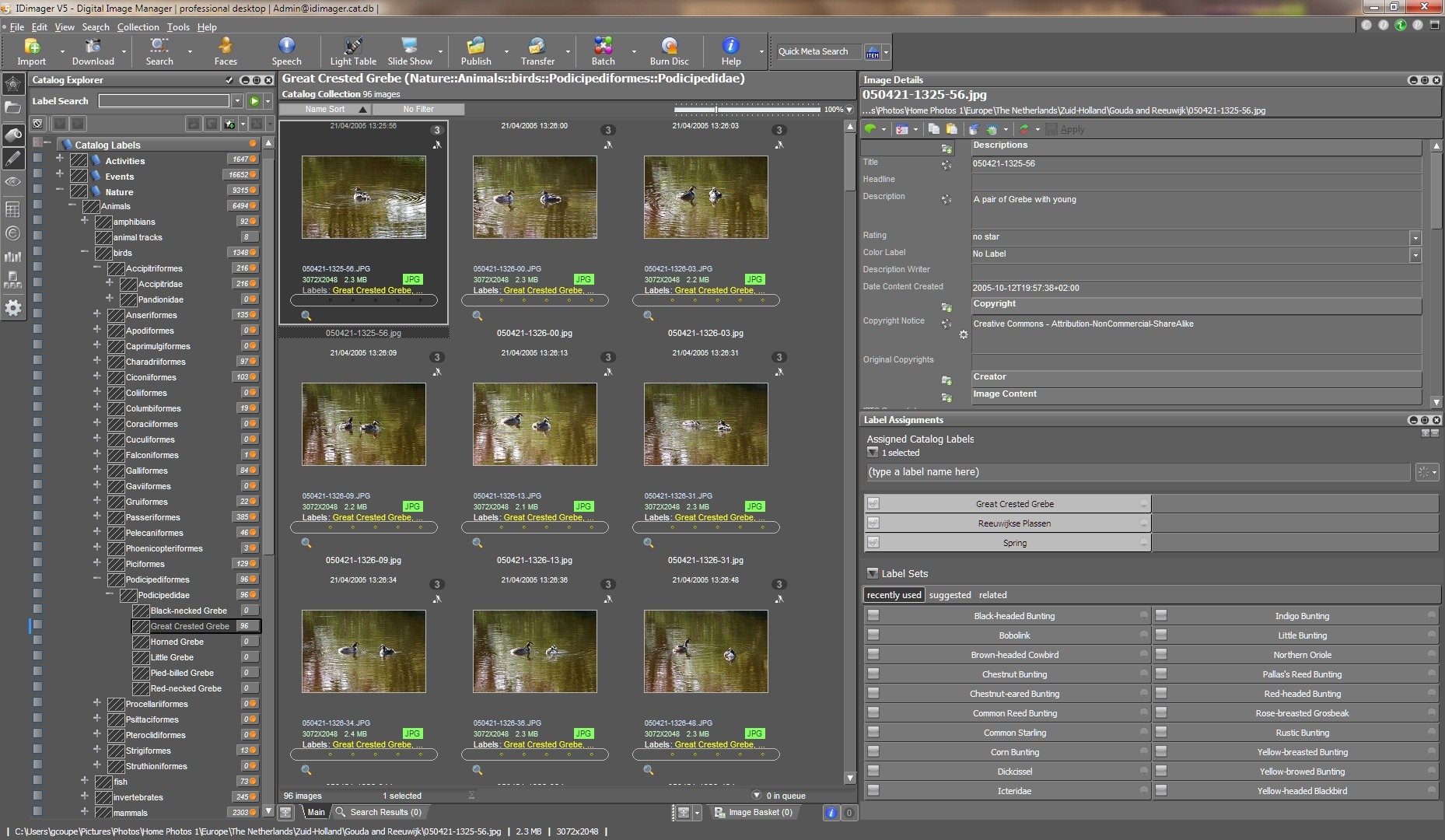
Looking through my photo collection, I see that I have taken over 1,300 photos that have a bird or birds as the subject. Up until now, I’ve catalogued these in a rather haphazard fashion, that’s to say that as I’ve photographed a new bird (for example a Green Woodpecker), I’ve added its common name to the list of keywords in my catalogue. As the list has grown, I’ve also tried to group the bird species a bit e.g. put the birds of prey together, or waterbirds together. So I’ve ended up with a rather messy taxonomy of birds.
Then, a few days ago, I noticed that someone had posted a message in the Controlled Vocabulary group to say that he’d put together a list of keywords for Adobe’s Lightroom that followed the taxonomy of the list of Western Paleartic Birds produced by the Association of European Records and Rarities Committees, the AERC. As an aside, I note that whoever is responsible for the AERC web site needs to fix the missing or broken links that pepper it.
Anyway, Rudi Theunis made his keywords list available to the members of the Controlled Vocabulary group, and I grabbed a copy to see if I could use it with IDimager, the program that I use to catalogue my photos. (Note: IDimager is no longer available. Its successor is Photo Supreme, which I am now using) It turns out that IDimager can easily import Lightroom keyword lists with one click, so I’ve now got a complete taxonomy of European Birds set up, with both common names and the scientific names as synonyms. See the following screenshot showing a partial view of the taxonomy (click on the image to see the full size screenshot in a new window).
I spent a few hours re-cataloguing my bird photos, and now they are all nicely fitted into the new taxonomy, thanks to Mr. Theunis.
-
What’s The Point – Part II
Here we go again, more bilge to wade through. This time it’s Jonathan Jones, whom I understand to be an art critic, claiming that in the area of writing about Natural selection: “Give me Darwin over Dawkins any day.“
Well, he’s every right to claim that of course, but his reasons don’t stand up to much scrutiny:
“Darwin is the finest fruit of English empiricism. His modest presentation of evidence contrasts, I am sorry to say, with the rhetorical stridency of Richard Dawkins. Visit the famous atheist’s website and you will see two causes being pushed. Dawkins is campaigning with other secular stars against the pope’s visit to Britain. Meanwhile he is touring the paperback of his book The Greatest Show On Earth: The Evidence for Evolution. The trouble with this book is that it lacks Darwin’s empirical style. Where the Victorian writer presented masses of evidence, and let his astonishing, earth-shattering theory emerge from common-sense observations of nature, Dawkins lacks the patience, at this point in his career, to let natural history speak for itself. He has become the mirror image of the theological dogmatists he despises.
He just can’t separate science from the debate he has got into with religious people.”
Jones seems to have read a different version of The Greatest Show on Earth from the one that I did. Mine has Dawkins present and review the evidence, both that which Darwin saw and that which has become available in the 150 years since Darwin first published. As Jerry Coyne says, it’s “chapter after chapter of solid biology, natural history, genetics, evo-devo, and the like”.
And if Dawkins can’t resist slipping in the occasional jab at the idiocy of creationists in the face of the mountains of evidence, then I, for one, cannot blame him. If it were me, I’d be screaming in their faces to get in the fecking sack, yer fecking eejits.
It’s all I can do to refrain from saying the same to a certain Mr. Jonathan Jones, erstwhile art critic of the Guardian and jury member for the 2009 Turner Prize. As Jerry Coyne says:
“Jones is clearly out of his element here, which is writing about pictures of dogs playing poker. In his haste to defend faith against the depredations of Dawkins, he makes a complete fool of himself.”
Oh, bugger it; Get in the fecking sack, Mr. Jones…
-
Chopped
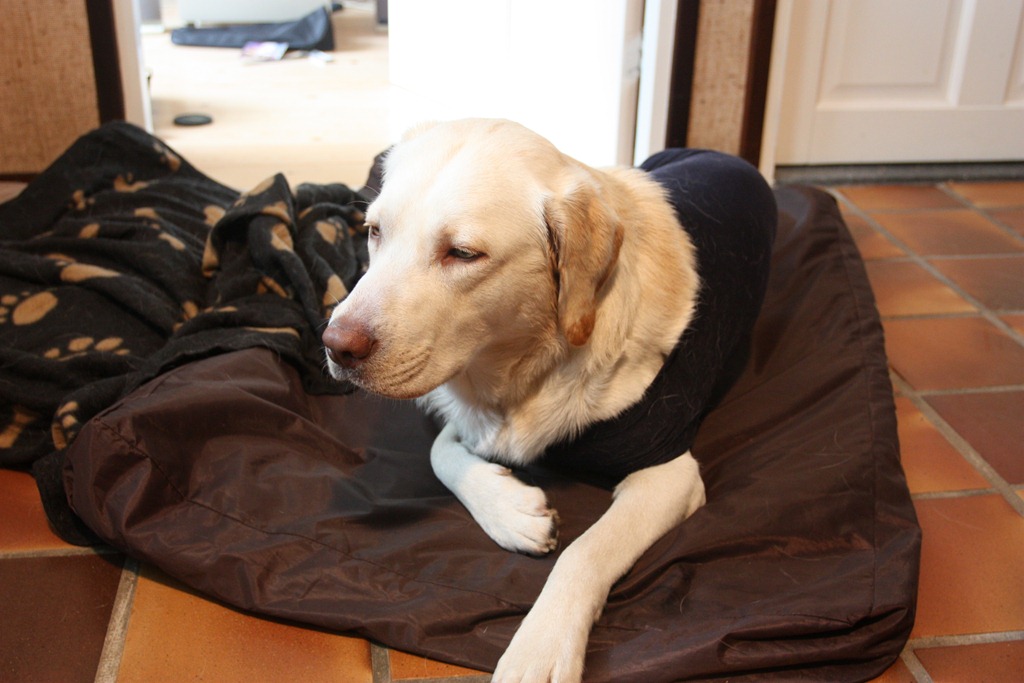
We have two Labradors: Kai, who is now over seven years old, and Watson, who is now 13 months, and heavily into puberty.
We became the owners of Kai when he was three, and he was already neutered when we got him. He has a gentle nature, and wins the hearts of everyone that meets him. Watson, on the other hand is a typical teenager, pushing the boundaries at every opportunity. He also pushes Kai around, while Kai just wants a quiet life.
So we decided to level the playing field by neutering Watson.
This morning he went for the chop. That was done without problem. Now he is coming to terms with the fact that something has changed. He’s feeling a bit sorry for himself, but I’m sure that will pass. He’s also being subjected to the indignity of wearing a one-piece garment at the moment in an attempt to stop him licking his wounds.
-
The Illusion of Free Will
Over at Why Evolution Is True, Jerry Coyne muses on the concept of Free Will. His musings were prompted by reading Dan Dennett’s book: Freedom Evolves.
His post is followed by a discussion by commenters batting the ideas back and forth. I’m no philosopher, and reading some of this stuff makes my brain hurt, but it’s enjoyable all the same to explore the ideas.
When it comes down to it, I think I’m pretty much in the camp that believes that free will is an illusion, albeit an exceedingly strong one. I think Ophelia pretty much sums it up for me:
This subject doesn’t fret me the way it does some people, and I suspect that’s because I’m lazy about it. I’m lazy about a lot of things. It doesn’t fret me because I always end up thinking “but it feels as if I choose and in a way that feeling amounts to the same thing as really choosing.” That’s probably lazy because of the “in a way” or the “amounts to” or both. It’s woolly. And yet –
And yet if we all do live that way, feeling all the time as if we choose various things, then for the purposes of living that way, it does amount to the same thing. Or at least it seems to. It’s like the self, and other such illusions. We can agree that they’re illusions, and yet in everyday life, we go on living and thinking as if they’re not, and we can’t really do anything else.
It’s like vision, too – we don’t really see what we see; what we see is a confabulation – we fill in all kinds of missing bits with our brains to make a seamless whole that our eyes don’t in fact see. I’m aware of that, but I certainly can’t refrain from doing it.
Perhaps I should go back and re-read Freedom Evolves again. Now, is that a decision taken of my own free will?
-
The Acid Tanks Await
I’ve always had this inkling feeling that the Transhumanist singularity is nothing much more than a rather daft idea peddled by the likes of Ray Kurzweil.
It’s a topic that comes up for regular chewing over in the science blogosphere, particularly around the time when the proponents of transhumanism hold a shindig.
I came across something today that triggered a faint memory. Over at Pharyngula, there’s a post today that contains a comment by Ye Olde Blacksmith that nails the flaw for me.
To summarise the idea of the singularity, it is that at some point in the not-too-distant future, it will be possible to copy the consciousness of a human person into another, perhaps non-biological, substrate, such that the consciousness lives on in the new vessel.
In a way, it’s what lies at the heart of the Star Trek transporter, but the idea was explored even earlier in Science Fiction in the 1964 book by Clifford D. Simak: Way Station. The central idea of the book is that what appears to be a remote rural farmstead in Earth is in fact a galactic way station that travellers are passing through. As Simak envisages it, travellers arrive at the way station by having their bodies and their consciousness replicated from the blueprints taken at the previous station. When they leave, the process begins with their complete blueprint, body, consciousness and all being transmitted to the next station. It is completed when the traveller on earth is killed and its body flushed into the underground tanks of acid that lie beneath the way station. That image has stayed with me.
The comment on the Pharyngula thread rather brought the memory of that book back to me:
Dr. Nick: Good evening, Mr. Anderson. Are you ready for the procedure?
MeatbagMe: Hi. Um, yeah, I guess. Are you sure this will work? I’m really going to be in the machine?
Dr. Nick: Yes, you will be in the machine and will no longer be biologically mortal.
MeatbagMe: Oh, OK, let’s get this party started.
*Dr. Nick admininstering sedative via I.V.*
Dr. Nick: Ok, start counting backwards from 100.
MeatbagMe: 99…98…97…9…..
Dr. Nick: Are you there? Can you hear me, Mr. Anderson?
DigiMe: Hey, yeah, I’m here! SWEET! I’m in a computer. The interfaces are awesome! I can’t even tell I’m not still in my body. So what happens now?
Dr. Nick: Well, now that we have established that the procedure was successful, we will dispose of the body.
DigiMe: Wait, what? So my original body is dead?
Dr. Nick: No, it isn’t dead, but you have no use for it anymore. Now that you are digital, that is, you have not need for a biological carrier.
*MeatbagMe comes to*
MeatbagMe: Hey, what happened? Did it work? I don’t feel any different.
Dr. Nick: Nurse, please begin the body disposal procudures.
*Nurse begins administering something via I.V.*
MeatbagMe: What? Hey, I’m still alive here! You can’t do this!
Nurse: The body is prepping now, Dr.
MeatbagMe: Hey! HEY! Stop this! I’m still here! I’m still here goddamm……………..
Nurse: I will arrange for the transport of the remains.
Dr. Nick: Thank you. Mr. Anderson, will you be requiring anything else?
DigiMe: Nope, I’m good.
Or, in devastating summary (comment #46):
“As you can see, this new duplicate of you is an exact replica in every way, down to every last memory, down to every last arm hair. Now please step into the disintegration chamber.”
This seems to me to be the fatal flaw. If I am a non-dualist, then I have to believe that “I” will cease to exist once I step into the disintegration chamber. The fact that a replica of me, carrying a perfect copy of my consciousness will carry on is of little comfort to the me that existed up until that point…
The acid tanks await…
-
Begging The Question
The Guardian’s Comment is Free section runs a feature called “The Question” Each week a question is posed and a series of writers offer their thoughts (usually both pro and con) on it. This week, the question is: Can we choose what we believe? Or, to put it another way: How do you believe the things you do, and are they things you can change?
Julian Baggini gets things off to a good start, but as is so often in CiF, we lurch from the sublime to the ridiculous with the next response from Usama Hasan. His opening sentence is a perfect illustration of the begging the question fallacy:
God exists, obviously.
Erm, no, it ain’t obvious. His piece pretty much goes downhill from there. As Baggini concludes in his piece:
The capacity to make free choices is not something we either have entirely or not at all. Rather, choices become freer the more they are the result of our own capacity to reflect on and assess facts and arguments. Beliefs based on ignorance or whim are thus less freely chosen than those held in full knowledge and on reflection. So to take one of the biggest belief choices of all, we do not choose to believe in God or not, but we can choose how much we attend to inconvenient facts, distorting self-motivations, and the rationality of arguments. In that sense, we are responsible for what we freely believe.
There’s been a number of items recently on whether free will is itself an illusion or not. For example, the philosopher Dr. Galen Strawson had a good article in the New York Times recently. His position is that free will is definitely an illusion. Bradley Voytek, over at his Oscillatory Thoughts blog, has some comments to counter the argument. And Jerry Coyne had an item on his Why Evolution Is True blog outlining the surprising results of an experiment to test “free will”. As Coyne writes:
Here’s the surprising result: the brain activity that predicted which button would be pressed began a full seven seconds before the subject was conscious of his decision to press the left or right button. The authors note, too, that there is a delay of three seconds before the MRI records neural activity since the machine detects blood oxygenation. Taking this into account, neuronal activity predicting which button would be pressed began about ten seconds before a conscious decision was made.
Food for thought, and a good deal more interesting than “God exists, obviously”.
-
Feeding Time
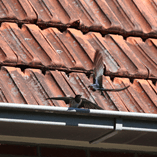
There are Barn Swallow nests at the neighbouring farm. Some of the juveniles have taken to sitting on our roof at feeding time. The parents catch the insects over the gardens around the house and then feed their young.
-
My, How They’ve Grown!
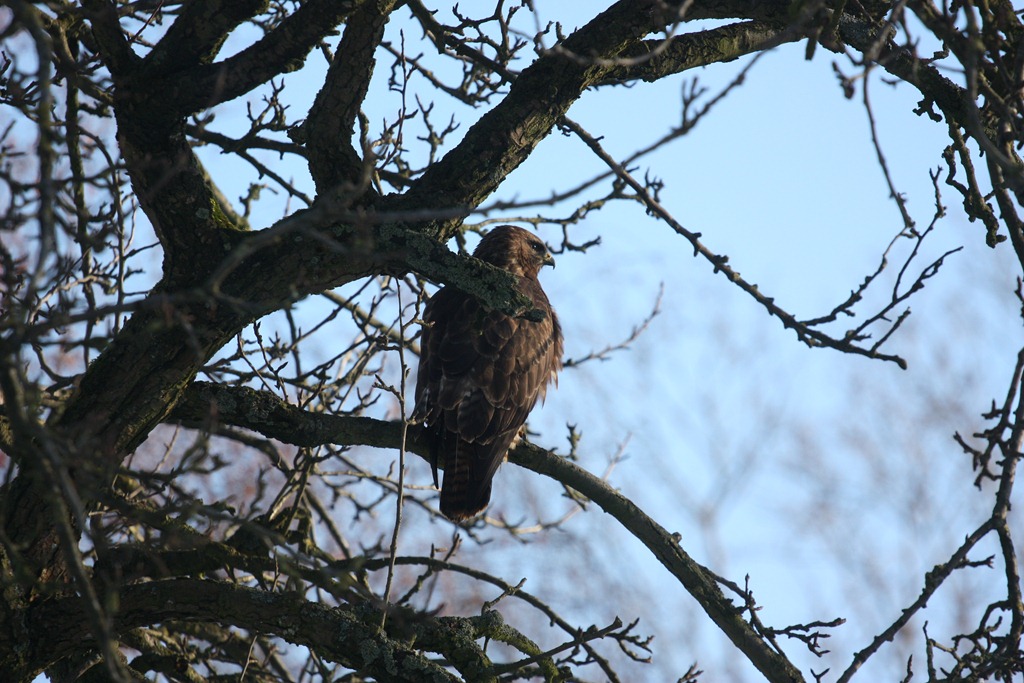
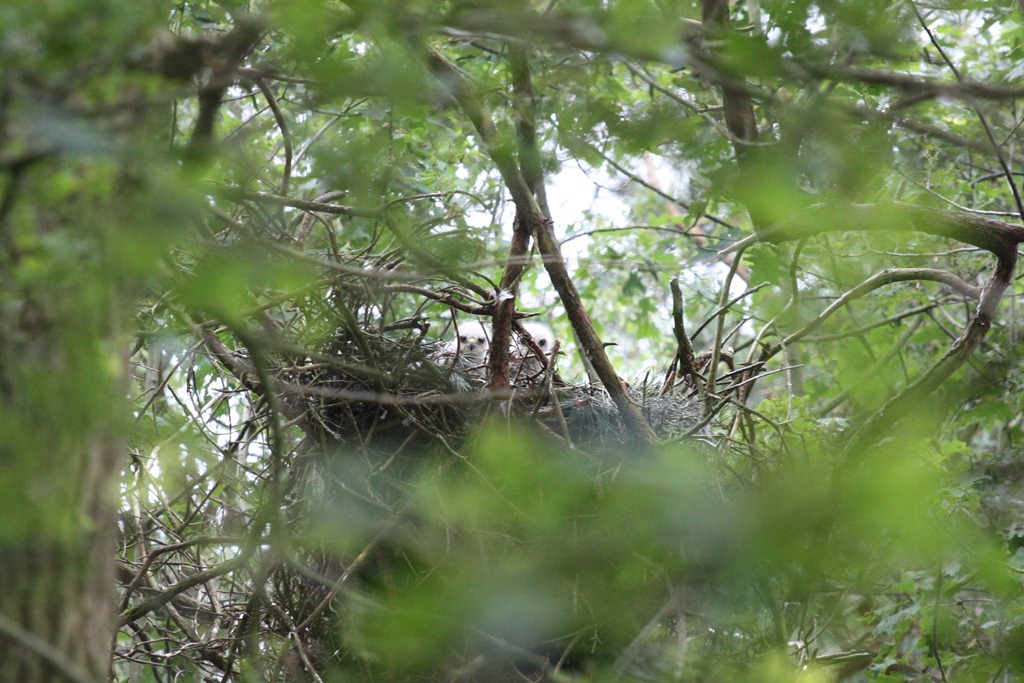
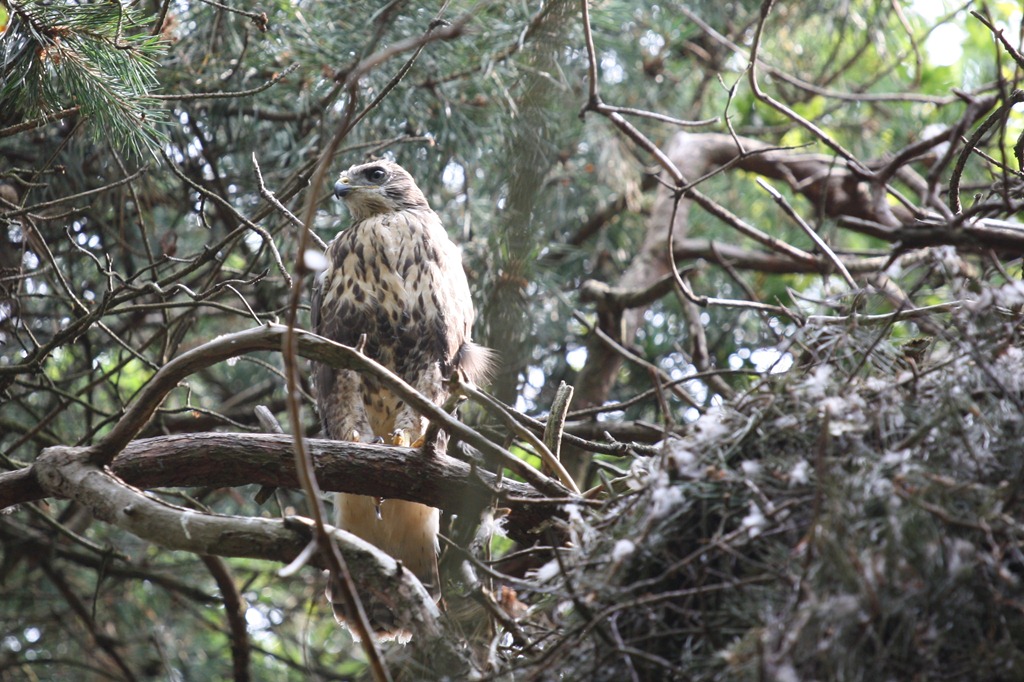
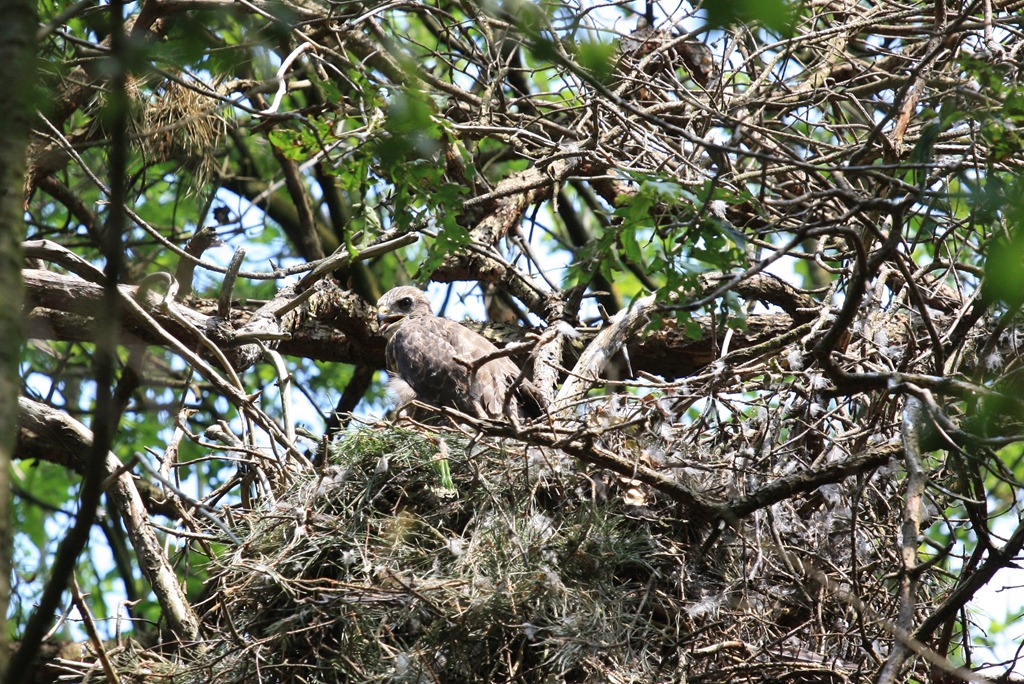
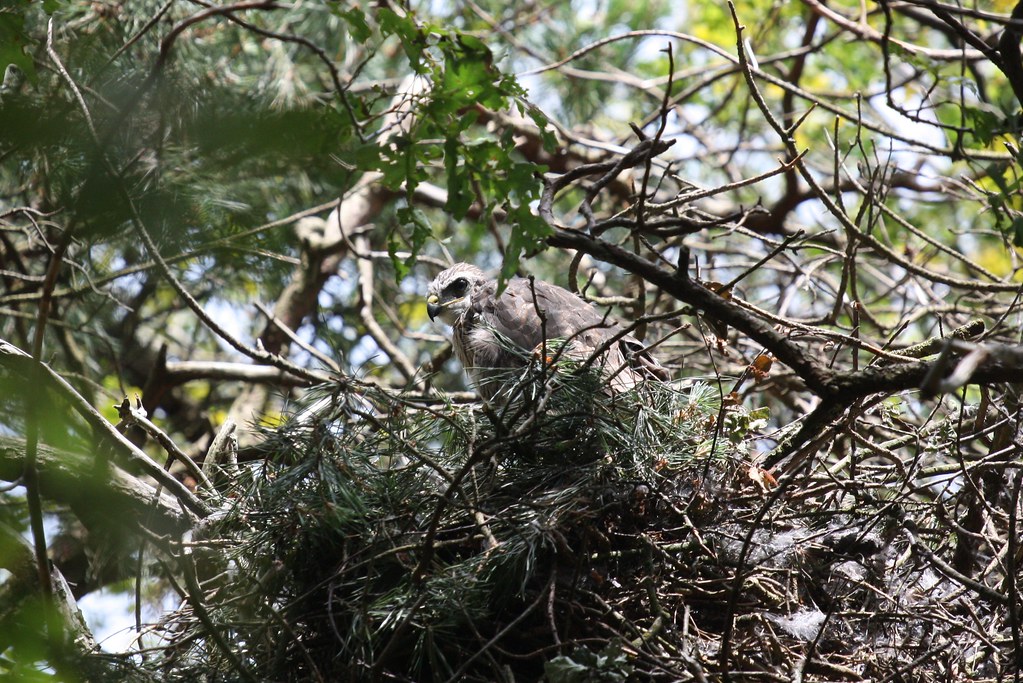
In just under a month, the two buzzard chicks I’ve been watching in the nearby wood have gone from this:
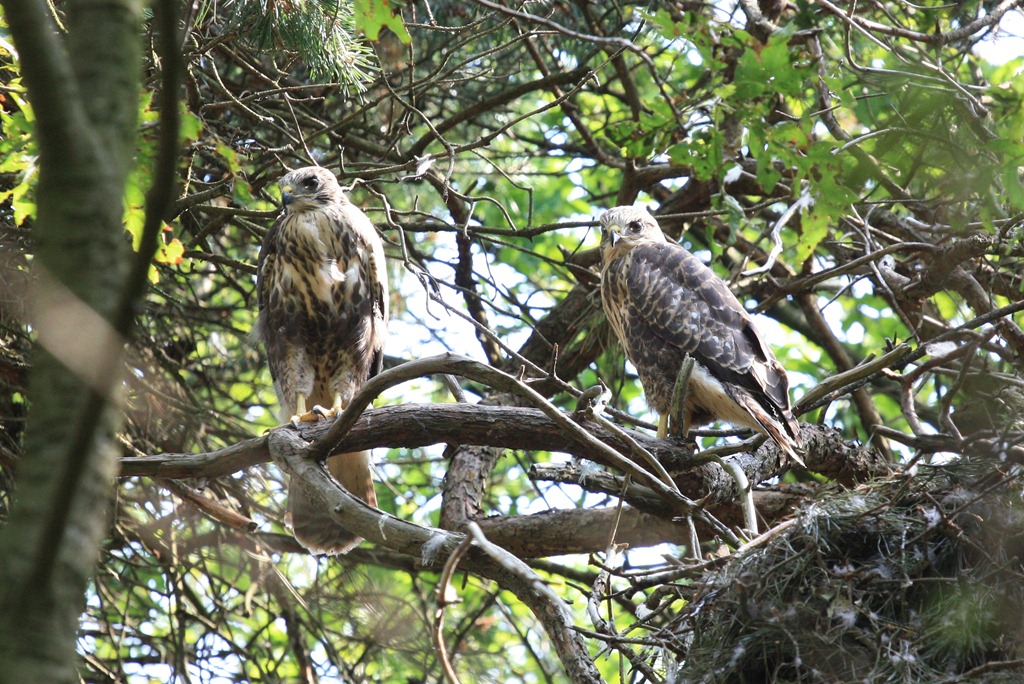
to this:
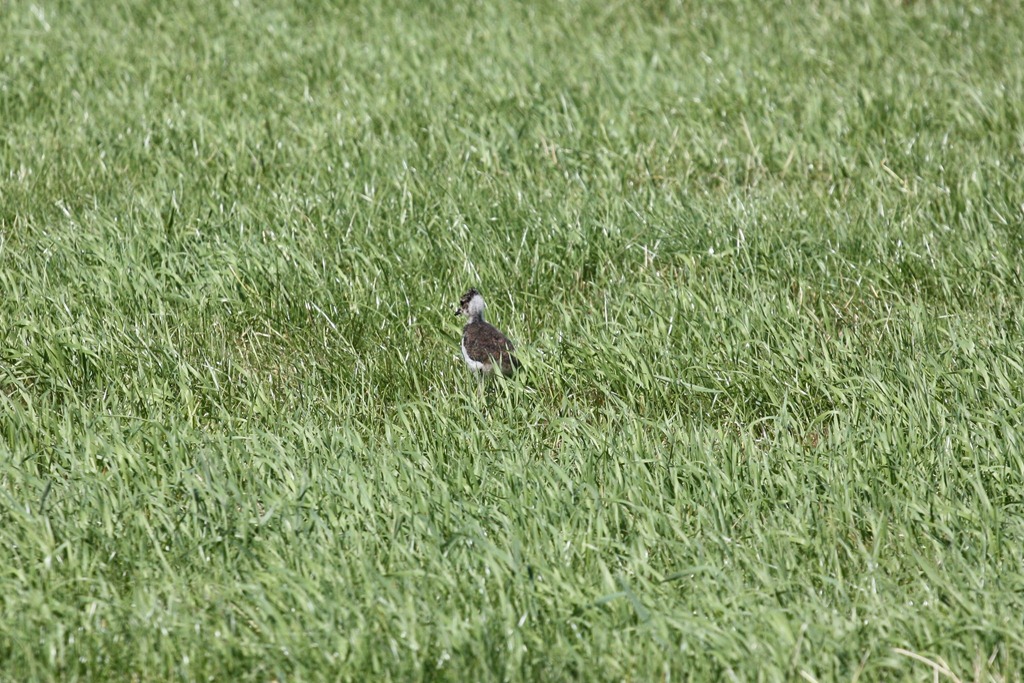
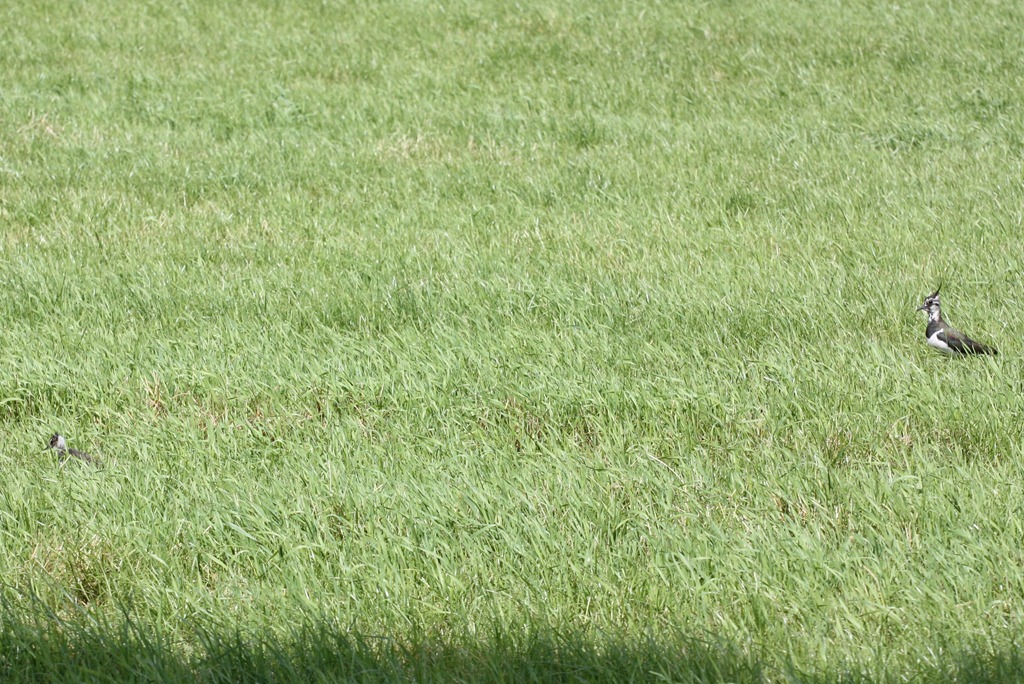
Oh, and remember I mentioned the Lapwings in the nearby field? Well, they managed to rear one chick (almost hidden in the grass on the left):
But, I’m afraid, after a few days, only the mother was to be seen, still calling for her chick:
As I said, Nature is merciless.
-
Time Flies
The buzzard chicks are getting bigger. They will soon fly the nest…
-
Raptor Rapture
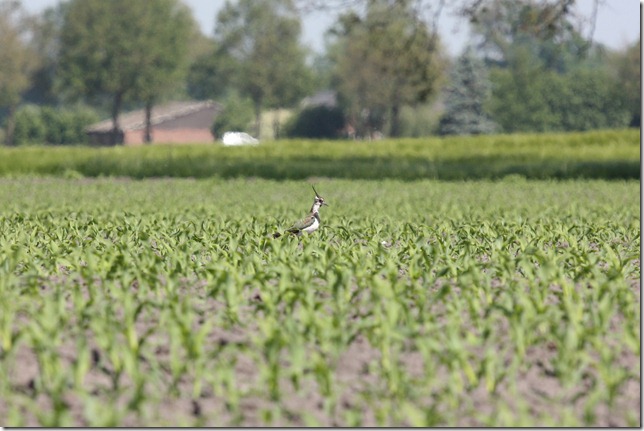
There’s a little wood nearby that I walk the dogs in most days. Following a different path a few weeks ago, I discovered that buzzards had built a nest above the path. I think there’s at least two chicks in it, but I’ll have to wait until they are bigger before I’m able to get a better view of them. Meanwhile, in a nearby field, lapwings keep a beady eye out for the buzzards, and I’ve seen them dive-bombing the buzzards in an attempt to keep them away from their own nest. Nature is merciless.


-
I Don’t Believe It…
Yet another opportunity for a Victor Meldrew moment today with the news that:Wildlife documentary makers are infringing animals’ rights to privacy by filming their most private and intimate moments, according to a new study.
Footage of animals giving birth in their burrows or mating crosses an ethical line that film-makers should respect, according to Brett Mills, a lecturer in film studies at the University of East Anglia.
Now, of course, this could be just the news media spinning what Dr. Mills has actually said. On the other hand, it would appear that he has form in making comments that make me want to bang my head against the wall…
Update: Some people think that Dr. Mills has a point. As I commented on Jean’s post, I still don’t buy it…
-
The Big Question
Richard Wiseman has posted a thought experiment linked to polls for pet owners, one for cat owners and one for dog owners. The thought experiment is this:Imagine walking into a room and finding your beloved dog or cat, and a randomly selected two year old child that you have never seen before. You are presented with a simple choice. You have to press one of three buttons. One button will instantly kill your pet. The second button will instantly kill the child and the third button will instantly kill you. No-one will ever know which button you pressed and there will be no legal ramifications for your choice. Answer honestly – which button would you press?Looking at the results, I am frankly amazed at how many pet owners would rather kill the child than their beloved pet (around one third at the moment). As for me, my answer would depend on additional factors. As a dog owner, for the most part I would unhesitatingly choose to kill my dog.But I could also imagine a circumstance where I would choose active euthanasia, and kill myself. After all, Wiseman’s said that the death is instant. Sounds to me like a good way to go, if I were ready to die…
The kid survives in both scenarios…
On a related note, Philip Ball comments on a new paper from psychologists Ilkka Pyysiäinen of the University of Helsinki and Marc Hauser at Harvard. The paper draws on the results from the Moral Sense Test and points out that individuals presented with unfamiliar moral dilemmas show no difference in their responses if they have a religious background or not, although religion may influence responses in a few highly specific cases.
Oh, and harking back to the experiment that kicked this off, I’ve always found the phrase "cat owner" to be faintly oxymoronic. As someone said: "dogs have owners, cats have staff".