Reflections on life at “De Witte Wand”…

Category: Society

  • RIP Chris Killip

    Chris Killip has died. He probably made his name as a photographer with his photos documenting the industrial decline in the north-east of England. But for me, as a fellow Manxman, it is his photos of the people and places of the Isle of Man that resonate the most with me, because I grew up with them.

    My parents had a hotel, which like many hotels on the island was open only during the Summer season, which ran from June to September. When I was very young – up until I think my eighth year – I would be sent to stay with a family in the country during the season, because my parents had their hands full with running the hotel. This was no hardship for me, because I was living in the countryside, but farming was not an easy life as Killip’s photos show. This photo of the interior of a Manx cottage could have been taken in the cottage where I lived for at least two of the seasons:

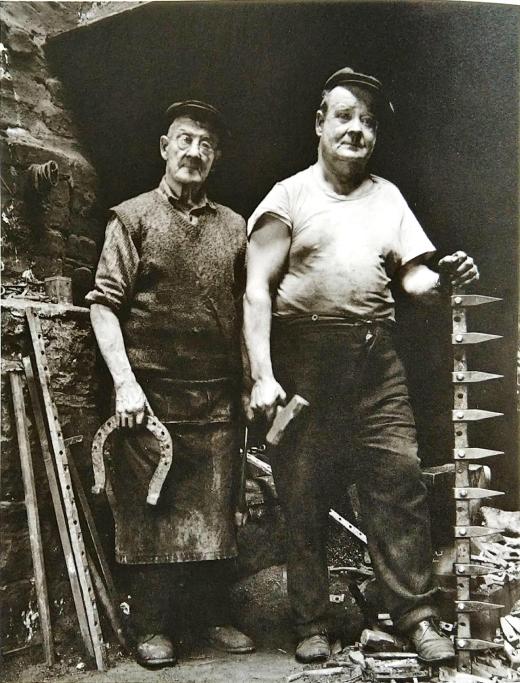
    It was still common to see horse-drawn ploughs, and look at this photo of Mr. Corkhill, the blacksmith, and his son – the size of the horseshoe gives you an idea of how large the Shire horses were. To a small boy, they were gigantic, mysterious beasts, whose eyes held hidden secrets.
    I remember also seeing Mr. Kinnish’s threshing and milling machine in action:
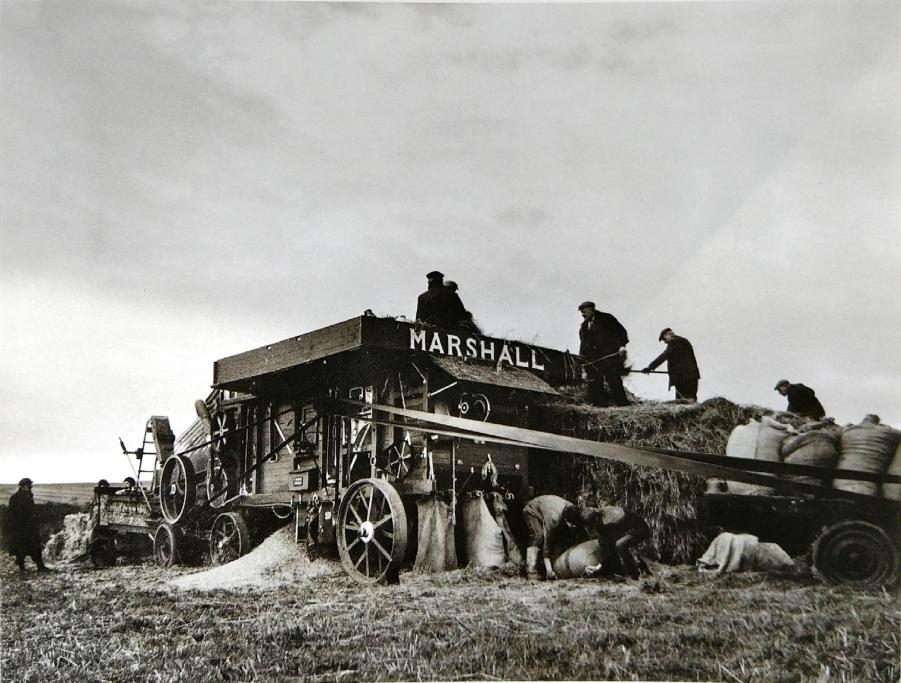
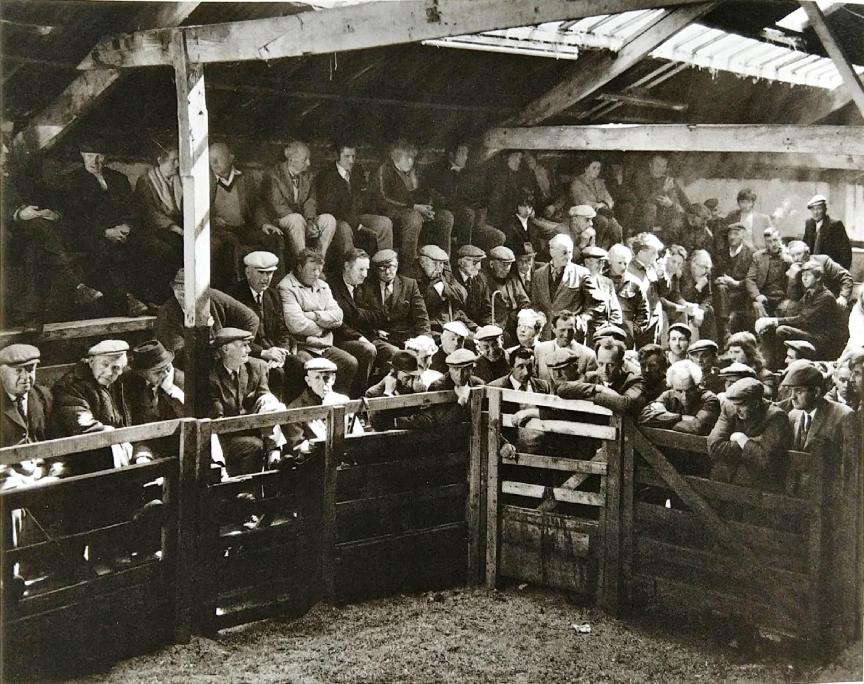
    I’m talking about the 1950s. Chris Killip took his photos between 1970 and 1973. It is clear that even 20 years after I lived amongst the farming community, that things had hardly moved on at all. The Farmers Mart at St. Johns, just a few miles from where I stayed in Greeba, looks much the same as when I was around 20 years earlier.
    The Manx Museum has a good collection of his Manx photos which can be seen online here.
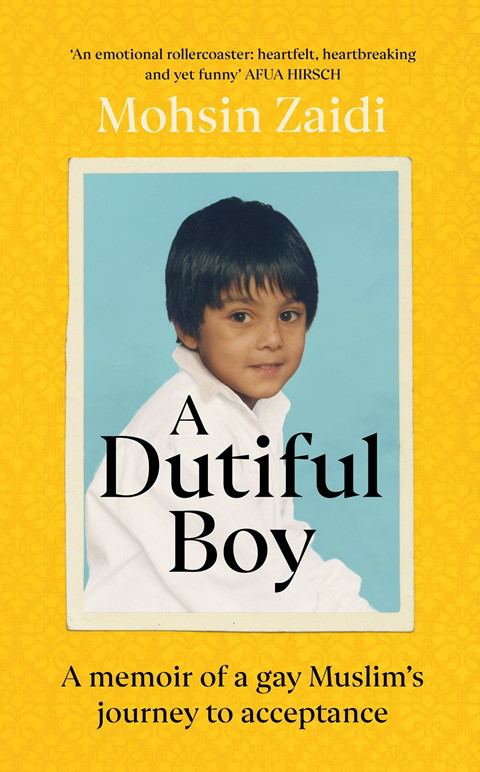
  • A Dutiful Boy

    The title of Mohsin Zaidi’s memoir of his journey to self-acceptance. There were times when I was growing up when I thought being gay and different was hard, but, believe me, it was as nothing as compared to Mohsin’s experience. That he’s made it, and that his family have made it, is wonderful.

    As Russell Tovey says:

    This memoir is so heartfelt, emotional and really funny. I picked it up because I wanted to know about different cultural experiences of what it is to be queer, especially when religion is involved. If you’re Muslim and you’re gay, I can’t fathom what that entails – how you corroborate that in your head, how you approach your family, friends and community for acceptance. This book is very candid and it really educated and entertained me.

  • There Are No Adults In The Room

    The room in this case being in Number 10, Downing Street. With the threat to break International Law, the UK Government seems intent on making the UK an international pariah. Chris Grey, over at his Brexit Blog has some choice words on the whole debacle. It’s a must-read.

    And now Boris Johnson is seeking to blame Brussels for an issue of his own making. The man is incompetent, and has no shame whatsoever.

    Addendum: and all praise to Marina Hyde for her satirical evisceration of this bunch of clowns. Thanks for making me laugh, otherwise I would be weeping at what the UK has come to.

  • Adding Insult To Injury

    The news that Tony Abbott has been appointed as a UK Trade Advisor would seem to confirm my suspicion that the UK government is resolutely determined to achieve a no-deal situation with the EU by the end of the year.

    I feel that the phrase “UK Government” is rapidly achieving oxymoronic status. If you want to laugh about this latest turn of events, then I can recommend First Dog on the Moon. If, like me, you feel like crying about the whole Brexit clusterfuck, then I can recommend Chris Grey’s Brexit Blog for a forensic flensing of the whole sorry saga.

  • Who Is Civilisation For?

    Another thought-provoking talk given by Jaron Lanier. It’s a recording of the talk he gave as the Willy Brandt Lecture in 2018, followed by a Q+A session with Ulrich Kelber, German Federal Commissioner for Data Protection and Freedom of Information.

  • Darkening the World

    “we live in a world that has been darkening recently” – and yet… I do like Jaron Lanier and his polemics and dissertations on where we are and where we are going…

    Worth listening to.

  • What I’m Thinking About

    It amazes me that the US has people like this, yet they still manage to pick Trump for President…

  • "He has acted responsibly, legally and with integrity."

    Boris Johnson’s defence of his political adviser Dominic Cummings is, in a word, unfuckingbelievable.

    As John Crace so rightly observes, it is now clear who is running the UK – and it isn’t Boris Johnson.

    One law for the little people, and another law for your boss, eh, Boris?

    Addendum 27 May 2020: the ever-dependable Marina Hyde eviscerates both Cummings and Johnson; whilst Chris Grey, over at his Brexit Blog, makes similar points about the paradox of populism – in less caustic tones, but none the less salient for all that.

  • Living in Interesting Times

    The emergence of the Coronavirus Covid-19 has given us all something else to worry about besides climate change, Brexit and Trump. 

    For months now I’ve been leading a workgroup planning two events in our village to celebrate the 75 years since the liberation of the Netherlands.

    We were going to have two events in our village hall. On the 3rd April – an evening of drama, song and stories (Freedom Then & Now), with an exhibition of photos, documents, objects, and clothing from 1945 plus drawings, poems, essays from the children in the village school about what Freedom means to them now. On the 4th April: a “Liberation Brunch” with an exhibition of wartime vehicles, and all the children would get a kite and be challenged to draw their symbol of Freedom on it before flying it from the field next to the hall.

    Last week, the Dutch government ruled that all events of more than 100 people were forbidden in the Netherlands until at least 31 March – and the Village Hall committee decided to shut the Hall until further notice.

    Then yesterday, the government strengthened the rules further. They announced that all schools, children’s day-care, restaurants, pubs, sports clubs, saunas, sexclubs and coffeeshops (this is the Netherlands, after all!) are to shut until the 6th April. Everybody is being asked to keep 1.5m distance from each other – including while shopping. Only children with parents who work in Healthcare, Police, Public Transport or Fire Services are being allowed to go to school or day-care.

    Buggeration. So everything has had to be cancelled, and I have no idea when or even if we can resurrect the events… Still, if it helps to stem the spread of the virus, it will be worth it in the end.

    As the apocryphal Chinese Curse has it: may you live in interesting times.

  • Messages of Farewell

    It’s the day after Brexit, and I’m still feeling depressed, and angry, about the whole sorry situation. I’ve been reading messages of farewell published in today’s Guardian from my fellow Europeans, and they have put into words the emotions I am experiencing. Two writers in particular capture my feelings, as these extracts may illustrate:

    Carlo Rovelli (theoretical physicist)

    What breaks my heart in Britain leaving the European project is the dark message that Brexit delivers to the entire planet: every nation for itself, instead of collaborating for the common good; everybody making its own rules, instead of searching for common ground; every group competing with the others, instead of solving the common problems together.

    Agnieszka Holland (film director)

    Do you really believe that turning your backs on the continent will hold off ecological catastrophe, the waves of migrants, artificial intelligence, the internet revolution or women’s aspirations? Do you believe that globalisation and unfettered capitalism as conducted by China or Trump’s America will give you more affluence and sovereignty than belonging to a community of Europeans, who can achieve any kind of success only by working together, and who are at least trying their best to maintain the values of freedom, equality, fraternity, solidarity, justice and human rights; the rights of all living creatures; and responsibility for the future of the planet?

    Adhering to these values is the only thing that can save humanity from sliding into an abyss of evil; we became familiar with this in the terrible 20th century, and the European Union was meant to inoculate us against the temptation to return to dark times. And for many years, together, it worked.

    Aren’t you ashamed to be the first to back away from hope? Can you see an alternative? Do you really think that once we’ve broken our voluntary ties things will be just as they were before? No, they will not. So I cannot wish you all the best. I won’t say “Goodbye and good luck.” Because I’m furious with you. I really do like you – your people, landscape, gardens and moorlands; your history, culture and art; your unique British manner, even in its debased form; your humour, eccentricity and bravery. But I am sure you are making a mistake that we’re all going to pay for – you are sure to, but so are we. I am afraid everyone’s going to pay equally for the lies, cowardice and arrogance of the few.

    Also in today’s Guardian is Ian McEwan’s withering summary of Brexit. Well worth reading and reflecting on.

    I sincerely hope that my fellow countrymen reflect on what they have done, and that this ignominious decision will come, in time, to be reversed. It will probably take at least a generation, and I am very likely to be long dead, but we Europeans will be waiting.

  • Brexit Is Not A Cause For Celebration

    For me, today is a day of sadness. Britain has turned its back on Europe and is determined to retreat to being an insular nation once more. As an act of self-harm, this takes some beating.

    And whilst Johnson and his government may crow that they’ve got Brexit done, the reality is that the hard work now starts, with the hammering out of new treaties and legal frameworks – with just 11 months to go until the end of the transition period. It is also clear from recent statements from the likes of Sajid Javid that the British government either hasn’t got a clue, or is being economical with the verité (as depressingly usual).

    Like Chris Grey, I mourn the country I have lost, and fear for the one to come.

  • Is It Downhill From Now On?

    Today’s Guardian has a sobering article on what the environment could be like in 2050. The most worrying aspect is not the environment itself, but the impact it will have on human society. It’s perhaps not such a stretch to say, as the article does, that civilisation itself will be at risk.

    The author suggests that the risk may be reduced:

    When it comes to the science, the dangers can be substantially reduced if humanity shifts decisively away from business-as-usual behaviour over the next decade. When it comes to the psychology and politics, we can make our situation better immediately if we focus on hope in shared solutions, rather than fears of what we will lose as individuals.

    I know I’m old and cynical, but I see little chance of that shift happening. Fasten your seatbelts, we’re in for a bumpy ride.

  • Voices for Equality

    Voices for Equality

    Of the 69 countries around the world that still criminalize same sex relationships, 32 are in Africa. In many countries, violence and discrimination is a part of the every-day life of lesbian, gay, bisexual and trans (LGBT) people and LGBT activism is banned.

    The UN Free & Equal project of the UN Human Rights Office has launched a new campaign: Voices for Equality. Take a look.

  • The Ghost Of Christmas Yet To Come

    The full text of Sir Ivan Rogers’ lecture given at the University of Glasgow recently is here. He is both a careful analyst of events and a bellwether foretelling a future that is very likely to play out in the agonies of the Brexit to come.

  • More Accomplished Racists Are Available…

    With just nine days to go, First Dog on the Moon has published a handy voting guide to the UK general election. It’s definitely worth reading. Though I fear that his advice will be disregarded, and the current gang of “shits, charlatans and shysters”* will be returned to govern.

    If there is a Tory majority, it will largely be because of their endlessly repeated slogan that they will “get Brexit done”. This means that Parliament will pass the Withdrawal Agreement, and Britain will leave the EU on 31 January 2020. However, Brexit is certainly not done, since the UK enters a new transition period during which the terms and conditions of multiple trade agreements and legislative frameworks have to be put in place. All of which leaves the future as uncertain as ever.

    If you want a more in-depth analysis on what the future might hold, and the stances of the various players, then Chris Grey’s Brexit Blog and “What would ‘getting Brexit done’ mean?” is an excellent, and highly recommended, place to start.

    *with acknowledgements to John Crace

  • A Contract For The Web

    I see that Sir Tim Berners-Lee has launched his “Contract for the Web” – that requires endorsing governments, companies and individuals to make concrete commitments to protect the web from abuse and ensure it benefits humanity.

    Two of the nine principles in the Contract concern respecting users’ privacy and personal data in real and meaningful ways.

    All very laudable – but then I see that two of the companies who are listed as endorsing the Contract are Facebook and Google.

    I think my irony meter has just exploded.

  • Dear Europe…

    That is how a number of letters begin that are published in today’s Guardian. From a range of public figures, they set out what Europe means to them.

    I’m a Manxman by birth, but I’ve spent half my life living in the Netherlands. I owe a lot to Europe, just like these letter writers, and it distresses me to realise that many of my fellow Britons are hell-bent intent on closing boundaries, rather than opening them.

  • Climate Crisis

    I see that the Guardian has updated its style guide to introduce terms that more accurately describe the environmental crises facing the world, using “climate emergency, crisis or breakdown” and “global heating” instead of “climate change” and “global warming”.

    All the political insanity that is currently rampaging through the world at the moment surely pales into insignificance compared to the existential threat that is the ongoing climate crisis? Indeed the latter will only exacerbate the former as time goes on.

    A few months back, I read The Uninhabitable Earth, by David Wallace-Wells. Yesterday, I read in one sitting, We Are The Weather, by Jonathan Safran Foer. Wallace-Wells is a journalist, Foer a novelist. As you might expect, the books are very different in style, whilst both dealing with the subject of the climate crisis.

    Foer’s book is a mixture of styles in itself, ranging from thought-provoking essays, to shocks to the brain from short chapters giving lists of factoids, to a “dispute with the soul” – a dialogue with himself over why it is that we seem unable to deal with the fact of the climate crisis. That’s all of us, whether you accept the science or deny it.

    Foer offers a path to help mitigate the extent of the crisis: switch to a plant-based diet from a meat-based one. The link between farming animals and the climate crisis is the backbone of his book, and he makes a persuasive case. Livestock are the leading source of methane emissions, whilst nitrous oxide is emitted by livestock urine, manure, and the fertilisers used for growing crops. Nitrous oxide has significant global warming potential as a greenhouse gas. On a per-molecule basis, considered over a 100-year period, nitrous oxide has 298 times the atmospheric heat-trapping ability of carbon dioxide.

    The Netherlands has just woken up to this inconvenient truth about nitrous oxide and other nitrogen compounds. We currently have what is known as the Stikstofcrisis (the nitrogen crisis), which arose this year when permit applications for an estimated 18,000 construction and infrastructure projects were stopped. Too high a concentration of these nitrogen compounds leads to a deterioration of nature and to a loss of biodiversity. A reported 61 percent of the nitrogen compounds produced comes from agriculture, with intensive livestock farming being one of the most important sources. So the farmers are up in arms about this, seeing the government placing the blame for the crisis on their shoulders. There have been protests and demonstrations.

    The trouble is, we simply can’t go on as we did before. Things will have to change, but that process will be a painful one, whatever we do.

  • China Today, Tomorrow, The World?

    A couple of weeks ago I wrote about Jaron Lanier’s book: Ten Arguments for Deleting Your Social Media Accounts Right Now, which is a warning against the rise of surveillance technology and algorithms capable of social manipulation.

    In the West, that technology is in the hands of private companies (e.g. Facebook, Google), but in China, it is firmly in the grasp of the State. I hadn’t appreciated just how far this had progressed until I read a recent article in the London Review of Books: Document Number Nine, by John Lanchester. He reviews two books written about how the Chinese Communist Party (the CCP) has adopted the internet, AI and surveillance technologies to monitor and control its citizens.

    It is the stuff of nightmares.

    I’ve just bought one of the books: Kai Strittmatter’s We Have Been Harmonised. The blurb on the back cover says:

    This is a journey into a land where Big Brother has acquired a whole new set of toys with which to control and cajole – ‘harmonise’- the masses. It is also a warning against Western complacency. Beijing is already finding eager buyers for its “Operating System for Dictators’- in Africa and Asia, Russia and the Middle East. And with China’s corporate giants – all ultimately under Party control – being offered a place at the heart of Europe’s vital infrastructure, it is time we paid attention.

    As Lanchester writes:

    Imagine a place in which there’s a police post every hundred metres, and tens of thousands of cameras linked to a state-run facial recognition system; where people are forced to have police-owned GPS systems in their cars, and you can buy petrol only after having your face scanned; where all mobile phones have a state app on them to monitor their activity and prevent access to ‘damaging information’; where religious activity is monitored; where the state knows whether you have family and friends abroad, and where the government offers free health clinics as a way of getting your fingerprint and iris scan and samples of your DNA. Strittmatter points out that you don’t need to imagine this place, because it exists: that’s life in Xinjiang for the minority population of Muslim Uighurs.

    Meanwhile, I continue to be astounded at our willingness to trust Facebook. Lanchester again:

    Do we want facial recognition technology to be in the hands of the least scrupulous technology giant? If we don’t, we’re too late – it already is. Facebook has changed its terms of service over ‘tagging’ people’s photos a couple of times, from opt-out to opt-in, but the gist is that it is too late: Facebook already owns your ‘faceprint’, the algorithmic representation of your face. How much do we think we can trust them with it?

    Not one inch, as far as I’m concerned.