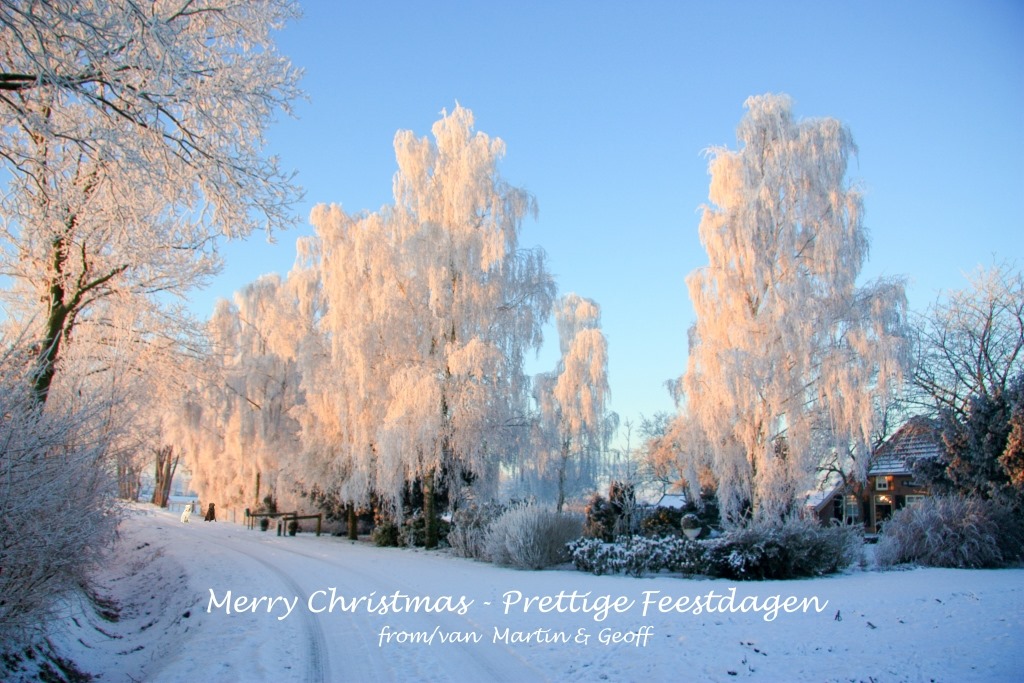
We hope you and yours have a happy and peaceful time.
The photo is of our garden in January 2009. In these days of climate change, I wonder whether we’ll see its like again…

Reflections on life at “De Witte Wand”…
We hope you and yours have a happy and peaceful time.
The photo is of our garden in January 2009. In these days of climate change, I wonder whether we’ll see its like again…
Regular readers of this blog will know that I’ve been looking at the specifications of the Lenovo ThinkPad 10 (the TP10) and the Microsoft Surface Pro 3 (the SP3) tablets, and trying to decide which of them is the best fit with my needs and usage. It’s been a bit of a saga, beginning back in May, with the announcement of the SP3 by Microsoft. I thought that the specifications of the SP3, whilst impressive in some respects, had some surprising omissions. I concluded that I would probably give the SP3 a miss.
I revisited the topic in June, once TP10 models were becoming available, and pricing details were known. At that point, despite the SP3’s negatives, the SP3 model that I was most interested in (with the Intel Core i3 processor) was only slightly more expensive (€15) than the closest equivalent TP10 available at that time, with its smaller display and less powerful processor. However, my decision was still not clear-cut, so I returned once more to the topic in July when I compared both the TP10 and the SP3 to my current tablet, the Lenovo Thinkpad Tablet 2 (the TPT2).
I’ve had the TPT2 since January 2013, and it has served me very well. Things were becoming clearer by July 2014, as a result of both the TP10 and the SP3 getting in the hands of customers, and them posting their experiences and issues in community forums. In recent weeks, the TP10 has started appearing in Lenovo’s online web stores around the world. Interestingly, the models offered include versions with Windows 8.1 with Bing, a lower-priced alternative to those offered with Windows 8.1 Pro (which have, up until now, been the only versions available here in the Netherlands). I don’t need the additional features of Windows 8.1 Pro in my tablet, so that gives me an immediate saving of €130.
That means that a TP10 with 4GB RAM, 64GB storage and no WWAN (i.e. the closest equivalent to the Core i3 version of the SP3) is €620 versus the SP3’s €819. I have to say that while the SP3 is an impressive engineering feat by Microsoft, the design has just too many compromises for me:
On that last point, it is true that Intel has now managed to produce a version of the Haswell chip that can be used in fanless tablet designs, but it’s clear that the SP3 was designed around the mainstream Haswell chips, and that means a fan is a necessity. All eyes are now turning to Intel’s next generation of chips, code-named Broadwell, and now becoming available under the moniker of Core M. These really do promise to deliver a full x86 platform as well as the performance beyond that of a smartphone or an Intel Atom-powered tablet (e.g. the TP10) in fanless designs. The first Core M-based fanless tablets/convertibles have already been announced by Lenovo (a new Helix model) and HP. They are both larger than the 10.1” form factor of the TP10 (possibly because the Core M chips are physically larger than the current Intel Atom chips?), so it’s quite possible that smaller tablets will continue with Atom-based designs. However, it seems almost a certainty that Microsoft must be at least thinking about a fanless SP4 having the same form factor and size as the current SP3, and such a design would be based around Core M.
To sum up. Now that a wider range of TP10 models are available here in the Netherlands, I could get a TP10 (faster, with a better display, and twice the RAM) to replace my existing TPT2 for €620. I definitely won’t be going for the SP3 (at €819) – too many compromises and issues for me. I could also equally continue using my TPT2 quite happily and wait to see what an SP4 has to offer. There’s no rush.
Addendum: I have a TP10 on loan!
Last Tuesday, Microsoft announced the latest device in their Surface range: the Surface Pro 3. Everyone expected that Microsoft would be announcing a different, smaller, model – the so-called Surface Mini, but somewhere between announcing the launch event, and the event itself, someone in Microsoft apparently got cold feet – but that’s another story.
The Surface Pro 3 is being pitched by Microsoft as a true laptop replacement. It is not seen as being just a tablet, such as the iPad. At the launch event, Microsoft’s Panos Panay claimed that 96% of people who own an iPad also own a laptop, since the traditional tablet is “designed for you to sit back and watch movies, read books, made for browsing the web, snacking on apps…”, whilst “Laptops aren’t designed that way at all, they are designed to get stuff done”.
The result of the design process for the Surface Pro 3 is a device that is as powerful as a laptop, whilst being lighter than the 13-inch MacBook Air.
There will be a range of models available, running from devices fitted with the Intel Core i3 processor, through ones with the Intel Core i5, up to the most powerful, fitted with the Intel Core i7. All will have a new form factor ratio (3:2) for the screen, which is both touch and pen-enabled.
I have to say that the SP3 models are tempting. But I want to be rational about this. My current devices are a full Desktop PC (home build) and a companion tablet (Lenovo ThinkPad 2, with GNSS, NFC and WWAN). I don’t have a laptop.
Microsoft, for some reason known only to themselves, have not included any of these capabilities (GNSS, NFC and WWAN) in what is clearly positioned as their flagship model (the SP3 web site trumpets: “best of a laptop, best of a tablet”). I agree that NFC is, at this stage of the game, more of a “nice-to-have” feature in a tablet than a necessity. It is further advanced in the smartphone world, and is already being exploited in applications such as those for mobile payments. And many people argue that WWAN is unnecessary in a tablet, since most tablet owners will have a smartphone, and the tablet can access the internet through the smartphone when WiFi is not available. This is true, but it’s not as convenient as having WWAN directly available in the tablet, and it also drains the phone’s battery faster. Still, at a pinch, it’s a way of achieving internet access.
However, I am really surprised that Microsoft has still not seen fit to include GNSS capability in any of their Surface products (other than their Surface 2 LTE device, where GNSS comes riding on the back of the WWAN chip). A dedicated GNSS chip (such as the Broadcomm BCM47521) consumes little in the way of real estate or power. Location services are part of the Windows 8.1 operating system, and many Apps (e.g. maps, weather, astronomy, photography) make use of them.
All models of the Lenovo ThinkPad Tablet 2 come with GNSS as standard (as do the newly announced successor, the ThinkPad Tablet 10). Having used Apps that exploit GNSS on my TPT2, I really don’t want to go backwards and lose this capability in my next tablet. It seems to me that Microsoft has missed an opportunity here to provide leadership. As far as I’m concerned, it takes the edge off the claim that the SP3 is the “best of a laptop, best of a tablet” product.
If I were to look at the SP3 models for simply a replacement for my TPT2 as a companion tablet, then I would go for the Core i3 model of the SP3. However, for roughly the same price as what I paid for my TPT2 eighteen months ago, I would be losing GNSS, NFC, and WWAN with the SP3. I really don’t see the point.
It seems to me that the only option worth considering (for my case) would be the “origami computing” option – going for the i7 SP3 + docking station + type cover to replace both the Desktop AND the tablet. Expensive, yes (extremely!), so I certainly couldn’t justify it on economic terms, but it would be rather a statement of where I want to get to. And I’d still be losing the GNSS, NFC, and WWAN capabilities.
Frankly, I think I’ll give the SP3 a miss. I don’t see that I could justify it. It’s more likely that I will be replacing my 18 month old ThinkPad Tablet 2 with a new ThinkPad Tablet 10.
The British Queen has granted a posthumous royal pardon to Alan Turing. I can’t help feeling that this is not right; it is sending entirely the wrong message.
I agreed wholeheartedly with the petition raised a few years ago for him to receive a posthumous formal apology from the British Government. And I was delighted when the apology was made.
However, a Royal Pardon is quite a different thing. It is saying, in effect, that the Queen and country forgives Turing for the crime of being homosexual because he was such a brilliant man and for his contribution to the war effort. Well, I’m sorry, so he gets his pardon while thousands of other men convicted for the same “crime” do not, simply because they don’t happen to be geniuses or their contributions to the war effort is somehow deemed insufficient? Some of these men are still alive. I wonder how they must be feeling at the moment, with their criminal records still intact?
If Turing is going to get a Royal Pardon, then it should be simply because he did nothing wrong, and the same pardon should be granted to an estimated 75,000 other men whose lives were wrecked by the insidious legislation that existed at the time.
As Ally Fogg writes:
It is shocking to realise that there are still people alive today who were unjustly criminalised in their youth, and who have carried the stain of a criminal record, as a sex offender, through almost their entire adult lives. In 2012 the Protection of Freedoms Act was passed, which allows those who were convicted of homosexuality offences to apply to have their entire criminal records removed if the facts of the case would no longer count as a crime.
As the legal commentator David Allen Green has pointed out, there is no reason why this provision could not be extended to cover all those convicted, whether living or dead, without the requirement for a personal application. With a little bit of political marketing, it could become known as the Turing law, recorded as such in the history books for generations to come. Now that really would be a fitting tribute to a national hero.
I agree.
This is a followup to my last post , which concentrated on the hardware of my recently acquired Lenovo ThinkPad 2, This time I’m looking at the software experience.
Well, of course, the software experience is all about the use of Windows 8. As I’ve said many times before, people seem to either love or hate Windows 8. Personally speaking, I love it. True, there are many areas in which it could be improved , but overall I am well satisfied.
Let’s take the area of handwriting recognition.
This entire post has been created by using a pen. No keys have been pressed in the making of this post. Well, apart from the Prtscn key on a wireless keyboard to take screenshots.
It is true that there are changes between the handwriting recognition input panels of Windows 7 and Windows 8. For example:
In Windows 7, there are three ways in which the tablet input panel can be invoked on the Desktop. In Windows 8, there is just one way on the Desktop to invoke the panel – tapping the icon in the taskbar.
Secondly, the Windows 7 tablet input panel had three modes that the user could switch between by means of explicit buttons on the input panel. In Windows 8 , although the three modes are still present, they are accessed differently. Now, the tablet input panel is larger and takes up half the screen.

The icon at the bottom right is used to switch between the handwriting and keyboard modes:


The default mode for the pen input is handwriting (freehand)

Tapping on a word switches the panel into its third mode. This is the character mode where individual characters may be edited, and where the dictionary kicks in and shows alternatives:
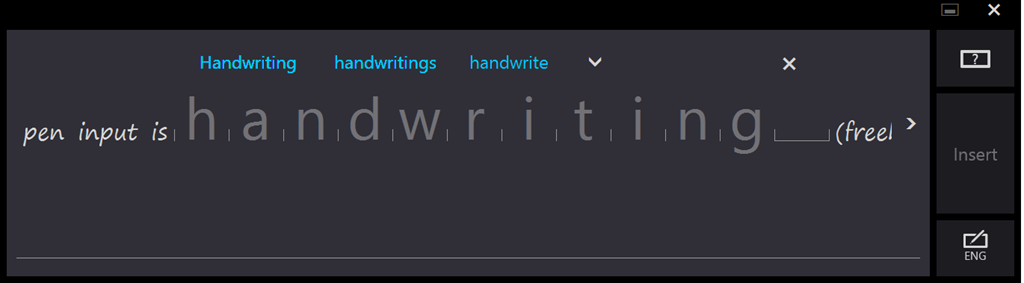
To my mind, the tablet input panel has been improved in Windows 8 over that in Windows 7. However , not everyone feels that way. Some people are finding it difficult to adjust to the new design.
I’ll carry on with thoughts on the software experience in a later post.
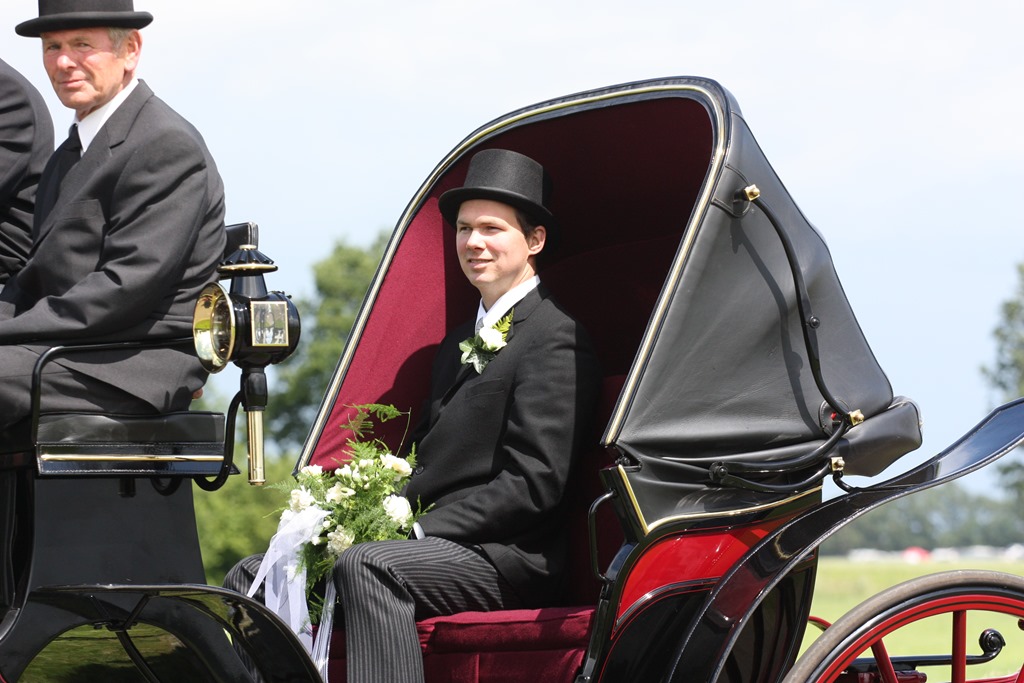
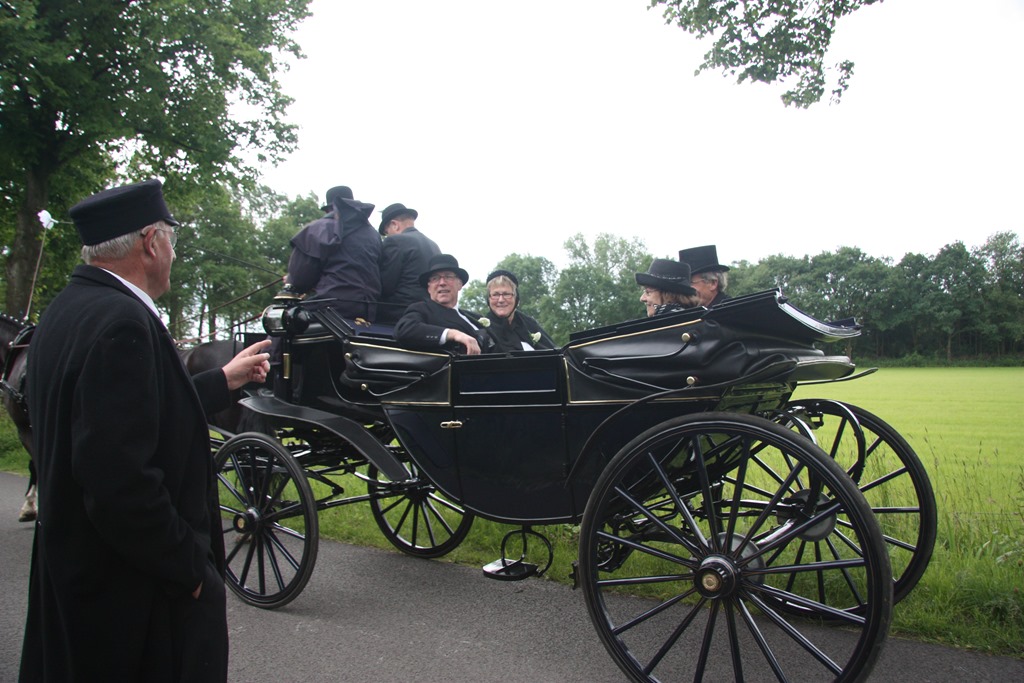
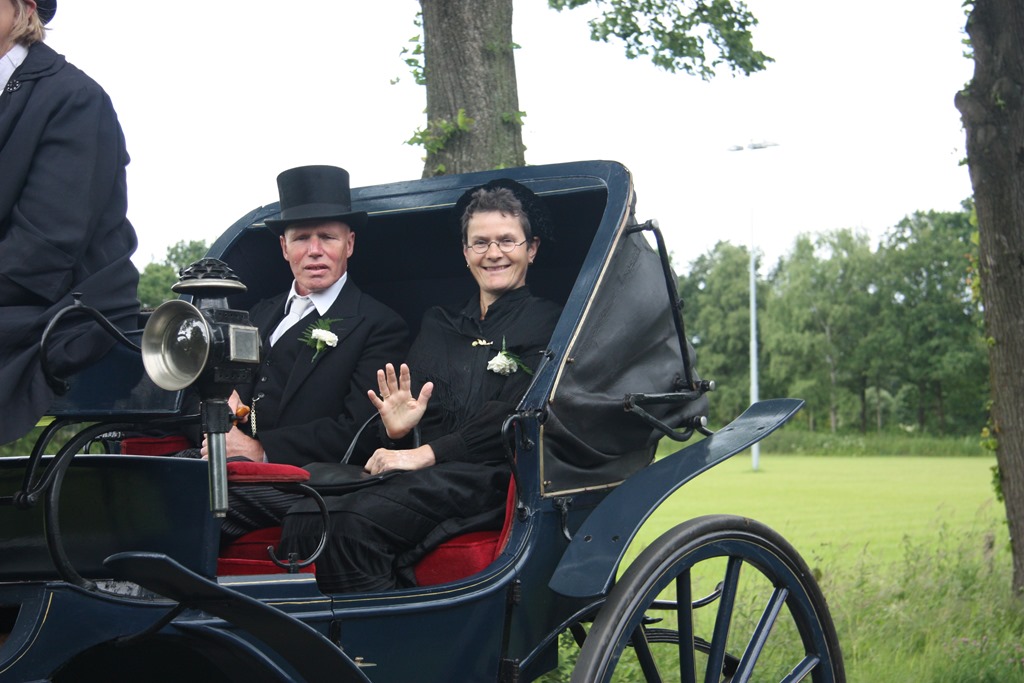
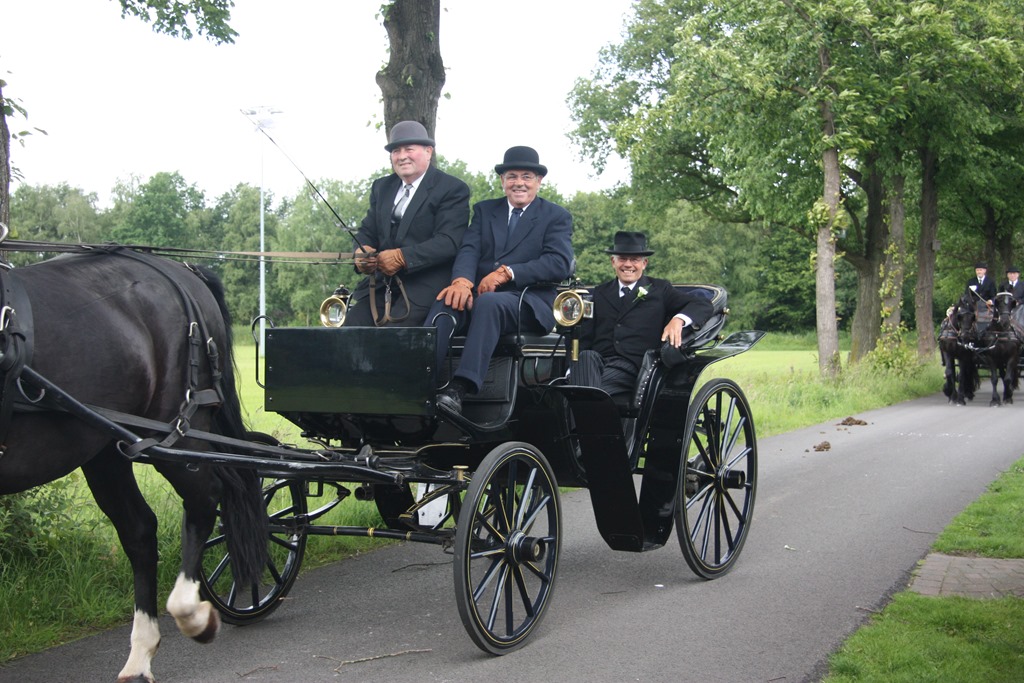
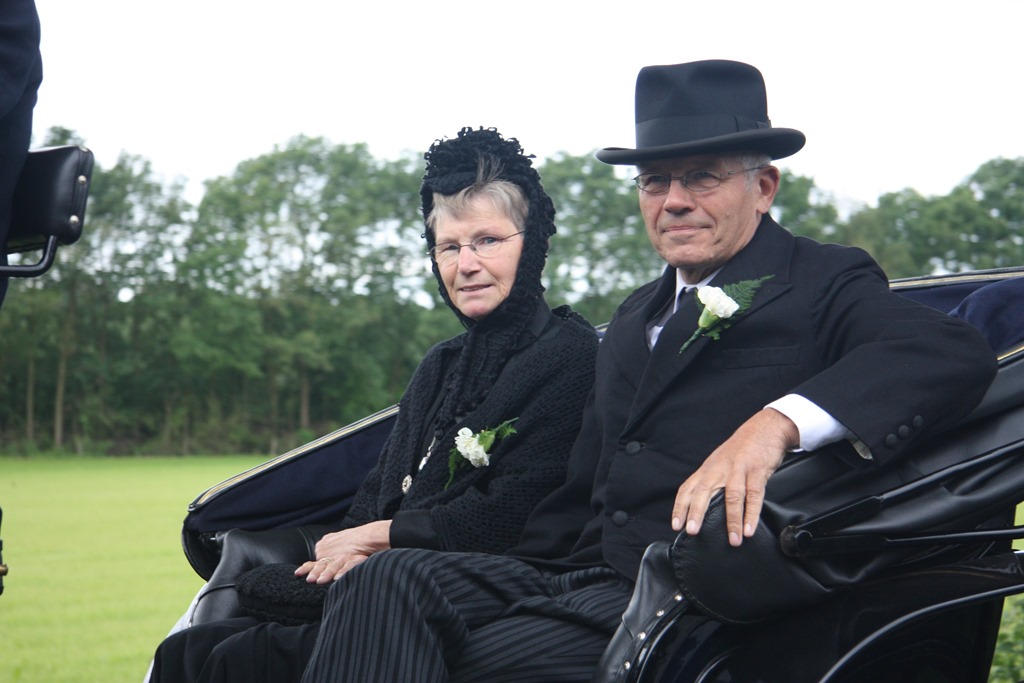
Boerenbruiloft is the Dutch word for a farmers’ wedding. Here in the Achterhoek area of the Netherlands, the sense of tradition is still very strong, so last Saturday I was able to be an onlooker of a boerenbruiloft. It was actually all a bit of play-acting from the members of the local horse and carriage club to celebrate thirty years of their existence. So they set out to show how a happy couple would get married with all the trappings and traditions that would accompany a typical farmer’s wedding in the first couple of decades of the 20th century.
That would involve the bridegroom travelling in horse and carriage to the house of the bride’s parents:
Once the bride was collected, the whole entourage (bride and bridegroom, parents, witnesses, and guests) would set off for the wedding ceremony:
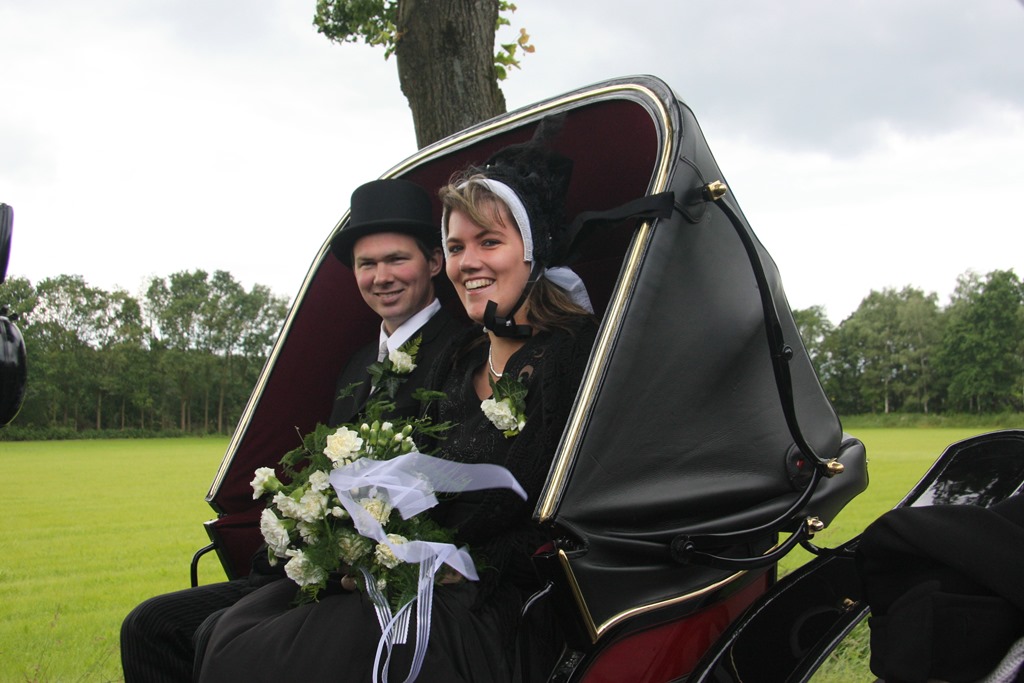
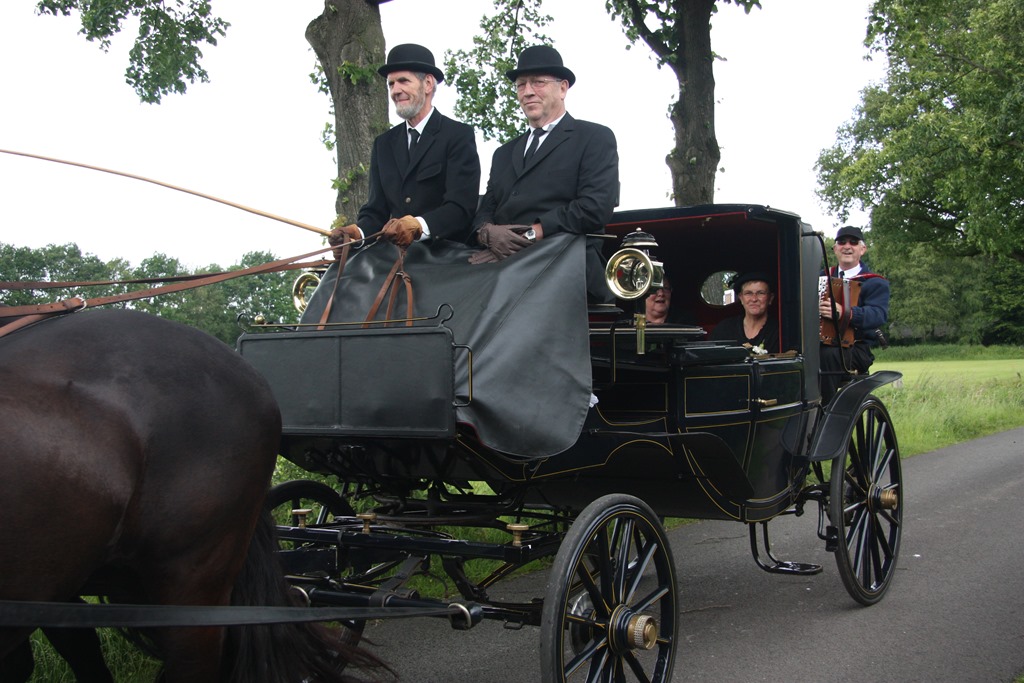
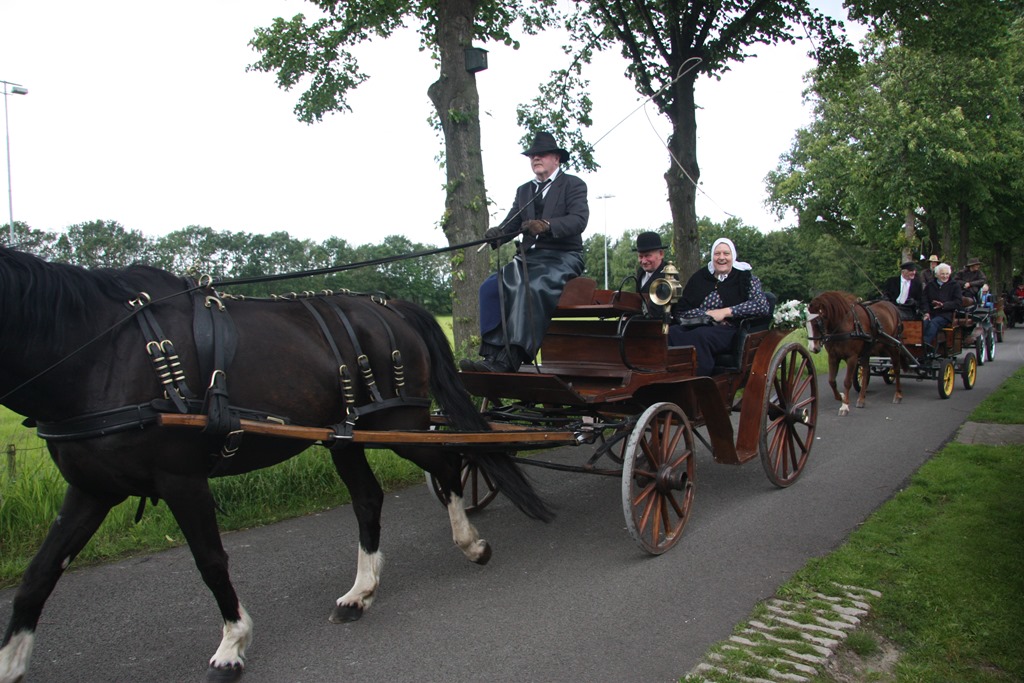
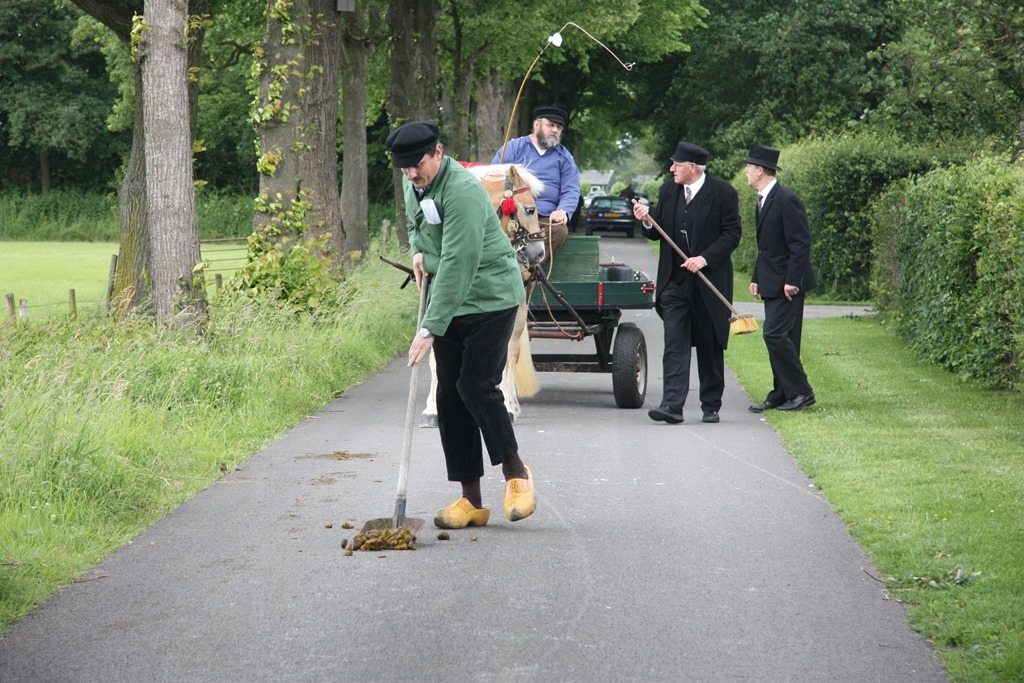
This being the Netherlands of the 21st century, Health and Safety issues seemed to also be creeping in…
The “marriage” ceremony itself was conducted in the Hofshuus in Varsseveld, an old farmhouse that dates from the 17th century.
Here in the Netherlands, marriage is a secular institution, with marriages conducted by a civil servant (ambtenaar) who has the right to perform marriages (an ambtenaar van de burgerlijke stand). So the “ambtenaar” formally asked the parents and the couple if they assented to the marriage, and then invited the couple to exchange rings.

Following the “marriage” ceremony, we had a re-enactment of another tradition that was once common in the Actherhoek: the presentation of a cow (the bruidskoe) to the bride by the bride’s father:
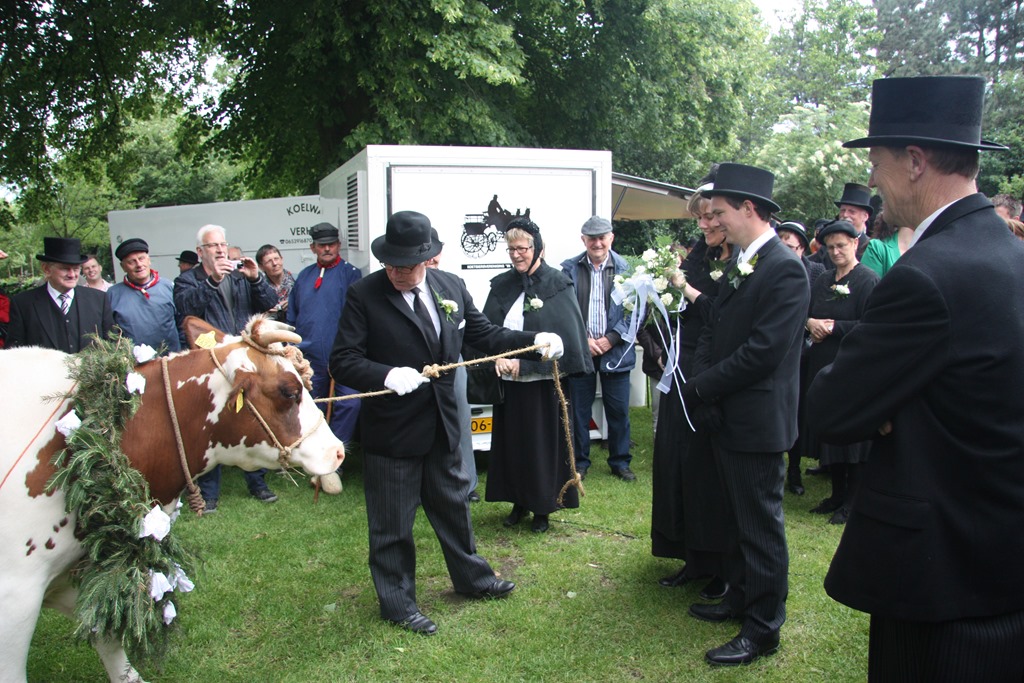
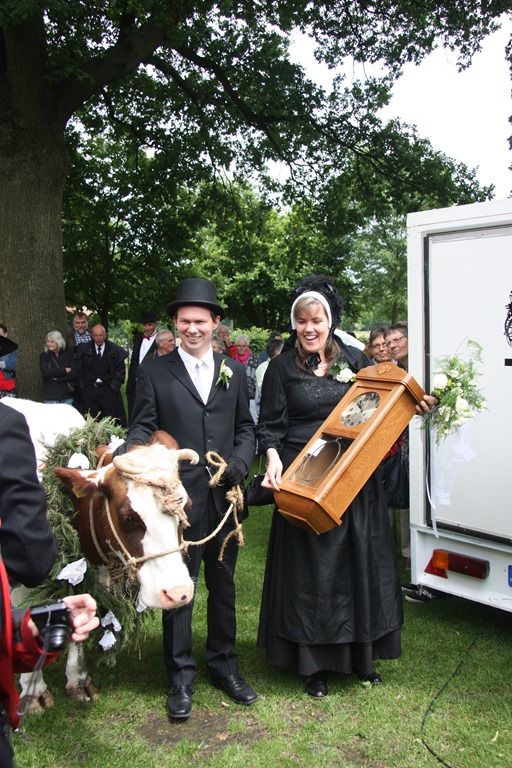
The people living in the neighbourhood (the buurt) of the new couple would also traditionally present the couple with a gift to welcome them into the buurt. Very often this would be a clock for the farmhouse:
There would then be a communal meal for everyone to celebrate the marriage:
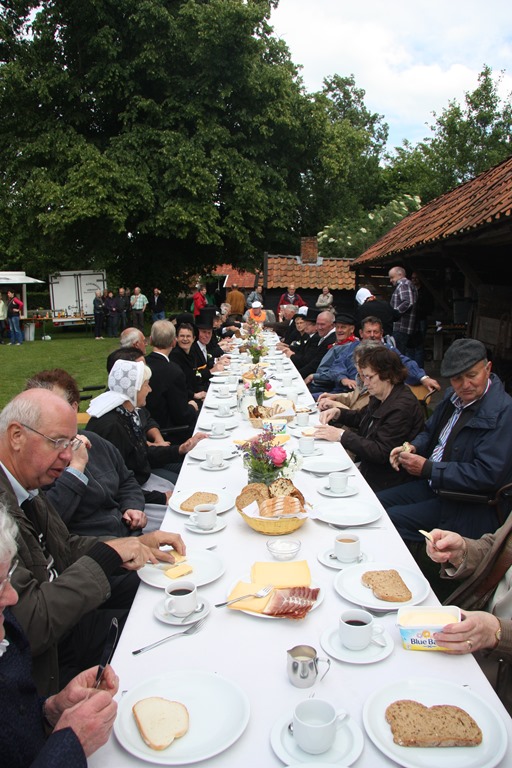
The forms may change, but the essentials remain the same, from the time of Brueghel the Elder to today…
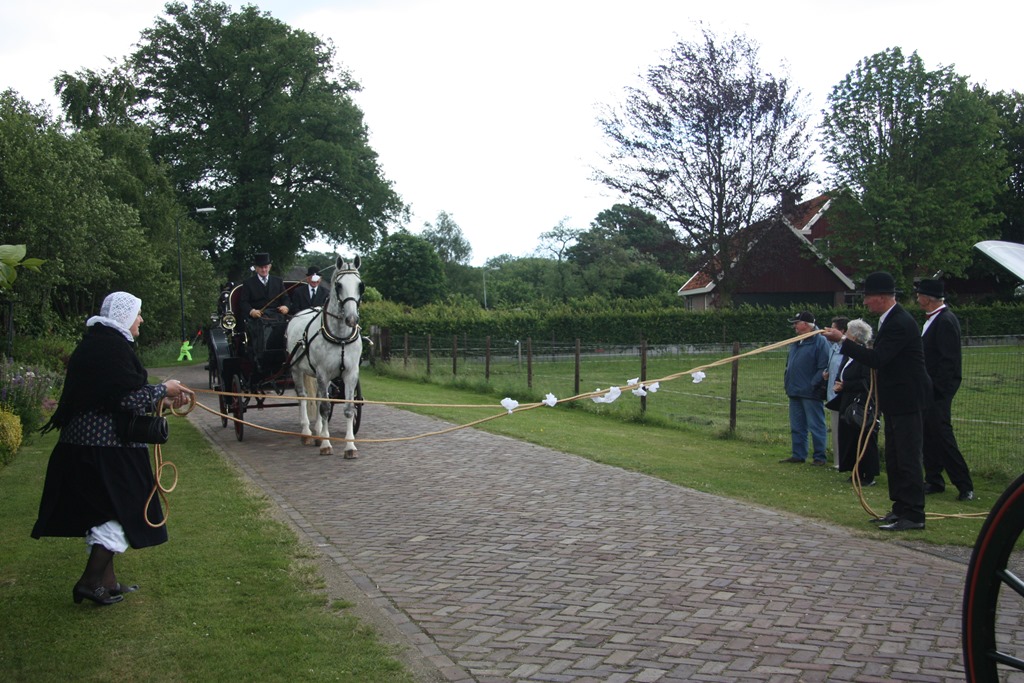
Following the meal, the bride and bridegroom would travel back to their new home, but along the way, the buurt would stretch a rope across the road, and demand payment of a toll.
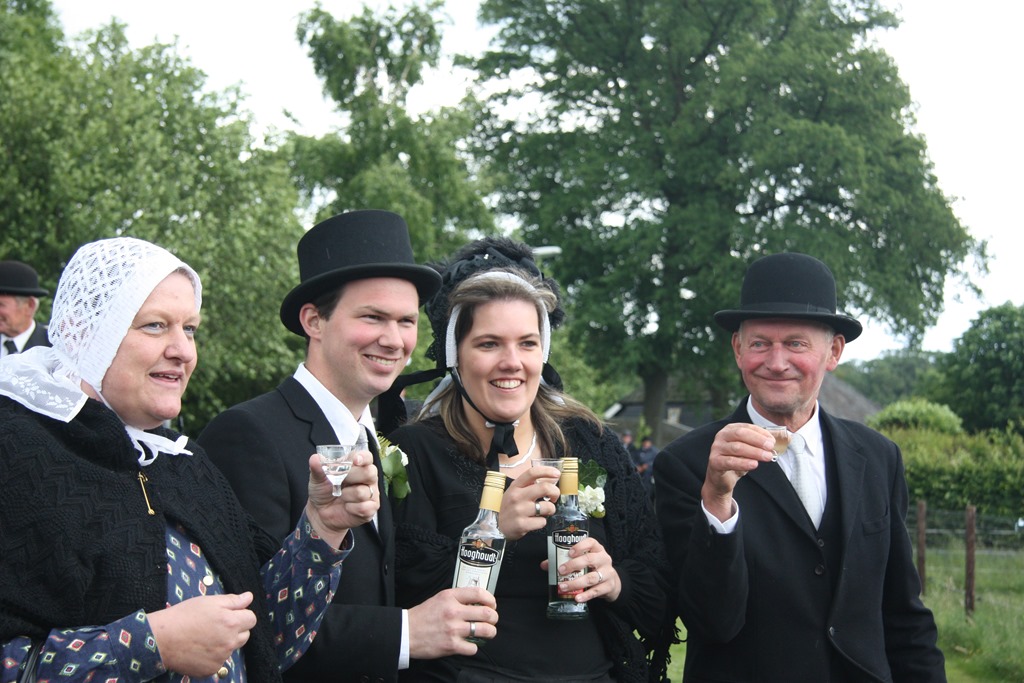
That would take the form of a glass of strong drink offered by the couple to the buurt. Note that the glasses have no foot – you’re meant to down the drink in one go…
The stats helper monkeys at WordPress.com mulled over how this blog did in 2010, and here’s a high level summary of its overall blog health:

The Blog-Health-o-Meter™ reads Wow.
A Boeing 747-400 passenger jet can hold 416 passengers. This blog was viewed about 5,800 times in 2010. That’s about 14 full 747s.
In 2010, there were 218 new posts, growing the total archive of this blog to 3578 posts. There were 224 pictures uploaded, taking up a total of 35mb. That’s about 4 pictures per week.
The busiest day of the year was December 2nd with 188 views. The most popular post that day was Windows Live Photo Gallery 2011 – Status Report 2.
The top referring sites in 2010 were bbc.co.uk, richarddawkins.net, technograns.wordpress.com, forums.dpreview.com, and gcoupe.blogspot.com.
Some visitors came searching, mostly for eyes to the right nose to the left, crimethinc, pixvue, dutch citizenship test, and windows live photo gallery 2011 problems.
These are the posts and pages that got the most views in 2010.
Windows Live Photo Gallery 2011 – Status Report 2 December 2010
11 comments
More Problems With Windows Live Photo Gallery 2011 November 2010
77 comments
“The Story of Us, Then” November 2010
3 comments and 1 Like on WordPress.com,
Windows Live Photo Gallery 2011 – A Status Report November 2010
40 comments
Fun With Technology – Part IV May 2009
21 comments
In view of the fact that Microsoft has effectively killed off the use of Windows Live Spaces as a worthwhile blogging platform, I’m stopping this blog and moving to a new address on the web.
My ramblings and rantings henceforth will be found at the new Geoff Coupe’s Blog, which has the www address of http://gcoupe.blogspot.com – so please update your bookmarks and RSS feeds if you wish to continue receiving transmissions from a slightly deranged mind.
Update 28 September 2010: Since I wrote the above, I’ve been waiting for Microsoft’s other shoe to drop. Well, today it did. As you can see, I have migrated my old blog entries from the now-defunct Windows Live Spaces across to WordPress. However, I will continue to use Blogger for my new entries at least for the time being.
Update 2: Well, I decided to stop using Blogger, so I’m back here on WordPress…
…to fit a false argument. Oh dear, I seem to be very negative today, what with pointing out Madeleine Bunting’s tripe, and now I feel impelled to do the same for Andrew Brown. Well, it’s not as if he doesn’t have a track record.
He’s written a piece on the “New Atheists” (oh, noes, not that meme again…). As soon as I read this bit, I thought, “Er hello, you’re either stupid or disingenuous…”:
The ideas I claim are distinctive of the new atheists have been collected from Richard Dawkins, Sam Harris, Christopher Hitchens, Jerry Coyne, the American physicist Robert L. Park, and a couple of blogging biologists, P Z Myers and Larry Moran. They have two things in common. They are none of them philosophers and, though most are scientists, none study psychology, history, the sociology of religion, or any other discipline which might cast light on the objects of their execration. All of them make claims about religion and about believers which go far beyond the mere disbelief in God which I take to be the distinguishing mark of an atheist.
Well, that’s interesting. “None of them philosophers”, eh? Well, passing over the fact that Harris has a degree in philosophy, where’s your mention of philosophers such as Daniel Dennett or A. C. Grayling, who I would have thought are prominent in the list of atheists in the public eye? Note, not “New” atheists… No doubt they conveniently slipped his mind.
Fuck it, he’s not worth the effort. Let P. Z. Myers deliver the flensing of Brown instead.
Update: And here is Ophelia adding some worthwhile points.
That seems to be the gist of the Pope’s Christmas message. On the one hand, I can understand that he is what he is, an old fool who has little understanding of what it is to be human, because his rational mind has been undone by his upbringing. But on the other hand, he is, for better or worse, the spiritual leader of millions, and his idiocy will be the cause of yet more totally needless angst.
By coincidence, one of the Christmas cards we received this season was from a family in which the mother was a former pupil in Martin’s ballet school. In the letter that accompanied it, she writes of the experience that the family is going through because one of her children is unsure of whether he is a boy or she is a girl. The family are doing what they can to support the child, and help him/her come to the best outcome.
The last thing that family needs is ill-considered hypocritical nonsense from an old fart who wears white dresses, red Prada shoes and expensive rings. If there is an abomination around here, it is him.
Over at Obscene Desserts, John Carter-Wood muses on the pleasures of Advent calendars, and, in particular, on the unfolding story that is contained within one that he purchased at his local supermarket. Do go and read about the adventures of Otto, who clearly is up to no good, and who, one suspects, is going to come to a sticky end.
John draws the parallel between these modern day toys-with-stories and with the Germanic tradition of the tales of the Brothers Grimm and Heinrich Hoffman’s Struwwelpeter (in English translation known as Shockheaded Peter). I had both books as a child, and Struwwelpeter in particular scared the living bejeesus out of me.
When in 1999, I saw the junk opera Shockheaded Peter at a performance in Amsterdam, all the old feelings of being simultaneously both scared and exhilarated came flooding back. It’s a great shame that a video recording of the production was never made, it was a terrific production (in all senses).
http://www.youtube.com/watch?v=TOVSp-fYUQc
At least the music from the production is available on CD. Aurally, it’s just as strange and scary as the opera was visually…
My understanding of economics is pretty basic. I can understand, and try to follow, the financial principles espoused by Mr. Micawber in Dickens’ David Copperfield:
"Annual income twenty pounds, annual expenditure nineteen pounds nineteen and six, result happiness. Annual income twenty pounds, annual expenditure twenty pounds ought and six, result misery."
I really think that that is all one needs to know, anything more, it seems to me, gets closer to religion and blind faith. So I can’t say that I’m much surprised by the current crisis in the financial markets.
In an attempt to understand the causes, I’ve been reading two analyses of the events. The first is an article in Edge written by Nassim Nicholas Taleb called The Fourth Quadrant. I will forgive him the air of "I told you so" that permeates the article, he’s somewhat justified in having it. After all, it was he who wrote back in 2006:
The government-sponsored institution Fannie Mae, when I look at its risks, seems to be sitting on a barrel of dynamite, vulnerable to the slightest hiccup. But not to worry: their large staff of scientists deemed these events "unlikely."
However, his analysis goes into dizzying detail about statistical theory and how people misinterpret statistics and probabilities. I’ll probably need to read the article several times before I can come closer to understanding what he is saying. But even after all that, I can’t help feeling that he’s shining the light of reason in the wrong place. That was brought home to me when I read John Carter Wood’s article over at Obscene Desserts. Like me, John finds the workings of high finance rather mysterious. He quotes from an article in the New York Times:
The mortgages, with an average size of about $450,000, were Alt-A loans — the kind often referred to as liar loans, because lenders made them without the usual documentation to verify borrowers’ incomes or savings.
And then, without the benefit of graphs or statistics, John gets to the root of the matter:
Let’s just pause here for a brief moment. Just for a measly few seconds.
Please just consider that last sentence, the one in which it is pointed out that lenders gave people mortgages worth an average of nearly a half-million dollars without even checking how much they earned or how much money they had?
Is this for real?
Because if it is, I can only say: What–please pardon my French (you know, I’ve been spending some time there)–the fuck?!
It seems to me to be all too easy to label the shenanigans on Wall Street and in other financial centres as “a crisis too complex for easy fixes”. John’s put his finger on it, the world’s economy is seemingly run by a bunch of greedy wankers. Micawber’s principles should never have been forgotten.
Yesterday, I had a day out. I travelled to Utrecht to attend a conference, which was held to inaugurate the opening of the Center For Inquiry Low Countries. The CFI is a sort of secular humanist think-tank. Its mission statement is to "promote and defend reason, science, and freedom of inquiry in all areas of human endeavor". To that end, it sponsors research in three main areas:
Frankly, I’d not heard of this organisation before. The only reason I had heard about the conference was via the philosopher Stephen Law’s blog, from which I learned that he was going to speak at the conference. Since I find Law a terrific writer on philosophy (his book, The Philosophy Gym is very good), I thought I would attend the event.
Chaired by Rob Tielman, emeritus professor of sociology at Utrecht University, the conference kicked off with a presentation by Paul Kurtz on "Planetary Ethics". Kurtz is both professor emeritus of philosophy at the State University of New York at Buffalo and the chair of the Center for Inquiry. I’m sure that the content of his talk was probably familiar to many of those in the room, but for me, it was the first time I had come across the word eupraxsophy. It summarises the secular humanist approach to life, one with which I find myself aligned with.
A side note: I was struck by the fact that of the 100 or so people in the room, a good proportion of them were my age or older. True, there were some young people, but they were in the minority. The old folks also seemed to be those who had been active in organised humanism for a long time. Me, I’m with Groucho Marx; I don’t want to belong to any club that would accept people like me as a member. Organised humanism smacks to me of ersatz religion, something that I approach with extreme caution. But, back to the conference…
Following Kurtz was Azar Majedi, with a passionate speech about the need to combat both the "War on Terror" and what she terms "Political Islam". She sees that the War on Terror and Political Islam are both feeding each other, increasing the power and influence of both, and calls for a "third way" to cut the Gordian knot. At a personal level, that third way can take the form of speaking out against both TWOT and PI; e.g. refusing to demonise Muslims (something which I note is depressingly on the rise here in the Netherlands) and supporting women’s rights.
Historian David Nash gave an overview of the history of the concept of Christian Blasphemy from the Middle Ages onwards. He made the interesting point that Blasphemy started out as almost a "public nuisance" crime, a way for the community to police anti-social behaviour; but then by the 18th century it evolved into a way for the state to pursue political dissidents. Nowadays, the state is extremely reluctant to pursue prosecutions for blasphemy, but it remains an avenue for the individual. He also made the point that, as a result of the Gay News trial in 1977/8, the law actually reverted to a form that existed before reforms in 1884. Thank you, Mary Whitehouse, you interfering old trout. As Nash said, maintaining the law on blasphemy will continue to wage war on artistic expression, wit and irony.
Following on from this point, the conference also marked an opportunity to have the formal opening of the Virtual Museum for Offensive Art. Joep Schrijvers was involved in the setting up of the Museum, and he introduced us to it. He also made the point that, in the chain of artistic production, (from the idea of the artist, through production of the work, publication/exhibition, and finally review/reaction to the work), he is seeing evidence that censorship is moving up the chain. We’ve had examples in the Netherlands of censorship at the point of exhibition (the Gemeente Museum in The Hague refusing to display work by the Iranian artist Sooreh Hera, for fear it would "offend certain groups"), but Schrijvers also mentioned censorship at the point of production.
Stephen Law opened the afternoon sessions with a couple of points drawn from his book: The War For Children’s Minds. First, he distinguished between the Liberal and Authoritarian approaches to moral authority. Secondly, he highlighted the myth, so prevalent in Authoritarian pronouncements that Liberals are moral relativists. He, by the way, would classify himself as a Liberal, who dismisses the "politically correct baloney" of moral relativism.
Herman Philipse, Research Professor in Philosophy, Utrecht University, chose as his topic the question of whether there was a war between science and Christian theology. The elegantly-suited professor gave a clear discourse on the topic in a patrician manner (and I do mean this in a complementary way). His conclusion? The "warfare" view is correct at the epistemological level. That is, "gods" are spiritual powers, incarnated or not, which cannot be discovered by biological research. The (alleged) sources of religious knowledge therefore have to rely on methods of communication such as receiving revelations, dreams or prayer-tests (1 Kings 18). Science and scholarship have thus far revealed these sources to be illusory.
Floris van den Berg outlined a proposal for a moral secularism in the form of a thought experiment. It seemed to me to be simply illustrations of "putting yourself in another person’s shoes" and applying the Golden Rule to the result, but perhaps I was missing something. Clearly, I would not like to wake up one day and find myself as a gay man in Saudi Arabia, ditto for waking up as a woman. And as for a lesbian, with a physical or mental disability in that or a similar country, well, yes, it would not be good. But then, many years ago, I read Charles Beaumont’s The Crooked Man, so this thought experiment did not perhaps have the power for me that it would for others…
Austin Dacey, author of The Secular Conscience, gave a thought-provoking talk on how the common secular viewpoint that "religion should be a private and personal matter" is not only unsustainable, but wrong. He argues that "divisiveness" is not unique to religion, and therefore not sufficient to ban religion from the public square. Neither, in his view, are the subjective experiences of religion a sufficient reason for a ban. Surely, he argued, the principle of "freedom of religion" must allow believers to speak their conscience. It’s a good point; but as he pointed out, religion should not also get a "free pass" to the public square – blasphemy laws and similar special protections must also be done away with. I see that Steven Poole has compared Dacey to a cross between John Stuart Mill and Melanie Phillips. Likening someone to Mad Mel is not an enviable comparison… Personally, I found him to be a cross between Evan Davis and Pim Fortuyn (in looks, not in views, I should stress; although perhaps Steven Poole hints otherwise). And I did find his talk to be excellent.
Norm Allen spoke of his work with secularist groups in Africa. It was interesting, and there are obviously huge cultural issues involved, but I’m afraid that I kept on having flashes of how similar his talk was to one that would be told by a missionary retelling his stories of the folks that he had met on his mission to bring the word of God to the poor people in Africa. Except in this case, of course, it was told through the prism of the Enlightenment. The basis may have been different, but the cadences and the styles were eerily similar…
Then came an extra speaker, not included on the original programme. This turned out to be none other than Ibn Warraq. He used his time to look at the reactions to recent events at the United Nations, where the whole concept of Freedom of Expression has just been turned on its head. He read out Roy Brown’s comment on the amendment to a UN resolution of Freedom of Expression, and the reaction of other groups (including Islamic NGOs also expressing their dismay). As I noted at the time, the UN has just signed the death warrant to Human Rights. Ibn Warraq, it would seem, agrees.
Alas, I had to leave before the final panel session, in order to catch my train back to the depths of the Achterhoek. However, I really enjoyed the day. There were some good speakers, and interesting topics to think about.
I’ve been somewhat distracted of late and neglecting my blogging. Nothing untoward. Part of it has been because of building work here at the farmhouse, part of it is because the garden is waking up unseasonably early from its winter sleep. But part of it is because I have acquired a new toy.
I’ve been longing to get a Tablet PC for some time now. Ever since I had the chance to play with the first Tablet PC that HP brought to the market back in 2003. Needless to say, that first model had limitations, but now with the latest generation of models I feel we are at the point where it’s worth my investing in a tablet for myself.
I’ve gone for the latest HP Tablet for the consumer market: the HP TX2000. This entry is being blogged on it using the handwriting recognition capabilities of windows Vista – which I have to say are quite scarily impressive, even with my appalling handwriting.
Thanks to its wireless capabilities I can now use the Tablet in the house and garden, and even listen to music that is being streamed from my music collection held on my Windows Home Server. At the moment I’m being serenaded by Cecilia Bartoli giving her all to Vivaldi. Bliss.
The Paleo-Future blog has a 1967 clip of Walter Cronkite interviewing biologist James Bonner who describes a modest proposal for eugenics. Somehow, I think the chances of implementing the proposal are slim, let alone whether it would actually work in practice.
But it does raise the question of whether examples of "unconscious" eugenics have occurred in the past. There’s a rather intriguing new theory from Gregory Clark, professor of economics at the University of California at Davis. His theory posits that the enabler of the Industrial Revolution in Britain was not changes in institutions, but changes in human behaviour, powered by the sons of the wealthy, who outbred the poor. The theory is documented in his book A Farewell to Alms, and links to reviews can be found here. Needless to say, it’s controversial.
Professor Clark, who is an engaging speaker, outlined his theory at the recent Beyond Belief: Enlightenment 2.0 conference. His presentation starts about 1 hour 38 minutes into the video of the afternoon sessions on day 1.
His presentation is followed by another good one, this time delivered by Deirdre McCloskey, Distinguished Professor of Economics, History, English and Communication at the University of Illinois at Chicago. She describes herself as "a postmodern free-market quantitative rhetorical Episcopalian feminist Aristotelian woman who was once a man."

I’ve been tagged by one of the memes currently doing the rounds of the Blogosphere. The vessel by which the meme reached me is J. Carter Wood, over at Obscene Desserts. The meme challenges me to name eight random facts about myself, and then in turn tag another eight victims. Oh dear, the potential for the pretentious/boring index to reach new heights is dangerously high. Well, here goes:
Dear me, but it took a while before number three was identified as the false statement…
I have failed to find a further eight victims to pass on this meme to. Those who spring to mind have already done it. So think of this of a bonus random fact – I make it a habit to break chains…
 Geoff Coupe's Blog