Reflections on life at “De Witte Wand”…

Category: Books

  • RIP Edmund

    Edmund White has died. He was a great author and biographer who chronicled our gay lives and times – and who gave us “The Joy of Gay Sex” as a handbook.

    Time to take time to reread the books I have of his in the library and remember his stories in all their glory.

    Addendum: If you’ve never read any of Edmund White’s 36 books and would like to know where to start, here’s author Neil Bartlett’s excellent guide to the books.

  • Looking At Women Looking At War

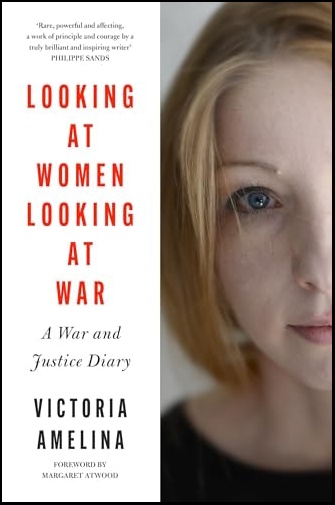
    Looking At Women Looking At War

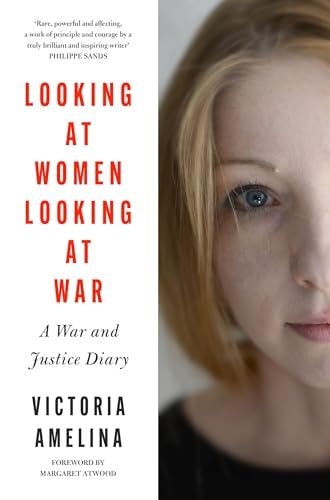
    That’s the title of the book written by the novelist, poet and human rights activist Victoria Amelina. It has the subtitle: A War and Justice Diary.

    Reading it is a sobering experience. She documented the war waged by Putin’s Russia on Ukraine, photographing the ruins of civilian buildings and recording testimonies of survivors and those who eye witnessed Russian war crimes.

    She became the chronicler of women such as Evhenia Zakrevska, a prominent lawyer turned soldier, and Oleksandra Matviichuk, head of the Center for Civil Liberties in Ukraine, who documented tens of thousands of war crimes. The Center for Civil Liberties was awarded the Nobel Peace Prize in 2022.

    Victoria Amelina was only 37 when she died in the evening of the 1st of July 2023 from injuries sustained in a Russian missile attack.

    The book was incomplete at the time of her death, but has been published by her editors to include her notes and field reports. The Foreword is by Margaret Atwood and contains this judgement on the war:

    In this war, Russia is fighting for greed – more territory, more material resources – but Ukraine is fighting for its life; not only its life as a country, but the lives of the citizens of that country, for there is little doubt about what the outcome of a Russian win would be for Ukrainians.

    The massacres, the wholesale pillaging, the rapes, the summary executions, the starvation, the child stealing, and the purges do not need to be imagined, for they have happened before. Russians claim to be the “brothers” of Ukrainians, but Ukrainians reject the kinship. Who needs a “brother” who is a homicidal psychopath and is trying to kill you?

    Looking at the events, this is totally understandable but it could have been so different without Putin whipping up the psychosis. As Alexei Navalny (who identified as half Russian and half Ukrainian) said when asked whether he identified more as Russian or Ukrainian, “It was like being asked who you loved more, your mother or your father.”.

    Read the book, it is a powerful document.

  • It’s A Good Life…

    I’m beginning to feel as though I’m trapped in a version of Bixby’s “It’s a Good Life” with Trump cast in the role of Anthony Fremont – the three-year old child with godlike powers who is destroying everyone around him.

    The difference being that Anthony is a child who knows no better, whereas Trump is a sullen, resentful old man who is fully aware of the deliberate chaos he is sowing.

    The Observer asked a question in its recent editorial on Alexei Navalny:

    When Trump calls Putin a “genius” who exhibits great “common sense”, does he understand – does he care – that he is dealing with a ruthless killer?

    The answer, clearly, is that Trump couldn’t give a damn about other people, he cares only about himself.

  • RIP Alexei Navalny

    Today it is one year since Alexei Navalny died in a Russian Penal Colony. By coincidence, last night I finished reading his memoir: Patriot. It is an extraordinary book and terrifying as an insight into the Putin machine. Navalny is a great loss to Russia, and to humanity, killed by a system run by a thug.

    The Observer has an editorial today describing Navalny as “Principled, charismatic and humorous, the murdered Russian opposition leader was everything Vladimir Putin is not”. It is worth reading and ends on a particularly chilling note:

    When Trump calls Putin a “genius” who exhibits great “common sense”, does he understand – does he care – that he is dealing with a ruthless killer? When, shattering the western consensus that Putin is an aggressor to be repulsed at all costs, Trump proposes a chummy tete-a-tete on Ukraine, does he have any idea how he is manipulated by this cynical ex-KGB thug? Does JD Vance, Trump’s ignorant vice-president, realise what a dangerous game he plays when he flirts with Europe’s pro-Putin neofascist far right? It seems not. Navalny would put them straight. Except he’s dead.

  • Incarnations of Dune

    Way back in 1975 I had read Frank Herbert’s Dune and been mightily impressed by the story. The paperback had a sticker on the front “Soon to be a major film” – but that proved to be rather optimistic, it was 1984 before the first film adaptation of Dune reached the screen. There was an earlier attempt to film the book – the Chilean-French director Alejandro Jodorowsky had purchased the film rights in 1974 – but in the end it all came to naught, no film studio was prepared to fund Jodorowsky’s vision, which reportedly would have resulted in a film lasting 14 hours.

    Then in 1984, the David Lynch version reached the cinemas. It was not a commercial success, and was mostly disliked by the critics, but I liked it – it certainly had visual style. Lynch himself was not happy with the result – the studio cut his three-hour film back to two hours.

    Following that, there were two TV series adaptations of Dune that were relatively successful, but I still did not think that justice had been done to the source material.

    Then, in 2021, Denis Villeneuve brought his version of Dune to the silver screen. For the first time, I thought that this was the version of Dune that I had been waiting for. It turned out that this was Dune Part One – Villeneuve intended that a book as complex as Dune required two parts to tell the story.

    I never got to see Dune Part One in the cinema, I’ve only viewed it at home on our TV (with surround sound). Still, it is very impressive. A spectacle, but also very well played by excellent actors.

    Dune Part Two was released in March this year. This time I was determined to see it in a cinema on an IMAX screen, as Villeneuve intended it should be experienced.

    I went to a morning screening (there were just 20 of us in the IMAX theatre) at the Pathé cinema in Arnhem. This was my first ever experience of IMAX, and it did not disappoint. Dune Part Two is superbly well-realised – in my opinion, a successful adaptation of the book in every way. There are sequences in it that are simply breathtaking in their spectacle, while the characters are never drowned out, their stories play out in front of us with real emotional weight.

    The film does say “based on the book” and while it does follow the plot in the main and often quotes the text, there are some significant deviations (no Count Fenring at all and no Alia in the final scenes, for example). I wondered about the dropping of Count Fenring – although a minor character in much of the book, he turns out to be significant at the climax. The closure of the film is also very different from the book, but points the way forward for part 3 (based on the “Dune Messiah” book) – which will probably arrive in 5 years’ time – I think Villeneuve wants to take a break and do something else next. I hope that I will live to see it…

  • Hitler Stalin Mum and Dad…

    … is the title of Daniel Finkelstein’s memoir about his family, and his parents’ survival of the Holocaust. It is very powerful and impressive; a real “Lest we forget” must-read.

    Still, as Rohan Silva says in his Observer review:

    Perhaps the more people that read this brilliant book, the less likely it will be that our liberal society ever disintegrates. But that faith in rationality was what Finkelstein’s grandfather, Alfred, believed in too, and it didn’t change a damned thing.

  • Bredevoort Boekenmarkt

    Went to the Book Market in Bredevoort today. Rather a shadow of its former self, consisting of a huddle of less than 20 stalls in the churchyard of a former church that is now an arts centre.

    When I first visited Bredevoort, almost 20 years ago, it was known as a Book Village, it had many bookshops, and held regular book markets centred around the market square and spilling out into the surrounding streets. Alas, time (and the internet) has taken its toll – only a few bookshops survive and the book market has dwindled and decamped to the churchyard.

    Still, I managed to pick up two Folio Society editions: Christopher Isherwood’s Mr. Norris changes Trains and Muriel Sparks’ The Prime of Miss Jean Brodie. Both editions were illustrated by Beryl Cook in her inimitable style, so my trip was successful as far as I’m concerned…

  • RIP Hilary

    Hilary Mantel is dead. She leaves us a marvellous body of work, but alas, we will never be able to read what she still had to write.

  • RIP Raymond

    The author and illustrator Raymond Briggs has died. Not unexpected, but a sad loss all the same. He warned us about it in his book “Time For Lights Out“.

  • Brexit as Greek Tragedy

    I’m currently about halfway through Chris Grey’s magisterial flensing of Brexit in his book: Brexit Unfolded.

    He takes us through the events of the five years since the fateful referendum, recording who said what, and whether what was said made any sense, either at the time or since. Disingenuousness, or downright deception, particularly from the Brexiteers, reaches stratospheric levels time and time again.

    I remain convinced that leaving the Single Market and ending Freedom of Movement for citizens was a huge mistake, one that began with the fluttering of Cameron’s butterfly wings and his ill-judged referendum, and that has ended with the ongoing catastrophe that is Brexit.

    I’ve been following Chris Grey’s Brexit Blog for some time, where he does a weekly analysis of the current events related to Brexit. This book is, in large part, a distillation of the contents of his blog, and is eminently readable, if depressing in its message.

    Highly recommended.

  • A Dutiful Boy

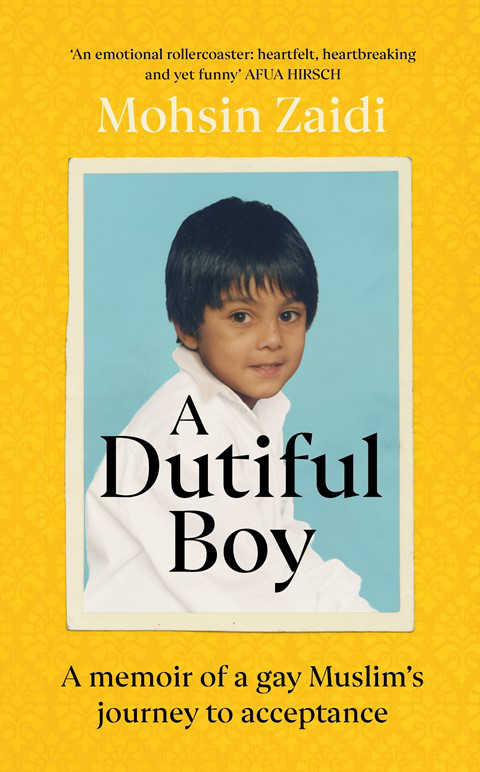
    The title of Mohsin Zaidi’s memoir of his journey to self-acceptance. There were times when I was growing up when I thought being gay and different was hard, but, believe me, it was as nothing as compared to Mohsin’s experience. That he’s made it, and that his family have made it, is wonderful.

    As Russell Tovey says:

    This memoir is so heartfelt, emotional and really funny. I picked it up because I wanted to know about different cultural experiences of what it is to be queer, especially when religion is involved. If you’re Muslim and you’re gay, I can’t fathom what that entails – how you corroborate that in your head, how you approach your family, friends and community for acceptance. This book is very candid and it really educated and entertained me.

  • RIP, Larry

    Larry Kramer has died. His obituary is here, but perhaps this eulogy by Matthew Lopez says more about him in this time of Covid-19.

    I have a copy of Kramer’s Reports from the Holocaust in the library, in which he coruscates the US government’s failure to deal with the AIDS crisis. Dr. Anthony Fauci figures in the book. Kramer is his nemesis, and indeed Dr. Fauci came over time to recognise that he was wrong and Kramer was right.

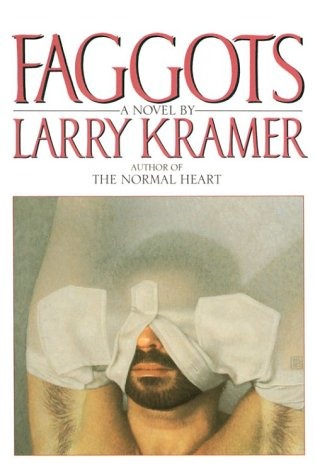
    And then there’s Faggots – Kramer’s 1987 novel that caused a furore in the male gay community. That’s also in the library. Time for a re-read, I think.

    FaggotsLarryKramer1361_f

    The cover illustration is by the artist Michael Leonard. Many years ago, I posed as a model, together with a good friend, Kerry, for him – but that’s another story…

  • Enigmatic, Elegaic, Extraordinary

    It’s called “Tales From The Loop”. It has taken several forms: an art book, a role-playing game, and now a TV miniseries of eight episodes available on Amazon Prime Video.

    It’s a world that has emerged from the imagination of Swedish artist Simon Stålenhag. A world that merges a rural landscape with elements of small-town Swedish life in the 1980s and the detritus of yet-to-be invented technology.

    You can get some idea of the shape of the landscape and the artist’s inspirations for it from this short film that was made in 2015 for the Kickstarter project to produce the English versions of his books.

    While waiting for my copy of the book to arrive at the local bookshop, I thought I would take a look at the TV miniseries. The trailer certainly looked intriguing – and it had the added bonus of having Jonathan Pryce in one of the roles.

    I saw the first episode and was instantly hooked. This is my kind of Science Fiction – the miniseries is really eight interlinked tales that explore different facets of the human condition.  They reminded me of the writings of Ray Bradbury; in particular those of growing up in a small town, where the fantastical is glimpsed out of the corner of the eye: Dandelion Wine, and of the tale of growing old: I Sing The Body Electric.

    Highly recommended.

  • Climate Crisis

    I see that the Guardian has updated its style guide to introduce terms that more accurately describe the environmental crises facing the world, using “climate emergency, crisis or breakdown” and “global heating” instead of “climate change” and “global warming”.

    All the political insanity that is currently rampaging through the world at the moment surely pales into insignificance compared to the existential threat that is the ongoing climate crisis? Indeed the latter will only exacerbate the former as time goes on.

    A few months back, I read The Uninhabitable Earth, by David Wallace-Wells. Yesterday, I read in one sitting, We Are The Weather, by Jonathan Safran Foer. Wallace-Wells is a journalist, Foer a novelist. As you might expect, the books are very different in style, whilst both dealing with the subject of the climate crisis.

    Foer’s book is a mixture of styles in itself, ranging from thought-provoking essays, to shocks to the brain from short chapters giving lists of factoids, to a “dispute with the soul” – a dialogue with himself over why it is that we seem unable to deal with the fact of the climate crisis. That’s all of us, whether you accept the science or deny it.

    Foer offers a path to help mitigate the extent of the crisis: switch to a plant-based diet from a meat-based one. The link between farming animals and the climate crisis is the backbone of his book, and he makes a persuasive case. Livestock are the leading source of methane emissions, whilst nitrous oxide is emitted by livestock urine, manure, and the fertilisers used for growing crops. Nitrous oxide has significant global warming potential as a greenhouse gas. On a per-molecule basis, considered over a 100-year period, nitrous oxide has 298 times the atmospheric heat-trapping ability of carbon dioxide.

    The Netherlands has just woken up to this inconvenient truth about nitrous oxide and other nitrogen compounds. We currently have what is known as the Stikstofcrisis (the nitrogen crisis), which arose this year when permit applications for an estimated 18,000 construction and infrastructure projects were stopped. Too high a concentration of these nitrogen compounds leads to a deterioration of nature and to a loss of biodiversity. A reported 61 percent of the nitrogen compounds produced comes from agriculture, with intensive livestock farming being one of the most important sources. So the farmers are up in arms about this, seeing the government placing the blame for the crisis on their shoulders. There have been protests and demonstrations.

    The trouble is, we simply can’t go on as we did before. Things will have to change, but that process will be a painful one, whatever we do.

  • Homage to Humanity

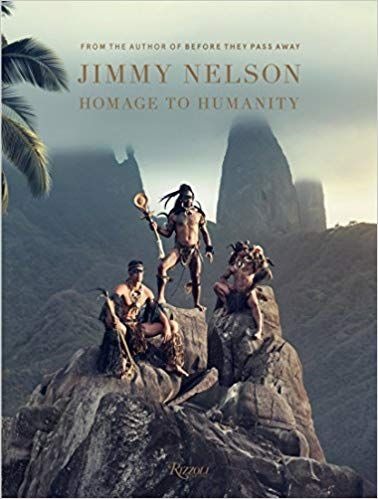
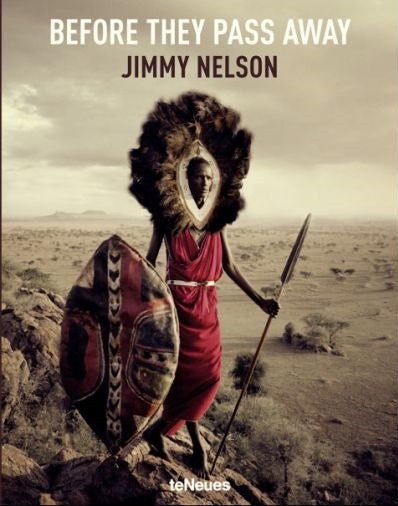
    While I was in Deventer at the book market, I popped into Deventer’s largest bookshop to check out the new book by photographer Jimmy Nelson: Homage to Humanity.

    I already have a copy of his previous book Before They Pass Away in the library, which has the same theme: photographs of indigenous peoples and tribal cultures that are in danger of vanishing from the world.

    I freely admit to being in somewhat of two minds about the books. The photographs themselves are stunning, but also carefully posed; almost theatrical. A sort of National Geographic crossed with Vogue. And yet, and yet – they are undoubtedly a record of sorts:  aspects of human cultures that are undeniably in danger of being swept away.

    So I wanted to take a look at the new book to see whether I should stump up the cost of adding it to the library – at €125, it’s not exactly the cost of a paperback…

    And, well, I was persuaded. It is a gorgeous book, printed by Rizzoli.

    I’ve ordered it via our local village bookshop. Now I’ve got to find space in the bookshelves to put it.

    JimmyNelsonJimmyNelson23247_f  BeforeTheyPassAwayJimmy20798_f

  • The Deventer Book Market

    The first Sunday in August sees a book market set up its stalls for one day of trading in the Dutch town of Deventer. This year marked the 31st time the book market has been held, and there were more than 850 stalls stretching a total length of 6 kilometres. I’ve been visiting it most years since 2004.

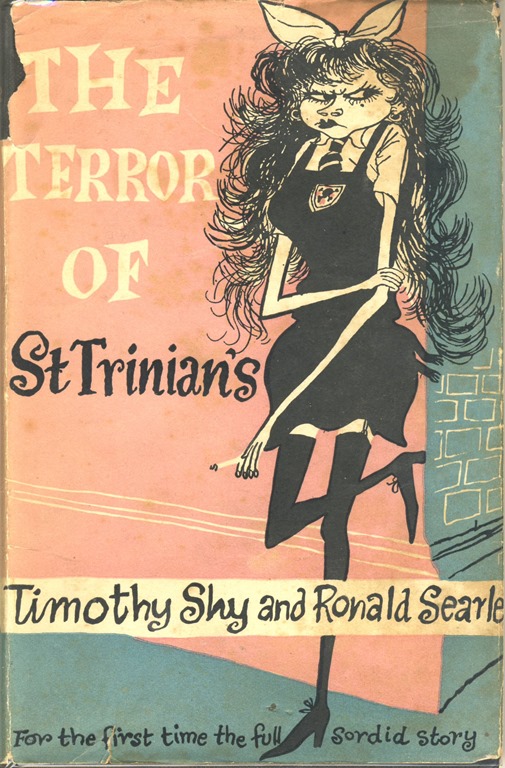
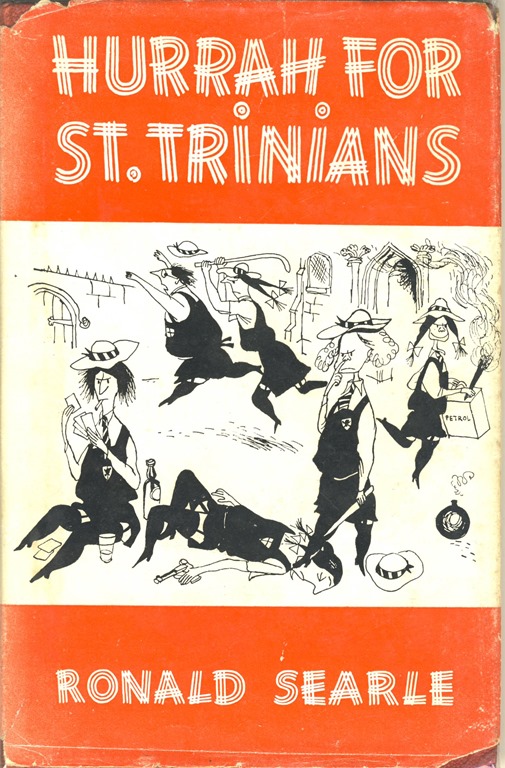
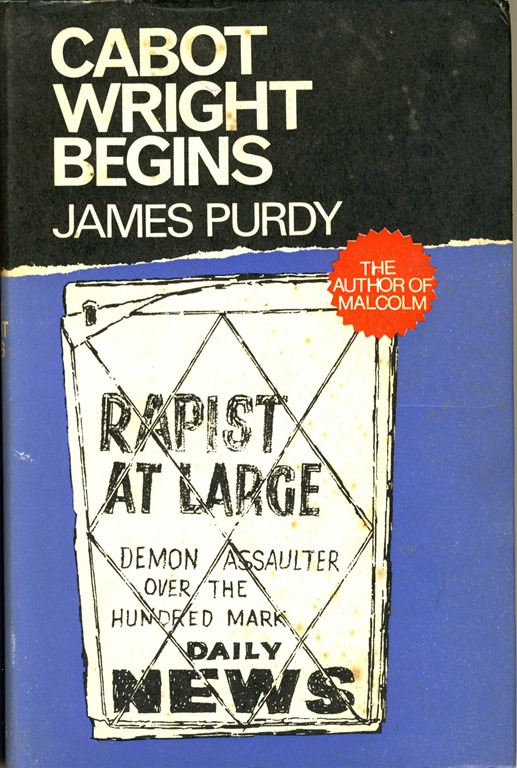
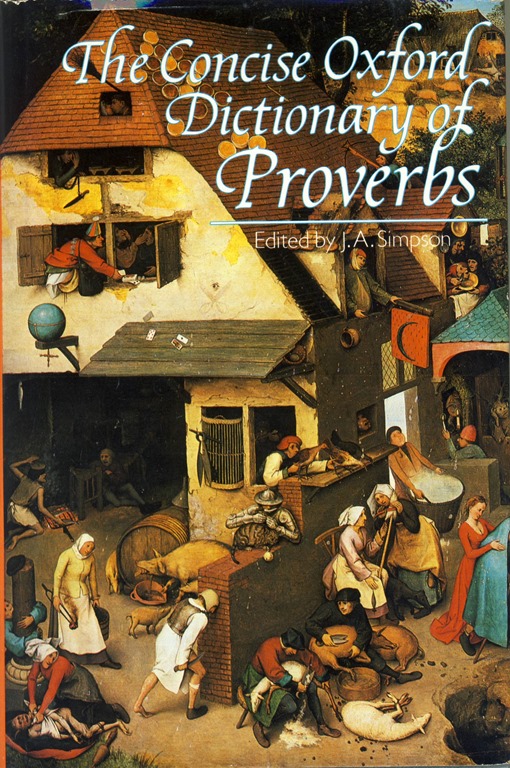
    I didn’t have a big haul this year – just four small books: two “St. Trinians” books, illustrated by Ronald Searle, a first edition of Cabot Wright Begins by James Purdy, and The Concise Oxford Dictionary of Proverbs, to remind me of the richness of language.

    Terror of St. Trinians  Hurrah for St. Trinians 

     Cabot Wright Begins  Concise Sayings

  • Apocalypse Now?

    The Guardian review of “The Uninhabitable Earth” by David Wallace-Wells has the subtitle “Enough to induce a panic attack…”

    I can attest to that. I started reading the book today on the train to Amsterdam, and got thoroughly depressed. Considering that I was on my way to attend the birthday party of two friends, it probably wasn’t the best choice of reading material. Nonetheless, it’s an important book, delivering a wake-up call as solid as a punch to the solar plexus.

    I think the most salutary lesson that comes through is that the effects of climate change are already with us, and that the scale will only ratchet up. The best we can hope for is to take action to ameliorate the extent; we cannot hope to reverse it and you can abandon all hope of stopping it.

    And with his calm recitation of the facts of recent events – hurricanes, droughts, floods and the like – he makes it abundantly clear that we are not heading for an apocalypse, we are already living in its opening chapters.

  • Steve Ditko

    The Guardian reports today that Steve Ditko has died aged 90. He was one of the great comic book artists. I remember as a boy going round the corner to the newsagents in Walpole Avenue, in Douglas, Isle of Man, because they had the best selection of American comics in town. I soon came to recognise the Ditko name and his style of art, and always picked up an issue if he had illustrated a story in it. Alas, my comic collection has long since perished.

    Walpole Avenue was a narrow street, and across the road from the newsagents was the Royalty Cinema, long since demolished. During the summer seasons in the 1950’s and up until the mid 1960’s it hosted live shows, usually of the stage hypnotist, Josef Karma – always billed as “The Great Karma”. I saw his show on at least two occasions, and was suitably impressed.

    Childhood memories…

  • RIP Ursula

    Damn. Ursula Le Guin has died. One of the greats who you would wish to go on forever. That task has now passed to her work. So that settles it, she will be read, and re-read for a very long time to come. She will be missed, but her memory, ideas, characters and philosophies will live on.

    Now, if you will excuse me, I will put aside my re-reading of Philip Pullman’s His Dark Materials, and pick up, once more, Le Guin’s The Left Hand of Darkness, before continuing with the other thirty-one books of hers in my library…

  • RIP, Sheri

    Learned today that the author Sheri S. Tepper has died. My favourite book of hers has to be The Family Tree. For almost two thirds of the book there are two very different plotlines intercut with each other. And then the kaleidoscope shifts and the two lock into one with the force of a sudden revelation. A brilliant coup de théâtre. The story is good too.