Reflections on life at “De Witte Wand”…

Category: Film

  • Under The Skin – Again

    As I wrote back in 2009, Michel Faber’s first novel Under The Skin will probably get under your skin, and provoke a severe reaction. I see that the novel has now been made into a film. While it sounds as though liberties have been taken with the plot, I hope that Isserly’s odyssey remains as strange and as haunting as in the original story.

  • Watch Anytime, Anywhere…

    I notice that some DVDs are now advertised as including a digital copy of the film, intended for playback on PCs, Smartphones and Tablets. I seem to recall that at one time, the digital copy was physically present on the DVD. These days, it seems as though you have to download it via the web. You go to a web site, type in the redemption code included with the DVD, and the digital copy gets downloaded to your PC.

    Well, that’s the theory, anyway. I’ve just bought a DVD of ParaNorman from Amazon UK. It boasts that this pack includes DVD + Digital Copy™ + Ultraviolet™ so that you can “Watch Anytime, Anywhere”.

    I thought that I’d download the Digital Copy for my tablet, but when I entered my redemption code on the web site, I was greeted with:

    Ultraviolet

    “Error occurred during token validation: Sorry, but this Digital Copy title is not available in your region”.

    So much for “Watch Anytime, Anywhere”, then… It’s probably against EU law, but I doubt that Universal gives a damn about that. They’ll just carry on making it difficult for their paying customers.

    Update: I tried raising the issue with technical support. They basically gave me the brushoff:

    Hello,

    We are sorry to tell you that the Digital Copy feature for this title is only available inside UK as the webpage is Geo-filtered. We regret the inconvenience caused.

    Thank you.

    Universal Digital Copy Support

    Support Case Info:
    Product: Universal Digital Copy
    Issue: Technical Issues
    Status: Resolved
    Template: DC00045

    I suggested to them that they might consider spelling out this limitation in their terms and conditions on the packaging…

  • Good and Bad Shorts

    I occasionally peruse the io9 web site. Occasionally, because, quite frankly, I find it a bit tiresome. It just seems a bit over the top and too much in love with itself.

    Here, for example, is the piece on R’ha, which exhorts us to watch the short film. Well, I did, and it struck me as the sort of thing a male teenager in the grip of his hormones might do. Portentous, limited, and ultimately something that I would not want to engage with. Technically well-realised; but intellectually, a single note plucked on a well-worn string.

    Then again there’s Mama. This has more meat on its bones. But whether it can be stretched out into a full length feature, I have my doubts. I’ll wait and see.

  • Rewriting 2001

    The Dreams of Space blog has an entry that shows a children’s comic produced in 1968 that ties-in to the release that year of 2001: A Space Odyssey. It depicts two children, Debbie and Robin, being taken to see the premiere of the film by their parents.

    It’s an interesting piece of ephemera, but it does lie about the story. It states that the “repairman” (actually Dr. Frank Poole), sent out to repair the communications unit on the spaceship Discovery, slips and floats away into space. Er, no he didn’t – he was murdered.

    There’s also the obligatory cringeworthy ending in the final panel when Debbie announces that she wants to be a space stewardess when she grows up, while Robin says he wants to be a space pilot. Gah!

  • The Hidden Talents of Giraffes

    I never knew that giraffes could do this. They must have remarkably strong teeth.

  • Just Tying Threads Together

    The news that Roger Ebert has died has brought out instances of what he meant to many people. Including the shout-out from Nina Paley, who thanks Ebert for his review of her film.

    Sita Sings the Blues is wonderful. Roger Ebert thought so too.

  • More Bad News

    Following on from the news that Iain Banks is not long for this world, comes the news that Roger Ebert has now departed it.

    I admit that I was only an occasional reader of Ebert’s film reviews, but I always found them worthwhile and thought-provoking. I refer you to The Mumpsimus for a deeper appreciation of Ebert and his writing. From that piece is a quote from Ebert himself. It’s probably Ebert’s best memorial and something to live up to:

    “‘Kindness’ covers all of my political beliefs,” he wrote, at the end of his memoirs. “No need to spell them out. I believe that if, at the end, according to our abilities, we have done something to make others a little happier, and something to make ourselves a little happier, that is about the best we can do. To make others less happy is a crime. To make ourselves unhappy is where all crime starts. We must try to contribute joy to the world. That is true no matter what our problems, our health, our circumstances. We must try. I didn’t always know this and am happy I lived long enough to find it out.”

    Amen.

  • The Challenger

    Last night, BBC Two showed “The Challenger” – a film dramatisation of the public inquiry (the Rogers Commission) that investigated the causes of the catastrophic accident that befell the space shuttle Challenger. The film has the title Feynman and the Challenger in the US.

    It was riveting. Amidst the political manoeuvering, and the attempts by NASA officials to mislead the inquiry at the time, Richard Feynman ploughed a course that uncovered the true cause of the disaster. He was played in this dramatisation by William Hurt, who delivered a completely believable portrait of Feynman, culminating in the scene where Feynman destroys the testimony of the NASA officials with a glass of iced water. I remember seeing the actual event on TV at the time, and thinking how extraordinary it was.

    The dramatisation was based on Feynman’s experience on the Rogers Commission, as documented in his book What Do You Care What Other People Think? As wikipedia has it:

    Feynman’s account reveals a disconnect between NASA‘s engineers and executives that was far more striking than he expected. His interviews of NASA’s high-ranking managers revealed startling misunderstandings of elementary concepts. For instance, NASA managers claimed that there was a 1 in 100,000 chance of a catastrophic failure aboard the shuttle, but Feynman discovered that NASA’s own engineers estimated the chance of a catastrophe at closer to 1 in 100. He concluded that the space shuttle reliability estimate by NASA management was fantastically unrealistic, and he was particularly angered that NASA used these figures to recruit Christa McAuliffe into the Teacher-in-Space program. He warned in his appendix to the commission’s report (which was included only after he threatened not to sign the report), “For a successful technology, reality must take precedence over public relations, for nature cannot be fooled.”

    That statement closed the film. It’s a film worth seeing.

  • Paperman

    Nice to see that Disney can still produce heartfelt animation. Short and sweet.

  • This Land is Mine

    I’m currently reading (very slowly) Steven Pinker’s magisterial The Better Angels of Our Nature. It’s a history of violence in human societies, and his thesis is that violence has actually declined over the centuries. It seems difficult to believe, but Pinker marshals his facts and presents a convincing case.

    And on the theme of the distressing fact that violence and humanity are inextricably locked together, here’s Nina Paley’s offering on that theme.

    More about the film, Seder Masochism, together with a handy guide to who’s killing who, can be found on Nina’s Blog.

  • Cloud Atlas

    “Cloud Atlas” is the name of a remarkable book by David Mitchell. A Russian Doll of a book, it contains stories within stories that link and arc to form a narrative that spans centuries and civilizations.

    I thought it was amazing.

    And now, it appears that a film of the book has been made. Even the trailer is almost six minutes long – it will be interesting to see how the film stacks up to the book. There are, at least, some good actors involved, so one can but hope.

    Update 4 September 2012: there’s a very good article on the making of the film in the current New Yorker. Definitely worth reading. I still fear for how the film will turn out. The Wachowskis are known for their bravura visual style over depth of characterisation (e.g. The Matrix), while the book is almost the complete opposite. Still, fingers crossed, the film may yet stand on its own feet as a work of art.

  • Facets of Delius

    I was first introduced to the music of Frederick Delius back in 1968 via Ken Russell’s brilliant biographical film portrait: Song of Summer. The film dealt with Delius’s last six years of life, when he was a cantankerous old man; blind, paralysed, and dealing with tertiary syphilis. It is a superb film. Apparently, Eric Fenby, who was Delius’s amanuensis at the time, found the film so true to life that he suffered a nervous breakdown as a result of seeing it.

    We’ve had to wait nearly 45 years for another film portrait of Delius. Last night, we got it, in the shape of John Bridcut’s glorious film documentary: Delius: Lover, Composer, Enigma shown on BBC Four. This took a view of the whole of Delius’s life, from growing up as Fritz Delius in a German family in Bradford, through his time in Florida, and the flesh-pots of Paris, to his old age in Grez-sur-Loing, when he was married to the long-suffering Jelka Rosen.

    It was simply stunning. And it has made me want to explore more of Delius’s music – particularly his early work. His opera Koanga pre-dates Gershwin’s Porgy and Bess by thirty years, and his A Mass of Life celebrates the joy of life, without religious overtones.

    John Bridcut does good work – his biography of Benjamin Britten: Britten’s Children, which I read before I saw his documentary film on which the book was based, alerted me to his talent. Delius: Lover, Composer, Enigma is equally good. It contains many interviews, both current and archival material (e.g. Sir Thomas Beecham – a champion of Delius’s music), that elucidate Delius’s genius. I’ve just ordered more CDs of Delius’s music as a result. Thank you, Mr. Bridcut. And thank you, Frederick Delius.

  • A Talent To Watch…

    He’s a young man called Cosmo Jarvis, a singer-songwriter. I came across the video of his song “Gay Pirates”, and thought it was pretty good…

    And then I found a much darker song: “Sure As Hell Not Jesus

    Jarvis directed these videos as well. The boy’s got talent…

  • The Devils

    Hurrah! The British Film Institute has just released the complete UK ‘X’-rated version of Ken Russell’s The Devils on DVD. It’s in its original aspect ratio of 2:35:1 and looks absolutely stunning. Derek Jarman’s sets are seen to the best effect, and the cast give all they’ve got to Ken’s extraordinary vision.

    It’s forty years since the film was first released, and Russell had problems with both the studio (Warner Brothers) and the censors. For years, the only version that was available was a cut version of questionable technical quality in the wrong aspect ratio.

    In retrospect, it’s hardly surprising that Russell had to fight to get his vision realised. Even after forty years, the mixture of religion, politics, sex (both sacred and profane) and violence is a heady brew, with more than a whiff of brimstone about it. As my favourite film critic, Mark Kermode, says, it is:

    Russell’s greatest work. A fearsome, breathtaking masterpiece.

    Despite the extravagance of Russell’s vision, the core facts of the story are historically true. His screenplay is based on Aldous Huxley’s The Devils of Loudun, which documents the events of the time, and includes letters written by the protagonists. Wikipedia sums it up thus:

    Urbain Grandier was a priest burned at the stake at Loudun, France on August 18, 1634. He was accused of seducing an entire convent of Ursuline nuns and of being in league with the devil. Grandier was probably too promiscuous and too insolent to his peers. He had antagonised the Mother Superior, Sister Jeanne of the Angels, when he rejected her offer to become the spiritual advisor to the convent. He faced an ecclesiastical tribunal and was acquitted.

    It was only after he had publicly spoken against Cardinal Richelieu that a new trial was ordered by the Cardinal. He was tortured, found guilty and executed by being burnt alive but never admitted guilt.

    I must get a copy of the book for myself.

    I watched the DVD last night and what struck me was how little things change, the same religious and political struggles are still with us, as are those who are prepared to use them for their own ends.

  • The Joy of Books

    What books get up to at night.

    I sometimes wonder what happens in my library deep in the night as well.

    (hat tip to Matthew Cobb over at Why Evolution is True)

  • Hugo

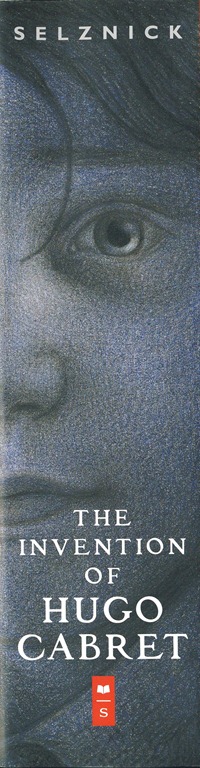
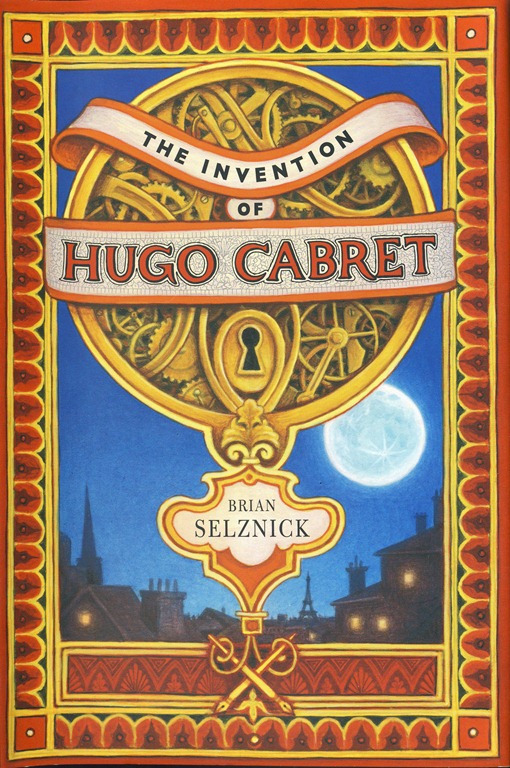
    A few years back, I bought The Invention of Hugo Cabret by Brian Selznick. Although it’s ostensibly a children’s book, I was attracted to it because the book is a work of art in its own right. Even when the book is closed and sitting on the bookshelf, Hugo’s eye stares out at you and you feel yourself drawn to reach out and discover what lies within.

    Hugo spine

    The only bit of colour is the book’s cover, everything else is black or white or shades of grey.

    Hugo cover

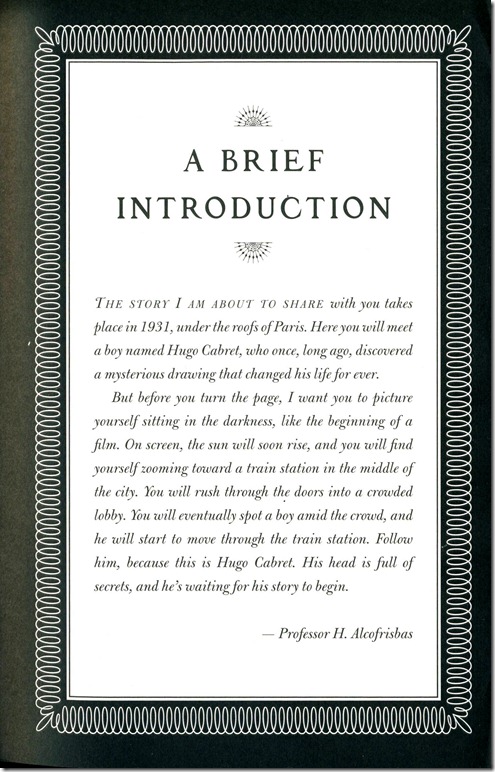
    Selznick mixes pages of black and white drawings into his text, and, as befits a story that concerns Georges Méliès, the sequences of drawings, on pages edged with black, flow like an unfolding film, with pans, zooms, and cuts. Indeed, the very first page invites the reader to imagine sitting in a darkened room waiting for a film to start:

    Hugo0003

    And now, a film has been made of the book. Because this is a children’s film, the director, somewhat surprisingly, turns out to be Martin Scorsese. But it makes sense when you realise that he has a great knowledge of, and affection for, the history of film. The trailer looks good (although I detest, with a passion, the sound of the trailer narrator’s voice), and the film is garnering good reviews.

    It doesn’t open here in The Netherlands until next February, but, when it does, I’ll definitely make one of my rare trips to the cinema to see it.

  • Ken, Meet Grim…

    I was saddened to read today that Ken Russell has died. He was 84. He once said that “the Grim Reaper is the only thing that will stop me making films”. Alas, introductions have now been made.

    It was Ken who, way back in the 1960s, introduced me to the music of Delius and Bartok through his films on their lives made for the BBC television programme “Monitor”. He also made short films on other aspects of art and culture for Monitor. Here’s one dating from 1960 that he did on the playwright Shelagh Delaney (who has also died very recently):

    His films were never less than interesting, and often courted controversy; most notoriously with The Devils. Apparently, the fully restored and uncut version of The Devils will be released in March next year to mark the centenary of the British Board of Film Classification. I’m sure that the irony did not go unmissed by the old devil Ken himself. He will be missed.

    Update: There’s a nice appreciation of Ken Russell written by Mark Kermode here. Worth reading.

  • Little Shop of Horrors

    The Guardian is running a series on the theme of “My Favourite Film”, and this week, Jessica Hopkins pens a love letter to “Little Shop of Horrors”. Not the Roger Corman original, but Frank Oz’s Musical remake.

    I agree with her absolutely, it is a wonderful film: visually, musically, and a perfect cast. I’ve watched it more times than I can remember, and will keep coming back to savour it anew.

    One thing that the comments on her article have brought to the surface: the original ending of the film is to be seen on YouTube. I’ve known of the original ending for a while, but I’ve never seen it. Apparently, the test audience for the film found it too depressing. While it was available on a DVD release for a short while, it was pulled by David Geffen, the producer.

    All that remains is a working copy, in scratchy black and white, of what once was Frank Oz’s apocalyptic vision. The studio got cold feet, pulled it, and substituted a happy ending. Having now seen it, on the one hand, I can understand it – the original is very depressing (everybody dies), while the revised ending is a happy one (with a twist). But, on the other hand, the sight of multiple Audrey IIs rampaging through America causing chaos and destruction à la vegetable Godzillas has a demented majesty that demands to be seen.

    It is rumoured that Geffen possesses the only copy of the original final version in colour. Here’s hoping that it will one day see the light of day and thus show the full wizardry of Oz.

  • The End of an Era?

    Steve Jobs has died at the young age of 56. He had a massive influence on at least three industries: computing, film animation and music.

    I thought that Dan Gillmor’s eulogy on Jobs probably came closest to a rounded portrait: “a man of contradiction and genius”. Gillmor also links to the commencement speech Jobs gave at Stanford University a few years ago and that is certainly worth reading; in particular, his thoughts on life and death:

    No one wants to die. Even people who want to go to heaven don’t want to die to get there. And yet death is the destination we all share. No one has ever escaped it. And that is as it should be, because Death is very likely the single best invention of Life. It is Life’s change agent. It clears out the old to make way for the new. Right now the new is you, but someday not too long from now, you will gradually become the old and be cleared away. Sorry to be so dramatic, but it is quite true.

  • Arrrr! – I Can’t Wait

    Aardman Animation’s latest, due in 2012. The Pirates! In an adventure with scientists. It doesn’t get better than this.