
Another installment of the Symphony of Science. This one proving that, although it’s amazing technology, even Auto-tune can’t make Professor Dawkins sing…
-
Seeing Is Believing
My dad always used Old Spice, but I don’t recall this ever happening to him. Nicely done special effects – most of them simple mechanics. Only the hand with the diamonds has been superimposed on the single take in this commercial. Mind you, it took three days and dozens of attempts before everything worked.2 responses to “Seeing Is Believing”
-
I love this ad – forget the Old Spice, where can I buy the man????
-
Ah, Lesley, he’s gorgeous, but it’s an ad – all is illusion, smoke and mirrors… He’s not for sale…
Leave a comment
-
-
Murder in Samarkand
Quick, you have (as of 21 Feb 2010) six days left to listen to something that you need to hear.Leave a comment
-
Dying in Increments
A phrase from a piece in Esquire about Roger Ebert, the film critic. Once you get past that amazing, arresting portrait image, the picture it paints of Ebert is wonderful. Worth reading.Leave a comment
-
Which Web Animal Are You?
The BBC has been running a series of programs on the effects of the internet and the World Wide Web on society called The Virtual Revolution. Fronted by Aleks Krotoski, it’s been a relatively good exploration of both the history and the societal effects of the Web. The fourth, and final, programme of the series looked at the societal impact of the web in more detail. It contained the inevitable soundbite from Baroness Greenfield expressing concerns about the negative impact on the brains of our youth, but this was rather nicely called “an extreme position” by Krotoski. The point is that there’s really little evidence either way – just plenty of anecdotes.
To try and address this lack of research, the BBC joined forces with Professor David Nicolas, head of the CIBER research group at University College London and Professor Clifford Nass of Stanford University. A Web Behaviour Test has been launched in order to try and gather more data. The professors propose that there are eight different archetypes of people who interact with the web, and have defined their characteristics in terms of animals (fox, hedgehog, etc.). If you take the test, you will be shown which archetype of web user you are. Apparently, I’m a bear:

Slow-moving – Web Bears browse the internet at a leisurely pace – just like real world bears who like to take their time over things.
Solitary – Like real bears, Web Bears tend to be solitary animals. My results show that when I am looking for information, I am less likely to use social networks or other sites whose content is created by its users, preferring instead to go it alone.
Adaptable – Web Bears are highly adaptable multitaskers, able to do several things at the same time. Real-bears are also very flexible, particularly in their diet, and will eat fish, insects, salmon and even scavenge in human refuse for new sources of food.
I’m not sure about the eating insects bit, or scavenging in human refuse, mind.
2 responses to “Which Web Animal Are You?”
-
People are different…..people make airfix kit’s differently…people compose Music differently…so people ae going to use the internet differently…so what’s new ? And the point of this test is..??
-
Simply to provide data. Real data is better than anecdote. If it were not so, then we’d all be thinking that astrology and homeopathy actually work…
Leave a comment
-
-
Fun With Technology – Part V
Here we go again, another trawl through the depths of technology. My problem is that I never could learn when to leave well enough alone; there are always a few niggles that will bother me, and usually I find that picking at them is like picking at a thread on my pullover, only to find that the pullover is starting to unravel.
In this case, the starting point is that I currently have a fairly reasonable home cinema setup – nothing too fancy, such as these – but for the most part it works, and more importantly, the spouse acceptance factor is reasonably good (although we are currently juggling six remote control units, which really doesn’t help).
However, it has a niggle.
When the Blu-ray player (Panasonic DMP-BD30), the audio amplifier (Denon AVR-3808) and the HDTV (Panasonic TX-37LZD800) are first switched on, it can take up to three or four minutes before I see a stable picture on the TV. The three components are connected together using HDMI interfaces, supposedly the latest and greatest technology for interconnecting audio-visual equipment. Any two of the components will work perfectly together with each other, but add the third into the chain, and the problems begin. The three of them are obviously engaged in some form of electronic pass-the-parcel; trying to decide on what level of communication will form common ground to get a DVD or Blu-Ray disc in the player displayed properly on the TV. The picture will appear momentarily before it breaks up into a multi-coloured snowstorm, and the units start over again, trying some other set of parameters to forge the chain. This continues, as I’ve said, for up to three or four minutes at a time. I’ve tried every conceivable combination of the setup possibilities in all three components in order to find a suitable starting point, all to no avail. All the units are supposed to support the same level of the HDMI specification (1.3A), but I fear that there’s many a slip ‘twixt cup and lip – someone, somewhere, deep in the engineering departments of the companies concerned has interpreted the HDMI specification differently from his or her colleagues, and the resulting implementation doesn’t quite work properly.
I had rather naively hoped that a firmware fix would emerge that would cure the problem, but alas, despite several iterations of firmware upgrades on all components, nothing has appeared to resolve this. And now we are at a stage where some of the equipment is positively ancient by today’s standards – the Blu-Ray player was released in November 2007, which apparently makes it geriatric in this particular technology area. So I don’t really expect any further upgrades to appear, hence the chances that the problem will ever be resolved are slim, as far as I can see.
Thus, that is the niggle. And I am pulling on its thread by wondering whether I should change one of the components. The Blu-Ray player is the most obvious candidate – it is the least expensive component (comparatively speaking), and has already been shuffled off, by its makers, to the equivalent of the Old Folk’s Home. Now, I could simply replace it with a newer model of Blu-Ray player, but you know me, as Mrs. Lovett said, sometimes these ideas just pop into my head… What if, instead of a Blu-Ray player, I put in an HTPC? I must admit, I do rather like the features, and the look, of the latest iteration of the Windows Media Center software that is bundled with Windows 7. And it integrates with our Windows Home Server, which is storing all our music and photos. As an experiment, I hauled my PC out of the study, and temporarily hooked it up, using HDMI, in place of the Blu-Ray player. Sure enough, I was able to use it as an HTPC, and successfully demonstrated that it was able to play DVD and Blu-Ray discs through the home cinema setup, as well as access music and photos on the Windows Home Server. The only drawback was that the audio was only 2 channel stereo, instead of 7.1 channels, but that is a limitation of the hardware I currently have in the PC. What I also observed was that there was no protracted electronic “pass-the-parcel” – the setup between the three devices appeared instantaneous.
So, in theory, an HTPC is a real possibility. OK, let’s pull on the thread a little more – what sort of HTPC should it be? A number of possibilities spring to mind: an off-the-shelf HTPC, such as the Dell Zino HD or the Mac Mini; or a home-built HTPC.
I must admit, the design of both the Dell Zino HD and the Mac Mini is appealing, but the real question is: are they up to the job of acting as a proper HTPC?
Let’s take the Mac Mini first. I’m not really convinced that this would be the right choice for me. First, Apple’s bundled media library software for HTPC functionality, Front Row, doesn’t seem to be nearly as polished as Microsoft’s Windows Media Center. Secondly, I’ve never liked the iTunes software or the service for a variety of reasons, and I don’t think I’m likely to change my mind now. Thirdly, at the moment, the Mac Mini is only available with a DVD player, not a Blu-Ray player, which kind of defeats the whole object of the exercise. It also doesn’t have an HDMI interface. The final nail in the coffin is cost: Apple gear always comes at a premium, and the Mac Mini is no exception. Let’s move swiftly on before this degenerates into a rant about the Apple religion.
The Dell Zino HD is an interesting box. It can be configured in a variety of ways, including with a built-in Blu-Ray player, so this seems as though it could be a possibility. Once I started to look into it though, I began to have my doubts. It only comes with the 64bit version of Windows 7, which, frankly, strikes me as overkill for an HTPC. I found one enthusiast who had tried using the Zino as an HTPC, but then I found out that he’d wiped off the Dell software and done a clean install of the 32bit version of Windows 7 for the systems that he eventually bought. There’s a thread about the Zino on the AVSForum – it’s extremely active, with over 4,100 posts and counting. I can’t say that the overall impression that I get is positive. I think that what it boils down to is to get your expectations set correctly. Despite what Dell marketing might imply, this does not strike me as an HTPC out of the box. It may be a good basic PC with a small form factor (like the Mac Mini), but getting it to work flawlessly as an HTPC requires careful tweaking of software. It can be done, but most people just want to plug and play. That is unlikely to happen, at least with the current state of hardware and software. I am mildly amused by the volume of posts on the forum that say “do this”, followed by an answering chorus of “no, don’t do that, do this…” A sure sign that the technology is not yet ready for primetime. Anyway, the bottom line for me at least is that the Zino doesn’t (at least at the moment) output Dolby TrueHD or DTS-MA bitstreams, which is what my current (and geriatric) Blu-Ray player can do. Add to that the fact that I’m looking at around €800 for a system that needs further improvement, and I think, no, not for me.
So, in that case, why not go the whole hog and build an HTPC from scratch? Well, I can certainly do this, there’s no shortage of advice (and it must be said, the inevitable choruses of “do this” and “no, don’t do that, do this”). The bottom line is that I think I can build a top-flight HTPC that is whisper-quiet for around €650. Will I go ahead? Mmm, I think I need to mull this over for a while…
2 responses to “Fun With Technology – Part V”
-
[…] six weeks ago, I wrote about the idiosyncrasies of the technology that makes up our Home Cinema setup, and wondered whether I should take the plunge and build my own HTPC. As I like building my own […]
-
[…] AVR, and eight B&W loudspeakers for our first Home Cinema system. This worked pretty well, but there were niggles. A couple of years later, these niggles grew in importance to the point where I decided to replace […]
Leave a comment
-
-
Happy Valentine’s Day
And following from the last post on Chatroulette, how could I resist this wonderful post about vintage sex toys from the Kinsey Institute? Ain’t humanity wonderful?Leave a comment
-
You Don’t Say?
So Chatroulette is the latest fad. I freely admit that I haven’t been brazen enough to hit "Play" yet, unlike Jason Kottke.I note, with a sense of irony, that the Chatroulette start page says:"Chatroulette does not tolerate broadcasting obscene, offending, pornographic material and and we will have to block users who violate these rules from using our service".Somehow, I can’t help feeling that that is precisely what is driving the curiousity of most of the evolved apes who are visiting this site…4 responses to “You Don’t Say?”
-
I went on and trained my cam on my dog. The reactions were hysterical, even the wankers stopped mid-stroke.
-
So, what, precisely, was Monty doing? On second thoughts, perhaps I don’t wish to know…
-
Sleeping, he’s a dog, not a pervert!
-
Hmm, perhaps so, but when I look at what Watson’s practising with his stuffed bear, then I have to wonder what goes through the mind of a dog…
Leave a comment
-
-
Puberty Looms
Living with him every day as we do, it is sometimes hard to realise just how quickly our Labrador puppy, Watson, is growing. It’s just over four months since we took him home from the kennel, and then he weighed 3 Kg.

Now he’s up to 20 Kg, and giving Kai a run for his money.
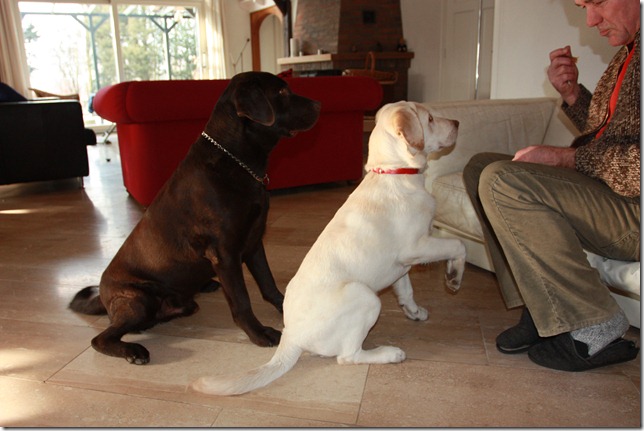
Puberty looms. God help us.

Leave a comment
-
Flame Warriors
Thanks to Jeff Atwood, over at Coding Horror, I’ve just learned about Mike Reed’s roster of Flame Warriors – a site that describes the various archetypes who populate the internet. I rather suspect that I’m Tiny Yapper – which one are you?Leave a comment
-
Uneasy Bedfellows
I sense that the spirit of Mandy Rice-Davies is with me tonight. My immediate response to the Synod’s passing of the motion that belief in Religion and Science are compatible was to think: “well, they would, wouldn’t they?”
I can’t say that I blame them, like Sisyphus, for trying, but really, in this day and age, the mantra of NOMA is wearing a trifle thin. And it doesn’t help when a delegate, Philip Brown of Manchester, says: "Science can only explain how something was created; religion can explain why."
Oh dear, oh dear, oh dear.
What I found really intriguing is that the vote was 241 in favour of the motion versus 2 against. I’d like to hear more from those two…
Leave a comment
-
The Big Question
Richard Wiseman has posted a thought experiment linked to polls for pet owners, one for cat owners and one for dog owners. The thought experiment is this:Imagine walking into a room and finding your beloved dog or cat, and a randomly selected two year old child that you have never seen before. You are presented with a simple choice. You have to press one of three buttons. One button will instantly kill your pet. The second button will instantly kill the child and the third button will instantly kill you. No-one will ever know which button you pressed and there will be no legal ramifications for your choice. Answer honestly – which button would you press?Looking at the results, I am frankly amazed at how many pet owners would rather kill the child than their beloved pet (around one third at the moment). As for me, my answer would depend on additional factors. As a dog owner, for the most part I would unhesitatingly choose to kill my dog.But I could also imagine a circumstance where I would choose active euthanasia, and kill myself. After all, Wiseman’s said that the death is instant. Sounds to me like a good way to go, if I were ready to die…
The kid survives in both scenarios…
On a related note, Philip Ball comments on a new paper from psychologists Ilkka Pyysiäinen of the University of Helsinki and Marc Hauser at Harvard. The paper draws on the results from the Moral Sense Test and points out that individuals presented with unfamiliar moral dilemmas show no difference in their responses if they have a religious background or not, although religion may influence responses in a few highly specific cases.
Oh, and harking back to the experiment that kicked this off, I’ve always found the phrase "cat owner" to be faintly oxymoronic. As someone said: "dogs have owners, cats have staff".
Leave a comment
-
Maddy’s Misrepresentations
I see that Madeleine Bunting is giving us the benefit of her views on the subject of euthanasia. I really find it irritating that she can so wilfully misrepresent Terry Prachett’s position:
"My life, my death, my choice," declared Pratchett. But this slogan is deeply deceptive; there is nothing to stop anyone committing suicide. The point Pratchett was making was quite different: "My life, my choice, you kill me."
No, Madeleine, that was not the point he was making. He quite clearly said that he wanted to die at a time of his choosing, and at his own hand:
I remember what George said and vowed that rather than let Alzheimer’s take me, I would take it. I would live my life as ever to the full and die, before the disease mounted its last attack, in my own home, in a chair on the lawn, with a brandy in my hand to wash down whatever modern version of the "Brompton cocktail" some helpful medic could supply. And with Thomas Tallis on my iPod, I would shake hands with Death.
Bunting really is economical with the truth at times. I note that she also throws in the emotive observation that:
It is estimated that in the Netherlands, where assisted dying is legal, one in five are euthanised without consent.
Of course, she doesn’t back up this with a reference. Had she done so, readers might have become aware that this factoid doesn’t tell the whole story. It comes from a report published in 1999 in the Journal of Medical Ethics: Voluntary Euthanasia Under Control? Further Empirical Evidence from the Netherlands. The report was written by H. Jochemsen of the Lindeboom Institute here in the Netherlands, and J. Keown of Cambridge University. Both are well-known opponents of euthanasia. The Lindeboom Institute is an organisation that “works within the Christian tradition and therefore finds its authoritative direction and inspiration in de [sic] Bible”. God spare me from these god-botherers who presume to deny me the right to choose.
The report states:
Nine hundred patients had their lives ended without explicit request in 1995, representing 0.7% of all deaths, only a slight decrease on the 0.8% so terminated in 1990. In other words, of the 4,500 (3,200 + 400 + 900) cases in which doctors admitted they actively and intentionally terminated life, one in five involved no explicit request.
Of course, as the authors concede, the majority of these 900 cases were because the patients in question were simply not competent to make a request:
The main reason for not discussing the issue with the patient was stated to be the patient’s incompetence (due, for example, to dementia). But not all patients whose lives were terminated without an explicit request were incompetent. In 15% of cases where no discussion took place but could have, the doctor did not discuss the termination of life because the doctor thought that the termination of the patient’s life was clearly in the patient’s best interests.
Furthermore, in a third of the 900 cases, there had been a discussion with the patient about the possible termination of life, and some 50% of these patients were fully competent, yet their lives were terminated without an explicit request. Moreover, in I7% of the 900 cases, treatment alternatives were thought to be available by the attending physician.
Yes, but as the authors themselves let slip, that 17% of cases were people who explicitly refused the treatment alternatives, and chose active euthanasia instead. Still, I agree that instances of non-voluntary euthanasia need to be treated seriously, but I question Jochemsen and Keown’s view that the Netherlands is on a slippery slope. As has been pointed out by others, such as Deldin and Magnusson, we simply do not know whether the prevalence of non-voluntary euthanasia has increased over what it was in the past.
And further, I really wish people would not conflate active euthanasia (i.e. me exercising my free will and dying at a time of my own choosing) and non-voluntary euthanasia, which at the least-worst end of the spectrum is also known as mercy-killing. In my view, they are not the same thing at all.
Update: since I wrote the above, someone has posted a comment to Buntings’ article, with data from studies published later than the Jochemsen & Keown study quoted above. They are strong evidence that the Netherlands is not on a slippery slope at all.
The incidence of the different circumstances of death in the Netherlands since 1995 has been determined in several successive robust epidemiological studies (Onwuteaka-Philipsen et al., Lancet. 2003;362: 395-399). In 2005, of all deaths in the Netherlands, not 20% but 0.4% were the result of the ending of life without an explicit request by the patient (van der Heide et al., New England Journal of Medicine. 2007;356:1957-1965). In the UK, the figure was 0.33%, i.e. quite similar to the 0.4% in the Netherlands (Seale, Palliative Medicine 2006; 20: 3-10). These instances have been found to be in dying patients who had become incompetent, were compassionate and are generally considered ethically acceptable (Rietjens et al. Death Studies 2007;31:205-221).
In 2005 in the Netherlands euthanasia was given in 1.7% of deaths and physician-assisted suicide occurred in 0.1%. These rates were somewhat lower than in 2001. Since the legalisation of euthanasia in Belgium its overall incidence changed little, but the care with which it is carried out improved markedly (Bilsen et al. New England Journal of Medicine 2009; 361: 1119-1121). If cases of euthanasia with no or only perfunctory precautions came to light, there would be prosecution. And if in the future there were to be evidence for anyone requesting euthanasia because of e.g. a waiting list for palliative care, there would be an outcry. Thus, legal euthanasia is one more safeguard against the health-care system falling short of its duty to offer optimal care at the end of life. In Belgium, legal euthanasia and palliative care are not opposites, but complementary and synergistic (Bernheim et al., British Medical Journal 2008;336:864-867).
All available data also put to rest Ms Bunting’s allegation that legal euthanasia imperils vulnerable patients. Compared with background populations, rates of assisted dying in Oregon and in the Netherlands showed no evidence of heightened risk for the elderly, women, the uninsured, people with low educational status, the poor, the physically disabled or chronically ill, minors, people with psychiatric illnesses or racial or ethnic minorities (Battin et al. Journal of Medical Ethics. 2007;33:591-597).
Leave a comment
-
Home Cinema
For my birthday, a neighbour of ours presented me with the DVD of Creation – the biopic about Charles Darwin.I am really touched by her thought on this, even though I have (without having yet seen the film) some misgivings over how Darwin’s life will be treated. Nonetheless, I think it will be a film worth watching. This still from the film shows both the potential and the dangers well, I think. A touch of fingers between an orang-utang and a human, but of course, with our cultural heritage firing on all cylinders, the pigments on the Sistine Chapel’s ceiling spring irresistably to mind…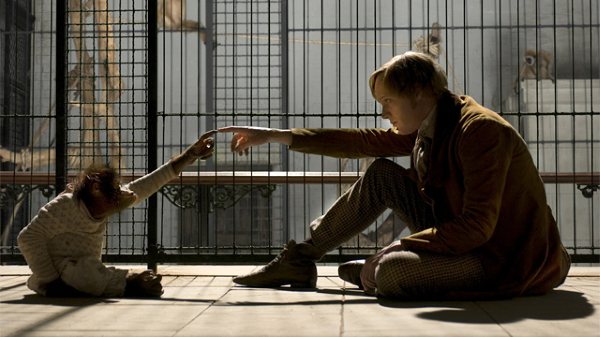
Leave a comment
-
The Stupid – It Burns
I’m sorry, but hasn’t Mary Midgeley realised that she’s barking up the wrong tree by now? Or perhaps she’s simply barking.Leave a comment
-
Storms Of My Grandchildren
I’m currently reading James Hansen’s Storms Of My Grandchildren – a thoroughly researched, and terrifying, look at climate change.I don’t actually have any grandchildren; the nearest my genes have come to carrying on are my nieces, nephews and great-nephew. While I don’t worry for myself, I am concerned about the state of the world that we are leaving for them.Leave a comment
-
Manx in Japan
Being from the Isle of Man, I occasionally look back to see what’s going on. Every now and then I am flabbergasted at what the internet hath wrought. Here’s Rebecca Flint, dressed up as Beckii Cruel, a 14 year-old Manx schoolgirl who appears to have taken the Japanese Anime world by storm…I confess that I don’t understand most of the world at all.Leave a comment
-
Euthanasia Tribunals
Last night I watched Sir Terry Pratchett deliver this year’s Richard Dimbleby Lecture – or rather, I watched his friend, Tony Robinson, deliver it by reading his words, while Pratchett looked on. The reason was that Pratchett has Alzheimer’s disease, and he can no longer rely on himself to be able to give a lecture.He used the occasion to make the case for those with incurable illnesses to be able to choose the time of their own death. It was a speech that was humourous, passionate, and compassionate. An edited extract of the speech is here. I agree with every word.Leave a comment
-
Positive and Negative
One story is uplifting,and one is profoundly depressing. If anything violates "natural law", it ain’t Gareth, but rather, this Pope.Leave a comment

 Geoff Coupe's Blog
Leave a comment