
In November 1990 LIFE magazine published a photograph of a young man named David Kirby. I remember the photo very well. It still moves me to tears, and evokes memories of friends who went far too soon. Here’s the story behind the photo.
Category: Society
-
The Tale Of Herman and José
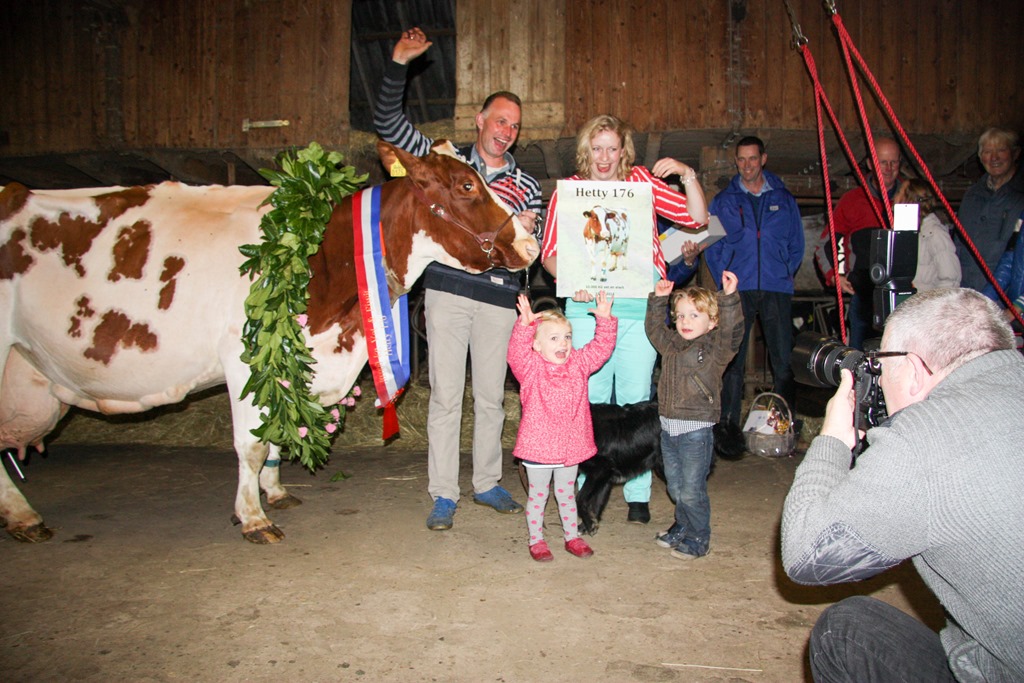
We moved here to our house in the Achterhoek in the Netherlands ten years ago. Our closest neighbours, a field away were a dairy farmer and his wife. In January 2007, the farmer sold his farm to Herman Bongen and retired. Herman had worked on the farm since he was a teenager, and his dream had always been to become a farmer himself.
So in 2007, the dream became a reality for Herman and his girlfriend José. We, and the rest of the neighbourhood welcomed them to their new home and workplace.
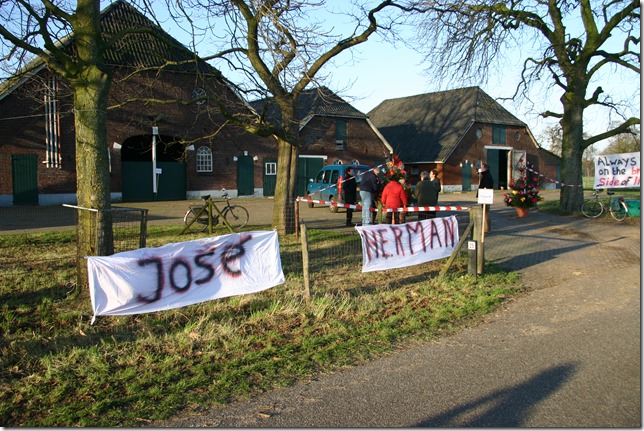
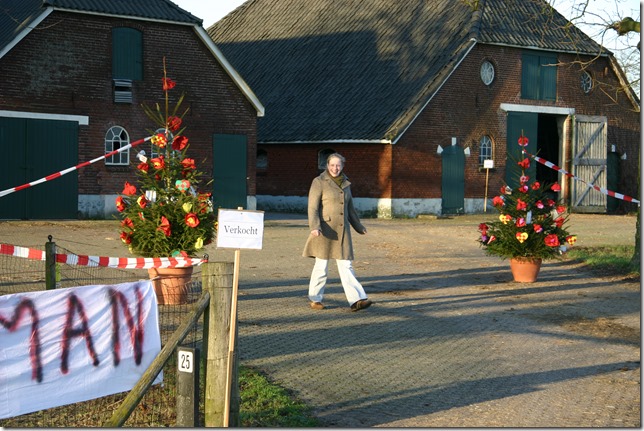
Since that time, much has happened, both good and bad. The good has been the fact that Herman and José have become happily married, and have two lovely children: Baastian and Linde.
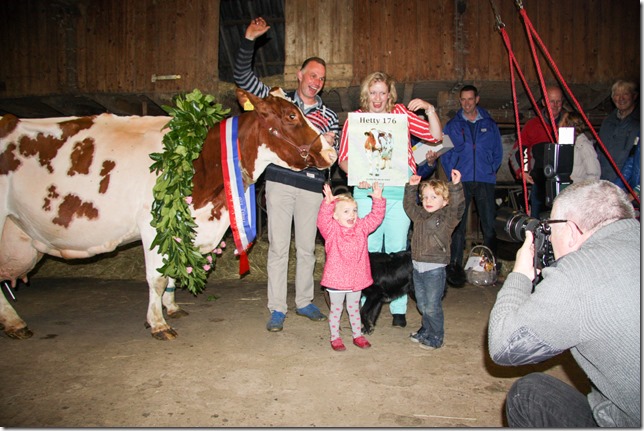
The bad has been the struggle that Dutch dairy farmers have had to keep their heads above water in a bad market.
It’s a struggle that has, in the last couple of months, become too much for Herman and José. They have decided to put their dairy farm up for sale. Herman told me the news some weeks ago.
José posted the news on her Facebook on the 27th August. This is what she wrote (translated from the Dutch):
More and more often we are asked: ‘Is it true? Are you getting rid of your cows?’
I waited to get in touch because my plan to write a pointed political essay just wasn’t happening. It was supposed to be my final statement about a hypocritical political system and society which shows such compassion for sustainability and the well-being of animals, but in the meantime allows for the supermarkets to demand the lowest possible price, using mega-margins over the backs of farmer and cow, flushing the market with cheap bulk milk. But my political words are gone.
No, we have not gone bankrupt. We do not have to leave our home. We did not sell the place to Fortis (a Dutch bank). And my husband Herman also does not have Parkinson’s disease. (Could be an interesting research project: how facts change through the grapevine, fascinating!) But we are putting our farm business up for sale.
Up to now we have always been able to pay our bills -something unfortunately not every farmer is able to say-, through hard work and using every bit of our savings. But we have had to surrender to the depressing feeling: ‘what are we doing this for?’. The romance which was still surrounding farm life, even in the 21st century, has gone.
The most straightforward and accurate explanation of our situation I saw yesterday: ‘Farming: the art of losing money while working 400 hours a month to feed people who think you are trying to kill them.’ Very funny, if only it wouldn’t be so terribly true.The reason for our decision is very simple: a milk price of 25 cents at a production cost of 35 cents. ‘A farmer with a brain will not become a farmer anymore ’, I read recently. That is so very true.
We cannot produce our milk any cheaper. Technically we are a success story. The vet and feed specialist are always praising our cows for their healthy looks, our good quality silage heaps, the low level use of antibiotics and how well-run the whole farm is in general. Those very healthy cows, their very well-being, we will not sacrifice any of that, ever.The practical bottleneck is mainly our high mortgage. It never was a matter of course that Herman would become a farmer. It demanded extraordinary cooperation, a sharp mind, long hours and, yes, that mortgage, in order to set up a modern business with 90 dairy cows and 50 hectares of land. I am so very proud of his passion to achieve all this!
Our very nice veterinarian was the first one to know. He was shocked: ‘You are doing such a fantastic job! You’ve got such a great farm!’ He’s right! But for two whole years now we have been totally knackered. We have bottomed out financially, whilst we will still have to replace our big barn from ’72 which includes shifting hundreds of square meters of asbestos. ‘The milk price is finally going up’, the news said yesterday. A bit early, because the new price will be publicized on Monday. But even if it does go up: even 26 cents results into a loss of 5000 euros per month. The bank will probably give us more credit, but the turn-over is low, losing money every moment. So when does one throw in the towel?
Other than the financial bottleneck there is the social one. Because of the low milk price, we cannot hire people, which makes Herman’s days longer and longer. He is more than fed-up with 80-hour weeks, how little time he’s got for the children, how his body is suffering. Also, we are fed up with not being appreciated economically, politically and socially for our efforts; worse at times. How the political parties and media get their knowledge about dairy farms from Wikipedia (how often have I had to write that the use of hormones is outlawed since 1961 and that milk and meat from animals with antibiotics in their system are not allowed to go into the human food chain?). And how new whimsical laws are made whilst crucial decisions are delayed yet again.
With great vigour we have educated ourselves this past year on how to convert to organic: a thought which had been with us for a longer spell of time but never yet got the attention it deserved. Both we and our farm are supposedly very suitable, the organic advisor told us. Only… we do not have enough land. And manpower. And there is already a waiting list. Because the consumer demands but does not buy.
The final straw was when Herman recently heard the news: ‘It is far cheaper for the consumer to buy their organic products in the supermarket.’ ‘Why are we still doing this… Does no one understand that taking good care of our cows costs money?’
I thought I’d given up on the idea of turning this into a political statement, but yet…’When our harvest fails, you are meant to get worried’, a headline said in a newspaper in an article about the loss of harvest caused by bad weather in the south of Holland. ‘When driven, responsible, intelligent farmers give up, you are also meant to get worried’, I would like to add.
Because we are not the first, and certainly not the last. Where will our milk come from twenty years from now? And how much influence will we have by then over the way it is produced? That is what worries me terrifically.
For us the facts are: by getting out now, now that our debts have not dug huge holes and we’re still ‘young’, we hope to be able to make a fresh start. A house in the countryside, being self-sufficient (also twenty years from now we will still remember how to produce good food!), possibly turning it into an educational project for youngsters… you never know.I keep on trying to focus on all of that: how relaxed and fun life could be, yet again. How wonderful it will be to have time for each other again. To have the peace of mind and spare time for a hobby and a normal social life. But that does not come easy, this new kind of dreaming. Because we are leaving another dream behind, a whole life as a matter of fact. Yesterday I watched as in the evening light our cows ambled out of the milking parlour back into their beautiful field, sheltered by woodland. And I could not help myself from sobbing out loud for the umpteenth time…
Her Facebook post went viral, and has been shared more than 18,000 times. She and Herman have been interviewed by the Press, and have appeared on Dutch television. Whilst the focus on the situation that they are in, and which is shared by many Dutch diary farmers, has been good, it does not change it one iota. The hard decision to sell the farm seems to be the right one.
It’s come as a shock to all of us in the neighbourhood, but there seems to be no alternative. I said to José the other week that the best way of viewing this was as the beginning of a new chapter, a new adventure, in their lives. To use a somewhat well-worn cliché, when one door closes, another often opens. It may seem trite, but that has often been my experience in life – I sincerely hope it will be the same for them.
-
Hooray for History…
As a fellow Manxman who got married to a Dutch man in the Netherlands, let me wish this happy couple all the best for their future.
-
A Marriage Proposal
With all the doom and gloom around as a result of Brexit; this cheered me up a bit.
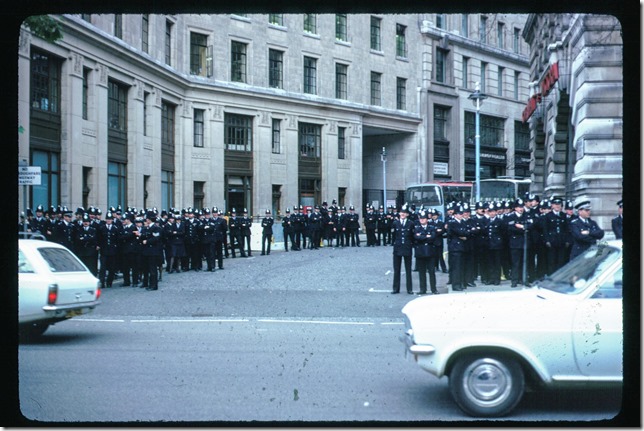
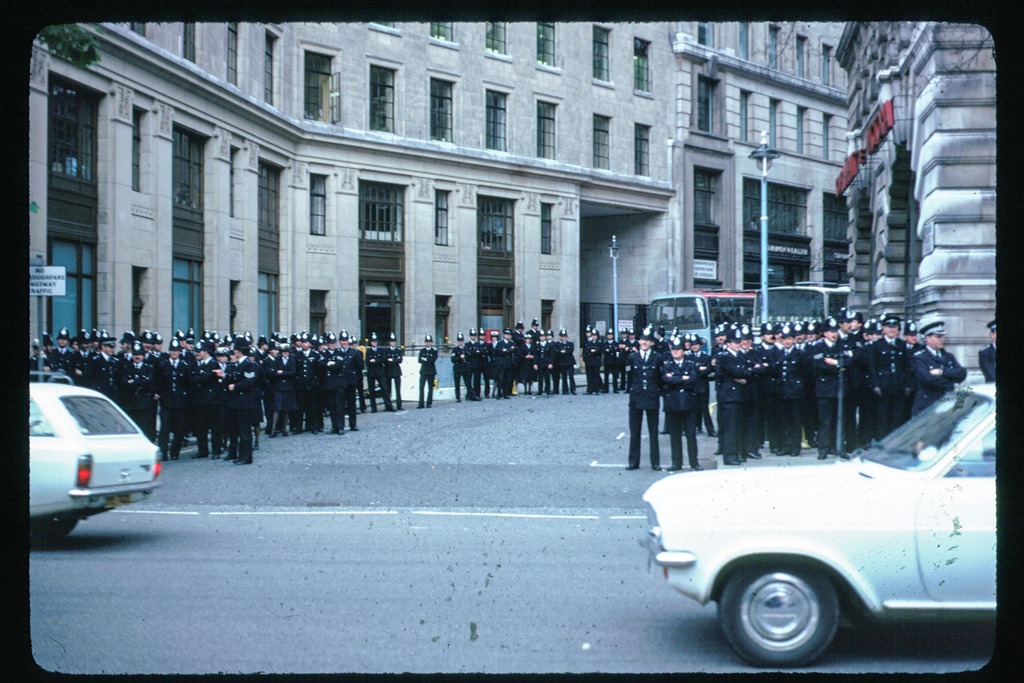
How things have changed since the days I went on Gay Pride marches in London. Back in those days (the 1970s), the police were not at all friendly.
-
Ah, Gawd…
So my fellow Brits voted for Brexit. I am depressed beyond words. A sad day for the EU and a glad day for the 51.9% of Little Englanders thumbing their noses at Johnny Foreigner.
-
RIP Jo Cox
Yesterday, a British Member of Parliament was stabbed and shot. Her name was Jo Cox. I am numbed by the news. This column by Alex Massie in the Spectator puts into words my feelings at the moment, please go and read it. A sample:
When you shout BREAKING POINT over and over again, you don’t get to be surprised when someone breaks. When you present politics as a matter of life and death, as a question of national survival, don’t be surprised if someone takes you at your word. You didn’t make them do it, no, but you didn’t do much to stop it either.
Sometimes rhetoric has consequences. If you spend days, weeks, months, years telling people they are under threat, that their country has been stolen from them, that they have been betrayed and sold down the river, that their birthright has been pilfered, that their problem is they’re too slow to realise any of this is happening, that their problem is they’re not sufficiently mad as hell, then at some point, in some place, something or someone is going to snap. And then something terrible is going to happen.
All the demonisation of the “other”, whether they be immigrants, Muslims, or the EU by the likes of Nigel Farage and his ilk does have consequences. We have an even nastier example here in the Netherlands in the form of Geert Wilders.
My father was a politician, and was a member of the Manx parliament. Like Jo Cox, he always fought for the underdog. It would have broken his heart had he lived to have seen the events of yesterday.
-
Remember the Pulse

The Rainbow flag in our garden flies at half mast today.
And here’s a message from Owen Jones that says what I want to say more eloquently than I am able to do.
-
What Could Possibly Go Wrong?
I’m dreading the EU Referendum – I can’t help feeling that my fellow Brits will choose to leave the EU…
And then, to top it all, the Americans will probably plump for President Trump.
Stop the world, I want to get off.
-
Losers
Nicholas Whyte, who lives and works in Brussels, gives his reaction to the terrorist attacks in Brussels yesterday. Go and read it – it’s worth it. A sample:
As with any awful event, there’s a temptation to grasp for easy explanations. I will give in to that temptation. It seems to my jaundiced eye that, dreadful as they were, yesterday’s attacks were botched. Maelbeek is actually the wrong metro station to attack – both Schuman, the stop before, and Arts-Loi, the stop after, would surely be much more attractive targets, being much busier intersections on the network (and also both recently renovated as prestige architectural projects). Only two of three planned explosions in the airport happened, the third attacker apparently losing his nerve and running away. To adopt a Trump-ism, these guys were losers.
This happened because they are losing. Less than a week ago, a major figure in the terror movement was arrested in Brussels; perhaps yesterday was revenge for his arrest, perhaps it was rushed into because they were afraid he would start talking (or knew that he already had). On the ground, their allies and sponsors are losing territory and resources in Syria and Iraq. I wrote a week ago about violence as story-telling, in the Irish context. This is an attempt to write a story about the weakness of our interconnected world, attacking places where people travel and meet, where many nationalities and cultures join together and build together.
It is a narrative that must not and will not win.
Amen to that.
-
Paris–13/11/2015
Here we go again, more deluded fools with guns and explosives murdering innocents, followed by a statement from IS that is “written in the standard, sententious style of Isis and other militant pronouncements and is framed by a worldview that has become wearily familiar over recent years”.
The late Iain M. Banks summed it up well in his novel Against A Dark Background:
Sorrow be damned and all your plans. Fuck the faithful, fuck the committed, the dedicated, the true believers; fuck all the sure and certain people prepared to maim and kill whoever got in their way; fuck every cause that ended in murder and a child screaming.
Amen.
-
“Home”- By Warsan Shire
no one leaves home unless
home is the mouth of a shark
you only run for the border
when you see the whole city running as wellyour neighbors running faster than you
breath bloody in their throats
the boy you went to school with
who kissed you dizzy behind the old tin factory
is holding a gun bigger than his body
you only leave home
when home won’t let you stay.no one leaves home unless home chases you
fire under feet
hot blood in your belly
it’s not something you ever thought of doing
until the blade burnt threats into
your neck
and even then you carried the anthem under
your breath
only tearing up your passport in an airport toilets
sobbing as each mouthful of paper
made it clear that you wouldn’t be going back.you have to understand,
that no one puts their children in a boat
unless the water is safer than the land
no one burns their palms
under trains
beneath carriages
no one spends days and nights in the stomach of a truck
feeding on newspaper unless the miles travelled
means something more than journey.
no one crawls under fences
no one wants to be beaten
pitiedno one chooses refugee camps
or strip searches where your
body is left aching
or prison,
because prison is safer
than a city of fire
and one prison guard
in the night
is better than a truckload
of men who look like your father
no one could take it
no one could stomach it
no one skin would be tough enoughthe
go home blacks
refugees
dirty immigrants
asylum seekers
sucking our country dry
niggers with their hands out
they smell strange
savage
messed up their country and now they want
to mess ours up
how do the words
the dirty looks
roll off your backs
maybe because the blow is softer
than a limb torn offor the words are more tender
than fourteen men between
your legs
or the insults are easier
to swallow
than rubble
than bone
than your child body
in pieces.
i want to go home,
but home is the mouth of a shark
home is the barrel of the gun
and no one would leave home
unless home chased you to the shore
unless home told you
to quicken your legs
leave your clothes behind
crawl through the desert
wade through the oceans
drown
save
be hunger
beg
forget pride
your survival is more importantno one leaves home until home is a sweaty voice in your ear
saying-
leave,
run away from me now
i dont know what i’ve become
but i know that anywhere
is safer than here(hat tip to Nicholas Whyte for bringing my attention to this poem by Warsan Shire)
-
Eyewash, Flapdoodle and Bullshit
The UK Parliament is about to debate a bill put forward to change the law on assisted dying. In yesterday’s Observer, the current Archbishop of Canterbury had an opinion piece on why he believes assisting people to die would have detrimental effects both on individuals and on society.
Needless to say, I disagree with his viewpoint.
I can’t help feeling that he’s being a tad disingenuous when he claims:
With other faith leaders, I have joined in writing to members of parliament, urging them to oppose Rob Marris’s assisted dying bill.
We have written, not in an attempt to push “the religious” viewpoint on others, but because we are concerned that a change in the current law on assisted suicide would have detrimental effects both on individuals and on our society.
It sounds very much like pushing the “religious viewpoint” to me. While he might wish to claim that:
…the faith leaders’ letter represents the considered opinion of our communities that have analysed, discussed and debated the issue over many years. Their response springs from philosophical and theological reflections as well as from a vast range of pastoral experience and a profound sense of compassion.
…it really deserves little more than the Mandy-Rice Davies response: Well, he would, wouldn’t he? As Ophelia Benson writes, it’s typically loaded language that at its heart is little more than “eyewash, flapdoodle and bullshit”.
He sets up a completely false dichotomy:
…we need to reflect on what sort of society we might become if we were to permit assisted suicide. At present, we can show love, care and compassion to those who at all ages and stages of life are contemplating suicide.
We still can, and, more to the point, we still do here in The Netherlands where assisted dying is legal. It would be as well to get some facts on the table, and dismiss the “slippery slope” argument in Welby’s rhetoric:
The incidence of the different circumstances of death in the Netherlands since 1995 has been determined in several successive robust epidemiological studies (Onwuteaka-Philipsen et al., Lancet. 2003;362: 395-399). In 2005, of all deaths in the Netherlands, not 20% but 0.4% were the result of the ending of life without an explicit request by the patient (van der Heide et al., New England Journal of Medicine. 2007;356:1957-1965).
In the UK, the figure was 0.33%, i.e. quite similar to the 0.4% in the Netherlands (Seale, Palliative Medicine 2006; 20: 3-10). These instances have been found to be in dying patients who had become incompetent, were compassionate and are generally considered ethically acceptable (Rietjens et al. Death Studies 2007;31:205-221).
In 2005 in the Netherlands euthanasia was given in 1.7% of deaths and physician-assisted suicide occurred in 0.1%. These rates were somewhat lower than in 2001. Since the legalisation of euthanasia in Belgium its overall incidence changed little, but the care with which it is carried out improved markedly (Bilsen et al. New England Journal of Medicine 2009; 361: 1119-1121). If cases of euthanasia with no or only perfunctory precautions came to light, there would be prosecution. And if in the future there were to be evidence for anyone requesting euthanasia because of e.g. a waiting list for palliative care, there would be an outcry. Thus, legal euthanasia is one more safeguard against the health-care system falling short of its duty to offer optimal care at the end of life. In Belgium, legal euthanasia and palliative care are not opposites, but complementary and synergistic (Bernheim et al., British Medical Journal 2008;336:864-867).
Note that Welby uses the term “assisted suicide”. As a hospice director pointed out:
There is often a deliberate and emotive attempt to confuse the terms assisted dying and assisted suicide. These are subtly but fundamentally different. People with a terminal illness are not choosing to die, they are already dying. Assisted dying offers an individual with a terminal illness and clear prognosis to have some say in the timing and place of their death if they want it. And, what is likely to be proposed in the bill is restricted to people who are terminally ill with a prognosis of less than six months. Individuals would also be required to administer the medication to end their life themselves.
However, facts do not seem to concern Justin Welby overmuch. He seems more content with hyperbole, half-truths and lies:
We risk all this for what? Becoming a society where each life is no longer seen as worth protecting, worth honouring, worth fighting for? The current law and the guidelines for practice work; compassion is shown, the vulnerable are protected. In spite of individual celebrity opinions and the “findings” of snap opinion polls (that cannot hope to do justice to the intricacies of the issue) the current law is not “broken”. There is no need to fix it.
The current law in the UK is broken. I am relieved that I live in The Netherlands where I have the option of assisted dying, should circumstances bring me to that point. I’ve lived a good life, and hopefully will continue to do so for many more years. I don’t think it is selfish of me to wish for a good death as well.
-
Hung Out To Dry – Or Hoist By His Own Petard?
There’s been a disturbance in the Force recently over remarks made by Sir Tim Hunt at a luncheon organised by the Korea Federation of Women’s Science and Technology Associations. He stood up and said:
“Let me tell you about my trouble with girls … three things happen when they are in the lab … You fall in love with them, they fall in love with you and when you criticise them, they cry.”
Adding that he was in favour of single-sex labs, but allowing that he didn’t want to “stand in the way of women”.
Hunt was clearly unprepared for the wave of negative reactions that followed, saying that while what he said was wrong, the price he and his wife have had to pay for his mistakes has been extreme and unfair. “I have been hung out to dry,” says Hunt. He has resigned from his position as Honorary Professor with the UCL Faculty of Life Sciences.
And just as night follows day, the wave of negative reactions has been followed by a wave of support from fellow scientists such as Richard Dawkins and Brian Cox. However, I can’t help but feel that Dawkins, in particular, is certainly not helping with statements such as
“ the baying witch-hunt that it unleashed among our academic thought police: nothing less than a feeding frenzy of mob-rule self-righteousness.”
There’s none so blind as those who will not see, professor Dawkins. At least Sir Tim has recognised the enormity of his gaffe. As his hosts pointed out in a letter:
“As women scientists we were deeply shocked and saddened by these remarks, but we are comforted by the widespread angered response from international social and news media: we are not alone in seeing these comments as sexist and damaging to science. Although Dr. Hunt is a senior and highly accomplished scientist in his field who has closely collaborated with Korean scientists in the past, his comments have caused great concern and regret in Korea.”
They also noted that although Hunt belatedly called his remarks an attempt at humour, he had earlier defended them as “trying to be honest.” His remarks, the letter said,
“show that old prejudices are still well embedded in science cultures. On behalf of Korean female scientists, and all Koreans, we wish to express our great disappointment that these remarks were made at the event hosted by KOFWST. This unfortunate incident must not be portrayed as a private story told as a joke”.
Sir Tim has written to them regretting his “stupid and ill-judged remarks.” He added:
“I am mortified to have upset my hosts, which was the very last thing I intended. I also fully accept that the sentiments as interpreted have no place in modern science and deeply apologize to all those good friends who fear I have undermined their efforts to put these stereotypes behind us.”
As is said in the article in which this exchange of letters is quoted:
The real point is our failure, so far, to make science a truly inclusive profession. The real point is that that telling a roomful of female scientists that they aren’t really welcome in a male-run laboratory is the sound of a slamming door. The real point is that to pry that door open means change. And change is hard, uncomfortable, and necessary.
What we certainly don’t need is other old, white, male scientists telling us that this is a “baying witch-hunt”.
-
Showing Their True Colours
It would appear that the Catholic Church is not happy, not happy at all, about the result of the Irish referendum supporting same-sex marriage.
First we had the Archbishop Diarmuid Martin of Dublin saying that the church needed to take “a reality check” and “not move into denial”. The church, he said, had lost its connection with young people, and needed to work to reconnect with them. Now while some liberal Catholics have seen this as an outbreak of common sense, it was very clear to me that this was a brilliant piece of equivocation on the Archbishop’s part. While to liberal Catholics it could be interpreted as recognising that the Church has to change, for the rest of us it was perfectly clear that his message was: “our attempt to indoctrinate Irish youth has failed, and we must redouble our efforts – marriage can only be between a man and a woman for the sole purpose of procreation”.
Luckily, we now have the Vatican’s number two, Cardinal Pietro Parolin, making it crystal-clear for us all. He is quite clear that Ireland’s vote was “a defeat for humanity”, adding that he was “deeply saddened” by it, and that the answer for the church is to “strengthen its commitment to evangelisation”.
Let’s just ponder that for a moment: a vote for equality and recognising that love can exist between two people of the same sex is seen by the Catholic Church as “a defeat for humanity”.
I truly wonder what goes on in the minds of the leaders of the Catholic Church. And for all the posturing of Pope Francis, I really do not expect him to correct Cardinal Parolin. He may equivocate, but he is unlikely to contradict the cardinal. Let’s wait and see; a miracle might yet happen.
Addendum: Grania Spingies has an excellent commentary on the Catholic Church’s position over at the Why Evolution Is True web site. In summary:
- First, yes, they really believe this stuff.
- Second, they are so out of touch with people that they have no idea how unintentionally funny and simultaneously insulting they are.
- Third, they fear the Internet
- Fourth, they have no intention of changing the Church’s position
-
Ireland Has Voted
And it’s a vote for sanity, equality, and same-sex marriage… I’m delighted, and not a little surprised – I had thought that reactionary forces, e.g. the Catholic Church, would have been able to make a greater dent in the majority view. It is clear, from the results, that rural areas are further behind, but hopefully, with this result, attitudes will begin to change in the country as a whole.
Well done to all the “Yes” campaigners, and thanks to all those who voted Yes.
-
Banning the Burqa
Back in 2010, I wrote about my misgivings about the fact that the Netherlands was considering banning the burqa. Fast forward to now, and the government has indeed now proposed a ban on wearing the burqa in certain places, including in courts, schools, townhalls, and on public transport.
I remain unconvinced that this ban is going to help our samenleving (literally: living together, but usually translated as society). Kenan Malik’s words at the time about the ban remain as true today as they were back then:
The burqa is a symbol of the oppression of women, not its cause. If legislators really want to help Muslim women, they could begin not by banning the burqa, but by challenging the policies and processes that marginalize migrant communities: on the one hand, the racism, social discrimination and police harassment that all too often disfigure migrant lives, and, on the other, the multicultural policies that treat minorities as members of ethnic groups rather than as citizens. Both help sideline migrant communities, aid the standing of conservative ‘community leaders’ and make life more difficult for women and other disadvantaged groups within those communities.
As I wrote at the time:
While I have qualms about why women should choose to wear the burqa, the answer is not to ban it. The answer is to make it as ludicrous as a codpiece, and that must emerge from the women themselves.
-
Ireland Votes
This coming Friday, Ireland will be voting in a referendum to legalise same-sex marriage. I’d like to think that sanity will prevail, and that the vote will be “Yes”, but I shouldn’t underestimate the continuing power of the Catholic Church, aided by US Christian groups, evangelical Christians and religious societies such as the Iona Institute to poison the well.
Take, for example, Breda O’Brien’s opinion piece in the Irish Times: Think about intolerance of thought police before you vote. I confess, my irony meter all but exploded on reading that headline. O’Brien is a patron of the Iona Institute, thus she can quite blithely state:
Think about the dogmatism and intolerance of the new thought police, the contempt for the conscientious objections of others, as you decide which way to vote.
I would hope rather that the Irish voters will dwell more upon the dogmatism and the intolerance of the old thought police as they decide which way to vote. O’Brien’s piece fulminates:
Nothing wrong with that, until you realise from the INTO LGBT group that they intend to normalise same-sex marriage in the teaching of children as young as four, using poster displays in classrooms and picture books.
They suggest using King and King, described by Amazon as presenting “same-sex marriage as a viable, acceptable way of life within an immediately recognizable narrative form, the fairy tale”. The prince is only happy when he meets and marries another prince.
Ah, yes, King and King – otherwise known as Koning & Koning in the original Dutch, published back in 2000. A charming little book for children – I have a copy in my library – whose message is nothing more than not everyone is the same, and love comes in different forms. Also in my library is a copy of Jenny lives with Eric and Martin, published way back in 1983, and which caused a similar furore in the UK at the time. The message here is that not all families are the same.
These seem to be messages that worry and concern Ms. O’Brien. I fail to see why. Her implicit cry is “won’t somebody please think of the children!”. We do, Ms. O’Brien. we do. Your way of thinking is to continue to lock children up, and make some of them continue to feel wrong. Your way of thinking leads to a lifetime of suffering. Ask Ursula Halligan.
-
Je Suis Charlie
From the reporting of the Guardian on today’s barbaric act in Paris, the words of the former Charlie Hebdo publisher Phillipe Val, whose friends were assassinated today:
“We cannot let silence set in, we need help. We all need to band together against this horror. Terror must not prevent joy, must not prevent our ability to live, freedom, expression – I’m going to use stupid words – democracy, after all this is what is at stake. It is this kind of fraternity that allows us to live. We cannot allow this, this is an act of war. It might be good if tomorrow, all newspapers were called Charlie Hebdo. If we titled them all Charlie Hebdo. If all of France was Charlie Hebdo. It would show that we are not okay with this. That we will never let stop laughing. We will never let liberty be extinguished.”
(translated from French by @rayajalabi)
Read the full interview in French here.
Addendum: During a restless night, while trying to sleep, I got to thinking about why I had blogged about this event, and not about other examples of violent religious extremism, for example the kidnapping of 276 female students from the Government Secondary School in the town of Chibok in Borno State, Nigeria by by Boko Haram, or the murder of 140 people, mostly schoolchildren, in a Taliban attack on a school in Pakistan. I suppose that a banal reason is simply that the Paris attack seems closer to home. It doesn’t seem a particularly strong or good reason, but there it is. The schoolchildren and their teachers have grieving families also.
Salman Rushdie, as usual, has a few wise words on the situation:
Religion, a mediaeval form of unreason, when combined with modern weaponry becomes a real threat to our freedoms. This religious totalitarianism has caused a deadly mutation in the heart of Islam and we see the tragic consequences in Paris today. I stand with Charlie Hebdo, as we all must, to defend the art of satire, which has always been a force for liberty and against tyranny, dishonesty and stupidity. ‘Respect for religion’ has become a code phrase meaning ‘fear of religion.’ Religions, like all other ideas, deserve criticism, satire, and, yes, our fearless disrespect.
Addendum 2: Juan Cole gives a very good analysis here in Sharpening Contradictions. A sample:
Most of France will also remain committed to French values of the Rights of Man, which they invented. But an insular and hateful minority will take advantage of this deliberately polarizing atrocity to push their own agenda. Europe’s future depends on whether the Marine LePens are allowed to become mainstream. Extremism thrives on other people’s extremism, and is inexorably defeated by tolerance.
Addendum 3: And, as only to be expected, Geert Wilders is stoking the fire to thrive on the situation:
This is not the end of the trouble, but the beginning,’ he said. Accusing political leaders of cowardice, Wilders said very tough measures had to be introduced. The borders must be closed and ‘the army has to be brought in to protect our stations, our streets and our shopping centres’
Idiot.
-
Racism: The Crack Cocaine of Politics
The bogeyman of English politics of the late 1960s was Enoch Powell, and Hanif Kureishi has written a masterful article on the effect of Powell: Knock, knock, it’s Enoch. It’s well worth reading.
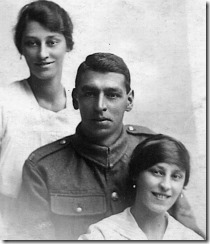
Like Kureishi, I was a teenager in 1968 when Powell gave his Rivers of Blood speech. Like Kureishi, I was born in Britain, although unlike Kureishi, I was white. So even though I was appalled at what Powell unleashed, I was never the target of white racism. Ironically, I am a child with immigrant blood – my mother’s side of the family has maternal roots in 19th Century India. As I’ve written before, my great-aunts and great-uncle were clearly Indian (as can be seen in the photograph below), and my mother remembered the casual racism directed at her father when she was a young girl.
Perhaps because of what my mother remembered, I was brought up without being conscious of the fact that racism existed. I also grew up on the Isle of Man, and I only recall ever seeing one black person in real life as a child; he worked at one of the hotels during one summer season. I was more struck by the fact that his bicycle had a real radio on it, than by the fact that he was black. Nonetheless, racist attitudes existed in the wider society, and I must have subconsciously been aware of them. I recall one incident that happened when I must have been 11 or 12, and visiting my aunt and uncle who lived in Tottenham. I was walking along a London street and saw a very expensive car – it was either a Rolls or a Bentley – and being rather impressed by its beauty. Then, the owner and his family appeared and got into the car. They were black, and from seemingly nowhere, the thought popped into my head: “how have the likes of them got a car like that?” I stopped in shock, absolutely appalled at what I had just thought, and horrified that I could think such a thing. Despite my parents care and attention, racism had snuck in and lodged itself in my brain.
It’s an insidious thing. Look again at that photo of my great-uncle George above. The uncle that I was visiting in Tottenham looked just like a whiter version of George. By his, and my mother’s, generation, their Indian origins had faded enough so that they could pass for white. He lived in the same terrace house where he had grown up. Tottenham became a multicultural melting pot, and during the 1960s contained a large population of African-Caribbean people. I became very aware during that time that my uncle and aunt had racist attitudes towards their neighbours. I would often bite my tongue in their presence. Lovely people, but with that side to them that I found very difficult to deal with.
As Kureishi writes:
Appealing to the worst in people – their hate – is a guaranteed way to get attention, but it is also fatal. Powell talked in whole sentences and was forever translating Herodotus, so was known for his cleverness. But he wasn’t smart enough to resist the temptation of instant populism for which he traded in his reputation. Racism is the fool’s gold, or, rather, the crack cocaine of politics.
Forty-five years on, and it’s still happening. We have Nigel Farage and UKIP in the UK, and Geert Wilders and the PVV here in the Netherlands.
Kureishi again:
Britain survived Powell and became something he couldn’t possibly have envisioned. He was a pessimist and lacked faith in the ability of people to cooperate with one another, to collaborate and make alliances. The cultural collisions he was afraid of are the affirmative side of globalisation. People do not love one another because they are “the same”, and they don’t always kill one another because they are different. Where, indeed, does difference begin? Why would it begin with race or colour?
Racism is the lowest form of snobbery. Its language mutates: not long ago the word “immigrant” became an insult, a stand-in for “paki” or “nigger”. We remain an obstruction to “unity”, and people like Powell, men of ressentiment, with their omens and desire to humiliate, will return repeatedly to divide and create difference. The neoliberal experiment that began in the 80s uses racism as a vicious entertainment, as a sideshow, while the wealthy continue to accumulate. But we are all migrants from somewhere, and if we remember that, we could all go somewhere – together.
I hope we can survive Farage and Wilders as well.
-
A Piece of Wet String
One of the less attractive things about living in the Dutch countryside is that the internet is usually delivered via the old copper cables used by the telephone companies. In the far distant days of using dialup modems (that is, 25 years ago), this was perfectly adequate. When ADSL technology was first introduced, using the same cabling, it seemed blazingly fast by comparison. And providing that you live close to the telephone exchange, it is still perfectly acceptable. However, the further away from the exchange that you are, the lower the internet speed becomes.
So for those of us out in the countryside, using the internet is usually akin to dealing with a piece of wet string. I’ve just surveyed the addresses around us that make up our postal area. It’s about 6 km by 3 km with two small villages in it surrounded by outlying farms and houses. There are, in total, 436 addresses. It’s possible to do an online check of what internet speed is available at each address, and this is the rather depressing result:
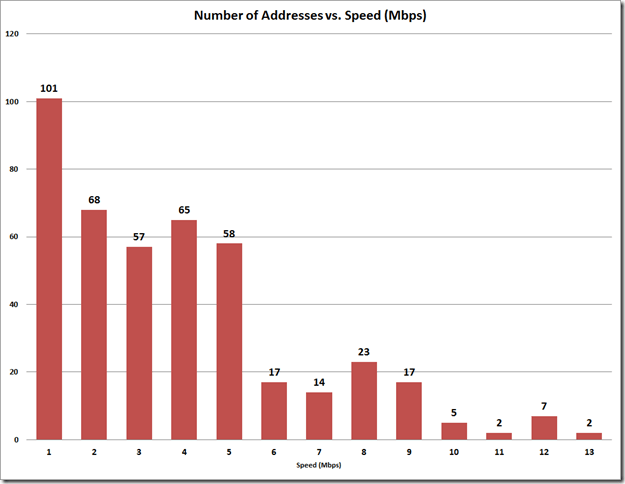
There are only 54 households that have internet (download) speeds of 8 Mbps or more, whilst the great majority (391) have 4 Mbps or less, with 101 households stuck with only 1 Mbps available via ADSL internet.
These days, such speeds are considered low, bordering on completely unacceptable, for the services that are being delivered via the internet. For example, there are changes in the Dutch Healthcare services coming that will require broadband speeds beyond what is currently available for most of us round here. The government and local authorities would like to see more of the elderly being able to live at home in their own houses for as long as possible, while being supported by healthcare professionals, carers, and volunteers. Their services will increasingly be delivered virtually by the internet. The district nurse and the doctor will no longer be carrying out housecalls by driving round, but using video conferencing to see their patients (or “clients” in the new Healthcare-speak).
At the other end of the age-range, today’s schoolchildren are using education services delivered via the internet, and this will only broaden and demand more bandwidth in the future. I know that the Director of our local schools is already concerned for the pupils at our village school. They are being disadvantaged in comparison with her pupils at the town school, which has broadband internet delivered via fibre optic cables.
The laying of fiber optic cables began ten years ago in the Netherlands, and now there are almost 2 million Dutch households connected to the network, mostly in large towns and cities. The issue has always been that it is more financially attractive for the cable provider to lay cable in built-up areas than in the open countryside. The Province of Gelderland tried to get an initiative off the ground earlier this year: a public-private partnership with a cable provider, but the deal fell through. Now they have just announced an initiative, in cooperation with ten of the Province’s local councils (including ours!), to lay fibre optic cables in countryside areas. The Province is making 32 million euros available for investment, with the ten local councils adding a further 25 to 30 million.
I expect that this investment will take the form of loans, with low or zero interest, made to individual householders who wish to pay for a connection to the fibre optic network. The challenge will be to get sufficient people willing to pay, so that the price per connection comes down to an attractive price for the majority of people. Our village community council is asking people how satisfied they are with the current situation for both internet and mobile telephone coverage. We’ll be using the results of that in our discussions with the Council. I’m hoping that we can get enough people around here to be interested in replacing the current pieces of wet string with pieces of glass – a fibre optics network.




 Geoff Coupe's Blog